

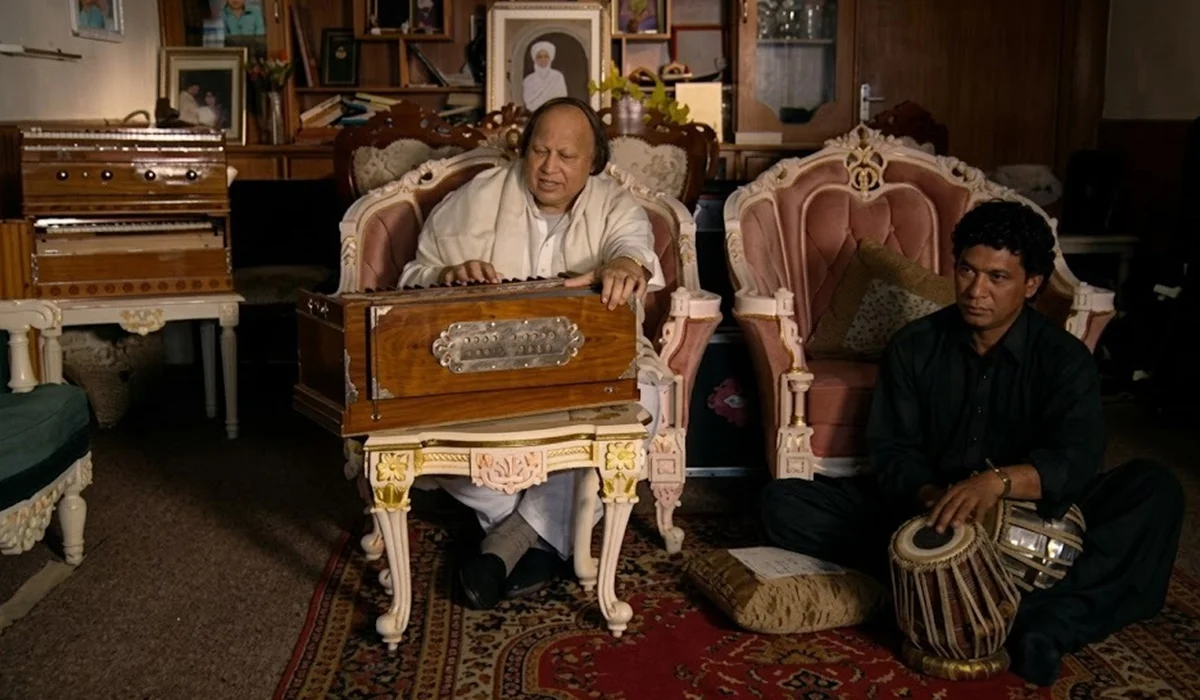

One of the most special moments in Nusrat Fateh Ali Khan’s qawwalis comes when, after casting the spell of his intricate artistry through a long, soaring alaap, he is left alone with the tabla for half a minute or so. Sometimes he leaves one beat empty, sometimes two or three. That empty space is filled either by the rhythmic claps of the accompanying artists or just the tabla itself. The sharp, crisp resonance of the tabla lingers in that vacuum for a long time.
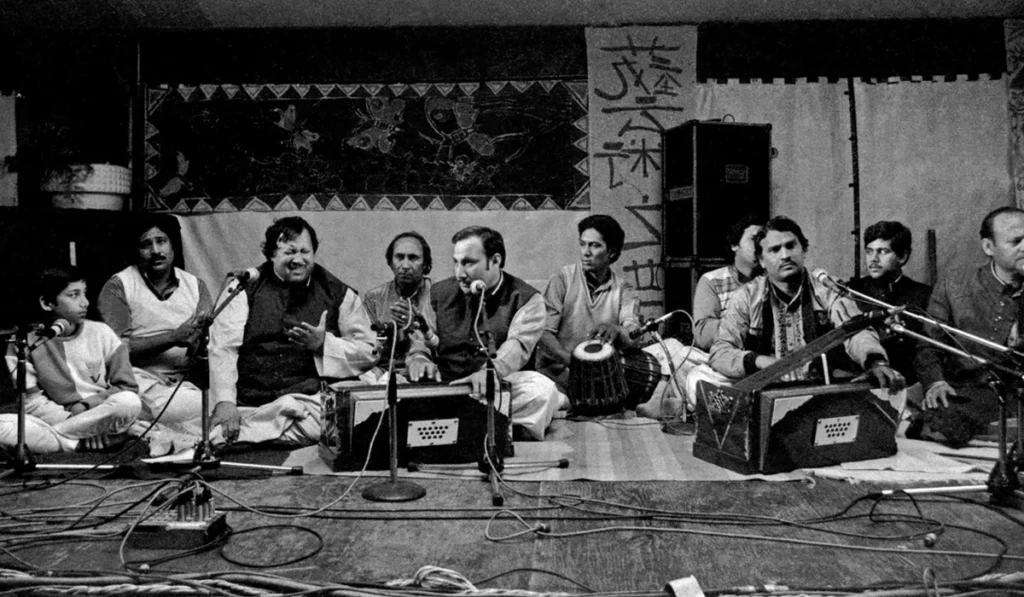
Hundreds of videos of the maestro are available across platforms. For a very long time, I have tried to gather information about the artists who accompanied him. I found almost nothing about those co-singers belonging to different age groups. Yes, his younger brother Farooq Fateh Ali Khan and Farooq’s son Rahat Fateh Ali Khan are recognizable. But the names of the others remain largely unknown. These accompanying artists, who spent their lives in the shadow of a great singer, never let his performance falter. In fact, at times, they came remarkably close to matching him.
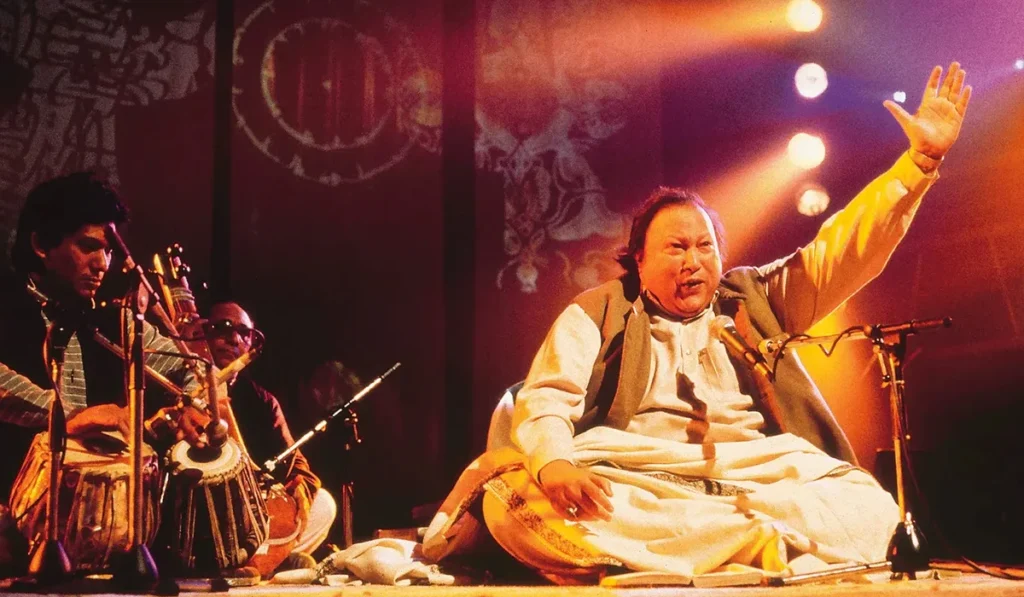
While watching Nusrat’s performances, one can also sense a subtle power equation. A mere glance from a senior accompanist towards a young singer attempting a high note carries meaning. It’s also intriguing to imagine how these artists lived their lives at home, who their friends were, and how much they were paid for an evening’s performance.
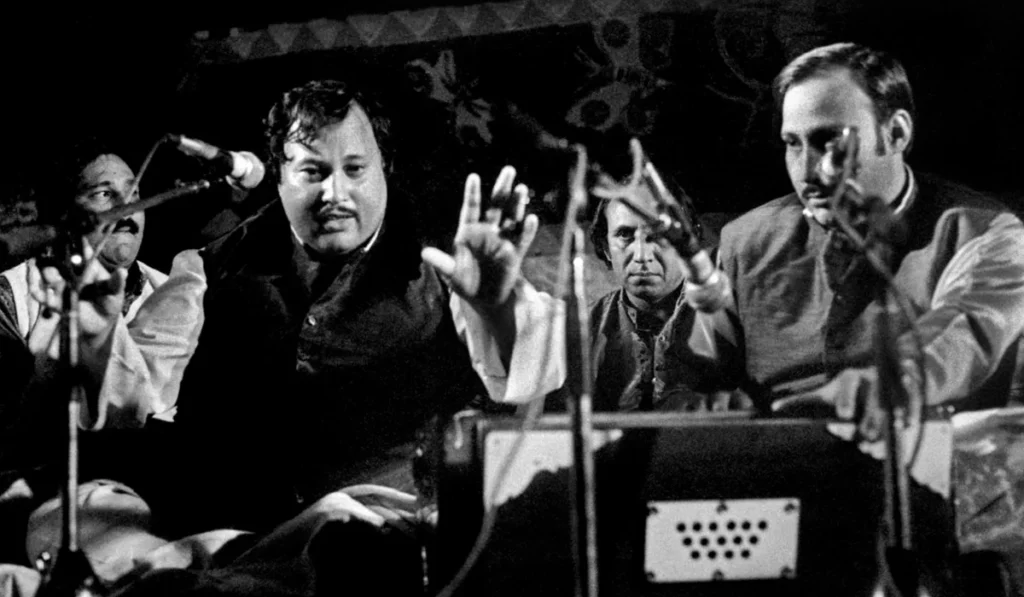
In almost all of Nusrat’s concert videos, the tabla player is barely visible. Hidden behind microphones, somewhere in the last row, he is given a place to sit. It is fascinating to think how Nusrat’s entire musical magic could ever be complete without this unseen practitioner.
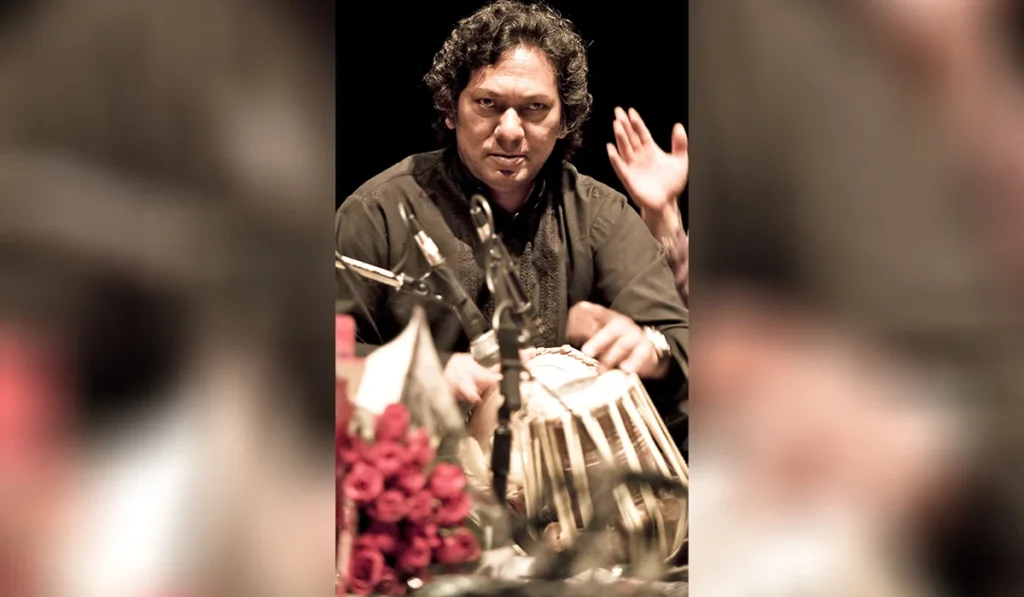
The tabla player who stayed with Nusrat for the longest time was Dildar Hussain, who performed alongside him for nearly thirty years. His family hailed from the Kasur region of Punjab.
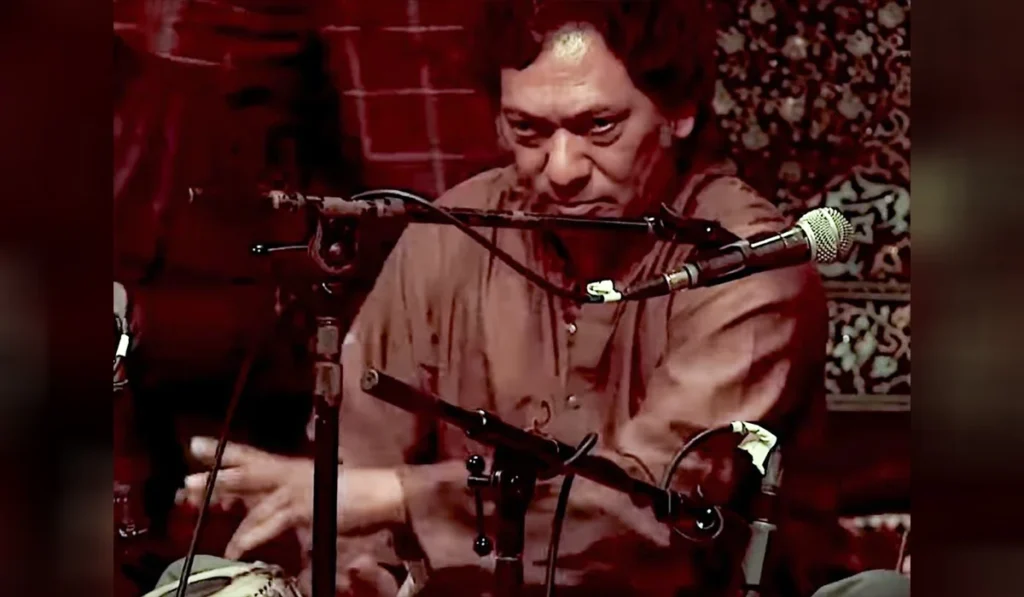
Raised in a musical environment from childhood, Dildar Sahib began playing the tabla at the age of just five. His father, Mian Sharifuddin, himself a qawwali musician and teacher, gave him his initial training. Later, he trained under the legendary Alla Rakha, father of Zakir Hussain. At the age of just twelve, he gave his first public performance in India in 1969.
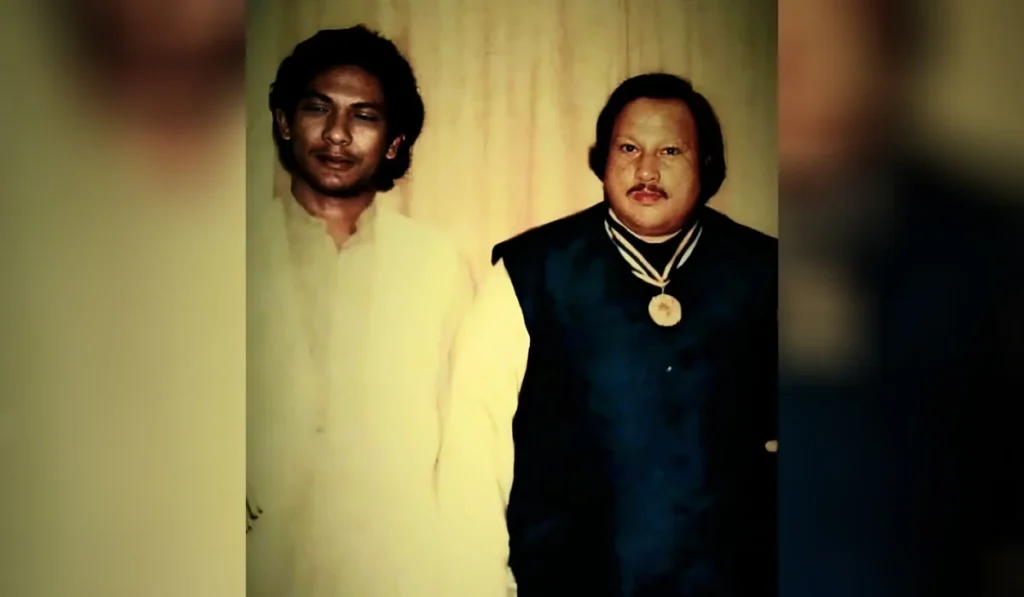
By 1971, at the age of fourteen, he had joined Nusrat Fateh Ali Khan’s newly formed qawwali party. Alongside Farooq Fateh Ali Khan on harmonium, he became one of the founding members of the core team. In Nusrat’s qawwalis, Dildar Hussain’s tabla was not just rhythm, it was emotion and soul. In Nusrat’s fast-paced compositions, taranas, and dhamals, his tabla echoed like a powerful heartbeat.
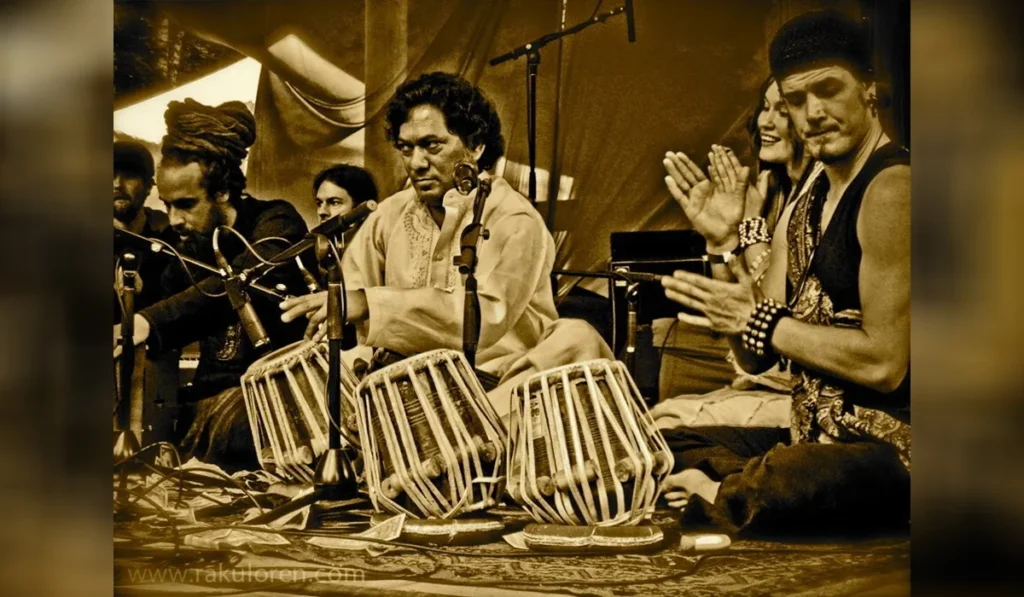
When Nusrat toured the world, Dildar accompanied him, collaborating with international artists like Peter Gabriel and Pearl Jam, helping take qawwali to a global audience as a form of Sufi music. He remained with Nusrat until the maestro’s untimely death in 1997. Nusrat often praised Dildar Hussain, considering his rhythm as the strong foundation of his own singing.
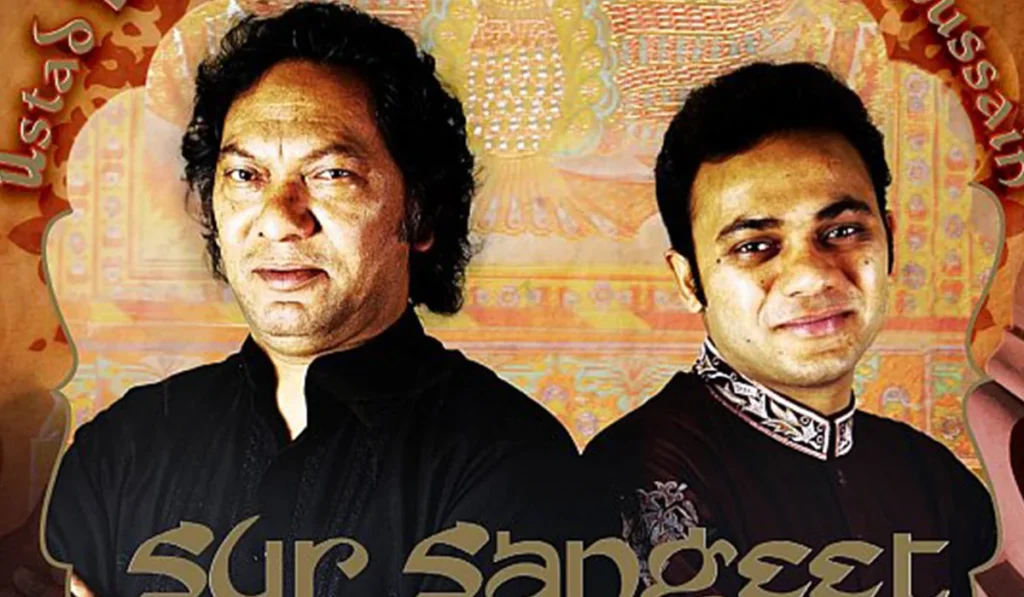
His sons, Abrar and Israr, are also tabla players. In 2015, he released a qawwali album with Abrar titled Sur Sangeet. Listening to it reveals that even in his seventies, Ustad Dildar Hussain was not just a master tabla player but also an accomplished classical vocalist.

Leave a Comment