
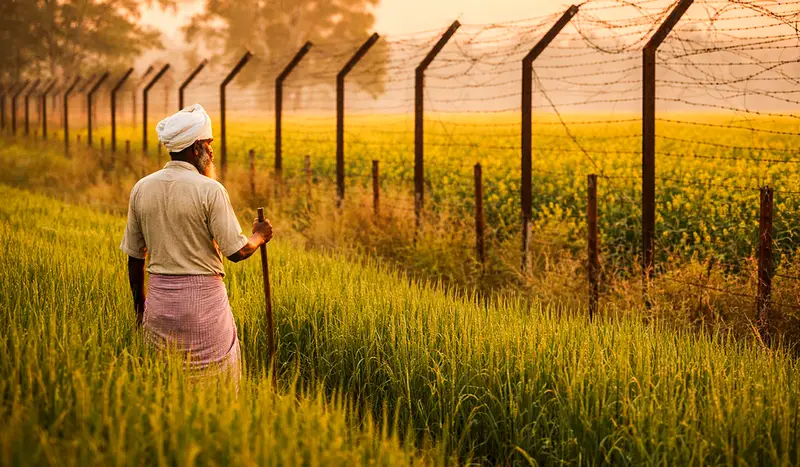

“Sada Punjab” had published an article on 7 November 2025 under the headline “The border farmers doing farming across the Kandiali wire are facing a double blow”, in which we had tried to explain in detail about the problems of the farmers and their solutions. Now, almost two and a half months after our article, this issue is in the headlines again.
Punjab Chief Minister Bhagwant Mann, in a meeting with Union Home Minister Amit Shah on January 17, raised the problems of border farmers and the issue of installing Kandiali wire near the zero line. According to the claim made by CM Bhagwant Mann, in the coming days, farmers of Punjab will be able to do farming on thousands of acres of border land without any restriction. CM Mann has also claimed that on our demand, the Central Government has agreed in principle to shift the Kandiyali wire on the border.
Well, in this article we will discuss about the problems of the farmers and how much benefit they will get by replacing the Kandiali wire. For decades, farming has been no less than a challenge for the farmers living on the India-Pakistan border. About 532 km long Kandiali wire is installed in six districts of Punjab (Gurdaspur, Pathankot, Amritsar, Tarn Taran, Firozpur and Fazilka). Crossing the Kandiyali Wire: During the decade 1988-90, the government gave permission to the farmers to do farming in their lands, but the farmers were told that they can go for farming only by showing their identity card. Apart from this, the identity card was also made by BSF, which is still made.
International rules! Kandiali wire should be 150 meters away from the zero line
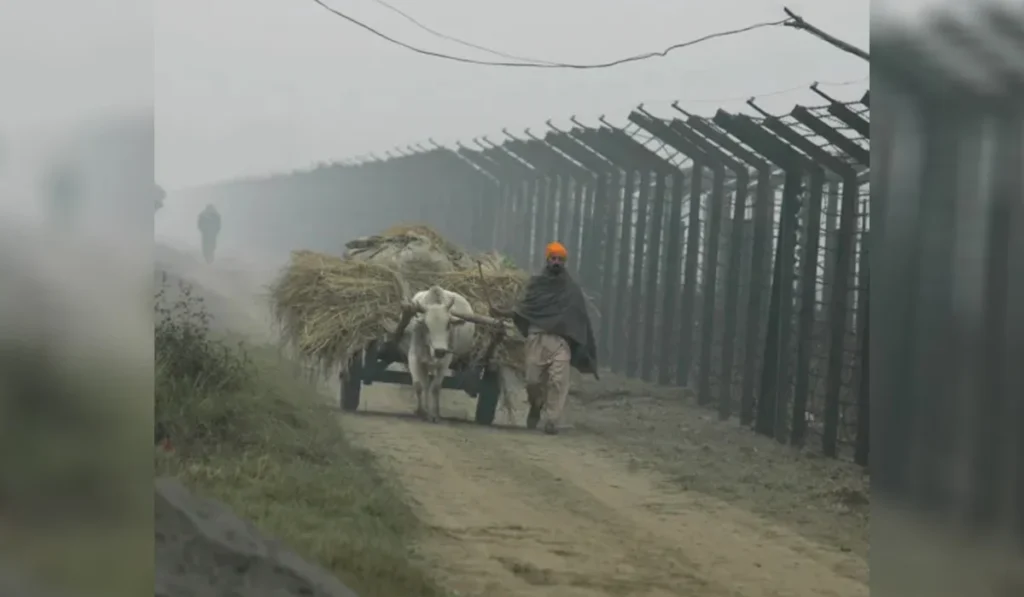
According to the Chief Minister’s claim, “As per the state rules, construction should be 150 meters away from the zero line but in many areas of Punjab, the border fencing wire is located within two to three kilometers.” Thousands of acres of cultivable land is beyond this wire, due to which farmers have to show their identity cards daily and go to BSF. They are forced to do farming in their fields under the protection of farmers. “If the fence is rebuilt near the international border, a large part of Indian land will come on this side of the fence, allowing farmers to do farming without any fear and daily restrictions without compromising national security.” The Chief Minister said that the Union Home Minister told him that this issue is under consideration and efforts have been made to make similar arrangements in Pathankot also.
Will the barbed wire be removed any time soon?
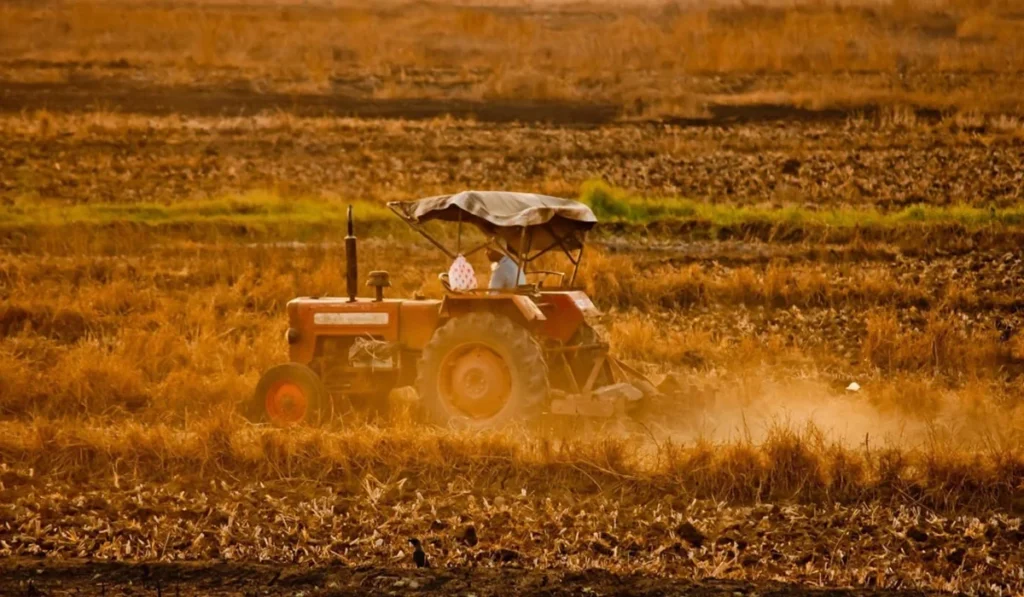
Actually, no work is difficult or easy, but if you are determined then every work seems easy. If the government can get hold of some work and if the intention is there, then the work of days can be completed in hours. Even though 532 km long Kandiyali wire is installed in six districts of Punjab, if the government wants, it can move it from one place to another in just 5-7 days. But the question arises whether all this is as easy as it is being thought? It has been more than three decades since the wire was installed on the border. If the wire is removed from one place then BSF will have to take more strict action at its place. Besides this, farmers can also be prevented from farming. Of course, the government has talked about removing or moving the Kandiyali wire to these areas, but this is not an easy task.
Along with the goods department, central agencies, state agencies, army as well as BSF are also going to play a big role in this. Removing the barbed wire and placing it on the zero line may mean solving the agricultural problems of the farmers, but it is not going to be done this easily and quickly. Even if this is started now, it may take up to a decade. Because, first, a proposal for all this will be prepared by the Central Home Department and after that survey teams will be sent. Apart from this, the survey teams will submit the report to the Central Home Department, then after talking to the state government, they will share the data and get the complete details of the lands, only then the tender will be passed. Further, there is the issue of contractor for laying the wire and security of the border, and many more, which the governments and agencies will have to think deeply about.
What are the main problems of border farmers?

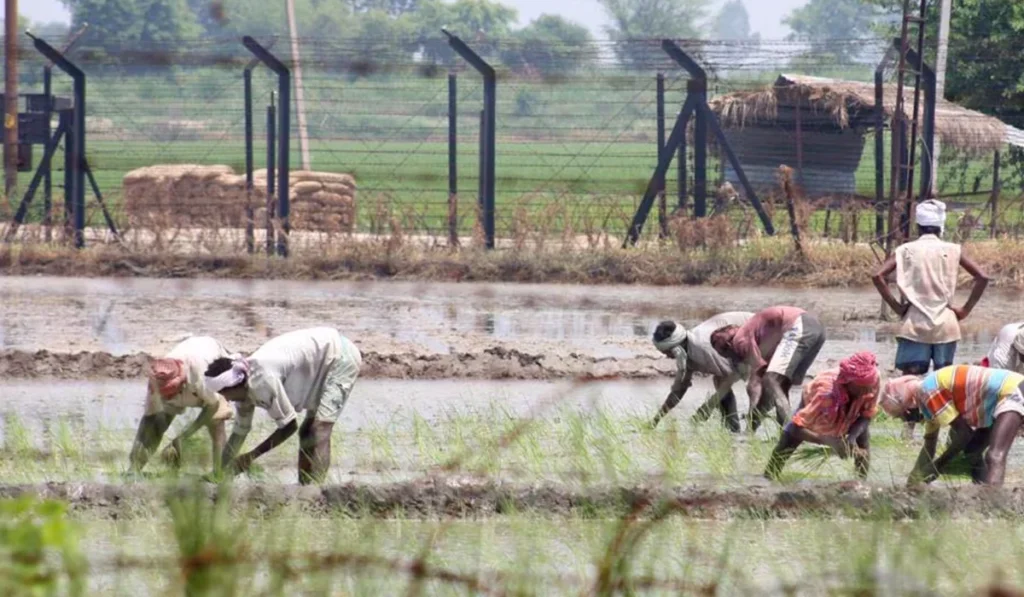
By the way, farming on the India-Pakistan border is no less than winning a war. While the common farmer can come and go in his fields as per his wish, the border farmers are forced to work on their own land as ‘government duty’. There are thousands of acres of land beyond the Kandiali wire where the fate of farmers depends on the clock and safety rules. BSF was the first to help the farmers in their field. Identity cards have to be shown at the checkpoints. The biggest problem is time; Farmers can work only for 6-7 hours. After this stipulated time, they are not allowed to stay in the fields, even if the crop needs water or it is the crucial time of harvest.
The reeds along the banks of Sutlej, Beas and Ravi rivers are richly populated by wild boars and blue cows. These animals from Pakistan enter Indian fields. The farmer works hard during the day, but because he is not allowed to keep watch at night, wild animals destroy his crops. Well, let’s see what decisions the governments take in the future in favor of these farmers? But if in a short time the barbed wire on the border is removed and comes closer to the zero line, then many farmers will get the benefit and these border farmers will also be able to do farming like other farmers.



Leave a Comment