
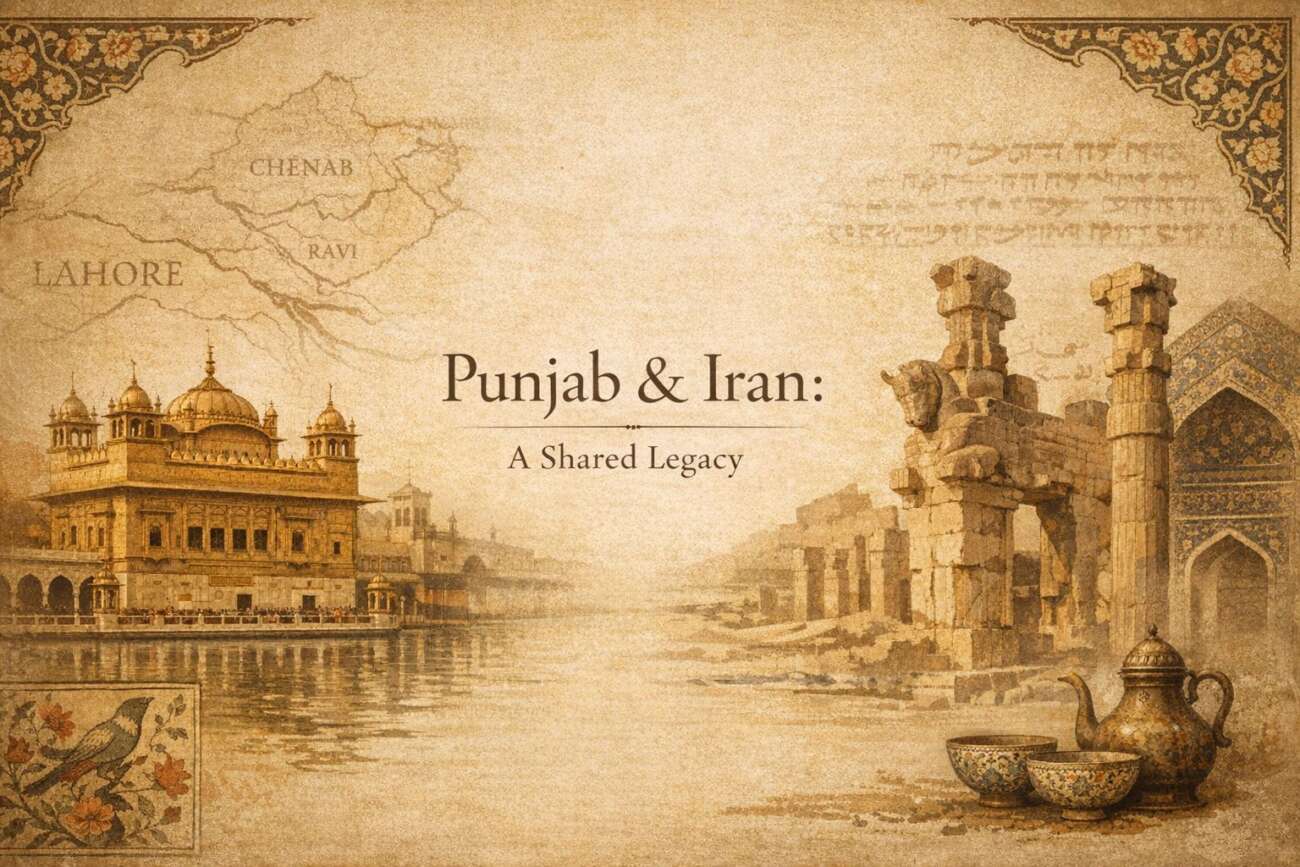

Origins of the Word “Punjab”
The word Punjab is derived from two Persian words:
• Panj meaning “five”
• Aab meaning “water”
Thus, Punjab literally means “the land of five rivers”—Sutlej, Beas, Ravi, Chenab, and Jhelum.
Persian is primarily spoken in Iran, and the very origin of the term “Punjab” reflects the deep historical connections between Punjab and Iran.
Early Contacts and Cultural Exchange
Following the invasion of Muhammad bin Qasim in 712 CE, many Muslim settlers came to the Sindh region. This led to a blending of local languages with Arabic, giving rise to Sindhi.
Beyond Sindh, the rest of northern India, including Punjab, was associated with Hindavi, an early form of Indo-Aryan speech.
When Mahmud of Ghazni established his rule over Punjab, the local language in Lahore was Hindavi. However, from the 11th century onward, Persian became the official language of administration under Ghaznavid rule.
From 997 CE to 1184 CE, Punjab remained part of the Ghaznavid Empire. During this time:
• Persian gained prominence as the administrative and literary language
• Scholars, poets, and administrators from Iran and Central Asia migrated to Punjab
Lahore emerged as a major intellectual and literary center for Persian scholars.
Ancient Persian Influence
Historical accounts suggest that parts of Punjab, particularly western regions, were once under the Achaemenid Empire during the reign of Darius I (522–486 BCE).
This region was then known as Sapta-Sindhu (Land of Seven Rivers). The Achaemenid Empire, founded by Cyrus the Great, extended into parts of the Indian subcontinent.
These early political and cultural connections laid the foundation for long-term Persian influence in Punjab.
Medieval Period: Persian as a Cultural Bridge
During the Delhi Sultanate and Mughal periods:
• Persian remained the court language
• Major literary works were written in Persian
Examples include:
• Akbarnama by Abul Fazl
• Tuzk-e-Jahangiri (Jahangir’s autobiography)
• Dabistan-e-Mazahib by Mohsin Fani
• Maktubat-e-Imam Rabbani by Sheikh Ahmad Sirhindi
Trade relations between Punjab and Iran also flourished, particularly in horses, during the time of Guru Arjan Dev Ji and Guru Hargobind Sahib Ji.
Sikh Gurus and Persian Influence
- Guru Nanak Dev Ji is believed to have traveled westward during his Udasis, with traditions suggesting visits to regions influenced by Persian culture (though exact Iranian city visits require verification).
- Guru Gobind Singh Ji’s famous Zafarnama, written to Mughal Emperor Aurangzeb in 1705, was composed in Persian.
Even Maharaja Ranjit Singh retained Persian as the official language of administration in his court.
Migration and Punjabi Presence in Iran
In the early 20th century (1900–1920), people from undivided Punjab, especially from Rawalpindi, migrated to Iran in search of economic opportunities.
They settled in regions such as:
• Zahedan
• Tehran
Some Punjabi farmers even established agricultural communities in Iran.
Anecdotal Cultural Exchange
A popular anecdote recounts that an Iranian ruler, upon seeing Sikh farmers with turbans and long beards, mistook them for holy men and showed them deep respect. This story symbolizes the cultural admiration between the two regions, though it remains anecdotal and not historically verified.
Sikh Presence in Modern Iran
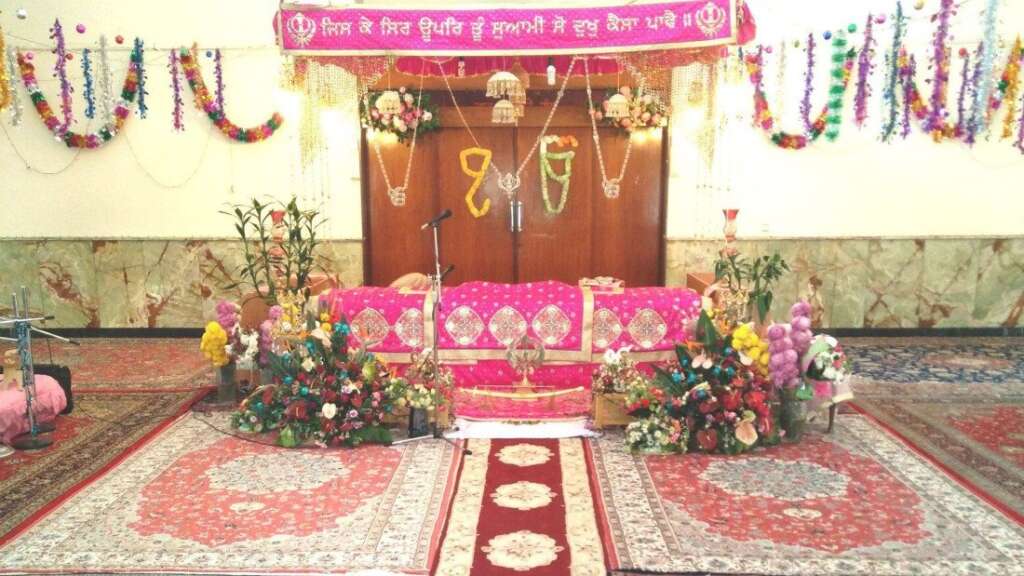
Today, small Sikh communities exist in Iran, particularly in:
• Tehran (Gurdwara Bhai Ganga Singh Sabha)
• Zahedan
Indian leaders, including former Prime Ministers Atal Bihari Vajpayee and Narendra Modi, have visited Sikh religious sites in Iran.
Continuing Academic and Cultural Links
Scholars like Professor Harpal Singh Pannu have contributed to academic exchanges between Punjab and Iranian institutions, further strengthening intellectual ties.
Persian Influence on Punjabi Vocabulary
A large number of everyday Punjabi (and Hindi-Urdu) words are derived from Persian, such as:
• Darwaza (door)
• Kitab (book)
• Duniya (world)
• Bazaar (market)
• Khabar (news)
• Jawab (answer)
• Sawal (question)
• Mehnat (hard work)
• Dost (friend)
• Zameen (land)
• Hukumat (government)
• Adalat (court)
• Muhabbat (love)
• Tareekh (history/date)
• Safar (journey)
• Aman (peace)
• Jang (war)
These linguistic overlaps reflect centuries of deep cultural interaction.
Punjab and Iran share a long and layered historical relationship shaped by:
• Political contact
• Migration
• Trade
• Language
• Cultural exchange
Persian influence has significantly shaped Punjab’s administrative systems, literature, and vocabulary. This connection continues to be visible even today in language, culture, and shared heritage.
Leave a Comment