
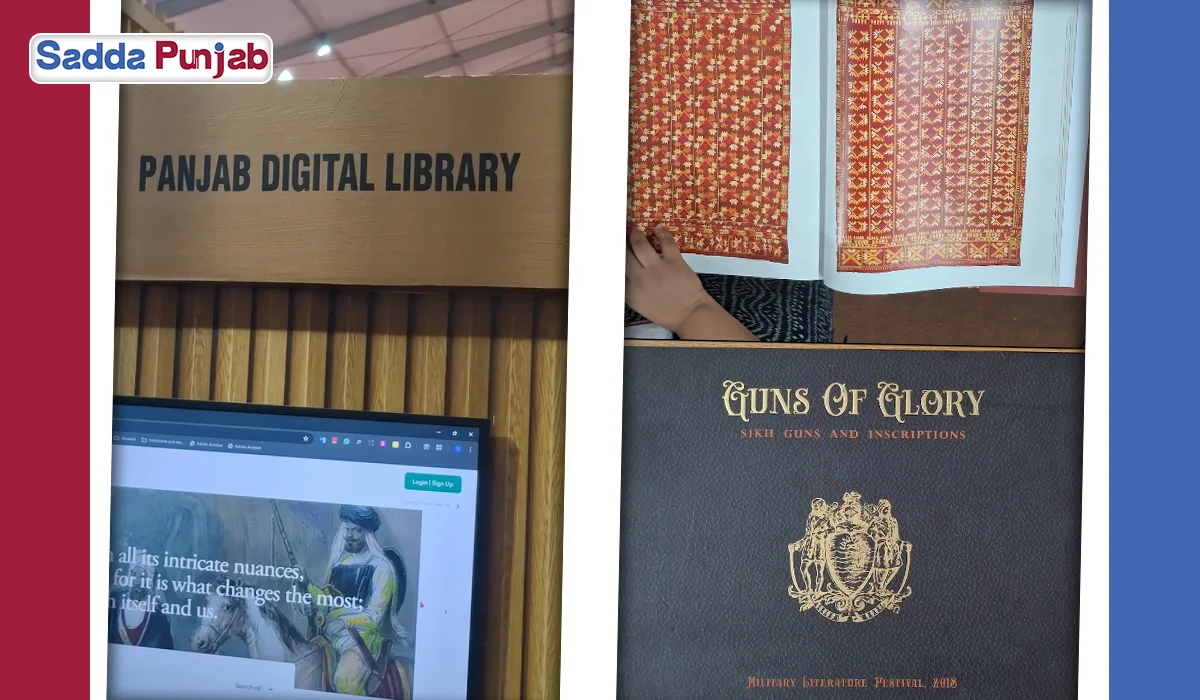

In today’s digital age, when historical documents are disappearing under the pressure of time, the Panjab Digital Library (PDL) in Chandigarh has emerged as a ray of light that opens centuries-old history with a single click. It is a voluntary institution that has, for more than two decades, been working to digitally preserve Punjab’s cultural, religious, and historical heritage and make it accessible to people.
Foundation and a Journey of Struggle
The Panjab Digital Library was founded on 20 April 2003 by Davinder Pal Singh and Harinder Singh. In its early days, this journey reportedly began with just a 3.2-megapixel camera and one computer. Despite very limited resources, the founders travelled across towns and villages in Punjab, carrying heavy equipment by public transport, to digitize rare manuscripts and archival material. Today, the organization has grown significantly and works with a large network of volunteers and specialists. The official site confirms the founding year and the co-founder details, while older coverage and PDL materials support the modest beginnings narrative.
A Massive Digital Collection and Key Numbers
The Panjab Digital Library has now crossed 100 million digitized pages, making it the largest digital resource in the world focused on Punjab and related material. That overall milestone is supported by PDL’s official web presence and recent public updates.
Its collection includes the following important categories:
Religious and Manuscript Holdings
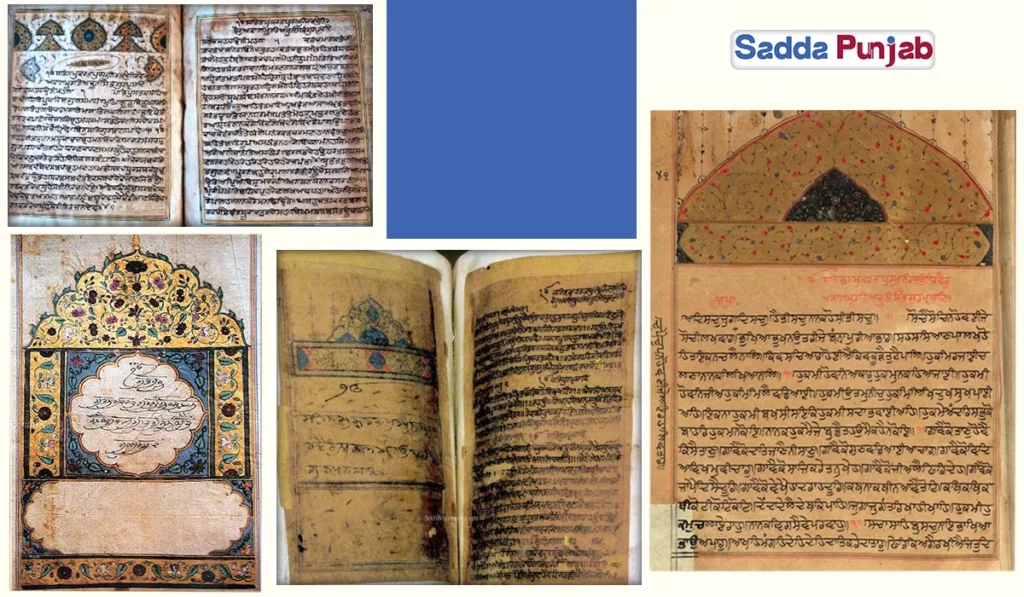
The archive includes 12,350+ manuscripts. Public descriptions of the collection say it includes rare Sikh manuscripts, old birs of Guru Granth Sahib, and manuscripts from other traditions as well. The article’s specific examples, such as a 1653 bir, may be true, but those particular item-level claims are not directly confirmed in the sources I checked and should be cited separately if retained.
Official and Legal Records
The library holds a very large collection of official and administrative files, including pre-1947 records. Publicly available summaries mention 545,000+ files (pre-1947) and thousands of legal documents. The article’s number of 6,50,000+ historical official files appears directionally close but is higher than the publicly surfaced summary I found, so that figure should be verified before final publication.
Printed Literature
The collection includes large numbers of books, newspapers, magazines, articles, pamphlets, and posters. Recent summaries place these at roughly 87,700+ books, 40,000+ newspapers, 18,600+ magazines, 47,000+ articles, 3,900+ pamphlets, and 2,700+ posters. The Punjabi article’s numbers are somewhat higher in some categories, so those category-specific figures should be checked against the latest official PDL dataset if precision matters.
Art and Cultural Material
The archive also includes 211,000+ photographs, 33,000+ coins, 10,700+ maps, thousands of poems, and a large number of artifacts and visual records. The article’s count of 50,000+ artifacts is lower than one 2025 report that cited 60,000; similarly, some map and poem numbers vary by source and year, so these should be treated as evolving totals rather than fixed figures.
Institutional Partnerships and Technical Capacity

PDL has played an important role in digitizing records connected with major institutions, and its official materials say it has worked on manuscripts, books, official records, newspapers, paintings, pictures, and architectural material. The article names institutions such as the SGPC, the Punjab Language Department, the Punjab Vidhan Sabha, and the Chandigarh Museum. Those specific partnerships are plausible, but I did not find all of them independently confirmed in the sources surfaced here, so those named collaborations should be retained only if you have direct documentation.
The article also says PDL can digitize about 50,000 pages per day and keeps backups at six different locations. I did not find a primary published source for those two operational details in the search results, so they should be treated as unverified unless you have internal or official confirmation.
Access for the Public and Researchers
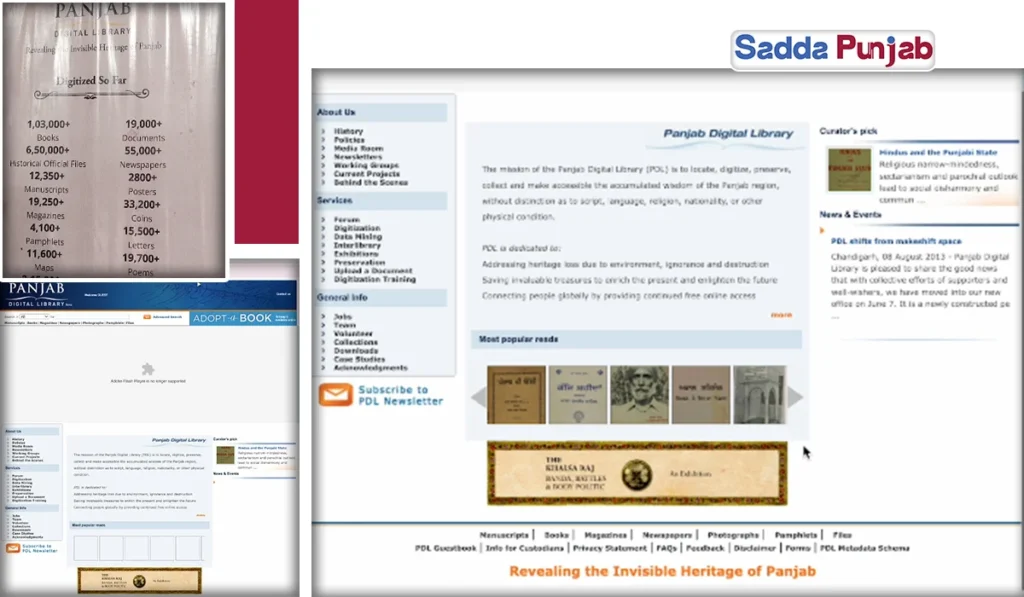
One of the organization’s core aims is to make knowledge widely accessible. The library was launched online for public use in August 2009, and its official site offers access to a wide range of searchable material.
The article says that more than 12 lakh people have used the service and that around 50,000 researchers and students visit the website every month. I did not find an official current traffic source for those exact usage numbers in the surfaced materials, so those statistics should be verified before publication.
The article also says the institution has held exhibitions at 100+ locations worldwide. PDL clearly runs exhibitions and public outreach programs, but I did not find a source in this search that confirms that exact number.
More Than an Archive
The Panjab Digital Library is not just an archive. It is a living institution that helps keep Punjab’s memory alive. It works to preserve Punjabi and Sikh heritage without discrimination of language, religion, or nationality, and efforts like this are essential for passing a rich legacy on to future generations. That broader characterization is consistent with PDL’s own mission statements and public descriptions.

Leave a Comment