
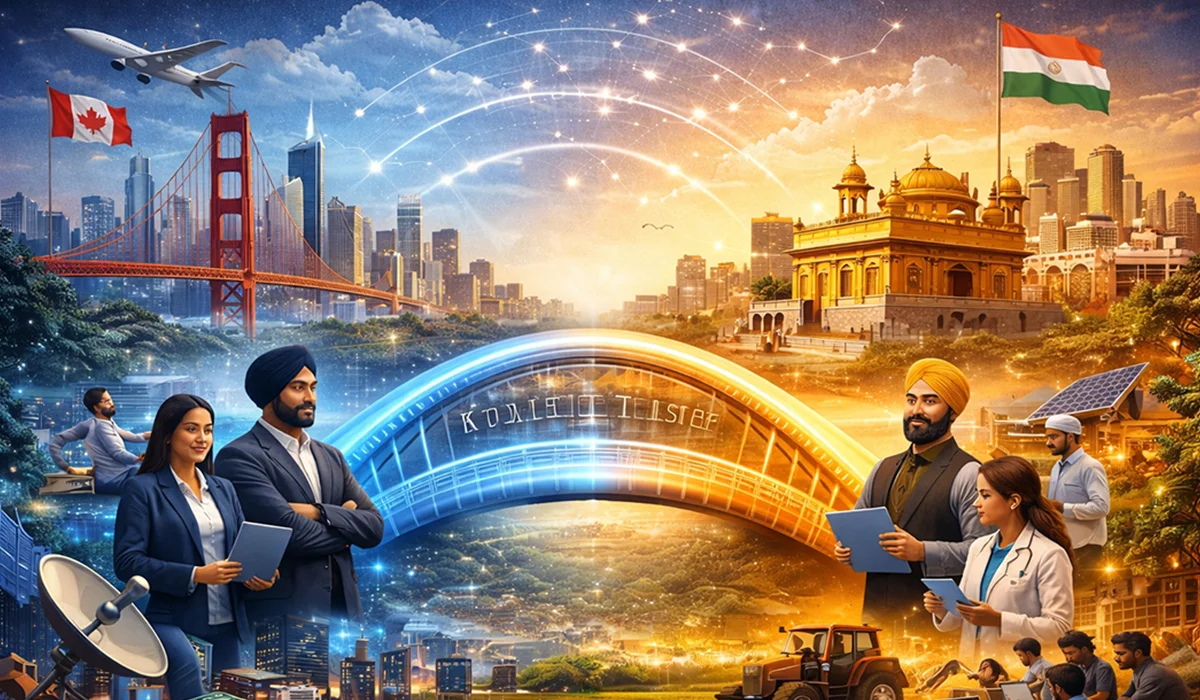

The journey from the fertile plains of the Indus River to the digital corridors of Silicon Valley is one of the most compelling stories of the modern global economy. For decades, members of the Punjabi and broader Indian diaspora have been among the most influential contributors to the global technology ecosystem. Many began as migrant engineers and gradually emerged as founders, investors, and institution-builders—leaders who are now channeling their global experience back into India’s next phase of economic transformation. This success is not merely about individual wealth, but about “brain circulation”, where roots planted in Indian soil continue to nourish the country’s growth across oceans.
Foundation: How India has produced global leaders
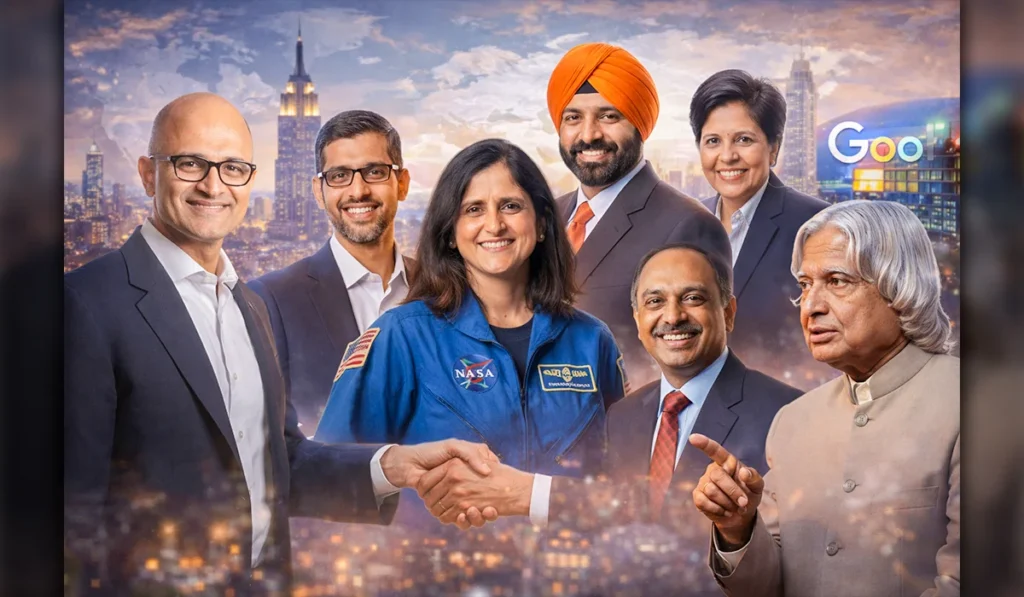
The global recognition achieved by diaspora leaders was not accidental. It was built on a strong institutional foundation laid by the Indian state. The establishment of premier institutions such as the Indian Institutes of Technology (IITs) and respected regional engineering colleges provided world-class technical education at a fraction of global costs. This publicly funded system gave many Indian students—including a significant number from Punjab—a decisive competitive edge, enabling them to enter global markets not merely as employees, but as innovators and leaders.

The economic liberalisation of 1991 proved to be a decisive psychological and structural turning point. It marked India’s shift from an era of economic restraint to one of aspiration and global engagement. The “Bandh Bharat” of regulation-heavy policies gradually opened into a “Global Bharat,” encouraging overseas Indians to reconnect economically with the motherland. This shift laid the groundwork for a strategic partnership between the diaspora and India, further strengthened by initiatives such as the Overseas Citizen of India (OCI) status, which allowed lifelong legal and emotional ties with the country.
Pioneers: Engineering the Modern World
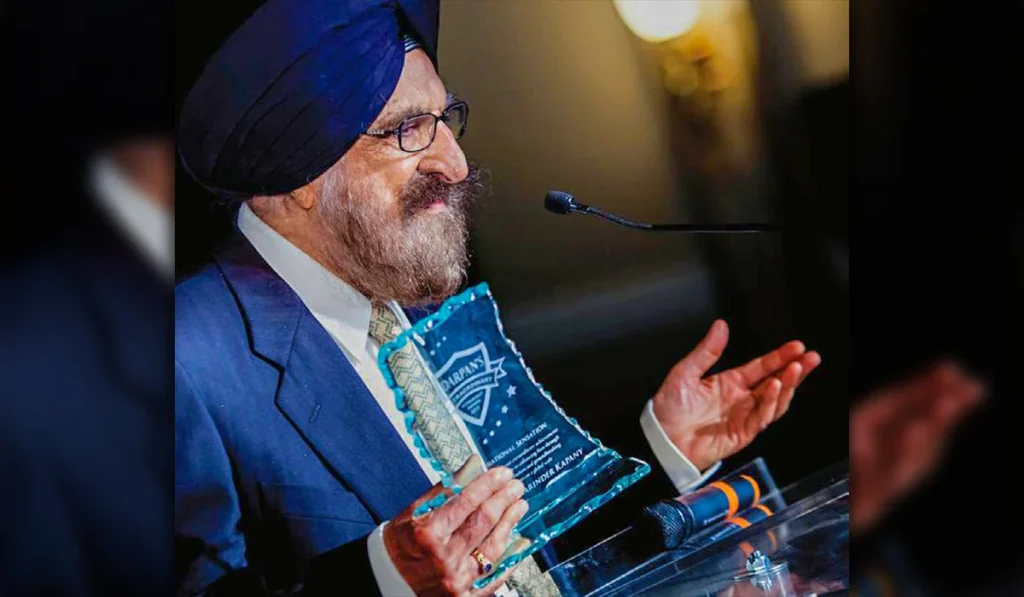
Early pioneers combined rigorous Indian education with resilience, adaptability, and a strong sense of cultural confidence. Among the most influential was Dr. Narinder Singh Kapani, widely regarded as the “father of fiber optics,” whose innovations laid the technological foundation of modern internet infrastructure.
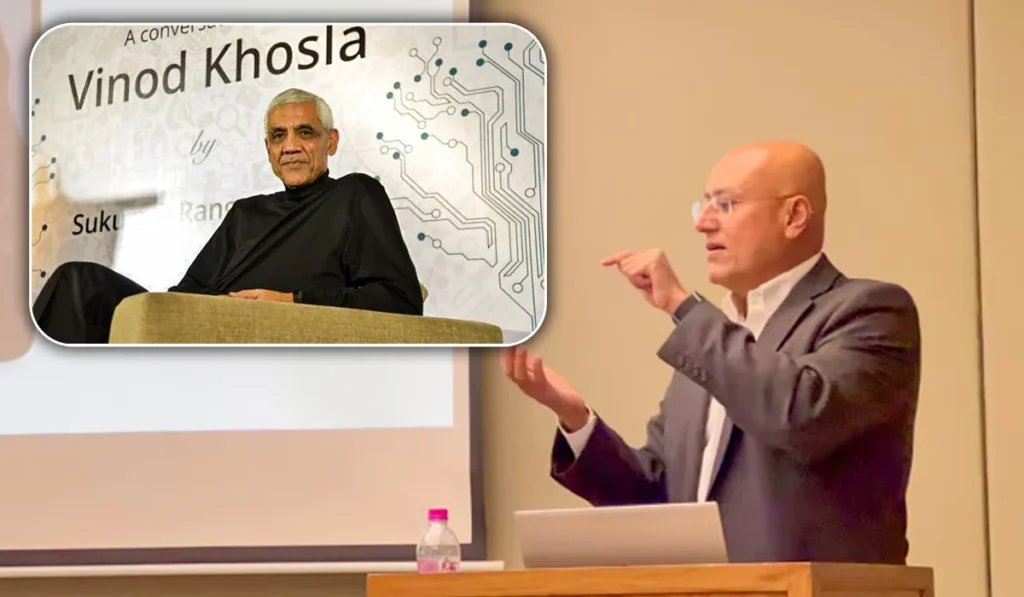
They were followed by a broader wave of Indian-origin visionaries who transitioned from laboratories to boardrooms during the 1980s and 1990s. Figures such as Vinod Khosla, co-founder of Sun Microsystems and later a leading venture capitalist, along with entrepreneurs like Sabir Bhatia and Kanwal Rekhi, demonstrated that Indian-origin leadership could shape the global digital economy. Their success helped establish a template for innovation rooted in technical excellence, risk-taking, and long-term vision.
The Power of Networks: TiE and Beyond

A major contribution of this diaspora was the institutionalization of consulting. In 1992, a group of entrepreneurs, including Kanwal Rekhi, helped start TiE (The Indus Entrepreneurs). This network acted as a bridge, connecting experienced veterans of the valley with newcomers and creating a collaborative ecosystem. This “founder-to-funder” model ensured that success was not an isolated event, but a process that could be replicated and lifted the entire community.
An Unbreakable Bond: More than just sending money

Despite living thousands of miles apart, these entrepreneurs have a deep connection to India. This bond is rooted in the Punjabi spirit of “Vand Chhakko” – the duty to share one’s success with society. This relationship is not just about sending money; it is a thoughtful exchange of social and intellectual capital. These “silicon sardars” maintain their connections by connecting with Indian policymakers and acting as informal ambassadors for Indian talent. Their emotional investment is evident in how much they prioritize Indian startups, often choosing to mentor young founders from Chandigarh, Bengaluru, or Delhi rather than other emerging markets. For him, success in the Valley is a way to showcase and elevate Indian identity on a global scale.
Investment Cycle: Fueling the $5 Trillion Dream
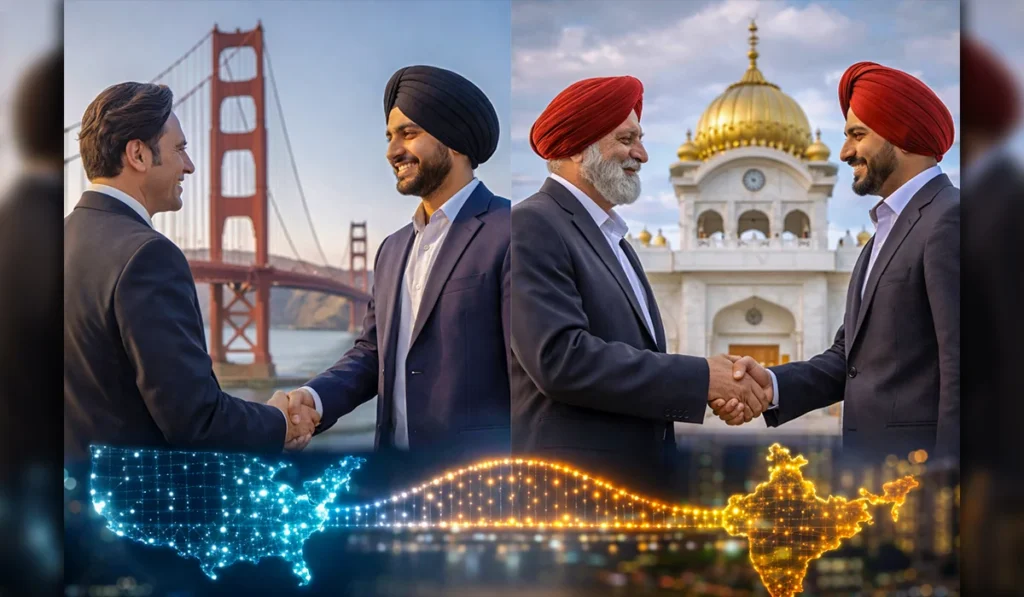
Today, this relationship has evolved into a powerful investment and influence cycle. Indian-origin leaders within global venture capital firms such as Sequoia Capital and Accel have played a major role in shaping India’s startup ecosystem by bringing Silicon Valley standards of governance, scalability, and execution.

Alongside them, global institutional leaders such as Ajay Banga, now President of the World Bank, have consistently advocated for capital access, financial inclusion, and institutional reforms that directly benefit emerging economies like India—strengthening global confidence in India’s growth trajectory.
Venture Capital and Unicorns:
Punjabi-origin leaders of global firms like Sequoia and Accel, as well as figures like Ajay Banga (President of the World Bank), have invested billions of dollars in the Indian startup ecosystem. They bring the “Silicon Valley playbook” – focused on hyper-scalability, world-class governance and execution.
Agriculture and Renewable Energy: Recognizing Punjab’s heritage, many are investing in clean agriculture and solar energy in their home state. These startups aim to address the challenges posed by the Green Revolution and help “food providers” transition to the digital age.
As artificial intelligence reshapes global business models, Indian-origin leaders are increasingly leveraging India’s engineering depth to build global SaaS and AI-driven platforms. In this evolving corridor, California provides capital, vision, and market access, while India supplies technical scale, execution capability, and innovation velocity, creating a mutually reinforcing economic loop.
A seamless economic corridor

The story of diaspora entrepreneurship is ultimately a story of cultural resilience and institutional foresight. By connecting innovation hubs like Palo Alto with the untapped potential of India’s cities and towns, these global Indians have helped create a seamless economic corridor. As India moves toward becoming a major global economic and technological power, this bridge—built on knowledge, trust, and shared identity—continues to ensure that the flame of excellence remains both global in reach and rooted at home.

Leave a Comment