
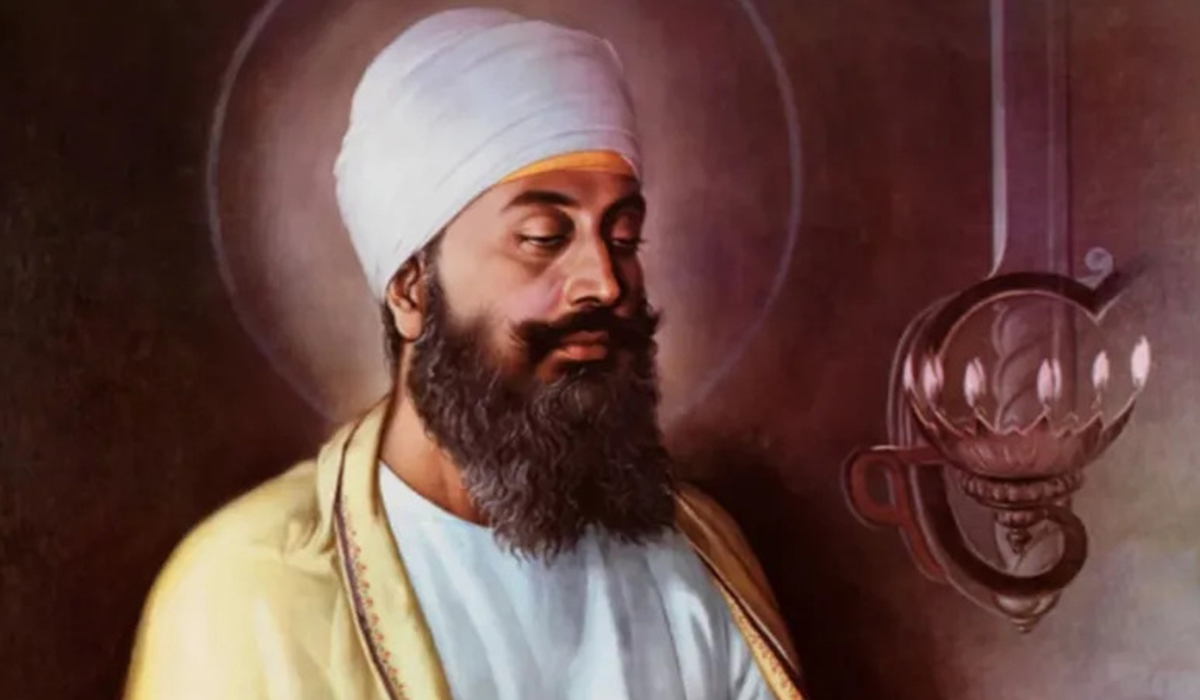

It was May 25, 1675. During the reign of Emperor Aurangzeb, policies of religious coercion and persecution were reported in several regions. The physically and mentally suffering Kashmiri Pandits, having exhausted all appeals for relief, came to the shelter of their ninth Guru, Sri Guru Tegh Bahadur Ji, and narrated their entire ordeal. The Pandits were deeply troubled by the actions of the newly appointed Mughal governor of Kashmir, Iftikhar Khan. The Mughal authorities were already uneasy with Guru Ji’s independent religious and social influence, and when a delegation of 16 Pandits led by Pandit Kirpa Ram reached Guru Ji, they described reports of forced conversions, destruction of temples, and threats of death for refusal to convert. Guru Ji encouraged the Pandits and reminded them that no one returns empty-handed from the door of Guru Nanak Sahib. Guru Ji said:
“Whoever takes refuge with me, I will stand for their cause.”
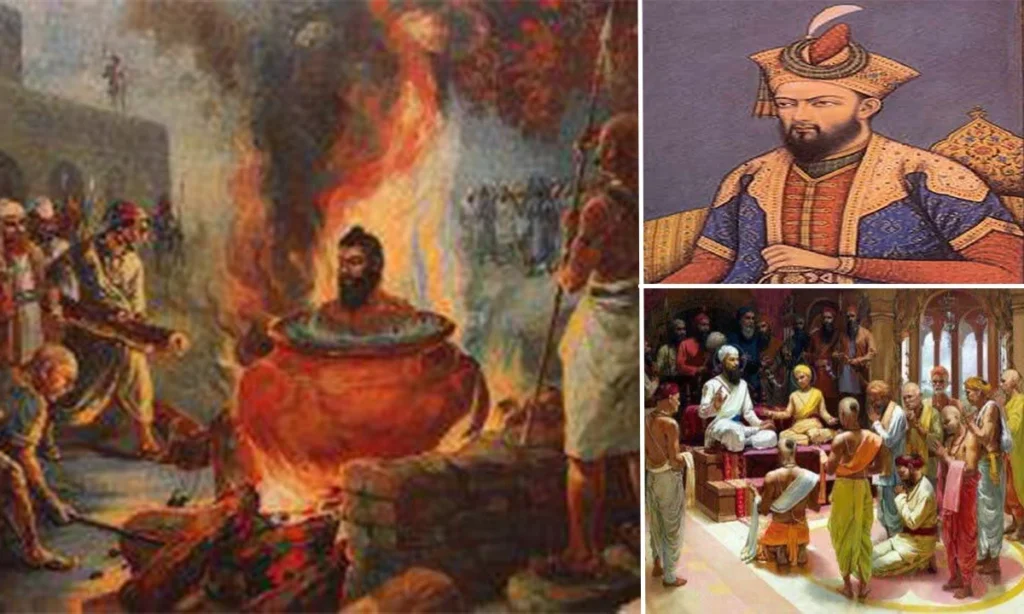
Pandit Kirpa Ram was a respected preacher of Sikh principles in Kashmir. Guru Ji was requested to convey to Iftikhar Khan and pass on a message to Aurangzeb that if Guru Tegh Bahadur Ji were to accept Islam, the Kashmiri Pandits would follow. Guru Ji reflected deeply and then stated that to stop such oppression, the sacrifice of a great and holy soul would be required. As the entire congregation contemplated Guru Ji’s words, his own nine-year-old son, Guru Gobind Rai, immediately said, “Father, who is greater and holier than you?” Guru Ji was deeply moved by the courage and fearlessness of young Gobind Rai.
When this message reached Aurangzeb, Mughal actions intensified. On July 8, 1675, orders were issued for Guru Sahib’s arrest. Before any arrest could be carried out, Guru Ji handed over the Guruship to Guru Gobind Rai and, along with a small group of Sikh companions, set out towards Aurangzeb. Near Bassi Pathana, they were surrounded by Thanadar Noor Mohammad Khan, who commanded a large force. To prevent unnecessary bloodshed, Guru Sahib surrendered himself to Noor Mohammad along with Bhai Mati Das, Bhai Sati Das, and Bhai Dayala Ji, and directed the remaining Sikhs to return to Sri Anandpur Sahib.
Extreme cruelty and test of Sikhism
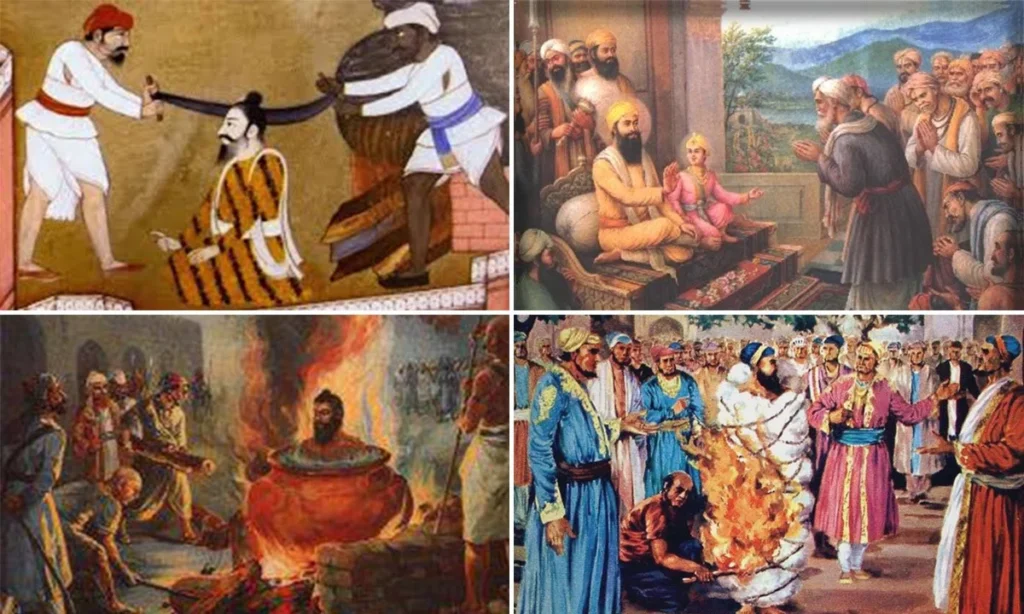
For several weeks, Guru Sahib and his three companions were imprisoned and subjected to severe hardship in the fort of Bassi Pathana. Later, on the orders of Aurangzeb, they were taken to Delhi in iron cages. According to historical accounts, on November 3, 1675, they were brought to the Kotwali of Chandni Chowk and the following day presented before the then Governor of Delhi, Safi Khan. The Governor demanded that Guru Sahib display a miracle, which Guru Sahib firmly refused. On November 5, a royal order was issued that if Guru Sahib did not show a miracle, he must accept Islam. Qazi Abdul Wahab directed that every possible attempt be made to force his conversion.
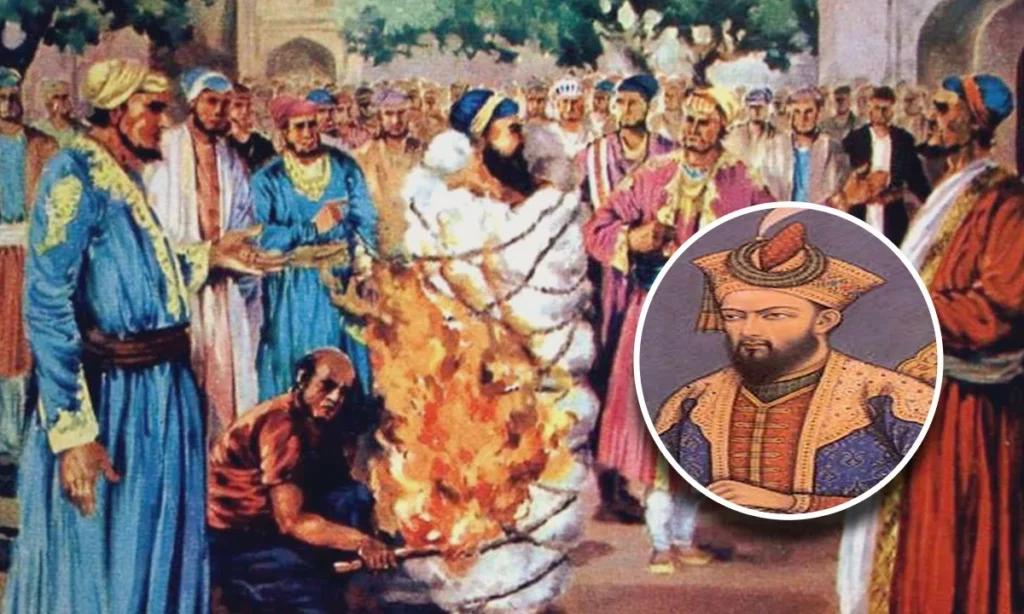
When these efforts failed, the order was given to punish Bhai Mati Das, Bhai Sati Das, and Bhai Dayala Ji in front of Guru Sahib. On November 10, 1675, the companions of Guru Sahib were executed in a manner that still causes deep anguish when remembered. Bhai Mati Das was executed by being sawn apart, Bhai Sati Das was martyred by being burned, and Bhai Dayala Ji was executed by being boiled alive. These brutal acts were intended to break Guru Sahib’s resolve, but he remained unshaken.
Seeing that these torments had no effect, the Qazi pronounced a final decree calling for Guru Sahib’s execution, with the intention of displaying the punishment publicly across the city gates. On November 11, 1675, carrying out this decree, the executioner Jalaluddin severed the head of Guru Tegh Bahadur Sahib from his body at Chandni Chowk beneath a public platform. The people of Delhi witnessed this scene in stunned silence and fear.
Bravely saved the body of the Guru from sacrilege
To protect the sacred remains of Guru Sahib from desecration, several Sikh devotees gathered secretly. According to Sikh tradition, Bhai Jaita, along with Bhai Nanu and Bhai Uda, reached the Chandni Chowk Kotwali after midnight. Acting swiftly under the cover of darkness, Bhai Jaita and Bhai Nanu carried the sacred head to Bhai Jaita’s residence. The next day, they transported it to Anandpur Sahib, where Guru Gobind Rai Ji performed the final rites of the sacred head with full honour.
Similarly, Bhai Lakhishah Vanzare, accompanied by his three sons Nagahiya, Hema, and Hari, removed the body of Guru Sahib from Chandni Chowk before dawn. They concealed the body in a cart loaded with rice and moved rapidly through the city. Before daylight, they cremated the body of Guru Tegh Bahadur Sahib according to Sikh rites at their own home. To avoid suspicion, they set their house on fire and raised an alarm. When Mughal soldiers arrived, nothing unusual was discovered. The site of this sacrifice is today revered as Gurdwara Rakab Ganj Sahib.
Guru Sahib’s Bani
The Bani of Sri Guru Tegh Bahadur Ji is preserved in Sri Guru Granth Sahib in 15 ragas, including Bihagra, Gauri, Asa, Devgandhari, Sorathi, Dhanasri, Todi, Tilang, Bilawal, Ramkali, Maru, Basant, Basant Hindol, Sarang, and Jaijaywanti. His verses are primarily addressed to the human mind, guiding it towards detachment and inner discipline. Guru Sahib says, “Jag Lehu Re Mana Jag Lehu Kaha Gafal Soya” (Tilang M 9). Sri Guru Granth Sahib Ji thus preserves Guru Tegh Bahadur Ji’s spiritual legacy within Sikh scripture.
Born on April 1, 1621, in Amritsar to Guru Hargobind Ji and Mata Nanaki, Guru Tegh Bahadur Ji was the youngest of five siblings. From childhood, he displayed a calm, resolute, and fearless nature, often remaining absorbed in deep meditation. After Guru Hargobind Sahib Ji’s passing, he settled in the village of Bakala, where he spent nearly 20 years in contemplation and meditation. Under his father’s guidance, Guru Tegh Bahadur Ji was trained in spirituality, arms, governance, and political awareness. He was dignified, learned, brave, and spiritually accomplished.
Guru Tegh Bahadur Ji’s sacrifice is widely seen as a defence of religious freedom and Sanatan traditions during Mughal rule. His martyrdom stands as a timeless testament to the protection of conscience and belief. The land of Hindustan remains forever indebted to this supreme sacrifice, which continues to inspire humanity across generations.


Leave a Comment