


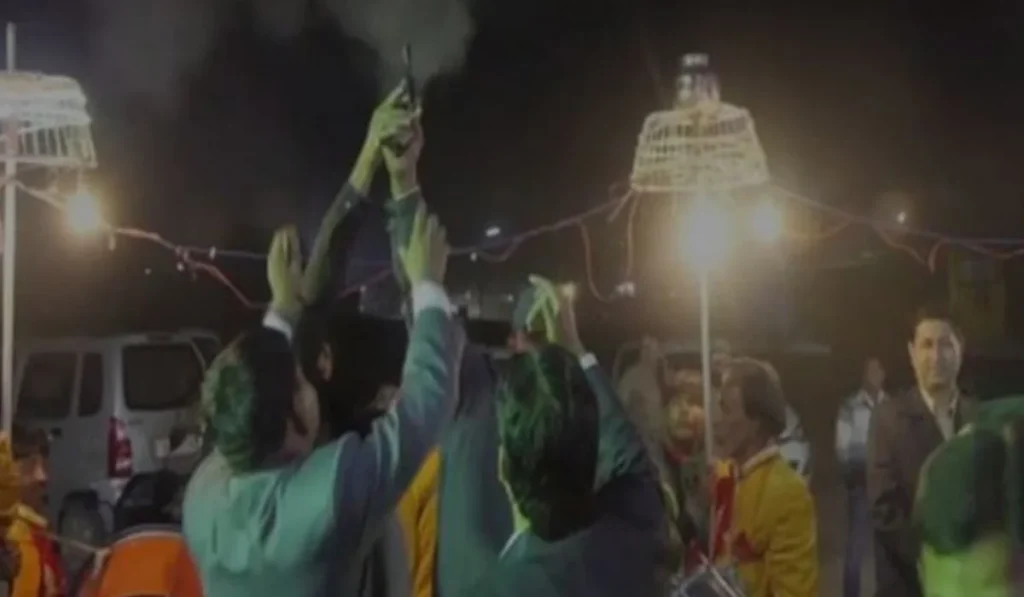
We often hear/see discussions about gangsters and gun culture in Punjab. Its reflection is always seen in songs, music and cinema. There have also been cases of posting photos with weapons on social media and waving licensed weapons at weddings. Cases of deaths due to gunfire at weddings have also been in the news in the past.
Although the government is now claiming to put an end to it with a heavy hand. Similarly, gang incidents have also given rise to a violent atmosphere in Punjab. Where do their roots lie?
Gang war incidents have been happening in Punjab in the past too. Gangster culture is the modern form of the old valley (badmash or lampan) of Punjab. They have been getting full support from political parties and leaders. This goon-politician-police nexus is so strong that gangsters sitting in jail run their gangs from there. It is a common belief among the people of Punjab that the major political parties have nurtured their own gangs of goons who use the youth for their own vested interests and when the need is over, such youth are left to their own devices or even killed. Former gangster Lakha Sidhana often says in his speeches and interviews that he has been working for many big leaders and after the need is fulfilled, they left him. Political leaders, allegedly, use the services of these gangs to run illegal occupations, extortion and drug trade, corner their opponents, beat up social activists and suppress mass movements.

During the Congress government from 2002 to 2007, it was a common discussion that some Congress leaders had nurtured gangsters for their illegal activities. Things were no different under the Akali-BJP rule from 2007 to 2017, as the number of gangs kept increasing. It was not hidden from anyone that which leader of the Akali Dal gets gangsters to do their illegal work. Even during the Congress government from 2017 to 2022, the activities of gangsters did not stop. Gang incidents are also happening during the current AAP government. Although the Punjab government has taken police action against gangs, but hasn’t gone into the root cause of the issue. Thus, there are allegations of illegal police encounters by the police. Critics say that police action is welcome, but fake encounters are anti-democratic.
The late Punjabi scholar and writer Principal Sant Singh Sekhon used to say in many places in his speeches, “Those who fight the activists of leftist student organizations in educational institutions, they go on to rule Punjab.” Students and youth organizations of major parties have also become coaching centers for recruiting gangster gangs. Speaking about gun culture in Punjab, renowned sociologist Professor Bawa Singh says, “The feudal system and society was a kind of gangster society, which the feudal lords maintained with their external piety and more or less kindness, claiming to be honorable. After the collapse of the feudal system, gangs started forming which gained power and wealth through the world of crime. The current gangs of Punjab are a modified form of the old dacoits and ransom gangs. Their arrival in Punjab came through the ransom gangs of Uttar Pradesh.

Bawa Singh further says, “The arrival of gangs in Punjab started from 2004-05 and reached its peak by 2010.” Explaining the phenomenon, Bawa says that student organization of a leading political party became the recruitment base of these gangs. He adds that many gangs emerged from this student organization, many of which are still active in Punjab today. “When these gangs started operating in colleges and universities, their photos were published with big leaders, and they started being questioned in police stations. It is then that these gangs and their leaders became a kind of celebrity in the eyes of the 18-19 year-old youth studying in colleges. For some reason, the youth who were victims of inferiority complex also started feeling that this would create a buzz in the society and girls would be attracted towards them,” says Bawa explain the rise of youth members in these gangs.
Bawa says, “Initially Panjab University, Chandigarh and colleges in Chandigarh became the base of these gangs. Then the student organization in question strengthened its base in the Punjab University student union elections.” Bawa adds that this was the time when the party, to which the student organisation was aligned, was in power and gave full support to its student wing, and a top leader often visited these educational institutions and addressed the meetings of the organisation. “In the rest of the universities and colleges of Punjab, student elections have not been held for many years, and gangs, supported by the then ruling party, started making college presidents on their own. This has attracted a section of the rural youth of Punjab towards these gangs. In the heritage of Punjab, weapons have been considered a symbol of valor. The reason for this is also the geographical environment of Punjab. This is the reason why weapons attract the youth of Punjab more. I have my own belief that whether Sant Bhindranwale hands weapons in the hands of the youth of Punjab, whether Naxalites or gangsters hand them over, the youth is drawn towards them. The mental stress of the capitalist era, unemployment and indifference towards the system also force the youth to follow this path,” says Bawa in his analysis of the current situation.

Gangs continue to fight each other, threaten each other and even kill each other. In recent years, most of the gangsters’ killings have been due to mutual enmity or group fights. The Punjabi music and film industry has also been affected by the gangs’ grip. In the 1990s and early 21st century, Punjabi songs underwent many changes in terms of style and technique, but the basis remained the same, such as feudal culture, love for feudal values, weapons, anti-women mentality, flaunting one’s wealth, violence, etc.
In the 21st century, Punjabi singing featured weapons, attracting girls to oneself through weapons, violence and gangster culture in such a way that the girl herself tells her lover to become a valley (gangster). One such song by Miss Pooja and Preet Brar is
Hun takk neeve reh reh ke aasin, ghutt sabar de bhar le
bari kra lun tainu aape, vech ke panj-satt marle
Valley Ban Mitra Bade drave Jar Ley
See some examples of such songs,
Valley Di Akh Aj Lal Ae
Koi Banda-Bunda Marana Tan Das” (Singer Bali Riar)
kadh ke de de Rafal do- naali
Naal Peti Rondaan Wali,
Lahu Jinha Ne Pita Sada bina sodhiyaan Nahi Sarda Sadda.
Ni Aaj Banda Maran Nu Ji Karda (Harjit Harman)
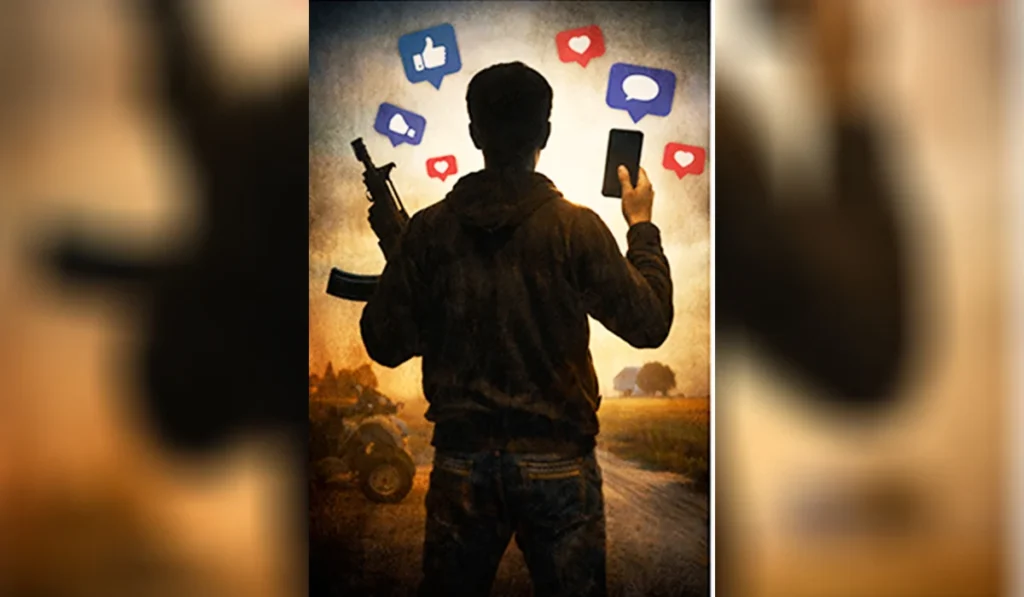
The era of terrorism in the 1980s, during which both the police and the terrorists attacked Punjab’s villages, causing great damage to Punjab. A large part of the youth born after that is devoid of political consciousness. A large part of the generation born in the late 1990s and in the 21st century has ancient history of Punjab, Sikh history, Gurbani, Sufi tradition, ancient great literature, freedom movement, Bhagat Singh, Kartar Singh Sarabha, Ghadar movement, turban maintenance There is either no knowledge about the Jatta movement, Kuka movement, Babbar Akali movement, Partition, the political, social and economic situation of Punjab after independence, or if there is, it is based on hearsay and limited facts. For this young generation, who is disconnected from the heritage and reality of Punjab, Bhagat Singh is a hero, as is Bhindranwale. He even picks up Kejriwal’s broom, he also likes Bhagwant Mann’s words, he also sees ‘gems of the nation’ in Deep Sidhu and Sidhu Moosewale.
Regarding the crisis of Punjab’s youth, Punjabi playwright Dr. Sahib Singh says, “The youth of Punjab is currently wandering in a big vacuum. The youth, disconnected from their roots and history, runs after whatever idea they find exciting. Later, when they come to know the reality of that idea, they then go into despair.”
Disclaimer: The views expressed in this article belong solely to the author and do not reflect the views or opinions of DNN24 or any affiliated organization.


Leave a Comment