

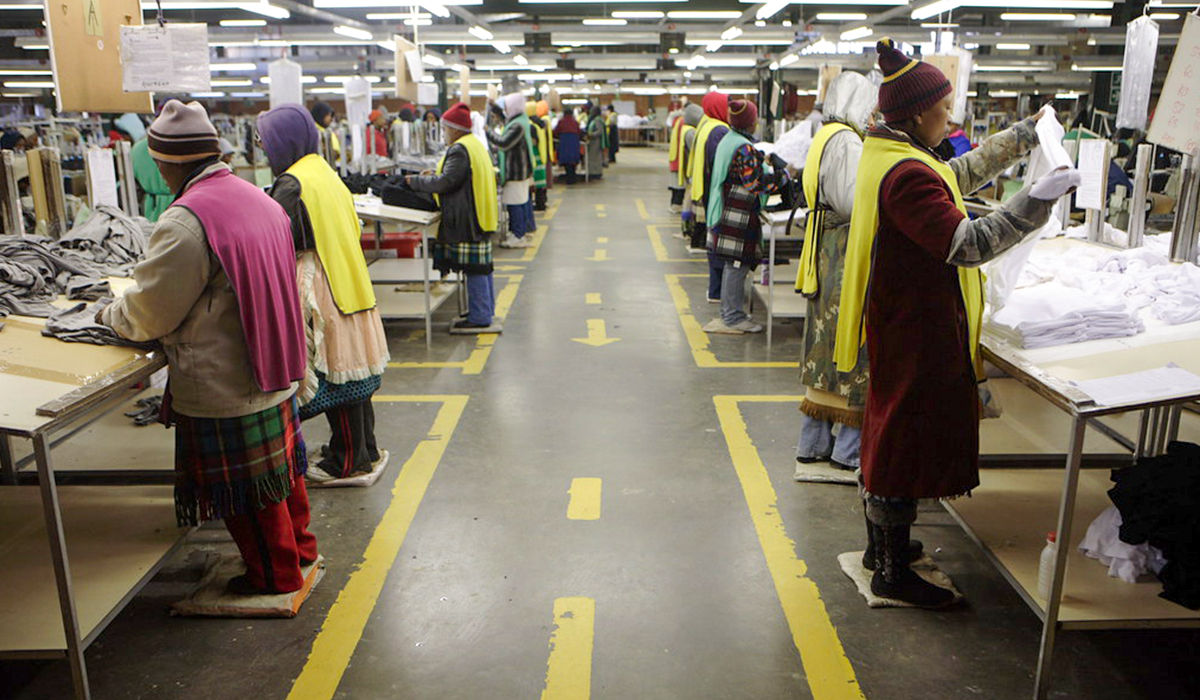

Punjab is a state of India where industry also plays an important role apart from agriculture. The textile industry has a special place in it. Ludhiana is also called the ‘Manchester of India’, where the whole world is connected with hosiery and woolen textiles. This industry not only creates employment but also strengthens the economy of the state. This industry contributes a significant share to the industrial production of the state. But at the same time, it is also causing damage to the environment. In this article, we will discuss in detail the development, government contribution, employment and disadvantages of this industry.
Industrial Cities

By the way, the history of Punjab’s textile industry is very old. Even before independence, hand-woven clothes were used in Punjab. After independence, this region developed rapidly. Mills were established in Ludhiana, Amritsar and Jalandhar. Amritsar is famous for woolen and shawls, Jalandhar makes sportswear. Today, the industry has expanded to cotton, wool, synthetic fibers. IIn 2025, Sanathan Textiles announced a Rs 1,600 crore technical textile project in Fatehgarh Sahib, with a planned capacity of around 350 tonnes per day. Ludhiana became the center of hosiery production. Today, this industry is a combination of modern technology and traditional skills.
According to information, Punjab contributes significantly to India’s hosiery, woollen textiles, sewing machinery, and sports goods manufacturing. Big brands and profitable companies like Wartman, Monte Carlo, Oswal, Ganga Acrowools etc. are known to the world. According to a government report, the Punjab government has recently implemented several new policies to attract new investments, improve the organization of old units and become employment centers for the youth.
The Punjab government has contributed to the establishment of several modern textile parks in Ludhiana. New industrial and business policies, subsidies, power relief, modern budget allocation, improvements in Ease of Doing Business rating, etc. have also proven helpful for new investments. The government has simplified the process for investors. A single-window system ensures that all approvals are given within a maximum of 45 working days. Registration is based on affidavits, and 22 special committees, including three dedicated committees for the textile sector (yarn weaving, fabric and dyeing), formulate policies in collaboration with entrepreneurs. The government is offering SGST refunds, interest subsidies, stamp duty exemptions and land-related incentives, subject to policy conditions.
Similarly, the central government has supported the Punjab textile industry through the Ministry of Textiles of India and other schemes. For example, the Rebate of State and Central Taxes and Levies scheme has been implemented for the apparel and garment industry. Along with this, other textile products are being facilitated under the scheme of exemption of duties and taxes on exported products. The Centre has launched training campaigns under the Samarth scheme, which is linked to the National Skill Qualification Framework – under this scheme, about 900 Punjabi beneficiaries have received technical training. In addition, large manufacturing industries are getting support for the production of man-made fabrics, garments and technical textiles under the Production-Linked Incentive Scheme.
Textile industry is creating employment for lakhs of people

In Punjab, every third household is doing some job. But if we talk about the private sector, the textile industry is considered an important source of employment in Punjab. According to Punjab PSC notes, this industry employs about 20 lakh (2 million) people, including hosiery and small-scale units. However, this figure could be even higher. On the other hand, the Punjab government claims that since the Aam Aadmi Party government was formed in the state, till March 2025, in just three years, 10 lakh 32,682 new small industries have been registered in Punjab. This is not a small figure, it is a great achievement. This shows how good the environment has become for starting a business in Punjab and people are coming forward to start their work by trusting the government’s policies.
Damage due to textile industry in Punjab
The textile industry is causing great damage to the environment. It is alleged that Budha Nallah in Ludhiana alone has been affected the most by this industry. This industry is a major consumer of water in Ludhiana. The dyeing, printing and finishing processes of textiles require a large amount of water. From a scientific point of view, 200-270 tonnes of water is required for 1 tonne of production. This increases the BOD and COD, which makes the water toxic. In India, this industry is responsible for 20% of the world’s industrial water pollution. Other challenges include old machinery, high energy costs and international competition. Ludhiana’s air quality has been classified as ‘highly polluted’ due to industrial emissions. Well, pollution is common wherever any industry is set up. But no one is paying attention to the adverse impact it is having on human health.
How was the problem solved?
Punjab’s textile industry remains a strong pillar of the state’s economy. It not only earns money but also provides employment to lakhs of people. The policies of the central and state governments need to focus on attracting new investments, especially in technical textiles. However, its biggest challenge is its environmental impact. Textile units must comply with strict environmental regulations and investing in zero liquid discharge and modern combined treatment plants is the need of the hour. The need of the hour is not just to develop this industry but to grow it in sustainable and eco-friendly ways so that Punjab’s natural resources can be protected for future generations. It is true that so far, governments have launched major projects and made efforts to clean the polluted water of the old drain, but considering the health of the people of the state, there is a need to intensify these efforts further so that a suitable solution can be found in time so that development does not stop and the adverse effects are also eliminated.


Leave a Comment