

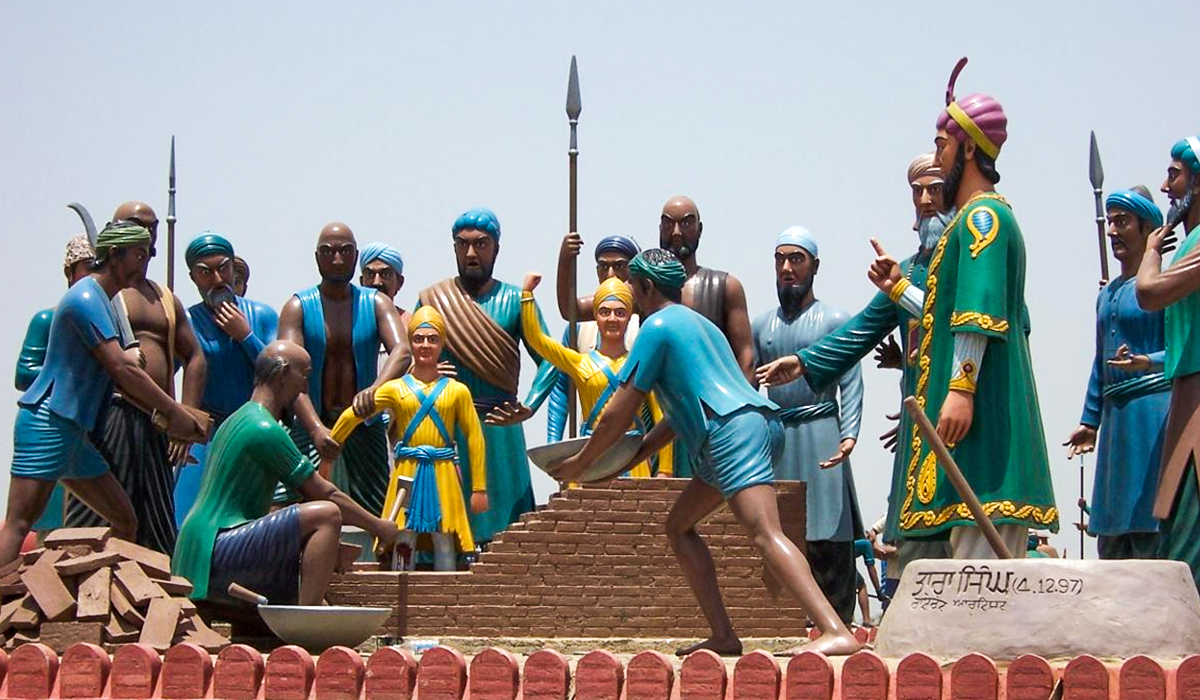

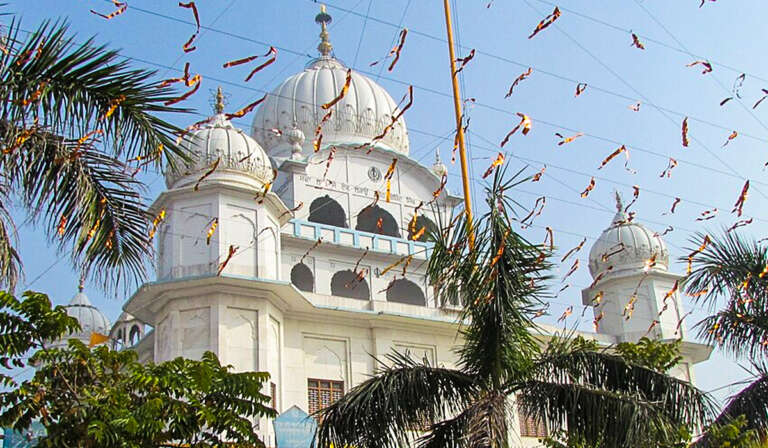
Sri Fatehgarh Sahib is that sacred land where an event considered the Karbala of Sikh history took place. This soil stands witness to the extreme cruelty of the Mughal administration. It is here that the two younger Sahibzadas of Sri Guru Gobind Singh Ji—Baba Zorawar Singh Ji and Baba Fateh Singh Ji—along with their beloved grandmother Mata Gujri Ji, attained martyrdom.
Both Sahibzadas set an unprecedented example in world history by refusing to bow before tyranny, just as their grandfather and forefathers had done, choosing instead to stand firm against oppression.
Bhagat Kabir Ji’s sacred verses in Sri Guru Granth Sahib Ji proclaim:
“Surā so pahchāniyai jo larai dīn ke het;
Purjā purjā kaṭ marai kabhū na chhāḍai khet.”
(Only that warrior is to be recognized as brave who fights for righteousness;
even when cut limb by limb, he does not abandon the battlefield.)
Bhagat Kabir Ji further describes death as the path to divine union:
“Kabīr jis marne te jag ḍarai, mere man ānand;
Marne hī te pāīai pūran paramānand.”
(That death which frightens the world brings joy to my heart,
for through death alone is supreme bliss attained.)
Fatehgarh Sahib and the Sahibzadas
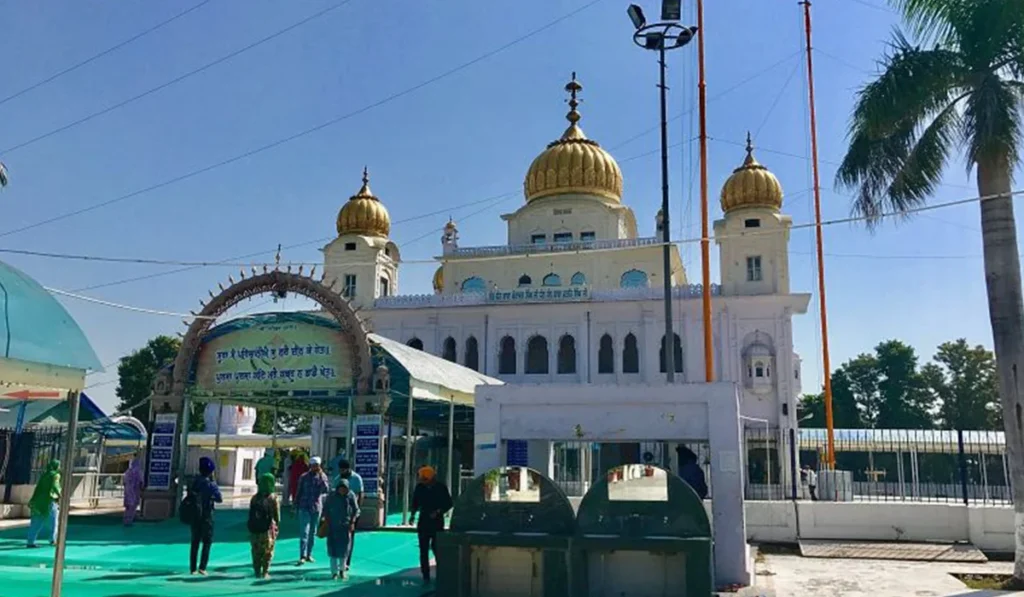
When Fatehgarh Sahib is mentioned, the images of Sahibzada Fateh Singh Ji, Sahibzada Zorawar Singh Ji, and Mata Gujri Ji immediately come to mind. This sacred place witnessed moments when children of tender age refused to bow before the authority of the state, refused to submit, and refused to compromise their faith.
The Mughal rulers and their religious enforcers viewed Sikhism with hostility and sought to impose religious conformity through force. Sri Guru Tegh Bahadur Ji had earlier sacrificed his life opposing forced conversions, standing as a universal protector of religious freedom and laying a protective “shawl” over all faiths.
Birth of the Younger Sahibzadas and the Siege of Anandpur
Baba Zorawar Singh Ji was born on Maghar Sudi 3, Samvat 1753, and Baba Fateh Singh Ji on Phaggan Sudi 7, Samvat 1755, at Anandpur Sahib to Mata Jito Ji.
When Mughal forces and hill rulers jointly laid siege to Anandpur Sahib, the siege prolonged for months. Food supplies were cut off, forcing the Sikhs to survive on leaves and tree bark. Repeated assurances were given that if Guru Ji vacated the fort, safe passage would be granted. After persistent appeals from the Sikhs, Guru Ji finally agreed to leave—but the enemy betrayed their oaths and attacked the departing caravan.
A poetic account describes this moment, noting that all four Sahibzadas accompanied Guru Ji during the departure.
Separation at the Sirsa River
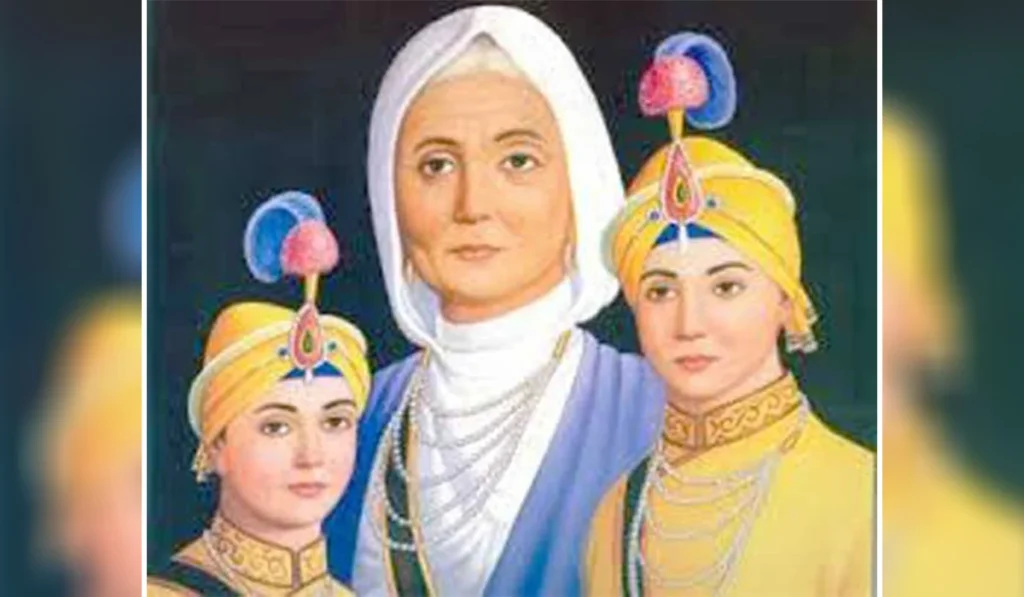
Near the Sirsa River, Guru Ji’s family became separated. The elder Sahibzadas—Baba Ajit Singh Ji and Baba Jujhar Singh Ji—proceeded with Guru Ji toward Chamkaur Sahib. The younger Sahibzadas and Mata Gujri Ji were taken by the Guru’s cook Gangu, who led them to his village Saheri. Historical tradition states that greed overtook Gangu’s conscience.
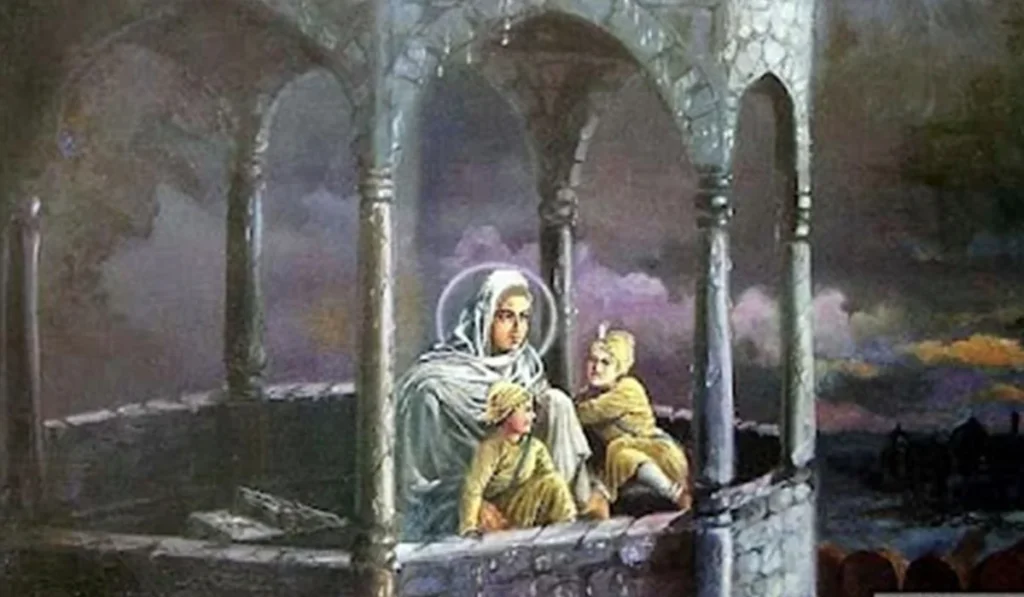
According to poetic accounts, Gangu stole a pouch of coins belonging to Mata Ji and later denied it, instead accusing her of harboring rebels. He informed Jani Khan and Mani Khan at Morinda, leading to the arrest of Mata Gujri Ji and the Sahibzadas.
They were first taken to Morinda and then sent to Sirhind, where Suba Wazir Khan imprisoned them in the Thanda Burj (Cold Tower). This occurred on 9 Poh, Samvat 1761 Bikrami. Mata Gujri Ji encouraged her grandsons to remain steadfast, reminding them of their forefathers’ sacrifices.
Trial and Refusal to Convert
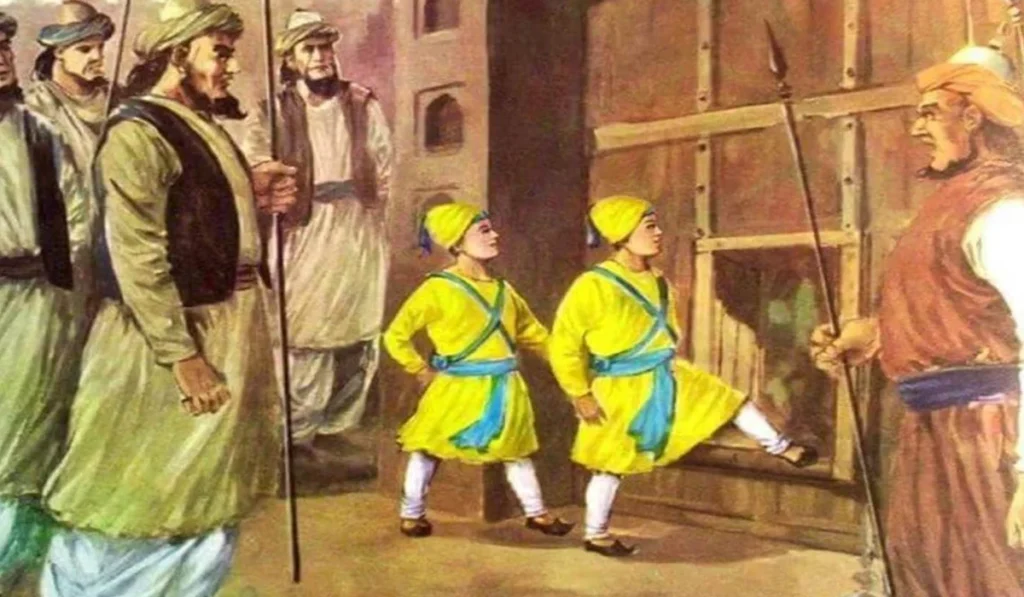
The Sahibzadas were repeatedly asked to accept Islam. They refused firmly. Offers, threats, and inducements failed to sway them. On 13 Poh, during their final hearing, the order was issued to execute them by bricking them alive.
At this point, Nawab Sher Muhammad Khan of Malerkotla objected, declaring that Islam did not permit such cruelty and refusing to participate in the act. His protest stands out in Sikh historical memory.
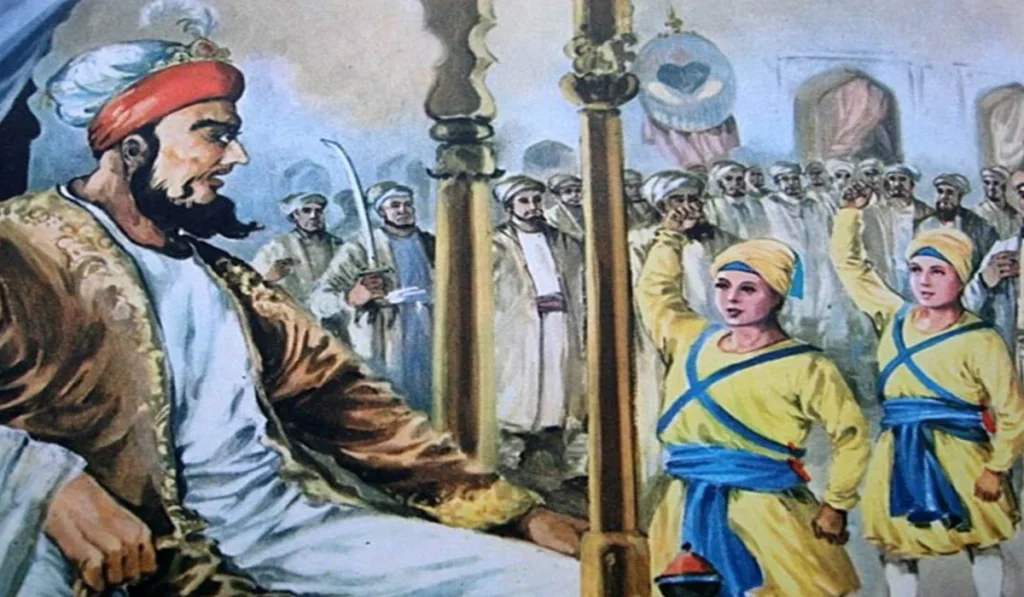
Despite this, the sentence was carried out. After being bricked into the wall, the Sahibzadas were taken out and executed. Mata Gujri Ji later attained martyrdom in the Thanda Burj.
Moti Ram Mehra’s Sacrifice
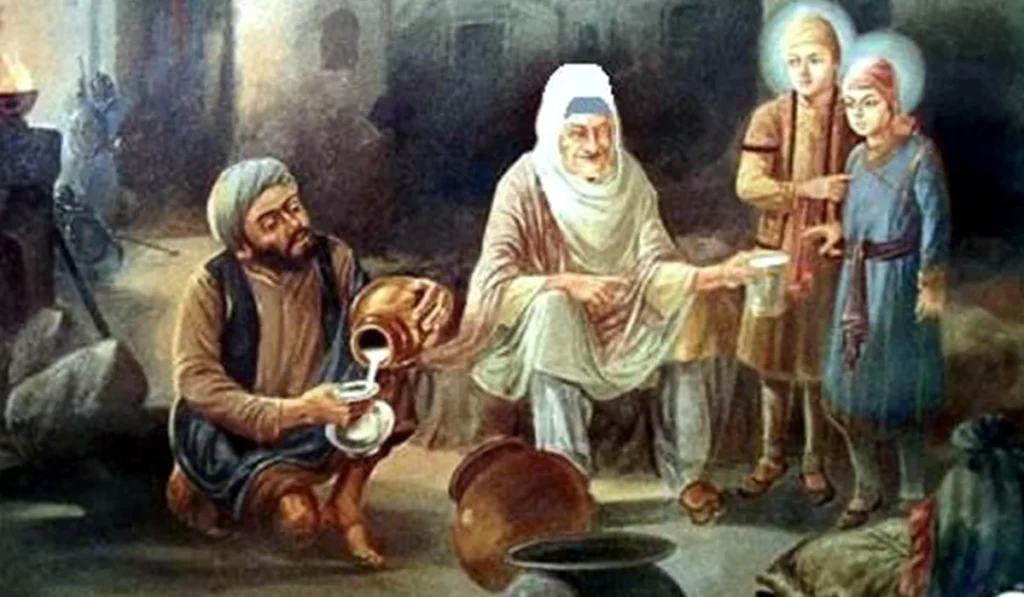
A compassionate official, Moti Ram Mehra, secretly provided milk to the Sahibzadas and Mata Gujri Ji at great personal risk. Later, he and his family were executed by being crushed in a mill. The Sikh community remains eternally indebted to his sacrifice.
Legacy of the Saka
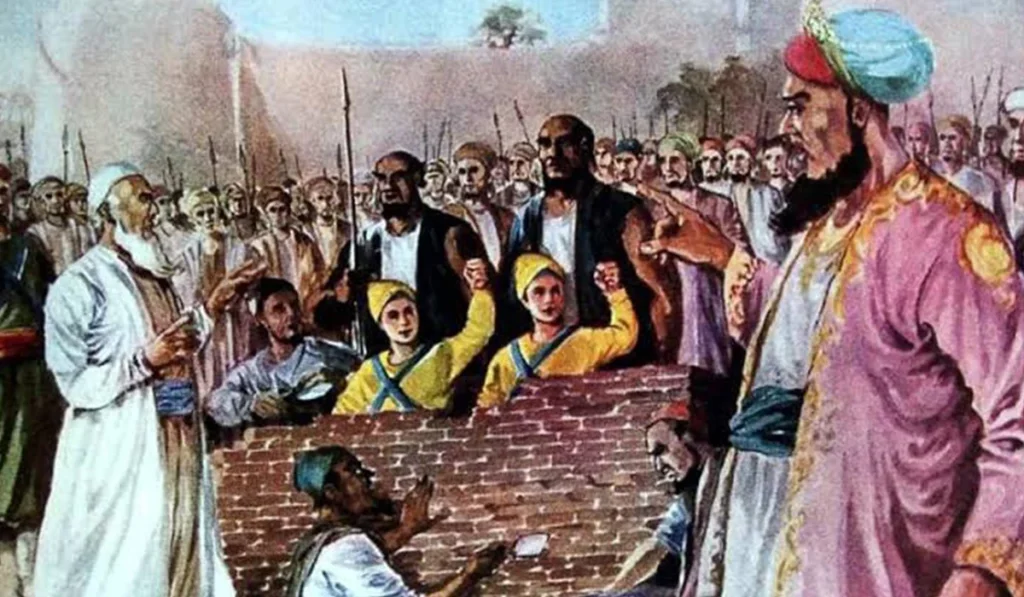
The brutality of the Saka of Sirhind melts even the hardest hearts. Poetic verses describe how this sacrifice laid the foundation of Sikh sovereignty.
Later, Baba Banda Singh Bahadur avenged this atrocity by defeating Sirhind and executing Wazir Khan. The text concludes by urging parents to instill the memory of this sacrifice in their children, so that future generations do not drift away under the influence of Western materialism.

Leave a Comment