

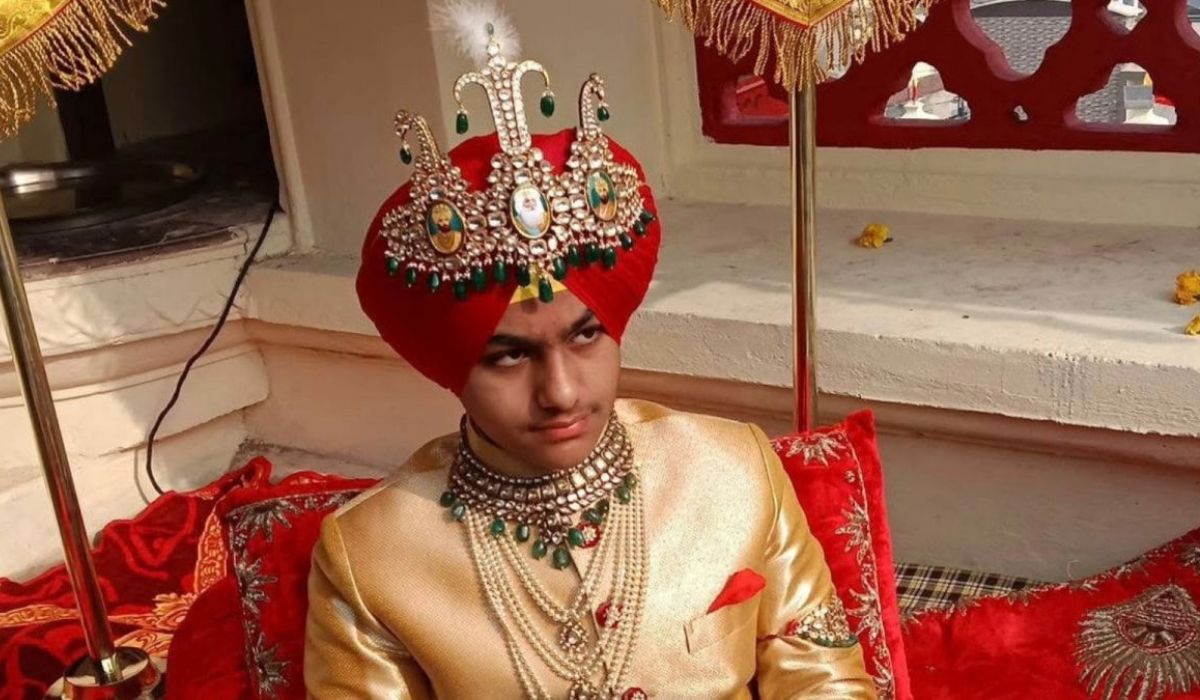

However far the roots of heritage may stretch, the fragrance of blood always returns to its own soil
Among the historic Phulkian princely states of Punjab, Nabha – known for its distinct and patriotic identity – has once again become the centre of attention for the global Sikh community and historians. Recently, the dastarbandi (turban-tying ceremony) of Abhi Uday Pratap Singh, the sixth-generation descendant of Maharaja Hira Singh and the great-grandson of the revolutionary Maharaja Ripudaman Singh, was performed with full royal grandeur at the historic Nabha Fort.
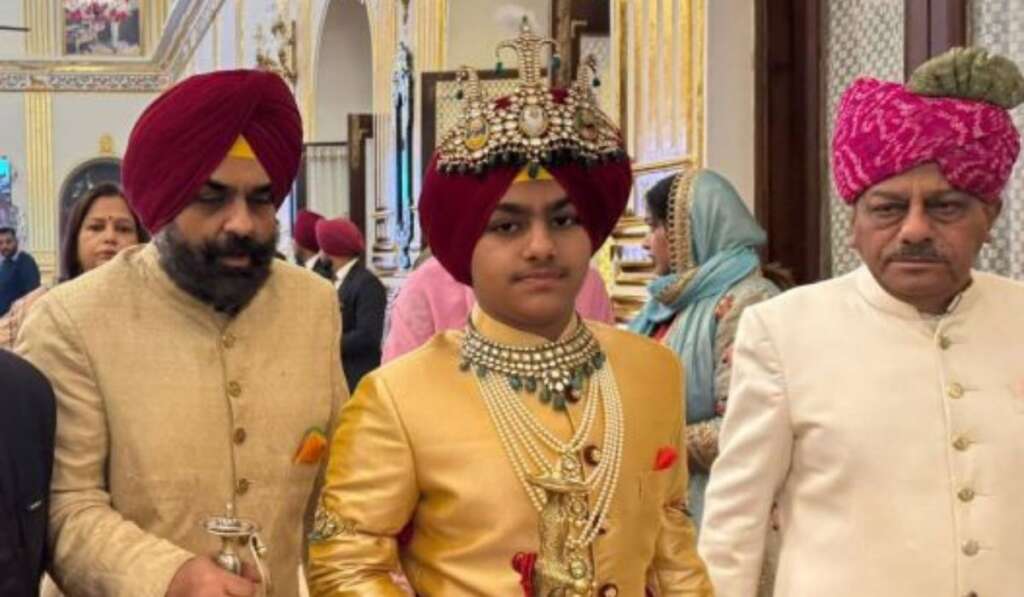
Abhi Uday Pratap Singh’s mother, Preeti Singh, told the media, “Not only among kings and royals, but in Sikh families too, a child’s first dastarbandi is performed in the presence of Guru Granth Sahib. One hundred and twenty-four years ago, Bhai Narain Singh conducted an Akhand Path in this very palace, and that same sacred ceremony has now been reenacted in this palace after 124 years.”
This event was not merely a family ritual; it symbolised the revival of royal traditions on the soil of Nabha after 124 years.
The Dastarbandi of Abhi Uday Pratap Singh

According to historians, such a royal gathering was held inside the inner fort of Nabha after nearly one and a quarter centuries. The dastarbandi of Abhi Uday Pratap Singh, a descendant of Maharaja Pratap Singh, has revived the cultural traditions of the princely state. Political and religious dignitaries attended the ceremony.
Abhi Uday Pratap Singh is the son of Bhanu Pratap Singh and Preeti Singh. Preeti Singh is married to the grandson of Maharaja Pratap Singh and currently resides in Nabha’s ancestral palace with her son.
Establishment and Historical Background of Nabha State
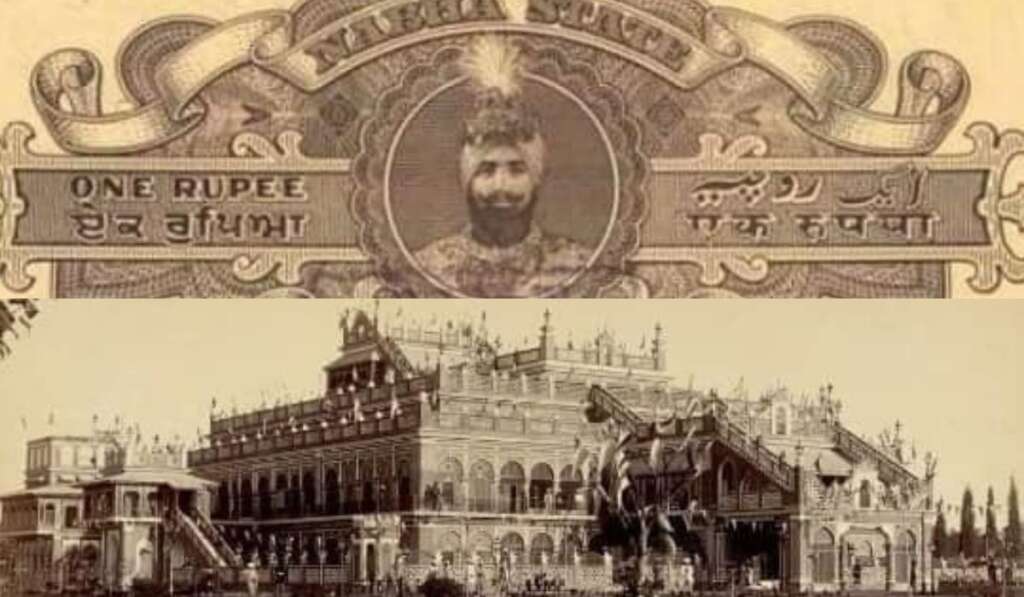
Nabha State was founded in 1755 by Raja Hamir Singh. It was one of the three major Phulkian states – Patiala, Nabha, and Jind. According to historians, after Hamir Singh’s death in 1783, his son Jaswant Singh ascended the throne at the age of eight. Later, in 1846, Devinder Singh carried the state forward.
Between 1871 and 1911, under Maharaja Hira Singh’s leadership, Nabha witnessed remarkable progress. He extended patronage to Bhai Kahn Singh Nabha, the author of the world-renowned Mahan Kosh.
In 1911, Maharaja Ripudaman Singh ascended the throne and is regarded as one of the most respected rulers in Sikh history, as he placed Sikh principles above British authority. Instead of accepting a ceremonial turban from British officials, he had his dastarbandi performed according to Sikh tradition by Sant Attar Singh Mastuana.
He strongly supported efforts to secure a distinct legal identity for Sikh marriages under the Anand Marriage Act. which established a distinct legal identity for Sikh marriages separate from Hindu customs. During the Jaito Morcha, he provided support and supplies to Akali jathas. The historic Jaito agitation saw hundreds of Sikhs martyred while demanding the restoration of his throne. Because of these sacrifices, the history of Nabha stands apart from other princely states with great honour.
Stand for Sikh Identity at Sri Harmandir Sahib
Maharaja Ripudaman Singh also criticised the presence of idols inside Sri Harmandir Sahib and emphasised the restoration of Sikh maryada (religious code). Owing to his contributions, his portrait is displayed at the Central Sikh Museum.
His strong Panthic and nationalist stance displeased the British authorities. In 1923, he was forcibly removed from the throne. Afterward, several attempts were allegedly made to draw the royal family away from Sikhism and towards Christianity. However, 124 years later, Abhi Uday Pratap Singh’s decision to maintain unshorn hair (kesh) has symbolically put to rest those earlier efforts to distance the royal lineage from Sikh identity.
A Message of Sikh Identity from Nabha Fort
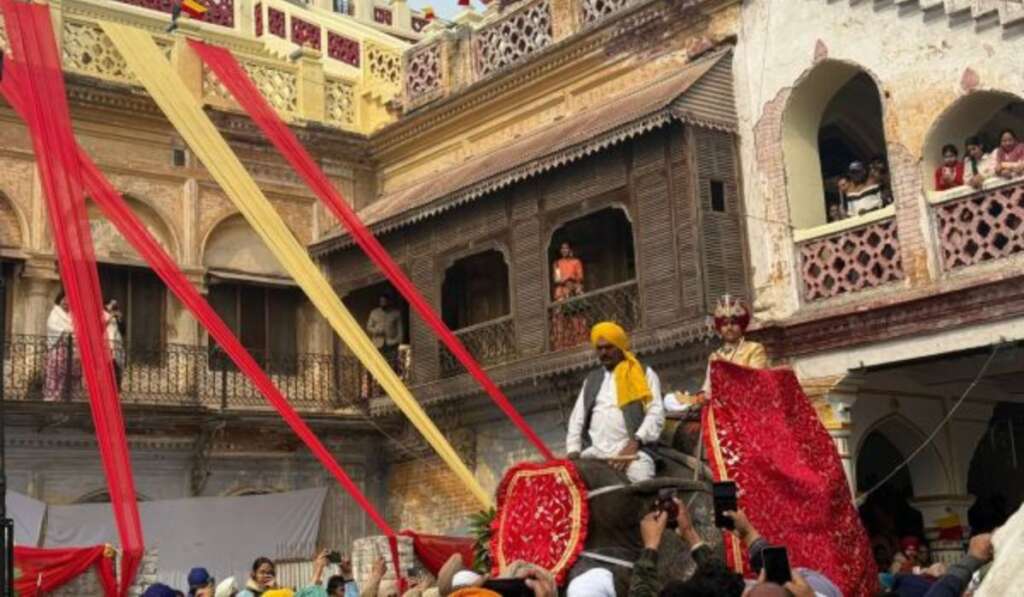
Nabha State is remembered not only for politics and warfare but also for its contribution to literature and its rulers’ defiant stance against British rule. Under Maharaja Ripudaman Singh’s reign (1911–1923), the state earned a new identity rooted in Sikh principles.
The history of Nabha is not merely the story of rulers; it is a living testament to the defence and preservation of Sikh principles. The message of Sikh identity that has emerged from Nabha Fort through Abhi Uday Pratap Singh’s dastarbandi is a matter of pride for Punjab and Sikhs worldwide.
This ceremony proves that however far the roots of heritage may stretch, the fragrance of blood always returns to its native soil.


Leave a Comment