


BEST OF DNN 24
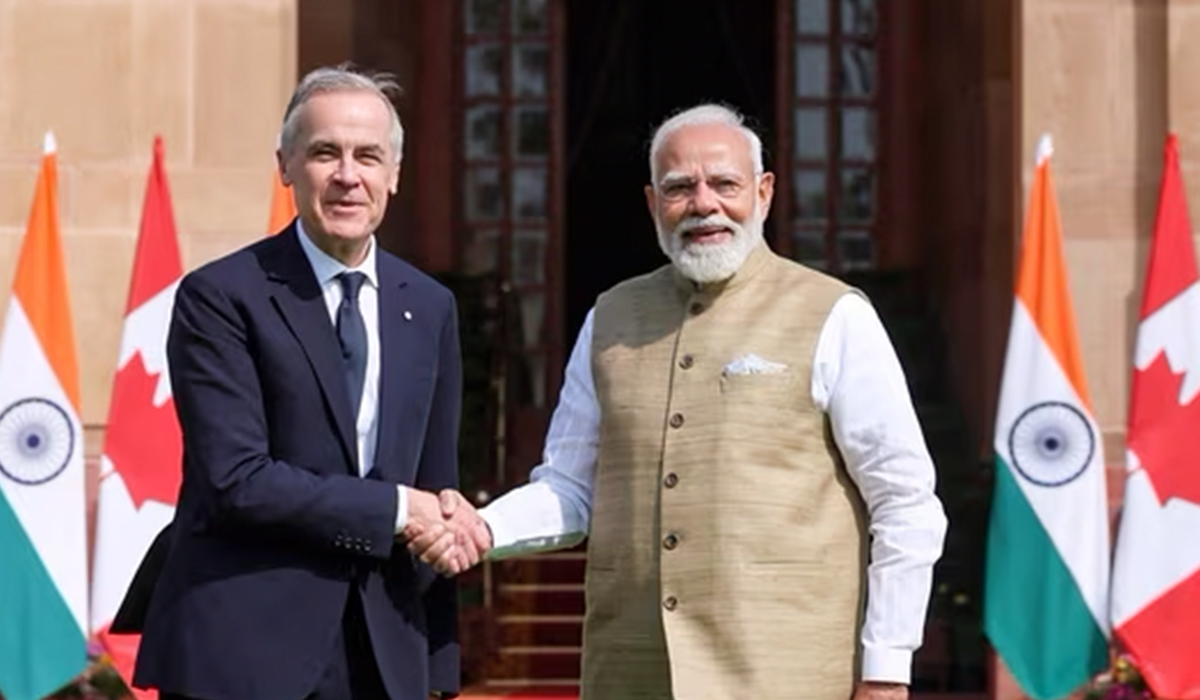
Nearly a month after his rousing speech about the changing world order at the World Economic Forum, Canada’s Prime Minister Mark Carney landed in Mumbai last week to put his speech into action. On his first visit to India as Prime Minister, Carney sealed a number of deals to put the India-Canada relationship on the fast track to growth after years of bitterness under the previous government.
Following two days of meetings with industry leaders in India’s financial capital, including a cultural afternoon hosted by Reliance Industries’ Chairman Mukesh Ambani at his residence, Carney arrived in New Delhi to meet Prime Minister Narendra Modi. The two leaders agreed to finalize a mutually beneficial Comprehensive Economic Partnership Agreement (CEPA) by the year end. With a bilateral trade target of US $50 billion by 2030, the agreement will significantly deepen India-Canada economic engagement at a time when both countries are looking to diversify their trade partnerships amid geopolitical uncertainty.
Carney was accompanied by a high-level business delegation that included heads of major Canadian pension funds. Their decision to invest US $100 billion in India was welcomed by Modi as a sign of their deep faith in India’s growth story. Canadian institutional investors already have a significant footprint in India; total Canadian investment crossed US $80 billion in 2024.
Energy security emerged as a central pillar of the renewed partnership. Under a new strategic energy framework, Canadian company Cameco will supply nearly 22 million pounds of uranium to India for civilian nuclear power generation between 2027 and 2035 in a deal valued at approximately CAD $2.6 billion. The agreement enhances India’s long-term energy security while reinforcing Canada’s position as a reliable supplier of nuclear fuel. The two sides also committed to collaboration on small modular reactors and advanced nuclear technologies, underscoring shared ambitions in next-generation clean energy. In addition, discussions on a long-term liquefied petroleum gas (LPG) arrangement point to expanding hydrocarbons cooperation even as both nations pursue energy transition goals.
India and Canada also signed an agreement on critical minerals cooperation reflecting their shared commitment to resilient global supply chains. With China currently dominating much of the global processing capacity for minerals essential to electric vehicle batteries, semiconductors, solar panels and defence systems, diversification has become an urgent priority for many economies. Canada’s substantial mineral reserves and mining expertise can play an important role in supporting India’s mineral stockpiling initiative and its broader manufacturing ambitions.
Education, a cornerstone of India-Canada people-to-people ties, received renewed emphasis. The two countries signed 24 institutional partnerships spanning artificial intelligence, healthcare, agriculture and innovation. These agreements include expanded internship pathways and scholarship opportunities for Indian students in Canadian universities. In Mumbai, Carney unveiled a new Canada-India Joint Talent and Innovation Strategy aimed at deepening academic collaboration and strengthening innovation ecosystems in both countries.
The first visit by a Canadian Prime Minister to India in eight years was more than symbolic. It marked a strategic recalibration. By focusing on trade, investment, energy security, supply-chain resilience and talent mobility, Carney’s government has signalled its intent to anchor relations in pragmatic, forward-looking cooperation.
With more than 1.8 million people of Indian origin living and working in Canada, the bilateral relationship carries both economic weight and deep societal links. In an era defined by geopolitical fragmentation and economic realignment, a stable and forward-looking partnership between these two democracies could prove not only mutually beneficial but strategically consequential.
Disclaimer: The views expressed in this article belong solely to the author and do not reflect the views or opinions of DNN24 or any affiliated organization.
This article originally appeared in DNN24


Leave a Comment