

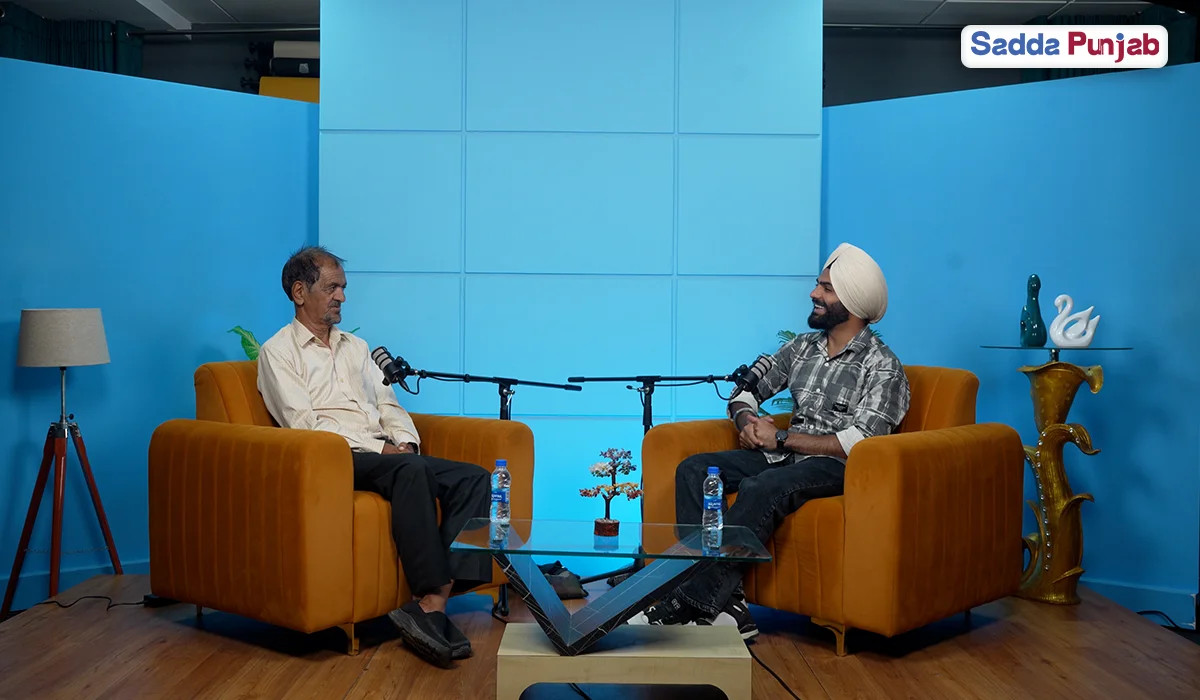

In the world of Punjabi literature, Jinder is a name that presents a mirror of society through his writings—one that clearly reflects the deep layers of the human mind, the pain of women, and the evolving realities of relationships. An author of 16 books and a recipient of several international honors, Jinder’s ideas attempt to revive human sensitivity in today’s materialistic age.
Notably, his pen does not merely weave stories but also analyzes psychological complexities. Through works like “Safety Kit,” he has fearlessly portrayed the inner fears and social constraints faced by women, setting a new benchmark in Punjabi literature. His thoughts guide readers back toward mutual understanding in relationships and human morality.
“Safety Kit”: A Psychological Weapon Against Fear
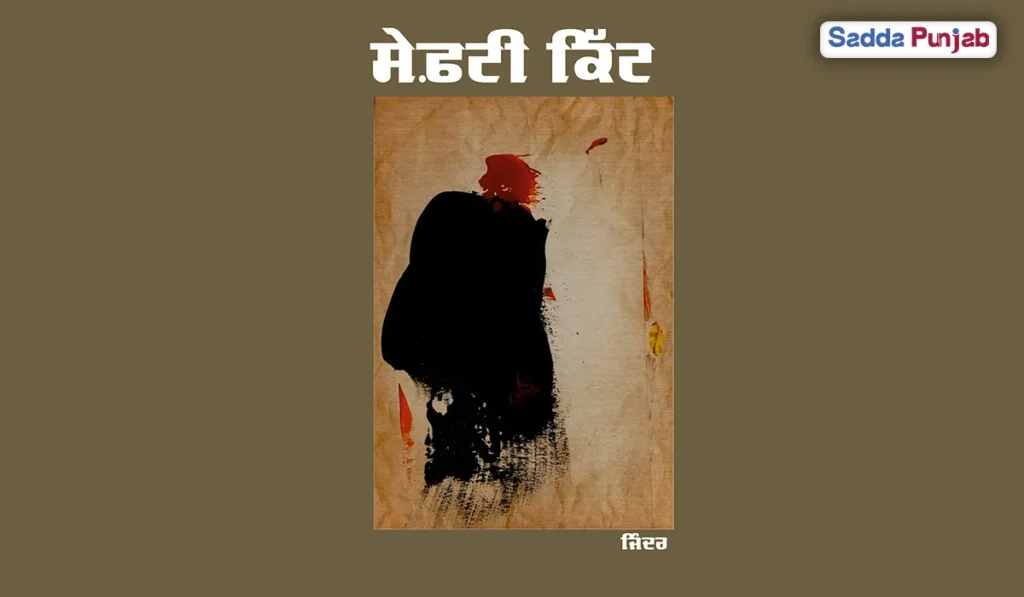
The well-known book “Safety Kit” by Punjabi writer Harjinder Pal is not just a collection of stories; it is a psychological resistance against the age-old fear of sexual violence that has haunted women for generations.
Jinder explains that the stories in this book were written over four to five years, first published in established Punjabi magazines and later compiled into a book in 2023 by Navyug Publisher, Delhi. The collection includes ten stories, among which “Mera Koi Kasoor Nahi” (It’s Not My Fault), “Safety Kit,” “Shart,” and “Chirag” stand out.
These stories revolve around migration. The central story, “Safety Kit,” follows Jaspreet, a girl from Punjab who goes abroad for studies and lives in constant fear of sexual assault. Her fear is eventually addressed by Samantha, who introduces her to a London-based academy offering self-defense and awareness training.
According to the author, society has amplified the fear of sexual violence to such an extent that victims often feel their lives are over. This story emphasizes that willpower is stronger than any tragedy. Jinder stresses that one should not let an unfortunate incident destroy the precious life given by nature, but instead move forward with courage.
Feminism and Social Double Standards
Women are often at the center of Jinder’s writings. He believes that women are fundamentally victims of injustice.
Even today, society operates on double standards: when a man makes a mistake, it is often overlooked, but a woman faces countless restrictions and judgments. According to him, one major reason behind women’s mental distress is their tendency to suppress emotions. They often hesitate to share their fears or desires with their husbands or children.
Jinder emphasizes that without financial independence, women cannot truly live life on their own terms. He cites examples from abroad, where women, empowered by economic independence, assert their right to equality.
Psychology of the Human Mind and Fear

Referring to the work of psychologists like Sigmund Freud, Jinder explains that fears rooted in our subconscious mind often surface through dreams. The fear of sexual violence or social stigma has been ingrained in our cultural conditioning across generations.
However, education can break this cycle. He stresses that education should not merely be about acquiring degrees but about transforming the way we think.
The Mobile Era and Fragmenting Relationships
Speaking about modern challenges, Jinder identifies mobile phones as a major threat to relationships.
Earlier, families would sit together and talk, but today, social media and short-form content have isolated individuals even within crowds. The trend of single-child families has further reduced the culture of sharing among children.
He observes that relationships have increasingly become materialistic. Even decisions like divorce are now often influenced by money and ego, whereas earlier they were tied to family honor and emotional considerations.
Emotional Distance Within Relationships

His story “Dooriyan” (Distances) reflects how relationships within families evolve over time. The departure of a mother and the arrival of a daughter-in-law can shift family dynamics significantly.
Jinder believes that without emotions, a person is no different from an animal. Even at the age of 72, he still dreams about his village—despite not having visited it for 35 years—showing how deeply rooted he is in his origins. He also finds spiritual peace in visiting places like Kasur (the shrine of Bulleh Shah) and Harmandir Sahib.
Mahabharata: A Mirror of Social Structure

Jinder encourages the younger generation to read the Mahabharata, not from a religious perspective but as a way to understand social structures.
He points out that issues like jealousy, conspiracies, and the humiliation of women—depicted in the Mahabharata—still persist today. Human nature, he says, has not fundamentally changed, even though lifestyles have become more luxurious.
Humanity as the Greatest Religion
Sharing his life experiences, Jinder says that true achievement is not awards but meaningful relationships—with friends and readers like Harjeet Atwal, Khalid Bharal, and Gurpal Sandhu, who are spread across the world.
His final message is simple yet profound: “See a human as a human.”
No religion teaches hatred; all religions guide toward humility.
If we begin to understand each other’s pain and give equal respect to men and women, only then can we build a healthy society. Jinder’s writing reminds us that life may be as difficult as climbing a mountain, but it can be conquered with love and faith.


Leave a Comment