

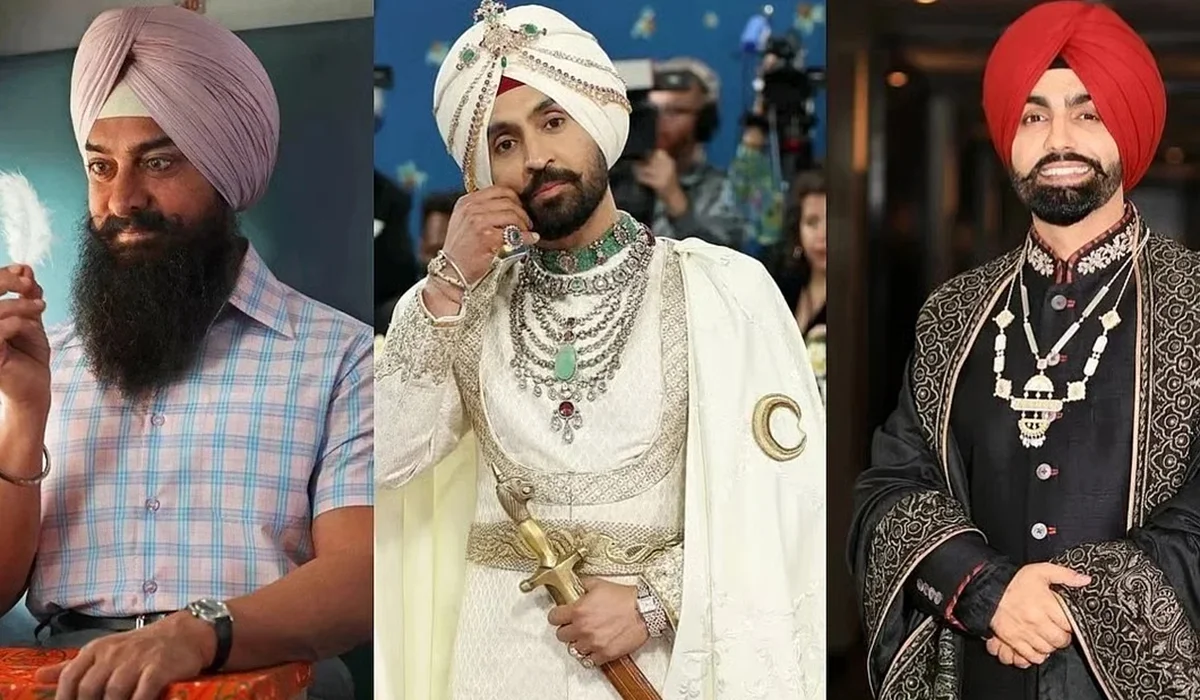

In Sikh heritage and Punjabi culture, the dastaar (turban) is not merely an article of clothing; it is a symbol of honor, dignity, and religious identity. The history of the turban in Punjab goes back centuries, and over time it has evolved into many distinct styles. In Punjabi society, the dastaar holds the status of a crown. It is not just a piece of cloth used to cover the head, but a reflection of the wearer’s personality, beliefs, and self-respect.
The History and Religious Importance of the Turban
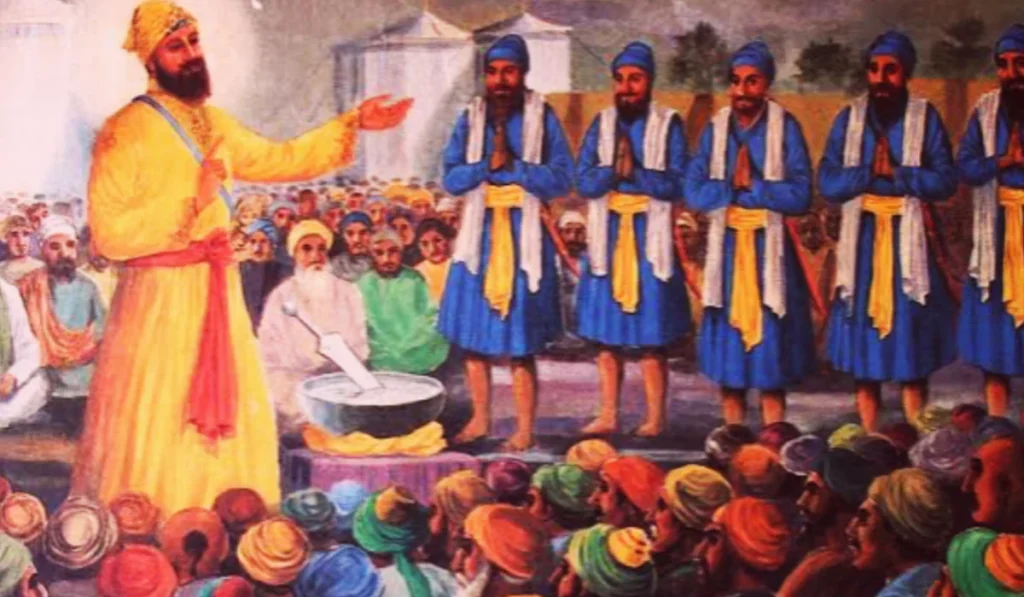
The dastaar holds a very high place in Sikhism. In 1699, when Guru Gobind Singh Ji created the Khalsa Panth, he made the turban essential for Sikhs so that a Sikh could be identified even in a crowd of thousands. In earlier times, the turban was often limited to royal families and the elite, but Guru Sahib gave every Sikh the right to wear it, sending a message of equality in society. For a Sikh, the turban creates a distinct identity and instills a sense of self-respect and moral responsibility.
Distinct Styles in Punjab: Identity Through Form
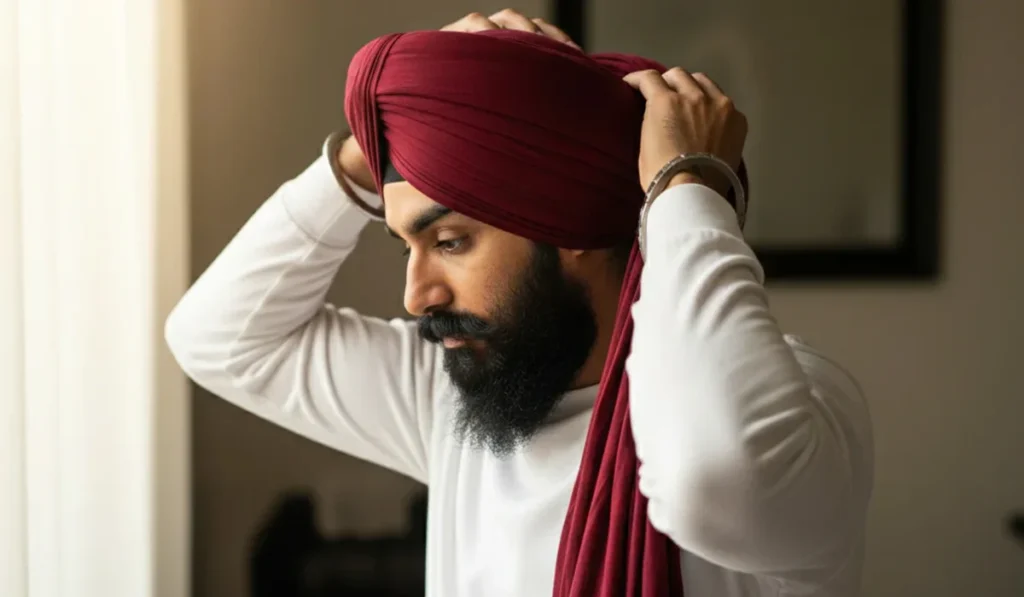
Across Punjab’s different regions—Majha, Malwa, and Doaba—and according to family traditions, there are many ways of tying a turban:
Patiala Shahi Turban: This is the most famous and traditional style. It is named after the royal family of Patiala. Its distinctive feature is its balanced folds and rounded shape, visible on both sides. It gives a royal appearance and is very popular among young people.
Amritsari Shahi Turban: This style originated in Amritsar. It is similar to the Patiala Shahi but has more folds and a slightly different tying method. It looks highly impressive.
Dumalla: This style is especially common among Nihang Singhs and devout Sikhs. The word dumalla comes from two words meaning “double cloth,” referring to two layers of turban, usually a smaller keski under a larger one. It symbolizes strength and martial heritage.
Morni (Pochvi) Turban: This is considered a favorite among educated and urban youth today. In this style, the front portion of the turban is pointed and it is tied very tightly.
Vattaan Wali Turban: This style is currently very trendy among young people. Instead of making the folds smooth and flat, fine twists are added, creating a rough and stylish appearance.
Malwai Turban: Popular in the Malwa region, this turban is slightly taller and has a style distinct from others.
Fabric Choice and the Art of Tying a Turban
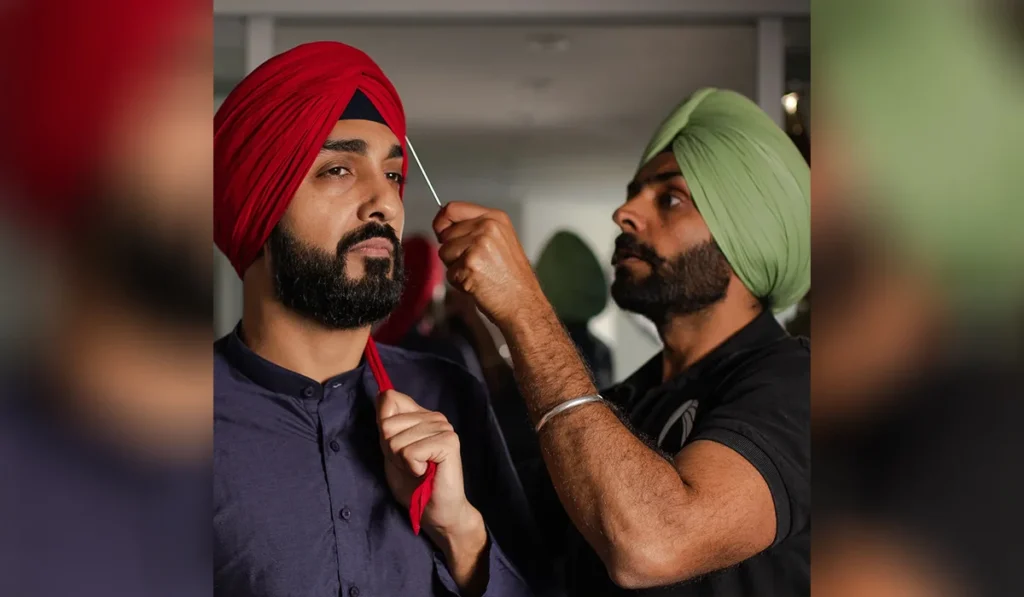
The cloth commonly used for turbans is usually full voile or rubia. Full voile is lighter, while rubia is slightly heavier and stiffer. Before tying the turban, the cloth is often lightly dampened and prepared so that the folds can sit properly.
The Significance of Turban Colors
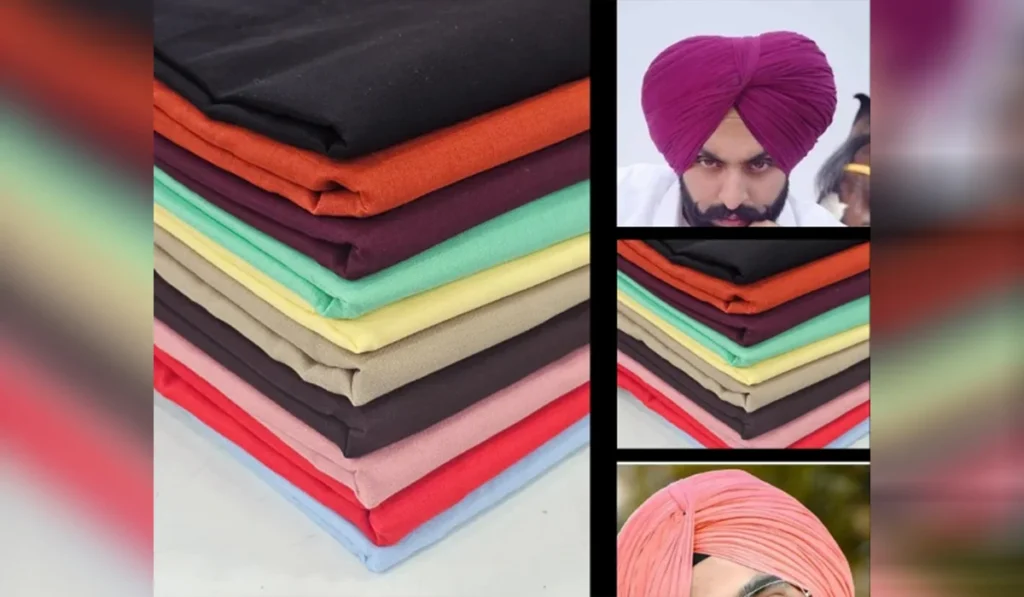
The colors of a turban also carry deep meanings. Blue is associated with Akali tradition and strength, while saffron symbolizes spirit and sacrifice. White represents peace and elderhood, and black is often used to express protest or simplicity. Apart from these, pink and red turbans are especially worn during weddings and joyful occasions.
From Tradition to Global Fashion
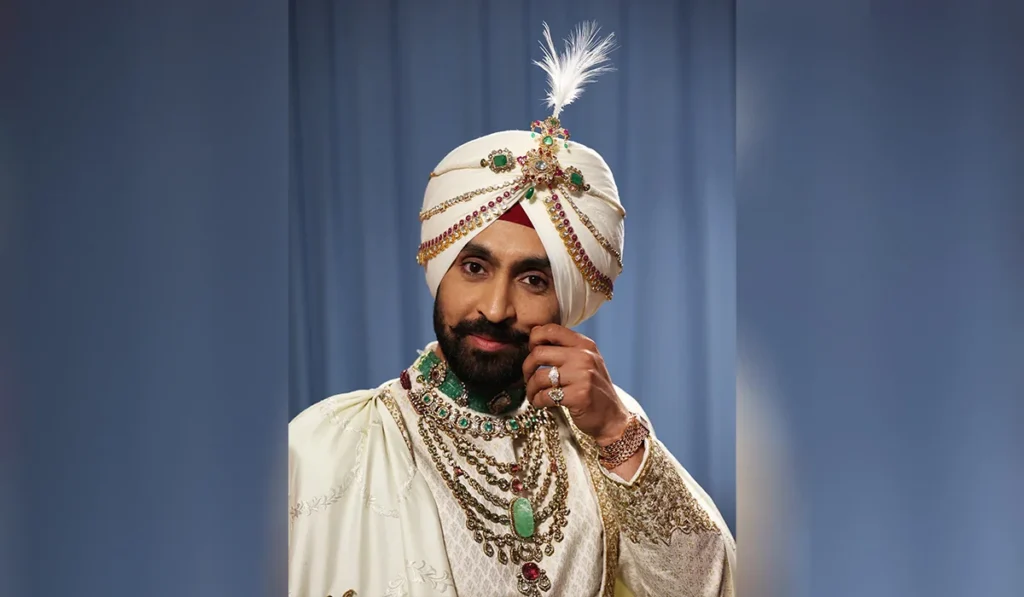
Today, the turban is no longer limited to Punjab; it has made its mark globally. Artists like Diljit Dosanjh have established the dastaar as an international style icon. As a result, there has also been a major shift in how turban colors are chosen. People now often match or contrast turban colors with their clothes. That is why, beyond traditional saffron, blue, and black, turbans in shades like peach, mint green, and other modern colors are now commonly seen.
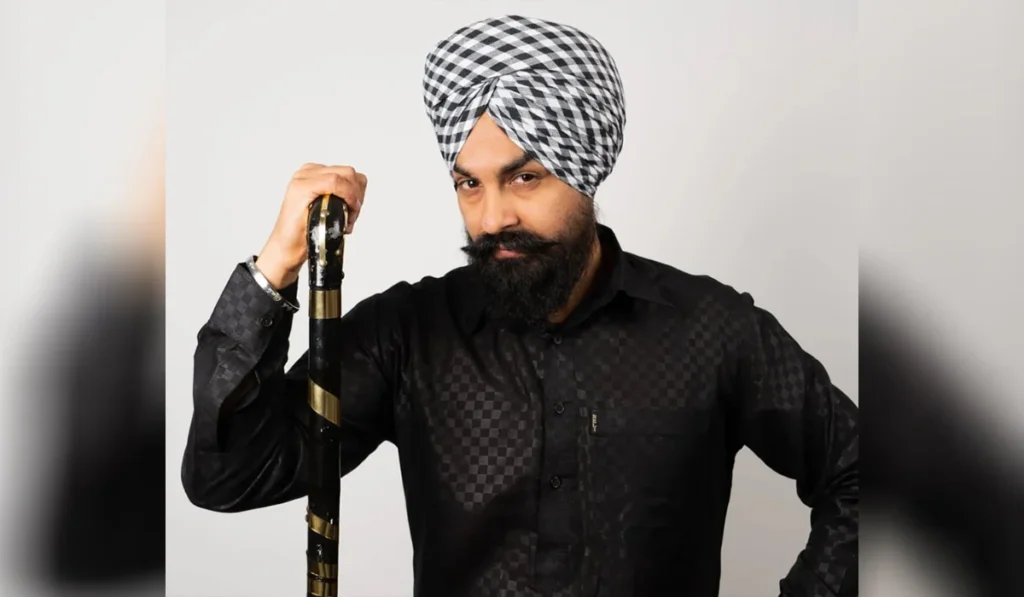
At the same time, while turban styles have changed, young people are also discovering new ways of tying the parna. Checked parnas in particular have become an important part of urban fashion.
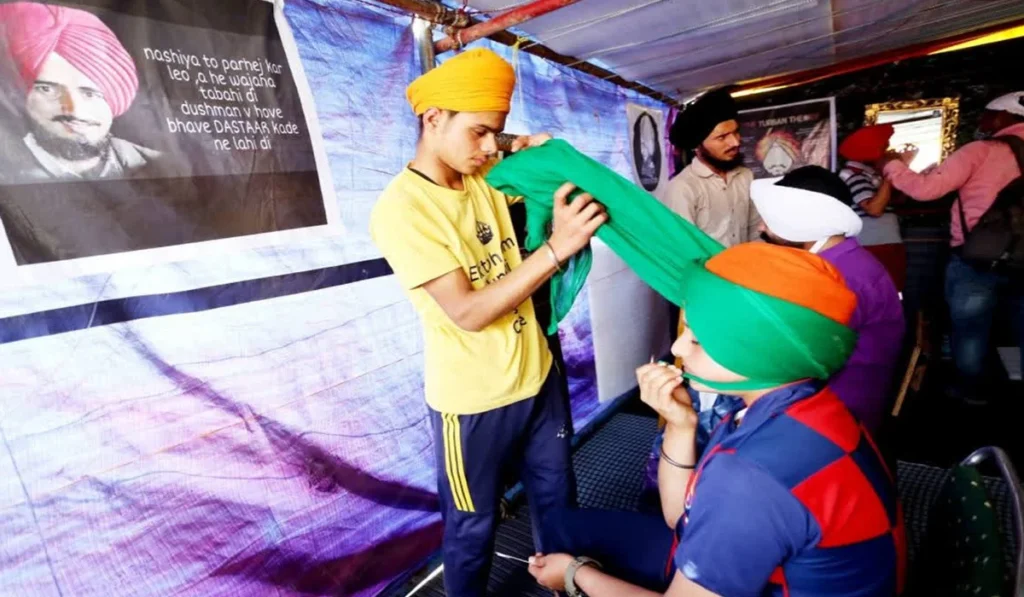
Turban training centers, dastaar competitions, and turban tutorials on social media have also played an important role. These have helped Punjabis living abroad reconnect with their rich heritage and roots.
The turban remains one of the greatest symbols of Punjabi pride. Even though the ways of tying and styling it may continue to evolve with time, its essential meaning and the respect attached to it will always remain alive in the heart of every Punjabi.
Leave a Comment