

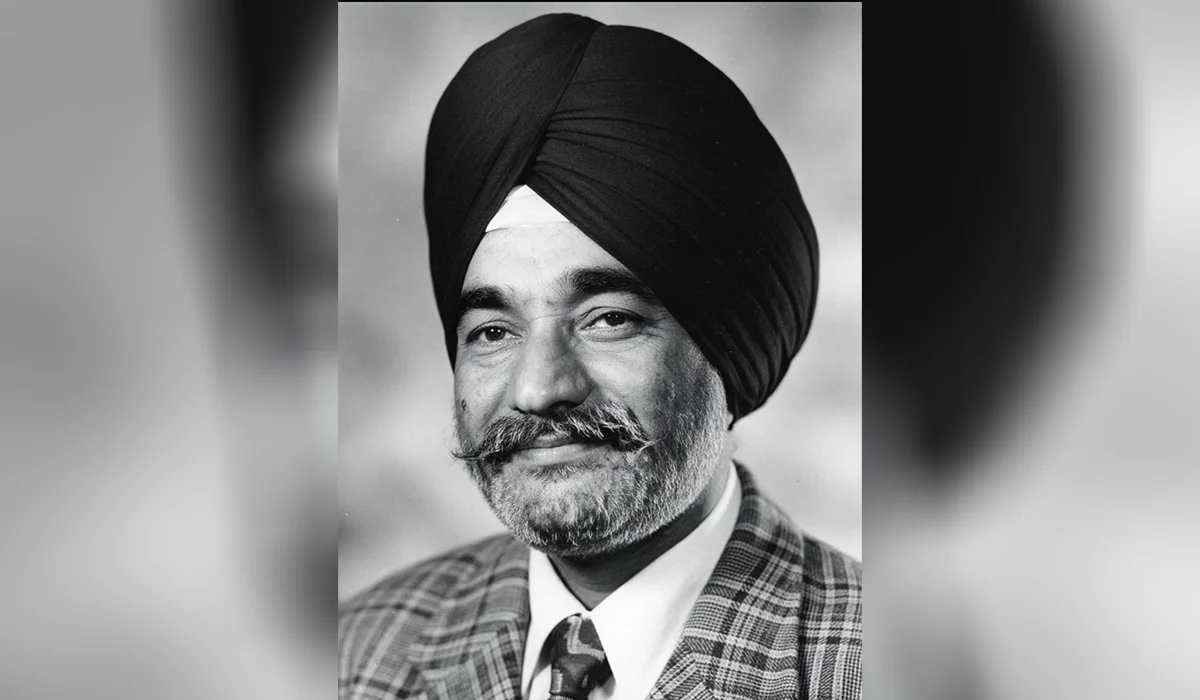

Recently, on a Sunday, I met Dr. Lakhwinder Singh Johal at the first managing board meeting of the Punjabi Sahit Akademi, Ludhiana. He told me that on June 12, they were going to release a special issue of the literary criticism journal he edits, dedicated to the birth centenary year of Punjabi poet Surjit Rampuri. I felt very happy. Many people of my generation had drawn inspiration from his poetry.
I was reminded of how Surjit Rampuri played a major role in making Rampur the rural capital of literature in 1954. Along with him were Gurcharan Rampuri, Mall Singh Rampuri, Mahinder Rampuri, Harcharan Rampuri, Jeevan Singh Rampuri, Sukhminder Rampuri, Amrit Rampuri, Surinder Rampuri, and from nearby villages, writers like Kulwant Neelon of Neelon, Harbhajan Singh Mangat of Begowal, Mahinder Singh Qaidi, Ajaib Singh Grewal, Telu Ram Kohara, Surjit Khurshidi, Gurmel Singh Bhandal, Raghbir Singh Bharat, Sarbans, and many others became his companions.
I remember how Santokh Singh Dhir, Ajaib Chitrakar, Dr. Randhir Singh Chand, Sajjan Grewal, and Inderjit Hasanpuri used to mix so warmly with one another. But that atmosphere is gone now. One cannot tell when calculation and self-interest entered human behavior.
In 1975, Gurcharan Rampuri returned to his homeland from Canada after many years. At a gathering of the Likhari Sabha Rampur, he took many photographs. I think I still have one group photo somewhere.
In 1976, when I was appointed lecturer at Guru Nanak National College, Doraha, I invited Surjit Rampuri to a poetry gathering there. The next year, when I started teaching at Lajpat Rai Memorial College, Jagraon, I invited him again, along with Santokh Singh Dhir, Ajaib Chitrakar, Surjit Patar, Takhat Singh, Sant Ram Udasi, Paash, Shamser Singh Sandhu, Variam Sandhu, and others.
I also remembered that Surjit Rampuri used to come to Ramgarhia Girls College as well. Once, when I invited Colonel Narinderpal Singh there, Surjit Rampuri came especially to meet him. I think I still have a photograph of that event somewhere too. In that picture, Sohan Singh Seetal and Niranjan Tasneem are also there.
Surjit Rampuri had very close ties with Purdaman Singh Bedi. It was Bedi who published “Main Sirf Awaaz Haan”.
During his stay in Nabha, Randhir Singh Chand, Shamsher Singh Sandhu, and I once spent a night at Rampuri ji’s house. During that same visit, we met Azad Gulati, Tarlok Singh Anand, Kanwar Chauhan, and Gurdev Nirdhan for the first time.
Surjit Rampuri was born on 12 June 1926 and bid farewell to the world on 3 March 1990.
He was born in village Rampur in Ludhiana district, though he spent much of his childhood in Calcutta, where his father worked as a transporter.
By profession, he was a teacher and retired in 1984 as the District Education Officer of Patiala.
His poetic works include Geetan Bhari Saver, Thari Chanani, Ichha Da Janam, Dard Kahani Rataan Di, Budha Dariya, Main Sirf Awaaz Haan, Pichhla Pehar, Vismaad, Supnian De Parchhaaven, Gaundi Hai Tanhai, Peedan Di Khushboo, and others. His ghazal collection Supnian De Parchhaaven was published by Gursharan Singh, the playwright. After his death, the Punjab Language Department published a selection of his songs.
Long ago, the famous singer Narinder Biba recorded his song “Main Dard Kahani Rataan Di” for All India Radio Jalandhar. Some of his songs and ghazals were later recorded by Iqbal Mahal in the voices of Jagjit Singh Zirvi and Dolly Guleria and released as an audio cassette. The music was composed by Jaidev. It included a ghazal about village Rampur as well, in which he speaks of the village through the metaphor of its water.
Ghungat vargian chhaavan mere pind dian
Jhooman mast havaavan mere pind dian
Kachchian kandhan, pakkian preetan di basti
Kinj gallian chhad jaavaan mere pind dian
Pooran varge puttran di sukh mangdian
Ichhran vargian maavan mere pind dian
Husnan de haase te preetan de naghme
Dohrian vagan jhanavan mere pind dian
Resham resham pinda kaalian rataan da
Gorian gorian baahan mere pind dian
Jihra paani peenda, shayar ho jaanda
Enian sakhat sazaavan mere pind dian
The rest some other time.
You too should read this very famous song of his.
Main Dard-Kahani Rataan Di
Main dard-kahani rataan di
Mainu koi savera ki jaane?
Jo raat pai soun jaanda hai
Oh pandh lammera ki jaane?
Patjhad di hissdi peeda haan
Ihnun mast-baharaan ki samjhan
Main pyaas kise virane di
Ihnun saun-fuhaaraan ki samjhan
Mera ghar maaroo-toofanaan te
Kandhe da basera ki jaane?
Main hijar di dhukhdi agni haan
Ihnun koi viyogi hi samjhe
Saddhran di raakh di dheri haan
Ihnun pyaar da jogi hi samjhe
Meri manzil Heer Siyaalan di
Gorakh da dera ki jaane?
Main vidhva hoi saddhar haan
Te bhatak riha armaan koi
Arshan chon tuttia taara haan
Main tol riha asmaan koi
Eh bhet jalan da, bujhne da
Massia da hanera ki jaane?
Main deepak raag di lai koi
Ki samjhe raag malhaaran da
Main trel kise de nainan di
Ki samjhe phull baharan da
Jihnun har thaan apna Rabb disda
Oh tera mera ki jaane?
Main hanjhuan da paagalpan haan
Main aas kise virane di
Ghummda aawaara baddal haan
Main masti haan mastane di
Jo khushi hai lutte jaavan di
Ohnun koi lutera ki jaane?
Main dard-kahani rataan di
Mainu koi savera ki jaane?
Jo raat pai soun jaanda hai
Oh pandh lammera ki jaane?
Leave a Comment