
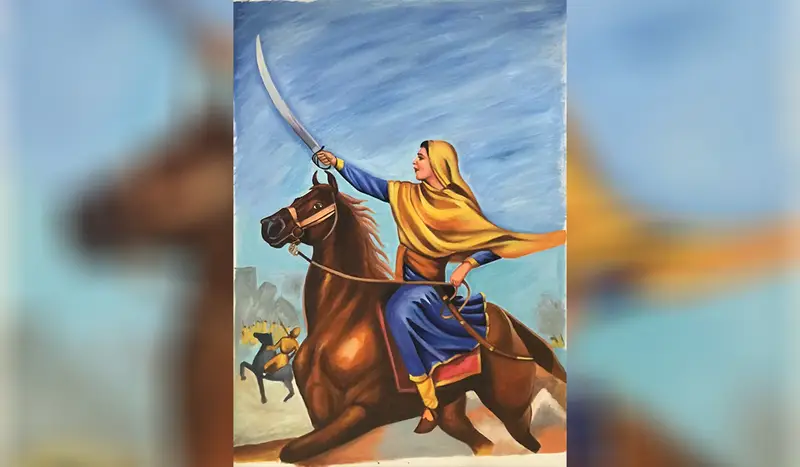

Sada Kaur: The Power Behind the Rise of Maharaja Ranjit Singh
Before the rule of Sher-e-Punjab Maharaja Ranjit Singh, Punjab was governed by the Misls. For nearly five decades, the political situation in Punjab remained unstable. Around the middle of the 18th century, Ahmad Shah Abdali held great influence over Punjab. Abdali invaded Punjab eight times and looted its wealth. During this period, a popular saying emerged in Punjab:
“Whatever you eat and drink is yours; what remains belongs to Ahmad Shah.”
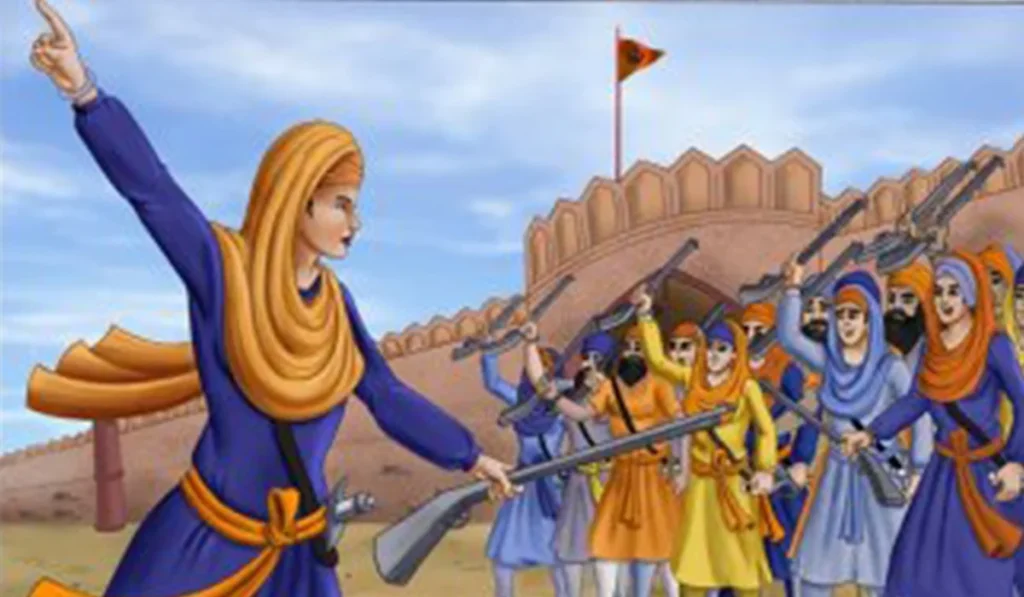
After Abdali, although his descendants continued to claim authority over Punjab, they were neither as powerful nor as politically skilled as him. The chiefs of the Misls began capturing more and more territory. These included the Ahluwalia Misl, Singhpuria or Faizalpuria Misl, Sukerchakia Misl, Nishanwalia Misl, Bhangi Misl, Kanhaiya Misl, Nakai Misl, Dallewalia Misl, Shaheed Misl, Karor Singhia Misl, Phulkian Misl and Ramgarhia Misl.
These Misls formed the political structure of Sikh rule in Punjab. Sikh rule became the rule of the Misls. Later, many of these Misls were brought under the authority of Ranjit Singh, the grandson of Charat Singh of the Sukerchakia Misl and son of Maha Singh. Maharaja Ranjit Singh, who later became the sovereign ruler of Punjab, ended the Misl system, made Lahore his capital and established an independent kingdom.
Maharaja Ranjit Singh was born in 1780 in Gujranwala. After the death of his father Maha Singh during his childhood, the leadership of the Sukerchakia Misl came into his hands. As he took charge of the Misl, he began the process of establishing an independent state in Punjab. The greatest help in this task came from his mother-in-law, Sardarni Sada Kaur. Historians believe that for nearly three decades, Sada Kaur played a crucial role in Punjab’s politics.
Early Life and Marriage
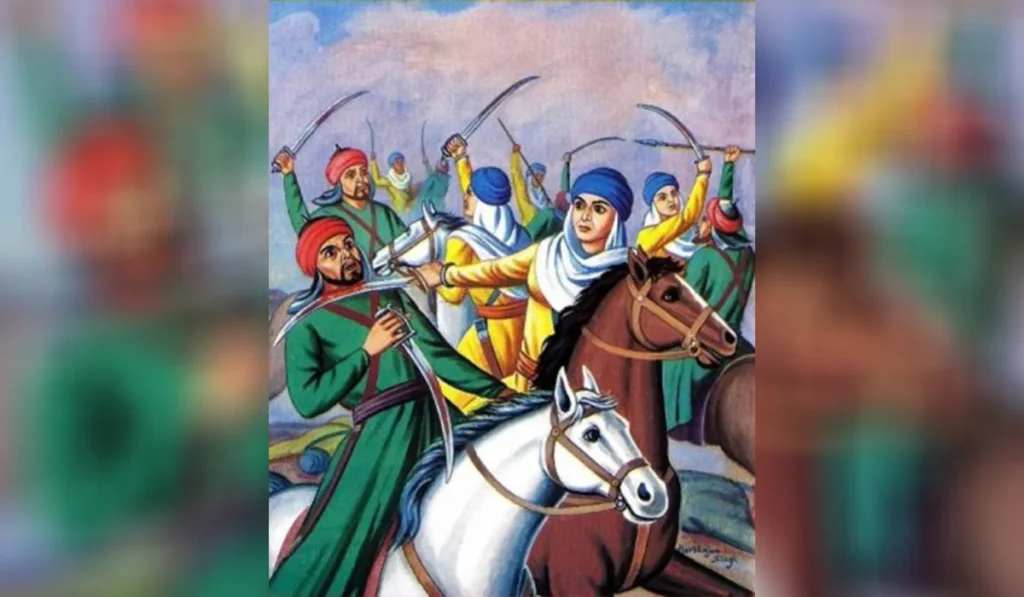
In Ferozepur district, there was a village of Sardars called Rauke. During the Misl period, a chief named Dasondha Singh lived there. A daughter was born in his house, and he named her Sada Kaur. When Sada Kaur grew up, Dasondha Singh married her to Gurbakhsh Singh, son of Jai Singh Kanhaiya, the chief of the powerful Kanhaiya Misl. Gurbakhsh Singh was only nine years old at the time of marriage.
When Gurbakhsh Singh turned 25, he was killed in battle. Sada Kaur became a widow, and at that time she had a young daughter in her lap.
The Kanhaiya Misl was once one of the most powerful Misls of Punjab. Jai Singh had made Batala his capital and conquered distant regions. At one point, the Kanhaiya Misl ruled from Kangra to Multan. In the early period, the Kanhaiya and Ramgarhia Misls often fought together. When the Sikhs first conquered Kasur, these two Misls were united and shared the spoils of war.
However, conflict began when the Ramgarhia chiefs looted wealth worth lakhs from the haveli of Diwan Dila Ram but did not give the Kanhaiyas their share. This created bitterness between the two Misls.
Rivalry Between Kanhaiyas and Ramgarhias
Just as Jai Singh of the Kanhaiya Misl was brave and powerful, Jassa Singh Ramgarhia of the Ramgarhia Misl was also a great warrior. The hill chiefs from Kangra had accepted his authority and paid him two lakh rupees annually.
Jassa Singh Ahluwalia, Charat Singh Sukerchakia and Jai Singh Kanhaiya had all suffered defeat at the hands of Jassa Singh Ramgarhia at different times. Therefore, they decided to unite and take revenge. Hill rulers, Sukerchakias, Ahluwalias and Kanhaiyas fought Jassa Singh Ramgarhia for four years. Eventually, the larger alliance won. Jai Singh captured Jassa Singh’s territories and forced him toward Patiala.
At this time, Jai Singh’s power was at its peak. All the hill chiefs paid tribute to him, and his influence extended from Kangra to Multan. After the death of Charat Singh of the Sukerchakia Misl, Jai Singh also looked after Maha Singh. It was Jai Singh who arranged Maha Singh’s marriage in Sangrur. However, a dispute arose between Maha Singh and Jai Singh over Jammu.
In 1783, Maha Singh looted Jammu. When Jai Singh came to know of it, he disapproved. Maha Singh knew that Jai Singh was far more powerful than him, but he still refused to return the loot.
The Turning Point: Death of Gurbakhsh Singh
In 1784, on Diwali, chiefs of all Misls gathered at Amritsar. Maha Singh came to Jai Singh with a tray of sweets to seek forgiveness. But Jai Singh covered his face with a sheet and lay silent. Maha Singh stood with folded hands for a long time, then returned to his camp in frustration.
Jai Singh then sent a message that unless Maha Singh paid one crore rupees for the loot of Jammu, he would not be allowed to leave Amritsar. Frightened, Maha Singh sought help from the Nakais. A message was also sent to Jassa Singh Ramgarhia that the time had come to take revenge on Jai Singh. Ramgarhia reached the banks of the Sutlej and joined Maha Singh.
Messages were also sent to hill chiefs and all those chiefs who were resentful of Jai Singh. When Jai Singh learned of this, he ordered his chiefs to capture Maha Singh and bring him before him. A battle took place between Amritsar and Majitha near Naga Sohian, but no one could capture Maha Singh.
Jai Singh then received news that Jassa Singh Ramgarhia was looting the Batala region. Sansar Chand was also marching against him with his army from the hills. Amar Singh and Fateh Singh Kanhaiya, powerful chiefs of the Misl, had joined Maha Singh. Hearing all this, the old chief Jai Singh rose in anger like a lion. He himself faced Maha Singh and sent his only son Gurbakhsh Singh to fight Jassa Singh.
A battle between the Kanhaiyas and Ramgarhias took place at Jahadpur, four kos from Batala. The battle had barely begun when a bullet struck Gurbakhsh Singh, killing him.
His death caused panic in the army. The Ramgarhia forces surrounded Batala. Sada Kaur fled barefoot and reached the fort of Sohian. When Jai Singh heard of this tragedy, he stood on the battlefield weeping and cried that someone should shoot him, for he had no reason left to live.
Jai Singh lost most of his territory. Some of it was captured by Maha Singh, some by Jassa Singh and the hill areas by Sansar Chand. Only the fort of Kangra had not yet fallen. After the death of his son, Jai Singh became almost half-mad. It was then that Sada Kaur, the widow of Gurbakhsh Singh, took charge of affairs.
Sada Kaur’s Political Masterstroke
At that time, Maha Singh’s wife, Mai Malwain, whose marriage to Maha Singh had been arranged by Jai Singh himself, had gone to Jwalamukhi for pilgrimage. Using political wisdom, Sada Kaur went to Jwalamukhi and arranged the engagement of her daughter Mehtab Kaur with Mai Malwain’s son, Ranjit Singh.
Through this political move, Sada Kaur brought Maha Singh to her side. She also gave the Kangra fort to Sansar Chand and gained his support. With the armies of Maha Singh and Sansar Chand, she confronted the Ramgarhias. Within a short time, Batala again came under Sada Kaur’s control.
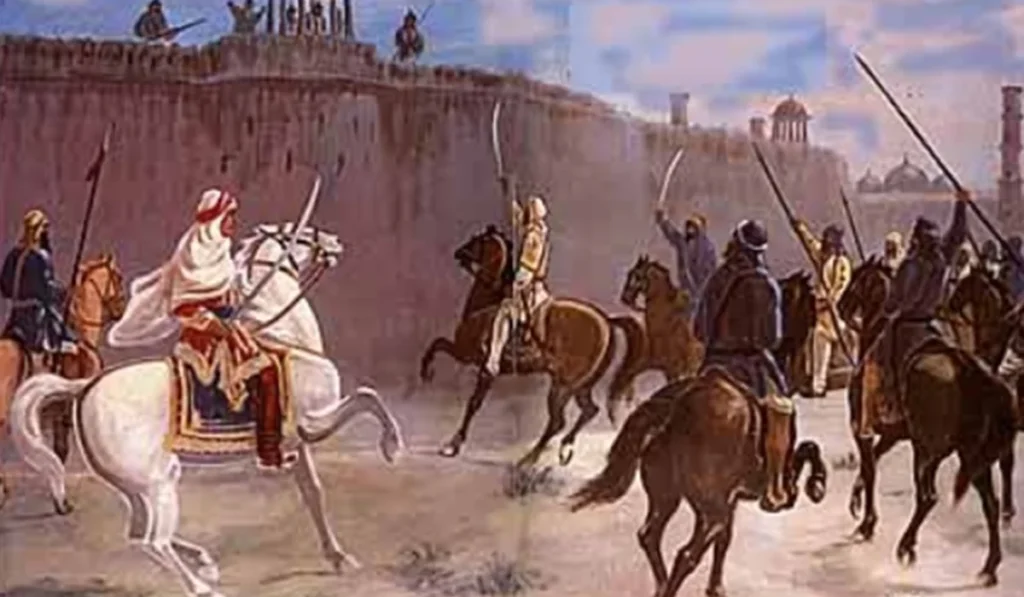
After Maha Singh’s death, Jai Singh married his granddaughter to Ranjit Singh. In the same year as the marriage, Jai Singh also passed away. The entire responsibility of the Kanhaiya Misl then fell upon Sada Kaur.
After Gurbakhsh Singh’s death, Jai Singh had two sons. Half of the estate was given to them, while the other half was managed by Sada Kaur, widow of Gurbakhsh Singh. Apart from the Batala estate, Sada Kaur also had to look after Ranjit Singh’s estate, as he was still very young.
She built a strong fort outside Batala and secured her capital. In 1796, she prepared to avenge her husband’s death from the Ramgarhias. Along with Jai Singh’s sons Nidhan Singh and Bhag Singh, as well as Jaimal Singh, Tara Singh Gheba, Khushal Singhpuria, Baghel Singh Jhabalia and Bhag Singh Ahluwalia, she first drove the Ramgarhias out of Majha and then seized their territories in Doaba.
Finally, she surrounded Jassa Singh Ramgarhia in the fort of Miani on the banks of the Beas. Sada Kaur also sent a message to Ranjit Singh, asking him to bring his army quickly so that she could take revenge on the Ramgarhias. Ranjit Singh’s army soon reached Amritsar, where Sada Kaur personally welcomed him.
At that time, Baba Sahib Singh Bedi was present in Amritsar. Jassa Singh Ramgarhia sent his men to him, requesting mediation. When Ranjit Singh bowed before Baba Sahib Singh Bedi, Baba Ji angrily told him that instead of fighting among themselves, they should go to Kasur, where Hindus and cows were being oppressed daily.
Baba Ji advised him to persuade Sada Kaur to make peace. But Sada Kaur refused. Baba Sahib Singh Bedi then told Jassa Singh’s men to remain inside the fort with courage, saying that the Guru would resolve the matter.
By divine will, on the third night, a flood came and swept away much of Sada Kaur’s army. By morning, Ranjit Singh left for Ramnagar, Nidhan Singh and Bhag Singh returned to Sohian, Jaimal Singh went back to Fatehgarh and the other allies also withdrew. Helplessly, Sada Kaur too returned to Batala.
But the anger in her heart did not fade. Whenever she remembered that the Ramgarhias had killed her husband, she burned with rage. Some years later, after Jassa Singh Ramgarhia died, she attacked his son Jodh Singh. Jodh Singh faced her army near Badala but was defeated. Though Jodh Singh escaped, his entire camp fell into Sada Kaur’s hands.
She remained an enemy of the Ramgarhias until her last breath. When Ranjit Singh captured Lahore and assumed the title of Maharaja, Sada Kaur persuaded him to confiscate all Ramgarhia territories. She also had the territories of Jai Singh’s two sons confiscated because they had abandoned her during the Miani campaign. Apart from this, the territories of all her smaller enemies were also seized.
The Ladder Behind Ranjit Singh’s Rise
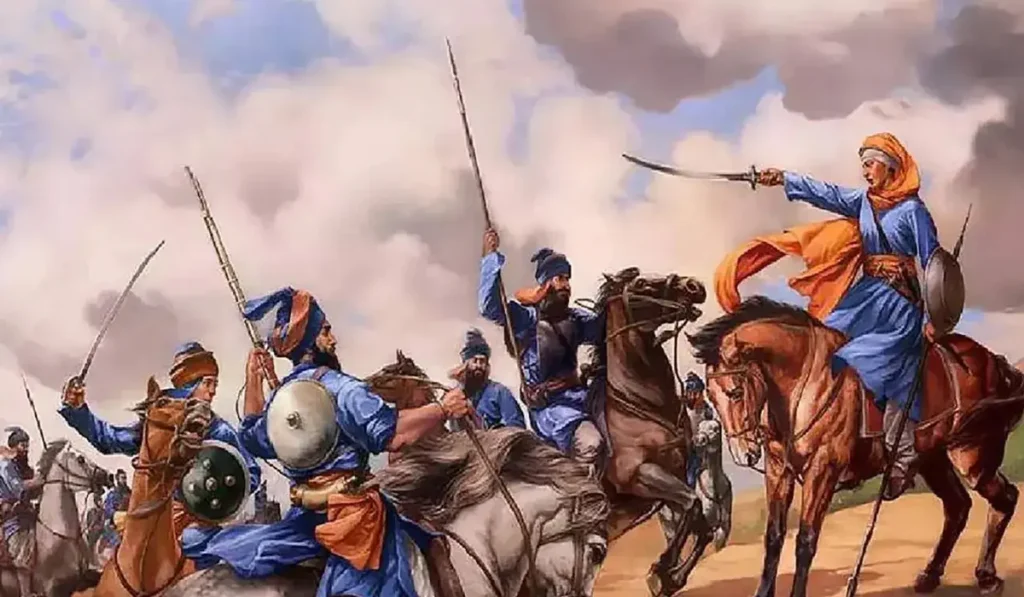
This is why historians agree that Sada Kaur was the ladder through which Ranjit Singh climbed to the position of Maharaja. When he was young, she protected him like a son. Several times, the Chathas surrounded the young chief at Ramnagar, but Sada Kaur always arrived in time to save him.
Whenever Zaman Shah invaded Punjab and Sikh chiefs abandoned their territories to flee into forests and hills, Sada Kaur gave shelter to Ranjit Singh in her fort of Atalgarh near Mukerian and protected his wealth.
In 1799, when Lahore was captured, Sada Kaur was with him. A few months later, when Gulab Singh Bhangi came with other Misl chiefs to fight Ranjit Singh, Sada Kaur fought alongside the Maharaja for three months near Bhasin.
In short, from the early days, Sada Kaur fully supported Ranjit Singh in battles, treaties and political negotiations. Because of her support, Ranjit Singh’s campaigns often succeeded quickly.
In 1802, Mehtab Kaur gave birth to a prince, but the child died at about one and a half years of age. Later, in 1807, Mehtab Kaur gave birth to twin sons, Sher Singh and Tara Singh, in Batala. When they grew slightly older, Sada Kaur took them with her to Haridwar for pilgrimage. On the way, she met Begum Samru of Sardhana, exchanged clothes with her and became her symbolic sister. After bathing at Haridwar, she returned to Batala.
In 1809, Mehtab Kaur fell ill and passed away. After her death, Sada Kaur herself raised both princes.
Conflict With Maharaja Ranjit Singh
After some time, differences arose between Maharaja Ranjit Singh and Sada Kaur over jagirs. The Maharaja also turned the princes against their grandmother by telling them that she was unwilling to give her estate to Sher Singh. He also created friction between Sada Kaur and Visakha Singh, the old Diwan of the Kanhaiya Misl from Jai Singh’s time.
The Maharaja went to Batala and personally asked Sada Kaur to give half of her territory as jagir to Prince Sher Singh and the other half to Tara Singh. Sada Kaur refused and warned that if this was forced upon her, she would go to her territory across the Sutlej, Badhni in Faridkot district.
The Maharaja hesitated and returned to Lahore. He then wrote her an affectionate letter, asking her to come and meet him. When Sada Kaur reached Lahore, her seal was used to transfer the entire territory to Prince Sher Singh, and she was confined in the fort.
But Sada Kaur was extremely clever. Near the fort was a shrine associated with Guru Arjan Dev Ji. Pretending to go there for darshan, she came out, sat in a closed carriage and headed toward Mukerian, her own territory. When the Maharaja came to know, he had her captured on the way and brought back. She was then confined in the palace.
The Maharaja ordered Sardar Lehna Singh Majithia to confiscate all of Sada Kaur’s territories. In the end, great injustice was done to her. For two days, she was given neither food nor water. On the third day, she submitted to the Maharaja’s soldiers and handed over her fort of Atalgarh as well.
She was then taken to Amritsar. Until her death in 1832, she remained under confinement there.
Kunwar Nau Nihal Singh personally performed Sada Kaur’s cremation. Maharaja Ranjit Singh took all of Sada Kaur’s valuable belongings from her attendant Mai Desan. These items were worth nearly two lakh rupees.
Legacy of Sada Kaur
Thus ended the life of Sada Kaur, the most prominent woman of Punjab in that era. For the previous 30 years, she had held the reins of political power in her hands and made her name permanent in Punjab’s history.
Sada Kaur made Ranjit Singh a Maharaja. She stood by him in campaigns, difficulties, sorrows and successes. But because of her stubbornness and sharp temperament, she eventually lost her entire estate. The territories of Batala and Mukerian were given to Prince Sher Singh as jagir, while the hill areas became part of the state. Until her death, she retained control only over Badhni, from where the British later removed the Maharaja’s palanquin by force. After Sada Kaur’s death, the British brought this territory under their control.
As long as Sada Kaur lived, she remained a dominant force in Punjab’s politics for nearly 40 years.

Leave a Comment