

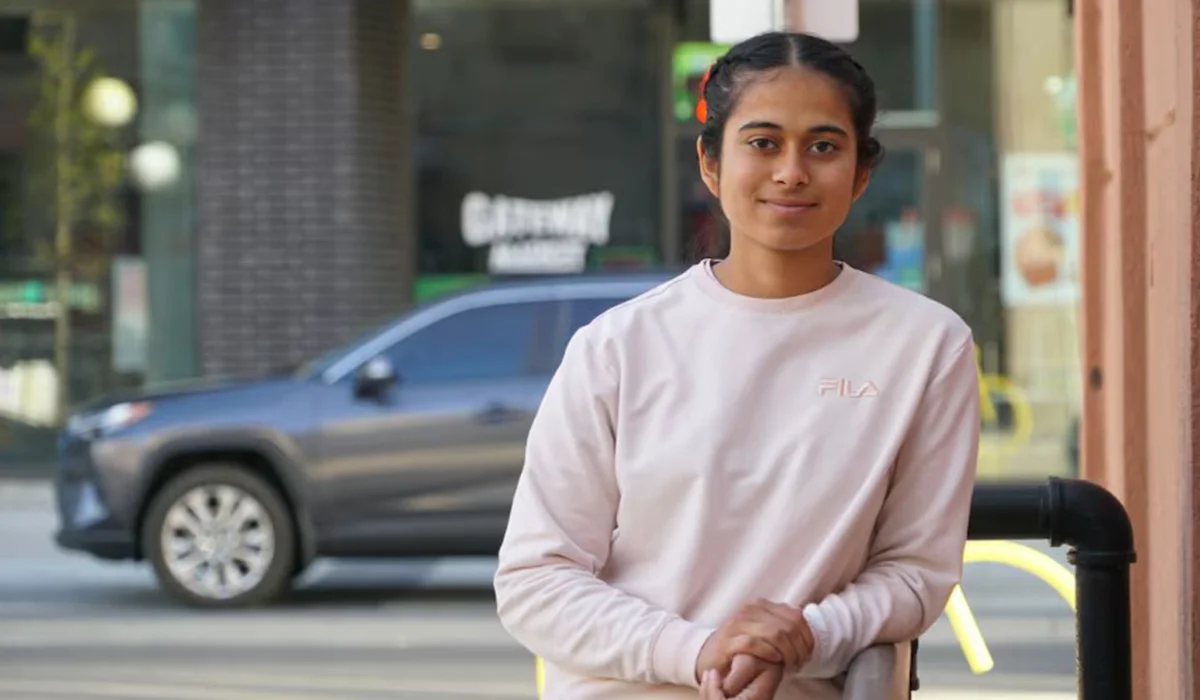

Gurnoor Kaur Wins Canada’s Highest Science Honour
Big breakthroughs do not always emerge from massive laboratories or billion-dollar research centres. Sometimes, they begin with a question asked by a young mind. The story of 17-year-old Gurnoor Kaur is one such example. This student of Punjabi origin has found a solution to a medical problem that had puzzled scientists around the world for the past 53 years.
Gurnoor, who lives in Canada, has roots in Punjab. She has found a way to correct a major flaw in the pulse oximeter, the small device that hospitals around the world rely on every day. Her discovery earned her the top honour at the 2026 Canada-Wide Science Fair, the “Best Project Award for Innovation.” This is not just the victory of a student; it is a moment of pride for Punjabis across the world.
A Small Device, But a Big Problem
A pulse oximeter is a clip-like device placed on a finger. It measures the oxygen level in the blood. Doctors use this reading to decide whether a patient needs oxygen, hospital care or admission to the ICU. During the COVID-19 pandemic, we all saw how important this device became. The treatment of millions of people depended on its readings.
But there was a concern that had existed for years. Several studies showed that in people with darker skin tones, this device sometimes showed oxygen levels higher than they actually were. The result? A patient’s condition could appear less serious than it really was, leading to delays in treatment. Scientists knew about this issue, but a solid solution had remained elusive.
A Question That Changed Everything
Gurnoor’s journey began with a simple question. She was working on an artificial intelligence-based health project when she noticed that the system was giving accurate results for people with lighter skin tones, but showed higher errors for people with darker skin tones.
This troubled her. She wondered: If a medical device is meant to save lives, why should it not work equally well for everyone? Most people might have dismissed this as a “technical limitation.” But Gurnoor decided to search for an answer.
When a School Student Became a Researcher
While many students her age were busy with school, sports and social media, Gurnoor spent months studying medical journals, physics and mathematical models. She realised that the problem was not only about data. The issue lay in the mathematics behind how pulse oximeters work. Existing models assumed that melanin in the skin affects light in the same way for everyone. But darker skin scatters light differently, which can lead to errors in calculation.
After understanding this, Gurnoor developed a new mathematical model. She named it “EigenPulse.” EigenPulse accounts for the differences in light caused by skin tone and tissue. It helps a pulse oximeter understand whether a change in reading is due to skin colour or a genuine drop in blood oxygen.
In simple terms, this could make readings more accurate and reliable for patients of every race and skin tone. For Gurnoor, this was not just a project. She believes healthcare should be equal for everyone. As she said, “Medical technology should be equally accurate for everyone. A person’s skin colour should never affect the accuracy of a device doctors depend on to save lives.”
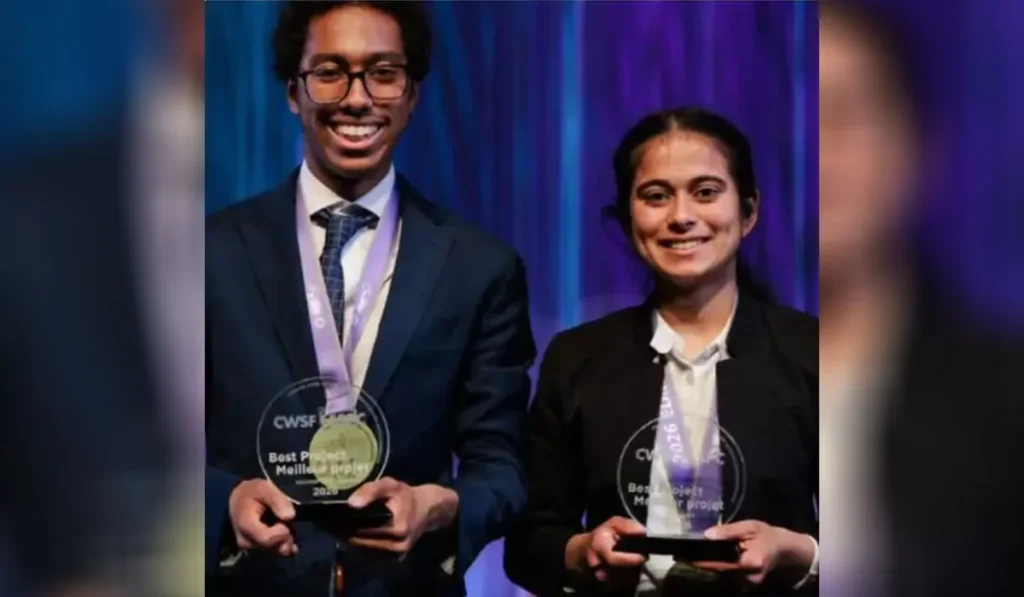
At the 64th Canada-Wide Science Fair held in Edmonton, Alberta, 390 young participants from across the country presented 344 projects. More than 250 scientists, professors and doctors evaluated them. Among hundreds of projects, Gurnoor’s “EigenPulse” emerged as one of the most impactful innovations and won the highest award in the innovation category.
Gurnoor’s story is not just about science. It is also about the spirit that has run through Punjabi families for generations: hard work, education and the courage to create something new. What makes this achievement even more special is that it did not come from a big company. It began with a question in the mind of a school student and turned into a possible solution to an old global healthcare problem.
Today, 17-year-old Gurnoor Kaur is not only a brilliant student in Canada, but also an inspiration for young people in Punjab. Her story teaches us one powerful lesson: age may be small, but when the questions are big and the determination to find answers is strong, even a young mind can change the world.
Leave a Comment