

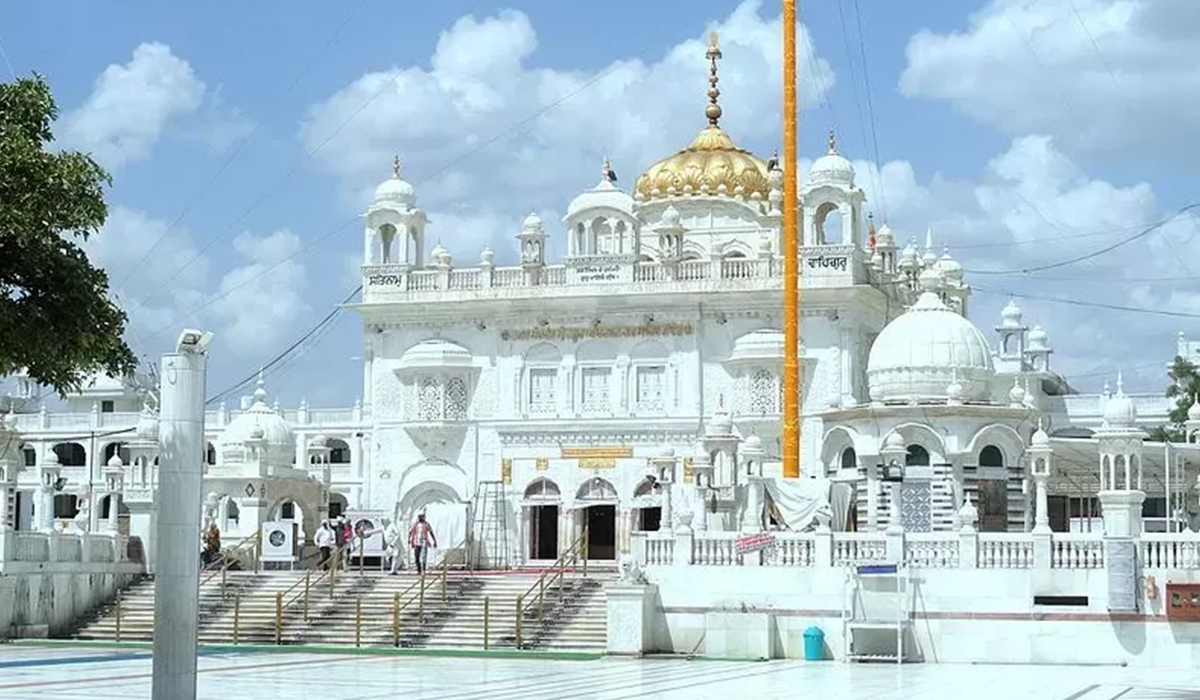

Maharashtra’s Proposed Bill on Sikh Gurdwara Governance Deserves Panthic Engagement, Not Reflexive Rejection
The Maharashtra Cabinet’s approval of the draft Takhat Sachkhand Shri Hazur Abchalnagar Sahib Gurudwara Bill, 2024 is the immediate trigger for this piece. It is a significant legislative event — one that has been long in coming and that the Sikh Panth, wherever it is domiciled, cannot afford to ignore. The Bill, prepared by Maharashtra’s Revenue and Forests Department, proposes to repeal and replace the nearly seven-decade-old Nanded Sikh Gurudwara Sachkhand Shri Hazur Apchalnagar Sahib Act, 1956 — a statute rooted in the era of Hyderabad State, carried forward when Maharashtra was carved out on linguistic lines on 1 November 1956, and which has governed the administration of the Fifth Takhat ever since.
We are told that the 32-page draft has been prepared in consultation with Sikh scholars, and that a conscious effort has been made to align its key definitions — particularly of who is a Sikh — with those of the Sikh Gurdwaras Act, 1925, as amended. That is a welcome acknowledgement. Let us examine how far that alignment has been achieved, who gains under the new dispensation, who loses, and what larger questions this legislation raises for Panthic governance across India.
The Definition of a “Sikh”: Broadly Right, But Incomplete
Section 2(l) of the Bill defines a Sikh as a person “who professes the Sikh religion, believes and follows the teachings of Shri Guru Granth Sahib and the ten Gurus only.” For any question of whether a living person qualifies, he must make a solemn declaration: “I solemnly affirm that I am a keshdhari Sikh, that I believe in and follow the teachings of Shri Guru Granth Sahib and the ten Gurus only, and that I have no other religion.”
This is broadly consonant with the SGPC Act’s definition, and the insistence on kesh as a non-negotiable marker of Sikh identity is consistent with Panthic tradition. The Bill also defines patit (Section 2h) and Amritdhari Sikh (Section 2m) in terms that mirror established usage.
However, the alignment is not complete. The Sikh Gurdwaras (Amendment) Act, 2016 — passed by Parliament with retrospective effect — added significant additional qualifications and disqualifications to the SGPC Act’s voter and membership provisions. Specifically, it tightened the bar against consumption of tobacco and alcohol, and introduced the patit disqualification with greater precision. The Maharashtra Bill’s voter qualifications (Section 7) require that an elector be a keshdhari Sikh who does not smoke or consume tobacco in any form — which is correct. But the prohibition on alcohol that features as a membership disqualification in Section 8(g) does not find explicit place in the voter qualification under Section 7. This is an inconsistency that the drafters would do well to address before the Bill goes to the Maharashtra Legislature: it creates an anomaly whereby a voter could be disqualified as a member on alcohol grounds but not barred from the electoral rolls.
Who Gains, Who Loses: The New Board Composition
The 17-member Board under Section 6 deserves close scrutiny. Three members are to be elected from amongst Sikhs of the Chhatrapati Sambhajinagar Division (Marathwada). This is a genuinely new and welcome provision — for the first time, local sangat will have elected representation on the Board, ending the anomaly of a purely nominated body managing a Takhat. Two members are to be nominated by SGPC, Amritsar.
The remaining twelve members are nominated by the Government of Maharashtra, distributed across various divisions of the state, with provision for a Sikh MP from Maharashtra, a Sikh member of the Maharashtra Legislature, and two retired officers from the Sikh community of Maharashtra — retired IAS, IPS, bankers, doctors and similar professionals.
Viewed against the 1956 Act’s composition — under which SGPC had four nominees and Chief Khalsa Diwan had one — the shift is notable. SGPC’s representation has been halved from four to two. The Chief Khalsa Diwan seat has been abolished entirely. Government-nominated members now account for twelve of seventeen seats. The Collector, Nanded and Additional Collector are permanent invitees — not voting members, their role confined to law and order, crowd management, and traffic.
One can understand the Maharashtra government’s logic: local Sikh representation is being strengthened through the elected seats, and the professional nominees from across the state bring in competence and breadth. But the structural reality is that the Government of Maharashtra controls the composition of the Board to an overwhelming degree. The President and Vice-President are themselves to be nominated by the Government from amongst the Board members (Section 12). This is a concentration of executive authority over a Sikh Takhat that should give the Panth pause.
The Board is a body corporate with perpetual succession (Section 5), and the Jathedar of the Takhat — whose authority in matters of Sikh theology and conduct is supreme — is not a member of the Board. He administers the oath to incoming members (Section 11(3)) and is appointed by the Board, but the governance architecture places management firmly with the nominated Board and its government-appointed President.
The All India Gurdwara Act: A Window Now Firmly Shut
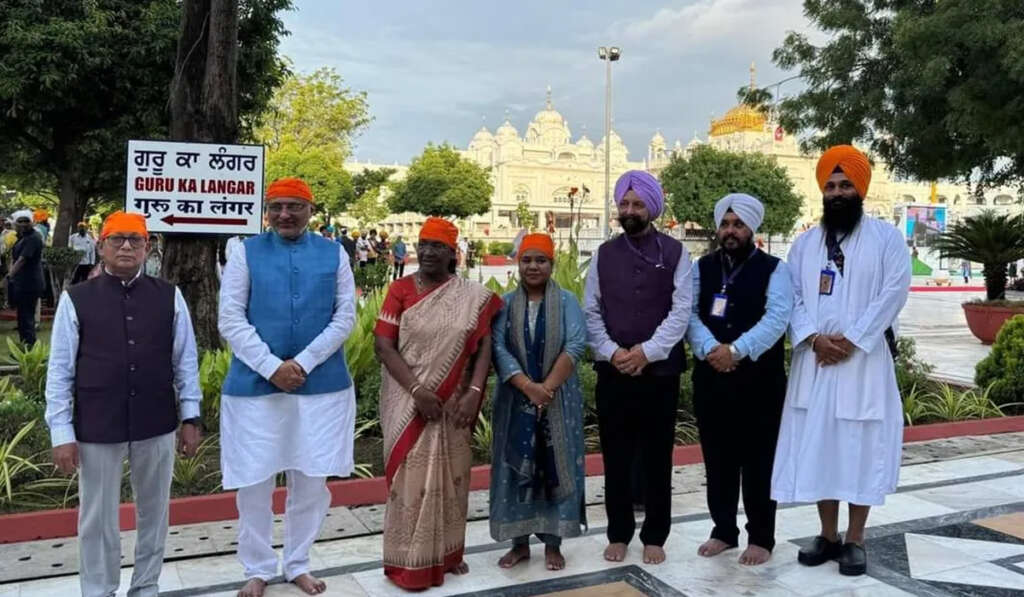
The controversy around Hazur Sahib’s governance is, in part, a consequence of the Panth’s own failure of institutional imagination. There was a moment — around the year 2000, when the Akali Dal was a partner in the NDA government in Delhi — when an All India Gurdwara Act was within reach. A third draft had been circulated. The political will existed, or should have. Nothing came of it. The window has since closed. Haryana has its own separate Gurdwara legislation and its own management structure. Delhi has the Delhi Sikh Gurdwara Management Committee under its own statute. The Supreme Court has upheld the exclusion of Haryana from SGPC’s jurisdiction. Any prospect of a unified All India Gurdwara Act that would bring Hazur Sahib, Patna Sahib and Damdama Sahib under a common Panthic governance framework is, for now, a matter of historical regret rather than practical possibility.
This reality makes it all the more important that the Panth engages seriously with what the Maharashtra government has proposed, rather than dismissing it as state interference. The question is not whether any law will govern Hazur Sahib — some law will, and does. The question is whether that law is as Panthic in its orientation as it can be made to be, given the constitutional and federal constraints that apply.
The Sahajdhari Question: Unresolved and Urgent
There is a larger unresolved question that shadows any discussion of Sikh electoral governance: the status of Sahajdhari Sikhs — those who accept Sikh teachings and live by Sikh values but have not taken Amrit and do not necessarily maintain kesh. The 2016 amendment to the SGPC Act effectively disenfranchised Sahajdhari Sikhs, restricting the electoral rolls to keshdhari Sikhs. The matter is sub-judice. The Maharashtra Bill, in its voter qualification clause (Section 7), follows the same keshdhari-only approach.
This is not merely a technical legal question. It goes to the heart of who constitutes the Sikh qaum and who has a voice in governing its premier institutions. The voting rights of Sahajdhari Sikhs must be resolved — through judicial determination or legislative consensus — at the earliest. To leave this question hanging is to leave a significant section of those who identify with the Sikh faith without institutional representation.
SGPC Elections: Long Overdue
The Maharashtra Bill also brings into sharp relief a parallel governance crisis closer to home. The last SGPC elections were held in 2011 — now fourteen years ago. An institution that is structured as a democratically elected body but has not faced its electorate in a decade and a half has a legitimacy problem, regardless of how efficiently it functions. As and when the SGPC General House meeting is fixed and convened, that meeting will be attended, ex officio, by the Jathedar of Akal Takhat — and the Jathedars of the other Takhats attend SGPC General House meetings in that same capacity. It would be fitting, and symbolically important, for Jathedar Kulwant Singh, the Jathedar of Takhat Sachkhand Shri Hazur Sahib, to make a point of being present at that meeting, given that the governance of his Takhat is now under active legislative scrutiny and the Panth’s collective voice needs to be heard. The SGPC General House must also place the question of early elections firmly on its agenda. Democratic renewal is not optional.
Terms, Tenure and Accountability: The Bill’s Structural Provisions
A few provisions of the Bill merit appreciation. The term of the Board is five years (Section 12(3)), with the President and Vice-President serving two-and-a-half year terms, renewable once — and no person can hold either office for more than two consecutive terms (Section 12(5)). This is a sound anti-entrenchment provision. The Superintendent — the chief executive officer — must be an Amritdhari Sikh with administrative experience and serves a five-year term (Section 33). The oath that every Board member takes before the Jathedar in the presence of Sri Guru Granth Sahib (Schedule II) is a meaningful constitutional gesture, grounding temporal governance in spiritual accountability. It is also worth noting explicitly — for the reassurance of the sangat — that the Bill does not alter the Jathedar’s terms and conditions of service to his detriment. The existing provision that the Jathedar retires at the age of sixty continues unchanged. His position, as the spiritual and ceremonial head of the Takhat, is structurally insulated from the Board’s administrative reorganisation.
The Bill also contains robust provisions for the protection of Gurdwara property (Section 52): no land or immovable property of the Gurdwara can be acquired by any government or local authority without following due process of law and paying lawful compensation. Given the concerns that have been voiced in recent years about development pressures around the Nanded complex, this provision is important.
Supersession of the Board is permitted (Section 38) but only in defined circumstances — if six or more members are disqualified, or if a senior judicial officer’s inquiry finds corruption or mismanagement — and a new Board must be constituted within six months of supersession. These are reasonable safeguards.
Overall Assessment: For the Sikhs to Decide
On balance, the Maharashtra government deserves credit for initiating this legislative exercise and for consulting Sikh scholars in the process. The 1956 Act was an inheritance from a pre-Maharashtra, pre-States Reorganisation era and was overdue for replacement. The new Bill introduces elected representation for local sangat for the first time, brings the definition of Sikh closer to SGPC Act standards, provides for professional management, protects Gurdwara property, and establishes clear accountability mechanisms through audit, the courts, and the Divisional Commissioner.
The concerns are real — the dominance of government nomination in Board composition, the reduction of SGPC representation, the removal of Chief Khalsa Diwan, the inconsistency in alcohol-related voter disqualification, and the broader question of democratic deficit in Sikh institutional governance across India. These must be raised, debated, and where possible corrected before the Bill is enacted.
But ultimately, it is for the Sikhs — the sangat of Nanded, the broader Sikh community of Maharashtra, the SGPC, the Akal Takhat, and the Panth at large — to engage with this legislation and shape its final form. The Maharashtra Legislature will have the last word in law. The Panth must ensure it has the first word in substance.

Leave a Comment