

Reflections in Commemoration of the Parkash Purab of Sri Guru Hargobind Sahib Ji
Point of Inflexion in Sikhism
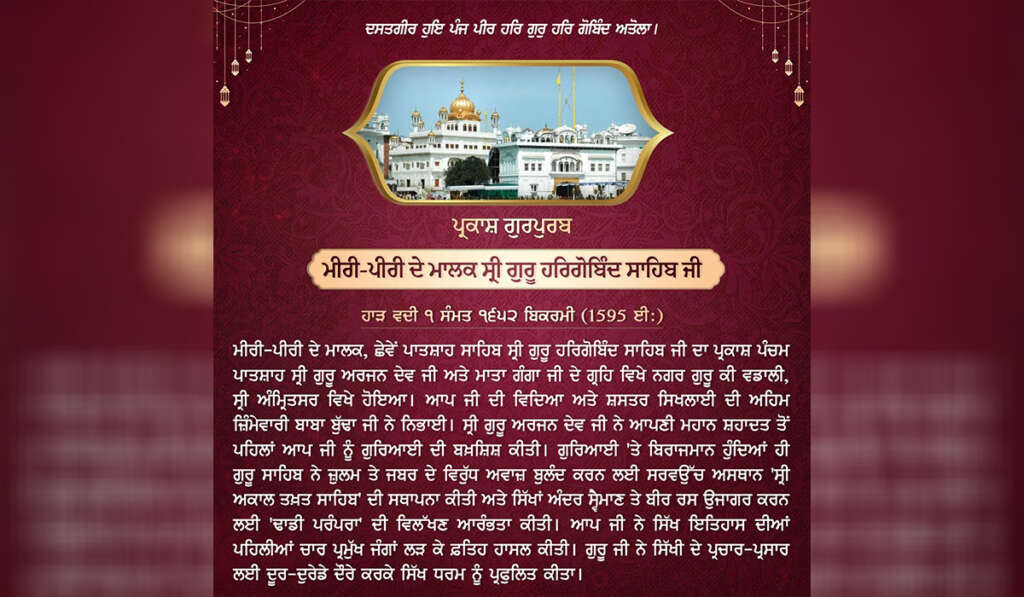
On the sacred occasion of the Parkash Purab of Sri Guru Hargobind Sahib Ji, observed today, June 30, 2026, we reflect on the profound legacy of the sixth Nanak. As the son of Guru Arjan Dev Ji, the fifth Guru and the first Sikh martyr, Guru Hargobind Sahib Ji inherited not only a sacred spiritual lineage but also a historic responsibility. His life and mission marked a defining turn in Sikh history. By introducing the concept of Miri-Piri, he symbolised the harmonious integration of temporal responsibility with spiritual authority. This visionary path set Sikhism on a bold new course, blending devotion with sovereignty, and spirituality with courage, dignity, and responsibility.
Birth and Early Life
Guru Hargobind Sahib was born on June 19, 1595, in the village of Guru Ki Wadali, in the Amritsar district of Punjab, India, to Guru Arjan Dev Ji, the fifth Sikh Guru, and Mata Ganga Ji. His early life was steeped in the teachings of Sikhism, with a particular emphasis on the spiritual education imparted by his father. However, the socio-political climate of the time, marked by Mughal oppression, necessitated a novel approach to leadership within the Sikh community.
Ascension to Guruship
In 1606, after the martyrdom of Guru Arjan Dev Ji at the hands of the Mughal Emperor Jahangir, Guru Hargobind Sahib ascended to Guruship at the tender age of 11. He symbolically donned two swords, one named Piri (spirituality) and the other Miri (temporal power), thus establishing the doctrine of Miri-Piri. This pivotal act signified the inseparable bond between the spiritual and the temporal realms, advocating for a life where spiritual pursuits and worldly responsibilities coexist.
The Concept of Miri-Piri and the Two Nishan Sahib Pennants
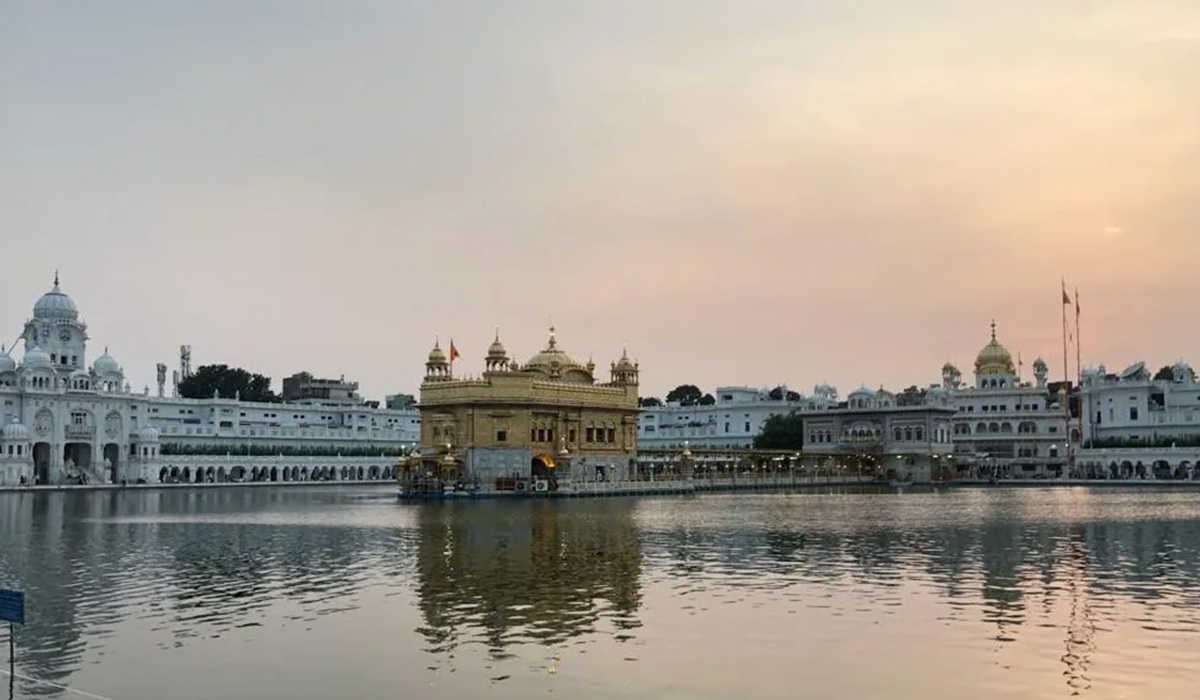
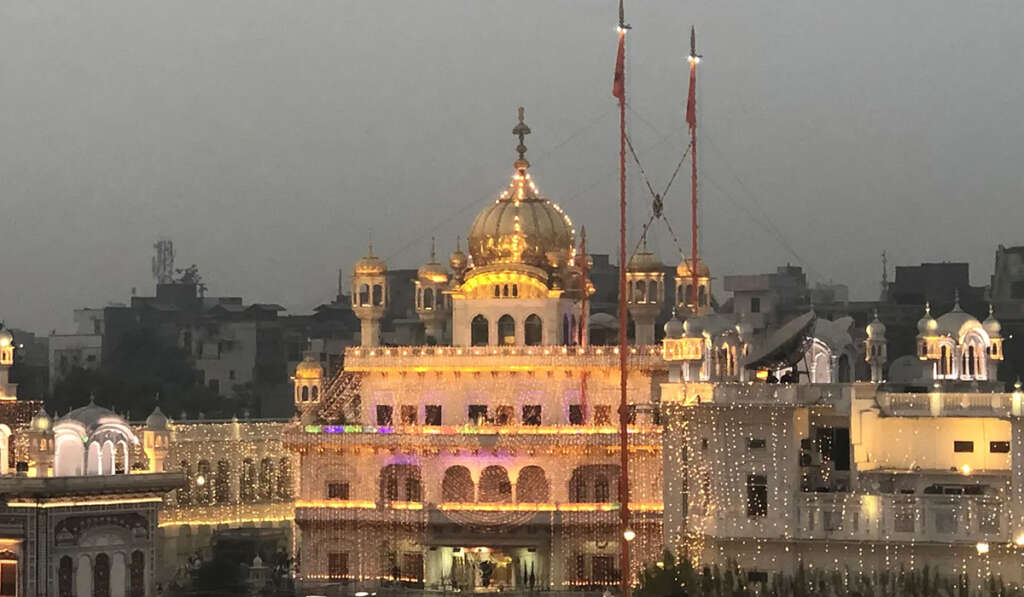
The concept of Miri-Piri was tangibly symbolized by the installation of two Nishan Sahib flags in front of the Akal Takht, the temporal command centre established by Guru Hargobind Sahib, and set against the backdrop of the Harmandir Sahib (Golden Temple), the spiritual heartland. The flag denoting Piri (spirituality) is traditionally positioned a foot and a half higher than that of Miri (temporal authority), illustrating the supremacy of spiritual governance over temporal rule. The Nishan Sahib facing the Akal Takht Sahib is made one foot shorter than its counterpart, which faces the Darbar Sahib. This visual distinction emphasized the Guru’s doctrine that, although temporal authority is essential for the safeguarding and flourishing of society, the quest for spiritual enlightenment should be the paramount goal of human existence.
Akal Takht and Relations with Mughal Authority
The Akal Takht, established by Guru Hargobind Sahib, served as the seat of Sikh temporal authority, a place from where the Guru could address and lead the community in worldly affairs. It was from here that he organised the community to withstand the challenges posed by the Mughal empire and other adversaries. His relationship with Emperor Jahangir was complex, marked by initial hostility, resulting in the Guru’s detention in Gwalior Fort. However, over time, there was a reconciliation of sorts, leading to his release, which is commemorated as Bandi Chhor Divas, coinciding with Diwali.
The Release from Gwalior and Bandi Chhor Divas
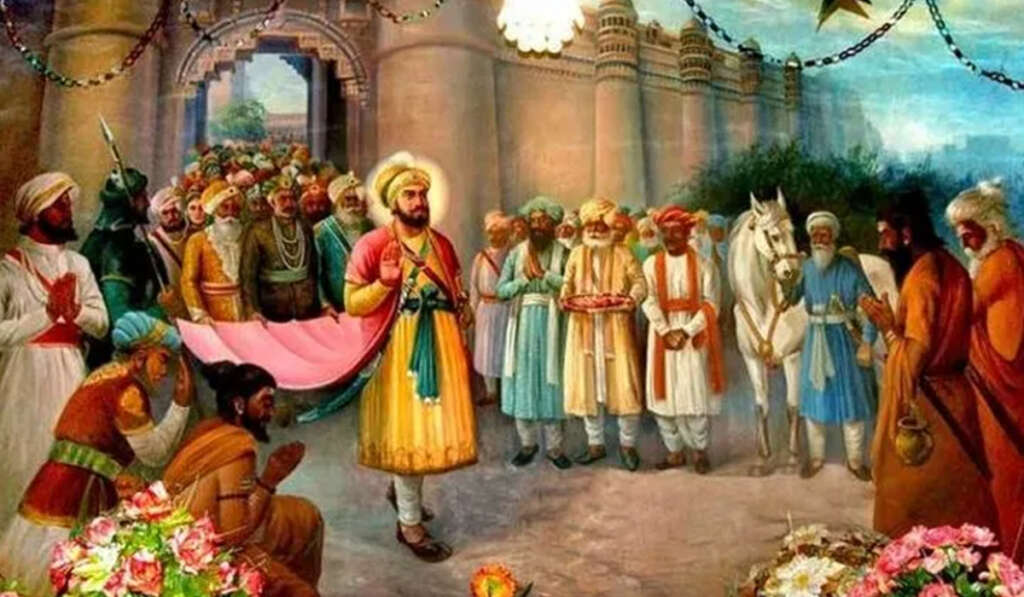
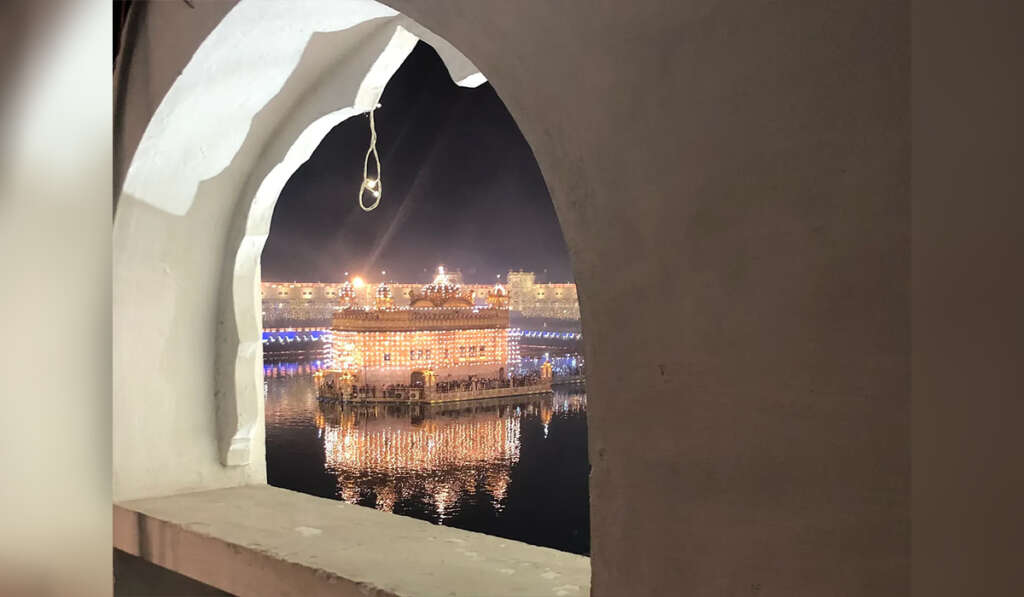
The release of Guru Hargobind Sahib from Gwalior, together with 52 Hindu kings whom he demanded be freed with him, is commemorated as Bandi Chhor Divas. This occasion reflects the Guru’s dedication to justice and liberation, reaching out beyond the Sikh community to all the oppressed. The Golden Temple Complex in Amritsar is bathed in lights and spectacular fireworks on this event, which coincides with Diwali, adding to the festivities and the spirit of freedom and joy.
His Passing and Eternal Legacy
Guru Hargobind Sahib’s passing in 1644 signified the transition from one epoch to another, with the Guruship being passed on to his grandson, Guru Har Rai. His legacy, nevertheless, continues to be immortalized within the Sikh tradition, not just through the physical institutions such as the Akal Takhat which he founded. While Guru Hargobind, the sixth Sikh Guru, did compose verses, these are not included in the Guru Granth Sahib. The Guru Granth Sahib, initially compiled as the Adi Granth by his father, the fifth Sikh Guru, Guru Arjan Dev Ji, contained the hymns of the first five Sikh Gurus (Guru Nanak, Guru Angad, Guru Amar Das, Guru Ram Das, Guru Arjan).
Later, when the tenth Sikh Guru, Guru Gobind Singh Ji, meticulously reconstructed what is now venerated as the eternal manifestation of the living Guru of the Sikhs, the Sri Guru Granth Sahib, while at Damdama Sahib (Talwandi Sabo) – after the original manuscripts had been lost in the floodwaters of the Sirsa river during the perilous journey from Anandpur Sahib to Chamkaur Sahib – he included only the invaluable verses penned by his father, the ninth Guru, Guru Tegh Bahadur Ji (Salok Mahala 9). He decided against incorporating his own hymns or those by any of the subsequent Gurus after Guru Arjan Dev Ji. Consequently, Guru Hargobind’s compositions are not included in the Guru Granth Sahib, but they may be found in other Sikh scriptures or texts.
A Day of Reflection: Reclaiming the Spirit of the Akal Takht
The Parkash Purab of Sri Guru Hargobind Sahib Ji, observed today, June 30, 2026, offers a sacred occasion to reflect on the life and legacy of the sixth Nanak, whose mission reshaped Sikh history. Born into the house of Guru Arjan Dev Ji, the fifth Guru and the first Sikh martyr, Guru Hargobind Sahib Ji came to embody both spiritual depth and sovereign responsibility. In the aftermath of his father’s martyrdom, he gave institutional expression to this vision through the establishment of Sri Akal Takht Sahib and the timeless doctrine of Miri-Piri, integrating spiritual authority with temporal responsibility.
This occasion is not merely commemorative; it offers a meaningful moment for the wider Sikh Panth—across geographies and generations—to reflect on the institutional structures that govern our collective spiritual and temporal life. In particular, it is a timely juncture to re-evaluate the criteria, authority, and procedure for appointing and removing the Jathedar of Sri Akal Takht Sahib. These discussions must transcend the administrative framework of the SGPC and involve thoughtful, inclusive dialogue among Sikh scholars, leaders, and institutions worldwide, ensuring that this sacred office remains true to its founding ideals.
Sri Guru Hargobind Sahib Ji’s legacy is one of strength, courage, and compassion. His leadership modelled the balance of devotion and action, humility and assertion. The health of our institutions must mirror the clarity, dignity, and farsightedness of our Gurus. It is a call to revive the spirit of Sri Akal Takht Sahib, not only in structure but in essence, so that it may once again serve as the unshakable moral and sovereign anchor of the Sikh community. The process of appointing the Jathedar of Sri Akal Takht Sahib is an important—though not the only—component of this broader renewal.


Leave a Comment