

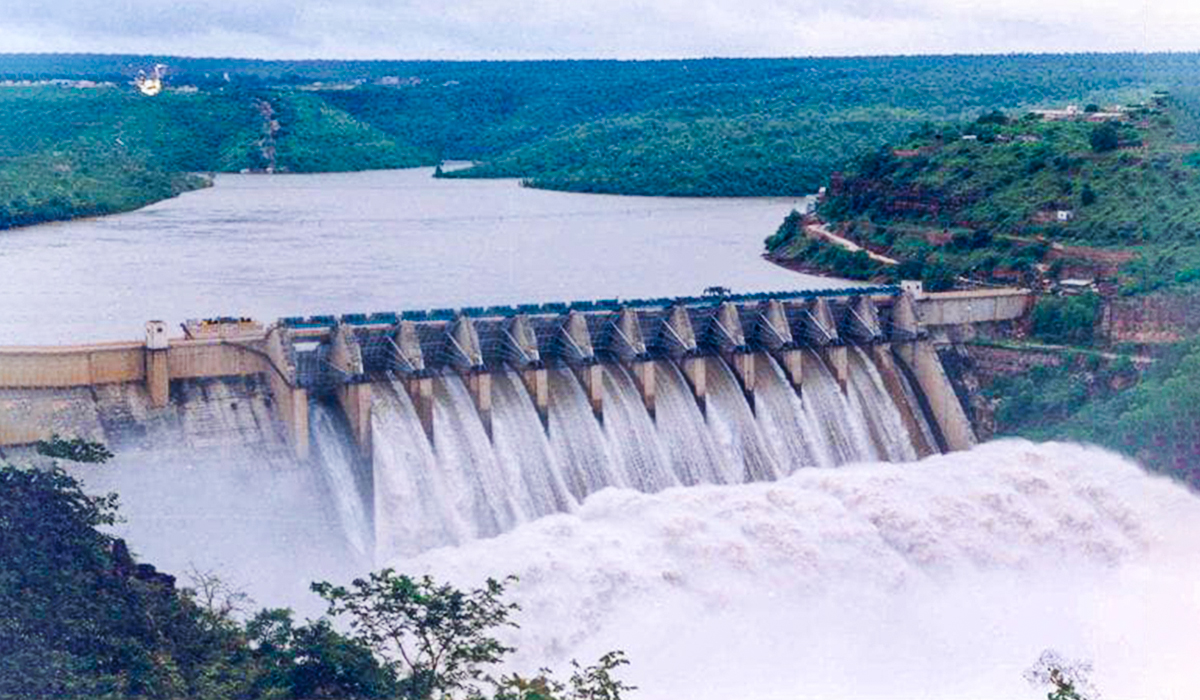

A Symbol of the Construction and Development of Modern India
Known as the true lifeline of Punjab, the Bhakra-Nangal Dam may fill to the brim during the monsoon season, but its structure has been designed in a way that has not only provided a lifeline to millions of people but has also held back enormous quantities of water and silt flowing down from the mountains.
The Bhakra-Nangal Dam is one of the most important multipurpose river valley projects in northern India. Built on the Sutlej River, this massive dam is not only an outstanding example of engineering but is also regarded as a symbol of independent India’s development, agricultural progress, power generation and efficient water management.
Located near Bhakra village in Bilaspur district of Himachal Pradesh, the dam impounds the waters of the Sutlej River to form the vast Gobind Sagar Reservoir.
Structure of the Bhakra Dam
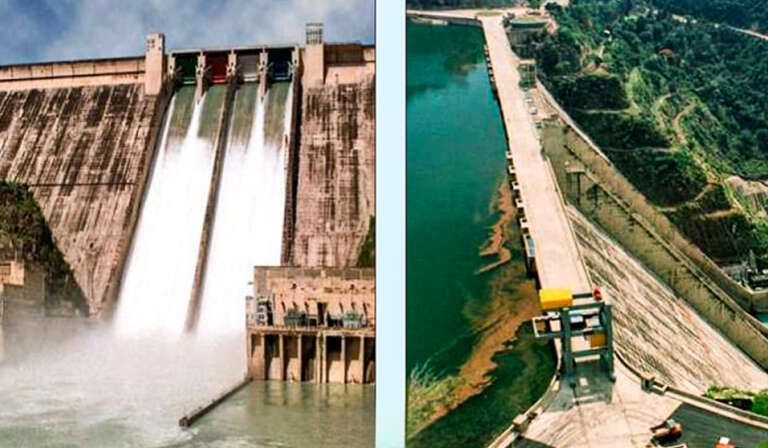
Bhakra is a concrete gravity dam. Its scale, height and construction technology place it among India’s most significant dams. The dam is approximately 225.55 metres (740 feet) high and about 518 metres long.
The Gobind Sagar Reservoir formed behind the dam spreads over an area of around 168.35 square kilometres. The reservoir is nearly 90 kilometres long and can store an enormous quantity of water.
In gravity dams such as Bhakra, the sheer mass and weight of the structure are crucial in resisting the pressure exerted by the water. As the water level in the reservoir rises, the pressure on the dam wall also increases. The dam has therefore been engineered to withstand this pressure safely.
According to available information, the Bhakra Dam has been designed in such a way that under increased water pressure it can deflect forward by approximately 1.03 inches. When the water pressure decreases, the dam returns towards its original position.
In engineering terminology, this movement is known as deflection. Such extremely small movements caused by water pressure and structural stress are considered part of normal engineering monitoring.
History of the Bhakra Dam
The idea of constructing the Bhakra Dam was conceived before India gained independence, but the project gathered real momentum after Independence.
Construction of this important project began in 1948, soon after India became independent. After nearly 15 years of work, the massive project was completed in 1963.
India’s first Prime Minister, Pandit Jawaharlal Nehru, viewed the project as closely linked to the country’s development. He regarded large dams and multipurpose river valley projects as important foundations for the progress of modern India.
Highlighting the significance of Bhakra, Nehru described projects of this kind as among the “temples of modern India.” The phrase reflected the priority that newly independent India placed on industrialisation, irrigation and electricity generation.
Constructing the dam was itself an enormous engineering challenge. Hundreds of Indian engineers, along with foreign experts, contributed to the project. Thousands of workers laboured day and night under difficult geographical conditions to turn the project into reality.
According to available accounts, the project cost approximately Rs 245 crore at the time, which represented an enormous investment for that period.
The Bhakra Dam is situated on the Sutlej River in Bilaspur district of Himachal Pradesh, close to Bhakra village. The construction of the reservoir submerged the old Bhakra village, and the area is now part of the Gobind Sagar Reservoir.
At approximately 225.55 metres in height, Bhakra was among the tallest straight gravity dams of its time. To put its scale in perspective, it is roughly three times the height of Delhi’s Qutub Minar.
The dam is about 518 metres long and approximately nine metres wide at the top.
The Gobind Sagar Reservoir behind the dam is one of the most important components of the project. The water stored in it is used for irrigation as well as electricity generation. The vast reservoir has also added to the natural beauty of the surrounding region.
Gobind Sagar Reservoir
The Gobind Sagar Reservoir created by the Bhakra Dam is a massive storage system for the waters of the Sutlej River.
It is named after Sri Guru Gobind Singh Ji, the tenth Sikh Guru.
The reservoir covers approximately 168.35 square kilometres and stretches for nearly 90 kilometres. It has a very large water-storage capacity.
Apart from generating electricity, Gobind Sagar supplies water for agriculture and several other purposes. The reservoir has also transformed the geographical and economic character of this part of Himachal Pradesh.
The region surrounding the reservoir is rich in natural beauty and also supports several water-related activities.
Difference Between Bhakra and Nangal Dams and Their Role in Power Generation
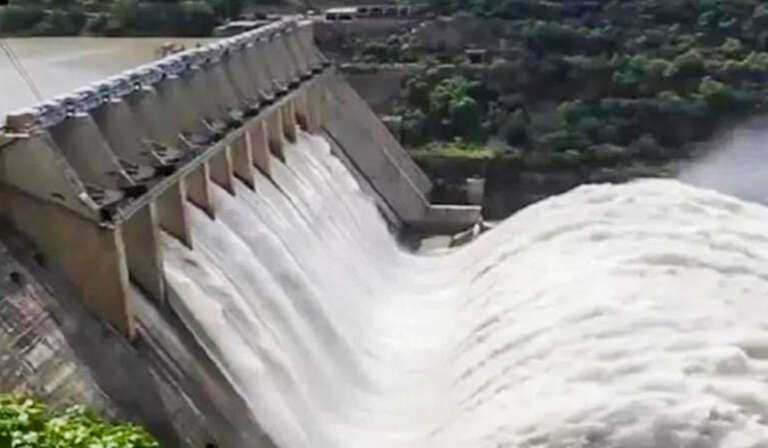
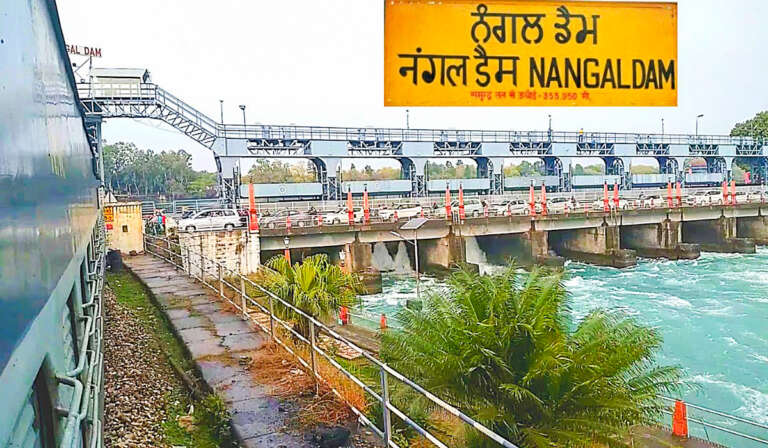
Bhakra Dam and Nangal Dam are commonly referred to together as the “Bhakra-Nangal Dam,” but they are actually two separate dams.
Bhakra Dam is built on the Sutlej River in Himachal Pradesh, while Nangal Dam is located downstream in Punjab.
The main purpose of the Nangal Dam is to regulate the water released from Bhakra and channel it further into the irrigation network through canals.
Together, the two dams form part of a major multipurpose river valley project, which is why the entire system is popularly known as the Bhakra-Nangal Project.
Canals originating from the Nangal system carry water to agricultural regions of Punjab and other states. This network has played an important role in strengthening irrigation systems in agricultural states such as Punjab, Haryana and Rajasthan.
One of the most significant achievements of the Bhakra-Nangal Project is also its contribution to electricity generation.
Hydroelectric power is produced in power houses associated with the dam by harnessing the energy of flowing water.
Water stored at a height in the Gobind Sagar Reservoir possesses potential energy. When this water is released in a controlled manner towards turbines, its potential energy is converted into kinetic energy.
The rapidly flowing water rotates the turbines, which in turn operate generators to produce electricity. In this manner, the natural force of water is converted into electrical energy.
Hydroelectric energy is classified as a renewable source of energy because it makes use of the natural water cycle to generate electricity.
Power generated through the Bhakra project has historically been important for several parts of northern India, including Punjab, Haryana, Himachal Pradesh, Chandigarh, Delhi and Rajasthan.
This electricity has contributed significantly to industrial development, urbanisation and the expansion of agriculture.
A Reliable Source of Irrigation for Farmers
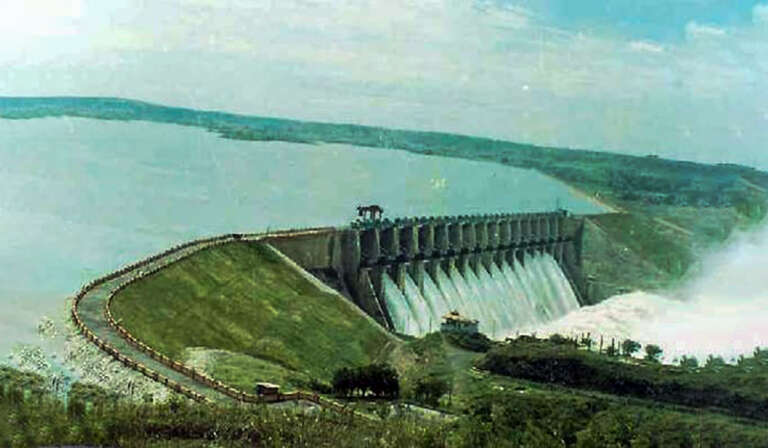
The Bhakra-Nangal Project played an important role in transforming agriculture across northern India.
The availability of canal irrigation increased across many regions of Punjab, Haryana and Rajasthan. This improved agricultural productivity and provided farmers with a more reliable source of irrigation water.
During the Green Revolution, the expansion of irrigation facilities in Punjab and Haryana made a significant contribution to increasing the production of crops such as wheat and rice.
The Bhakra-Nangal Project was an important part of the infrastructure that supported this major agricultural transformation.
Canal-based water supplies also benefited areas where agriculture had previously depended heavily on rainfall.
Thus, the dam was not merely a source of electricity. It also became an important contributor to food security and the rural economy.
Safety Arrangements
A massive dam such as Bhakra does not remain safe merely because of the strength of its structure. Continuous monitoring is equally important.
As the water level rises, pressure on the dam wall increases. Seasonal changes, fluctuations in temperature and variations in water flow can also affect the structure.
For this reason, even very small changes in the dam’s structure are technically measured and recorded.
Measurements such as deflection help engineers understand how the structure is responding to the pressure being exerted on it.
Systems and technical experts associated with the Bhakra Beas Management Board (BBMB) play an important role in maintaining and monitoring such major water projects.
Regular inspection, monitoring and maintenance are essential for the safety of large reservoirs and power houses.
The sight of huge volumes of water rushing downstream from the dam can be extremely impressive. The roar of the water and the scale of the reservoir make the area an attraction for tourists.
However, visitors must strictly follow safety regulations.
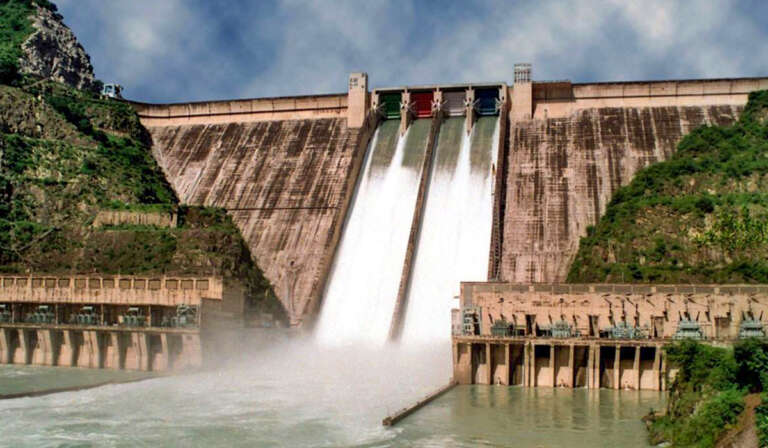
The Bhakra-Nangal Dam is not merely a water and power project; it has also developed into an important tourist attraction in northern India.
Every year, large numbers of visitors come to see the massive dam, Gobind Sagar Reservoir and the surrounding natural landscape.
The hilly terrain, vast reservoir and the natural course of the Sutlej River make the location visually striking.
The dam itself is an engineering marvel that attracts visitors from different parts of the country.
Rules and timings for visiting the dam are determined by the authorities. According to available information, visits have generally been permitted during designated hours, roughly between 8 a.m. and 3 p.m.
Visitors are advised to check current permission requirements and regulations before travelling, as access rules may change due to security considerations.
A Symbol of Nation-Building
The importance of the Bhakra Dam lies not merely in its height or enormous scale. Its real significance lies in the way it transformed the economy, agriculture and energy systems of northern India.
When the project was conceived and constructed, India was a newly independent nation with an urgent need for infrastructure.
Large projects were considered essential for expanding irrigation, generating electricity and supporting industrial development.
Against this backdrop, the Bhakra-Nangal Project came to be seen as a major nation-building initiative.
Jawaharlal Nehru’s association of such projects with the “temples of modern India” reflected precisely this vision.
The dam represented the scientific outlook of that period, India’s growing engineering capabilities and the country’s confidence in large-scale development projects.
Environmental Impact and Future Challenges
Like other large dams, the Bhakra-Nangal Project has also had environmental and social consequences.
The creation of the reservoir altered the geography of several areas and affected a number of villages.
Large infrastructure projects of this scale therefore raise important questions not only about development but also about the rehabilitation of displaced communities and environmental conservation.
Today, increasing demand for water, climate change, irregular rainfall patterns and population growth have made water-resource management even more challenging.
As a result, the safety, maintenance and efficient utilisation of water from major projects such as Bhakra-Nangal have become more important than ever.
The enormous structure of the Bhakra Dam continues to fascinate engineers and tourists alike.
The sprawling Gobind Sagar Reservoir behind it, the surrounding mountains and the natural flow of the Sutlej give the location a distinctive character.
Understanding the Bhakra-Nangal Project is therefore not merely about understanding the story of a dam. It is also about understanding a period in the history of independent India when the country dreamed on a massive scale and sought to turn those dreams into reality through ambitious infrastructure projects.
That is why the Bhakra Dam continues to occupy a special place in the history of modern India’s development.


Leave a Comment