

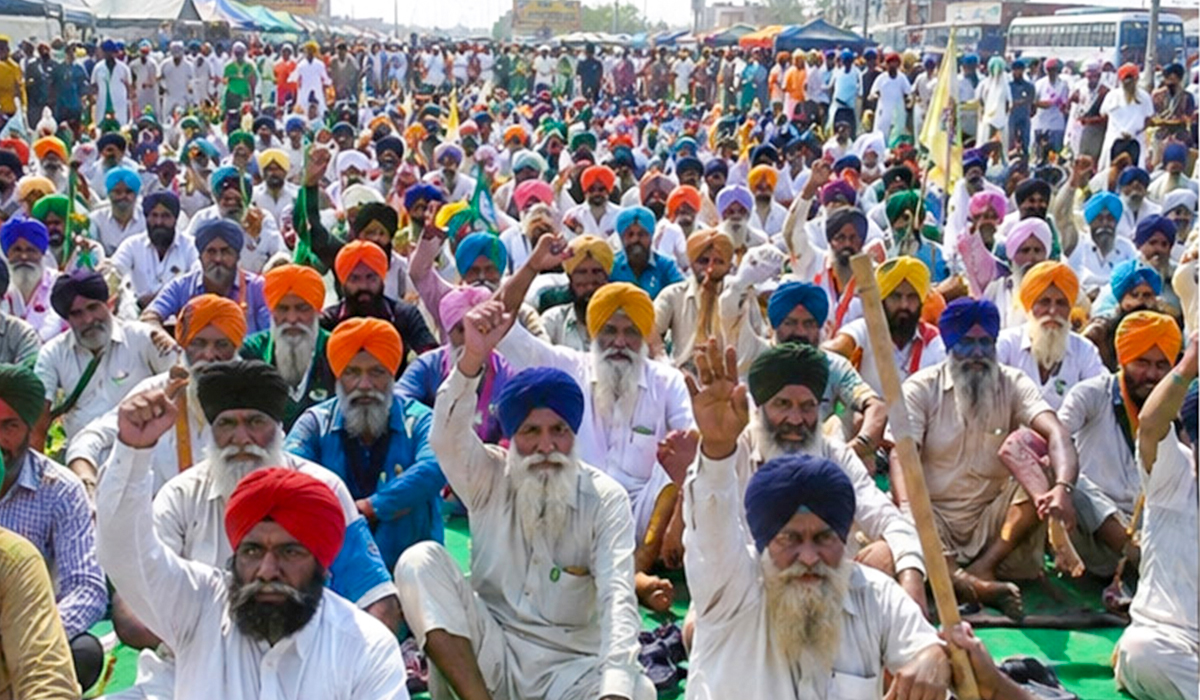

From India’s freedom struggle to the Green Revolution, Punjab has always been at the forefront of driving the country’s development.
Punjab’s history is filled with stories of pride, hard work, courage and relentless struggle. Farmers who helped make India self-reliant in food production, workers who toil day and night in factories, soldiers who serve on the borders, and Punjabis who have earned recognition across the world for their business acumen have always been the pride of the state.
From the freedom struggle to the Green Revolution, Punjab has consistently remained at the forefront of India’s development.
But today, at this point in the 21st century, Punjab is passing through a delicate and worrying phase in which its development-oriented identity appears to be facing a new kind of crisis.
Over the past few decades, a trend has grown rapidly in the state that has often slowed down economic activity. Whenever the demands of an organisation, employees’ union, farmers’ group, transporters’ association or social organisation are not accepted by the administration or government, the first and most prominent form of protest often takes the shape of blocking highways, stopping trains, occupying toll plazas or staging indefinite sit-ins.
From the ‘Land of Farmers and Entrepreneurs’ to ‘Dharnaland’?
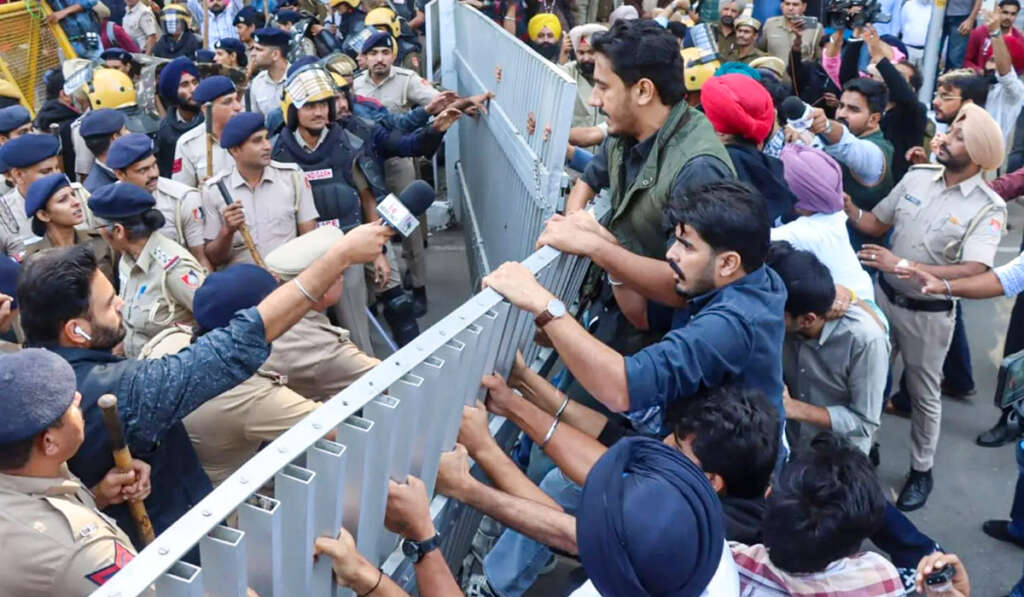
This recurring situation has created an image of Punjab at the national and international level that has prompted many intellectuals, economists and ordinary citizens to ask, with concern:
“Is Punjab gradually changing from the ‘land of farmers and entrepreneurs’ into ‘Dharnaland’?”
This article examines the various dimensions of this question.
On the one hand, the right to peaceful protest is an essential part of democracy. On the other hand, there is an urgent need to assess the serious impact such protests can have on Punjab’s economy, industries and the everyday lives of ordinary people.
In any democracy, citizens have the right to raise their voices for their rights, disagree with government policies and protest peacefully.
Under Article 19(1)(a) and Article 19(1)(b) of the Indian Constitution, citizens enjoy freedom of speech and expression and the right to assemble peacefully and without arms.
The Historical Contribution of Protest Movements
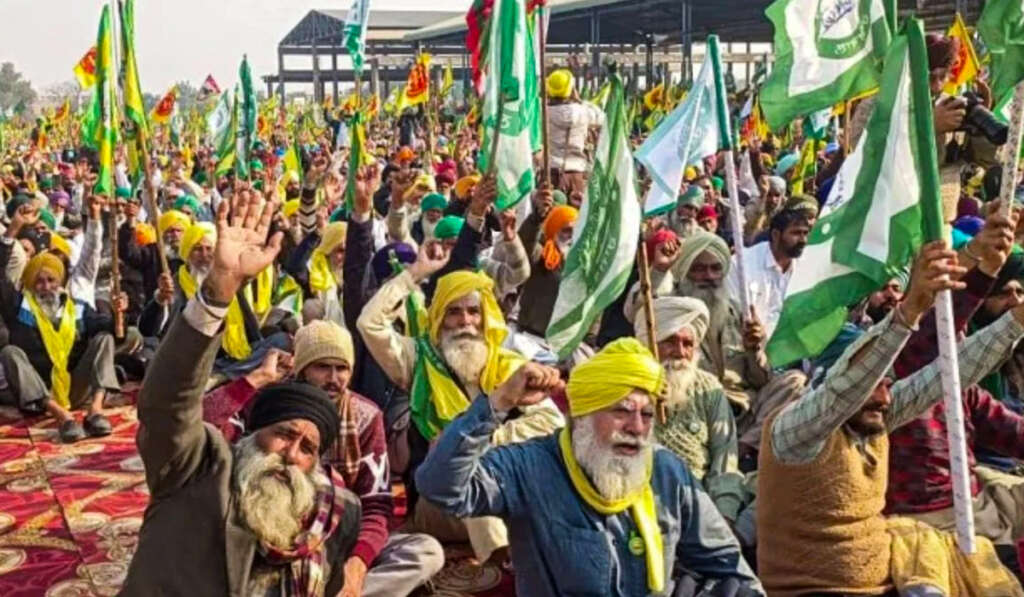
History shows that mass movements across the world, and particularly in India, have played a major role in securing social and economic justice.
During the Pagri Sambhal Jatta movement of 1907, Punjab’s farmers mobilised against agrarian laws imposed by the British government.
The 48-hour working week, minimum wages and pension rights were also achievements linked to long struggles and movements.
Similarly, movements against the Emergency for the restoration of democracy, and the historic farmers’ agitation at the Delhi borders against the three farm laws enacted by the central government, demonstrated that even powerful governments can be forced to respond to public pressure.
These examples show that protests and movements are an important part of democratic life.
When the administrative system becomes unresponsive, bureaucracy stops listening to ordinary citizens and political leaders ignore people’s issues after winning elections, protest often becomes the last available option.
Over roughly the past one-and-a-half decades, however, the nature of protests in Punjab has undergone a major change.
Movements are no longer limited to major national or political issues. They have increasingly become part of routine administrative life.
Railway tracks and national highways are frequently blocked over issues such as crop-loss compensation, stubble-burning solutions, MSP, farm-loan waivers and canal water.
Long sit-ins are organised outside the residences of chief ministers and ministers over demands such as regularisation of jobs, restoration of the Old Pension Scheme and salary increases.
People climb water tanks, launch hunger strikes or block intersections over delays in recruitment processes or demands for additional seats.
Bus stands are shut, road traffic is stopped and toll plazas are occupied.
When such protests take place not merely on a few days each year, but repeatedly every week across different districts, the normal functioning of the entire state administration gets disrupted.
The Economic Cost of ‘Dharnaland’
Punjab’s economy is already facing several challenges, including financial stress, a heavy debt burden and stagnation in the agricultural sector.
In such circumstances, repeated road and rail blockades can further damage economic activity.
Industrial cities such as Ludhiana, known for hosiery, bicycles and textiles; Jalandhar, known for sports goods and hand tools; Mandi Gobindgarh, a major steel centre; and Batala, known for its foundry industry, depend heavily on smooth road and rail transport.
When railway tracks or highways are blocked, raw materials such as coal, iron, cotton and chemicals may fail to reach factories on time.
Finished goods produced in factories may also be delayed on their way to ports or other states.
Such disruptions can result in cancelled orders, delayed deliveries and financial penalties from buyers.
Are Investors Losing Interest in Punjab?
Before investing large sums of money in any state, domestic and foreign investors generally look at three key factors: peace and law and order, uninterrupted transport and stable government policies.
If investors believe highways or railway lines in Punjab can be blocked without warning, they may prefer neighbouring states such as Haryana, Rajasthan and Himachal Pradesh, or other industrial destinations such as Gujarat, in order to protect their logistics and supply chains.
In recent years, several major industrial units from Punjab have reportedly chosen to expand their operations outside the state, which is a matter of concern.
The most painful impact of road-blocking protests is often felt by ordinary people who have no connection with the protesters’ demands.
When major roads are blocked, patients can suffer the most.
Critically ill patients, people suffering heart attacks or accident victims can become trapped in ambulances for long periods.
In some instances, delays in reaching hospitals can have fatal consequences.
Such delays can also be particularly dangerous for pregnant women requiring urgent medical attention.
The Future of Youth and the Responsibility of Government and Bureaucracy
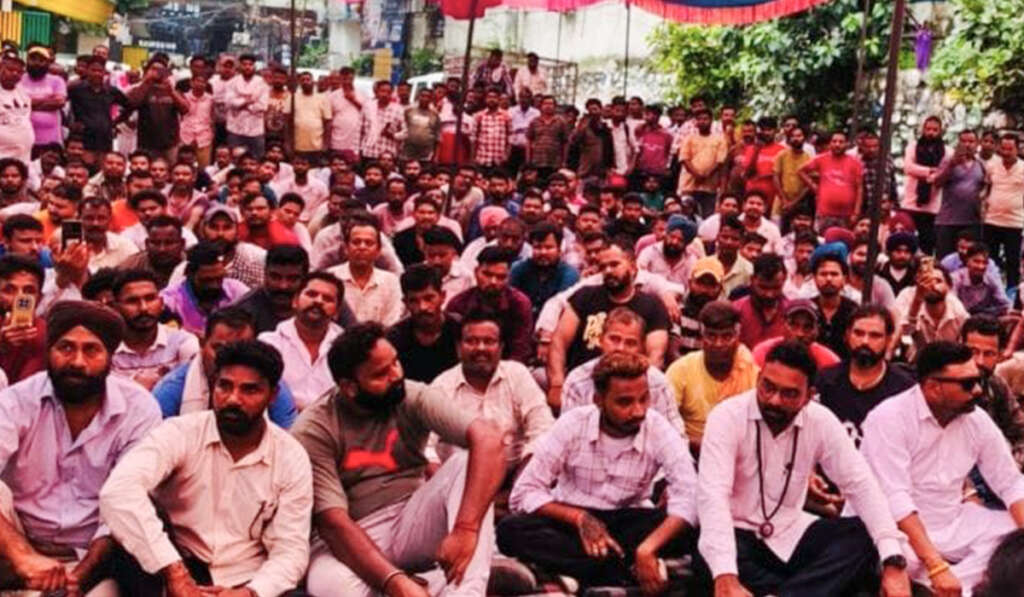
Thousands of students travelling to schools, colleges, universities and competitive examinations may fail to reach examination centres because of road blockades.
Young people travelling for job interviews may lose important employment opportunities because they get stuck in traffic.
Street vendors, auto-rickshaw drivers, taxi drivers and daily-wage workers, whose earnings depend on their ability to work each day, may lose an entire day’s income because of such disruptions.
Shopkeepers in markets or along highways where protests are held can also see their businesses come to a standstill.
This raises an important question: Why do people feel compelled to come out onto the streets in the first place?
Is it merely the rigidity of protesters, or does it also reflect failures within the government system?
It is often observed that unless a union or organisation blocks a road, the administration or ministers may not pay serious attention to its letters and memoranda.
Governments sometimes schedule meetings and later fail to hold them, or create committees that delay decisions indefinitely.
Such administrative behaviour can create the perception that “the government does not listen unless the road is blocked.”
Electoral politics also complicates the issue.
Political parties may hesitate to act firmly against protesters or enforce law and order because they fear alienating vote banks.
Parties that criticise protests while in government may support the same protests once they move into opposition.
Such double standards have further deepened the problem.
Time to Free Punjab from the ‘Dharnaland’ Label
The problem is serious, and so is the need for a solution.
To free Punjab from the label of “Dharnaland” and restore its image as a progressive state, the government, administration, organisations and citizens will all have to share responsibility.
The government should establish a permanent committee or grievance-redressal cell that holds regular monthly meetings with different unions and organisations.
Demands should be examined seriously at an early stage so that people do not feel compelled to come onto the streets.
If the government accepts a demand, it should be implemented promptly.
If a demand cannot be accepted, the government should clearly explain the reasons instead of allowing the issue to drag on indefinitely.
Administrative officers should also be given sufficient authority to take timely decisions on sensitive matters.
At the same time, organisations must recognise that holding ordinary citizens, children, patients and the economy hostage in order to press their demands is ethically difficult to justify.
Instead of blocking highways or railway lines, protests can be organised at designated protest sites identified by the government, such as grain markets, open grounds or parks near district headquarters.
Even when demonstrations take place, lanes should always remain open for ambulances, school buses, fire services and vehicles carrying critically ill patients.
The Supreme Court and the Punjab and Haryana High Court have, in various rulings, emphasised that the right to protest cannot override the rights of ordinary citizens to move freely.
Laws relating to damage to public property and unlawful obstruction of national highways should be implemented fairly and without discrimination.
Punjab is currently standing at a sensitive crossroads.
The state does not belong to any single group. It is the shared home of its farmers, workers, traders, students and ordinary citizens.
If Punjab’s economy weakens, industries move away and young people continue leaving the state in search of employment abroad, the loss will not be limited to one government. It will affect future generations.
The right to protest and express disagreement is an integral part of democracy.
But blocking roads and railway lines and thereby bringing the state’s economic activity to a halt cannot be a permanent solution to any problem.
Punjab today does not need movements that cripple its economy.
What it needs is serious dialogue, political will, administrative sensitivity and civic responsibility.

Leave a Comment