
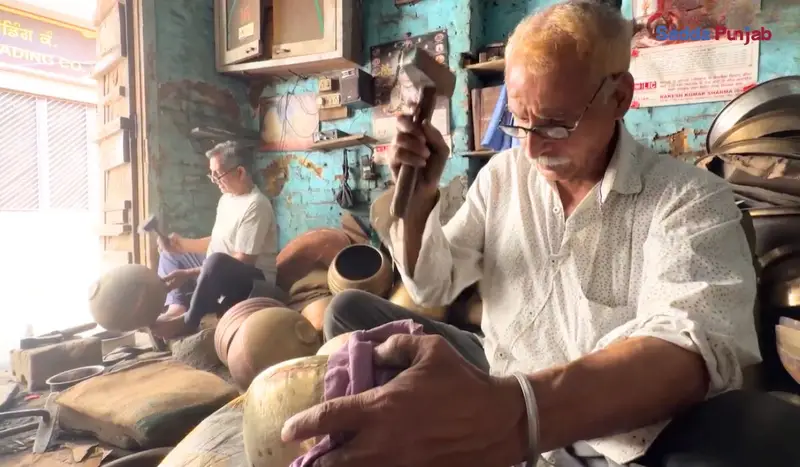

Jandiala Guru, a small town in Punjab’s Amritsar district, carries within it a priceless legacy. This is the story of the Thatheras, artisans who for generations have shaped utensils from copper, brass and bronze entirely by hand.
Heating metal in blazing furnaces and then shaping it through carefully controlled hammer blows has been part of their everyday life for centuries.
In 2014, UNESCO inscribed the traditional craft of the Thatheras of Jandiala Guru on its Representative List of the Intangible Cultural Heritage of Humanity. It became the first traditional metal craft from India to receive this recognition.
Not Just Utensils, but Mastery of a Craft
Dr Sukhdev Singh, retired Professor of Linguistics at Guru Nanak Dev University, Amritsar, and former Vice-Chairman of the Indian National Trust for Art and Cultural Heritage (INTACH), explains that UNESCO’s recognition has a very specific meaning.
Heritage can broadly be understood in two forms. One is tangible heritage, such as buildings or utensils that can be physically touched. The other is intangible heritage, which includes the skills and knowledge required to create something.
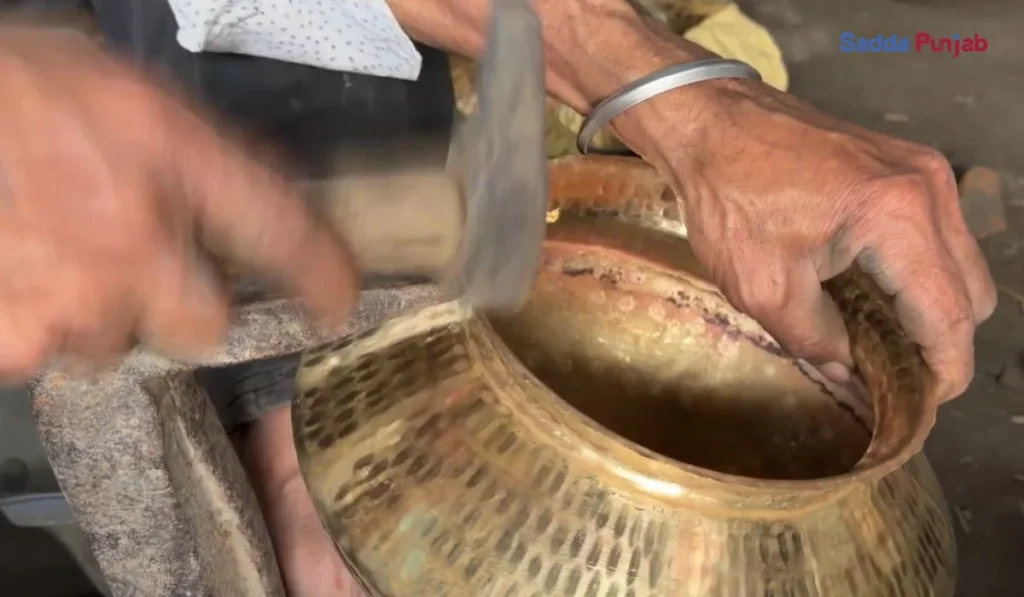
UNESCO did not recognise merely the utensils produced at Jandiala Guru. It recognised the distinctive handcrafting skills and knowledge of the Thathera artisans.
Knowing exactly how much force to apply with each hammer blow and how to shape metal correctly is a highly specialised skill that has been transmitted from one generation to the next.
The Era of Maharaja Ranjit Singh
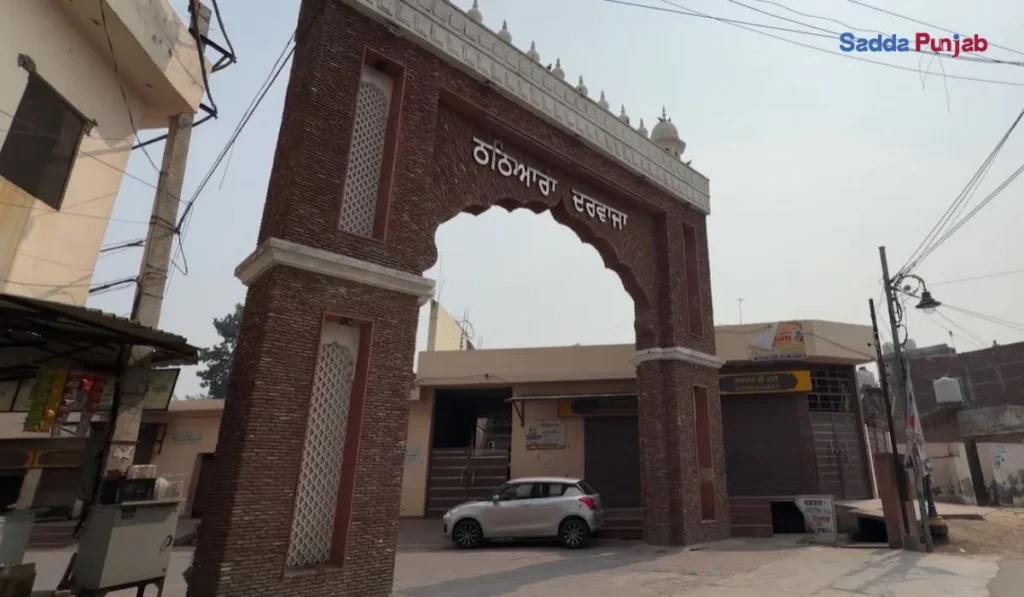
Dr Sukhdev Singh says that the Amritsar District Gazetteer, published by the British in 1883, contains a specific reference to the Thatheras of Jandiala Guru.
According to the Gazetteer, Jandiala Guru was then a major centre for copper and brass utensils, from where products were supplied to distant regions.
Even earlier, during the reign of Maharaja Ranjit Singh, the craft received state patronage, and several artisans were reportedly brought from Kashmir and settled in the area.
At the time of Partition in 1947, Muslim artisans migrated to Pakistan, while Hindu and Sikh artisans arriving from Gujranwala settled here.
Although the craft was also practised in places such as Batala, Phagwara, Hoshiarpur and Jagadhri, Jandiala Guru remained its principal centre.
The Science and Tradition of Metals
Explaining the metals used in Thathera craft, Dr Sukhdev Singh says that copper is the primary base metal.
When tin is added to copper, it produces bronze, while adding zinc to copper produces brass.
These alloys were traditionally prepared according to different household and functional requirements.
The Rise of Steel in Indian Kitchens
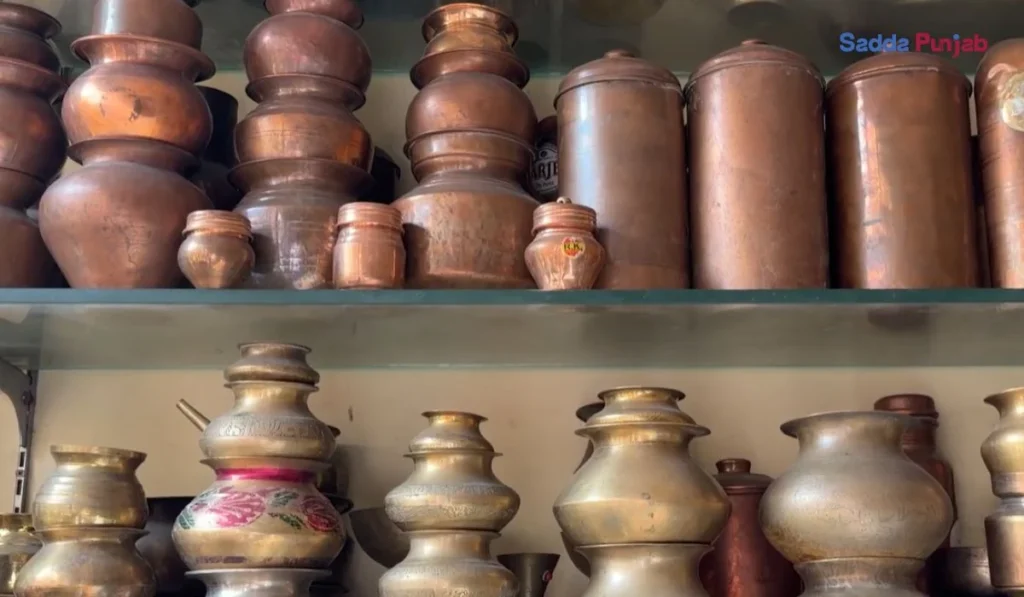
There was a time when large copper and brass utensils were commonly used in household kitchens, weddings and community kitchens at gurdwaras.
Over time, however, lifestyles changed and stainless steel became dominant.
According to Dr Sukhdev Singh, some of the major reasons include:
- Maintenance: Copper and brass utensils often required kalai, or tin coating, particularly when used for acidic foods, whereas steel utensils are relatively easy to clean with soap.
- Cost and labour: Steel utensils can be manufactured by machines at a lower cost, while handmade metal utensils require considerable time, skill and physical labour, making them more expensive.
- Availability: The growing popularity of steel, plastic and disposable utensils reduced demand for traditional handcrafted vessels.
Health-Related Beliefs About Copper and Brass Utensils
Older generations often advised keeping water overnight in a copper vessel and drinking it the next morning.
According to Dr Sukhdev Singh, the human body requires not only food but also various minerals and trace elements. He says that traditionally, when food was cooked or water was stored in copper or brass vessels, small amounts of such elements could enter the food or water.
He describes traditional metal utensils as a way in which households once sought to support nutritional needs naturally.
A Craft in Crisis
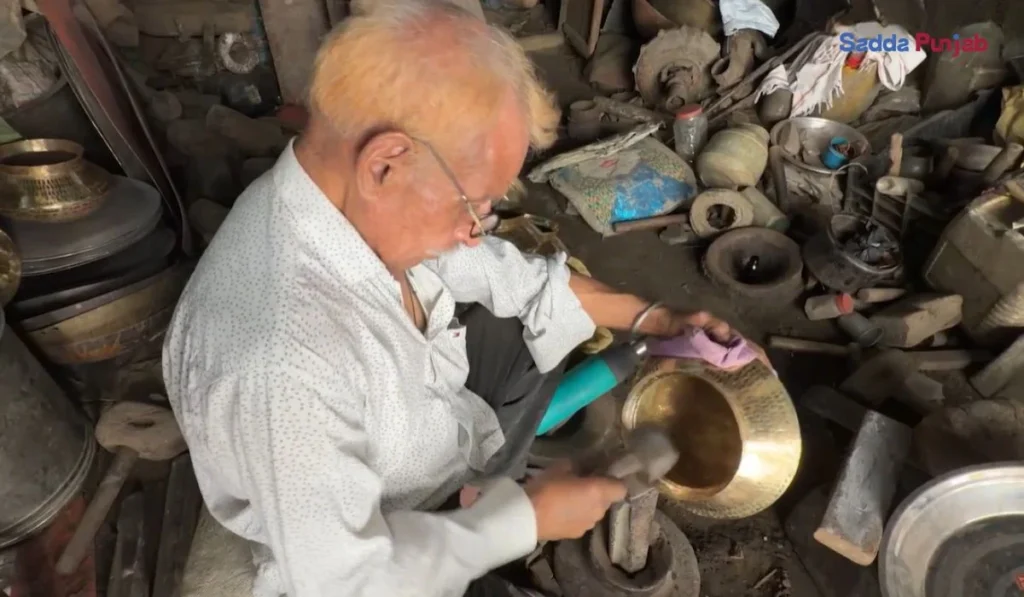
Despite receiving global recognition, the artisans practising this craft are now struggling for survival.
Dr Sukhdev Singh says that when his team conducted research, they found that Jandiala Guru once had around 400 artisans, but the number had fallen to only around 30 to 40.
The younger generation was increasingly unwilling to take up such physically demanding work.
A major reason for the decline in artisans’ income has been the changing system of raw-material supply and the role of middlemen.
- Raw-material allocation: Earlier, artisans reportedly had fixed quotas for obtaining materials such as military scrap, copper wire from electrical motors and old utensils.
- Entry of traders: Later, the government and military began auctioning scrap and raw materials. Large traders could purchase these materials through bidding, leaving many artisans dependent on them and reducing craftsmen effectively to wage workers.
- Taxes: Taxes such as GST on small-scale production have also contributed to higher prices for handcrafted utensils.
Measures to Preserve the Heritage
Dr Sukhdev Singh says the Punjab government has applied for a GI Tag, or Geographical Indication Tag, for the craft.
A GI tag could help certify that these products are genuinely associated with the artisans of Jandiala Guru, potentially strengthening their identity and market value.
The artisans themselves have also introduced innovations over time.
Earlier, they mainly produced traditional items such as plates, glasses, bowls, buckets and gagars. Now, some artisans have even begun manufacturing brass pressure cookers.
Dr Sukhdev Singh, who has also written an English book titled “Thatheras of Jandiala Guru,” says the government should consider exempting these products from GST and promote their sale through government emporiums.
He also believes that consumers can help preserve the tradition by using copper and brass utensils alongside modern steel products and thereby supporting the artisans.
The Thatheras of Jandiala Guru are not merely making utensils. They are keeping alive a centuries-old cultural heritage.

Leave a Comment