

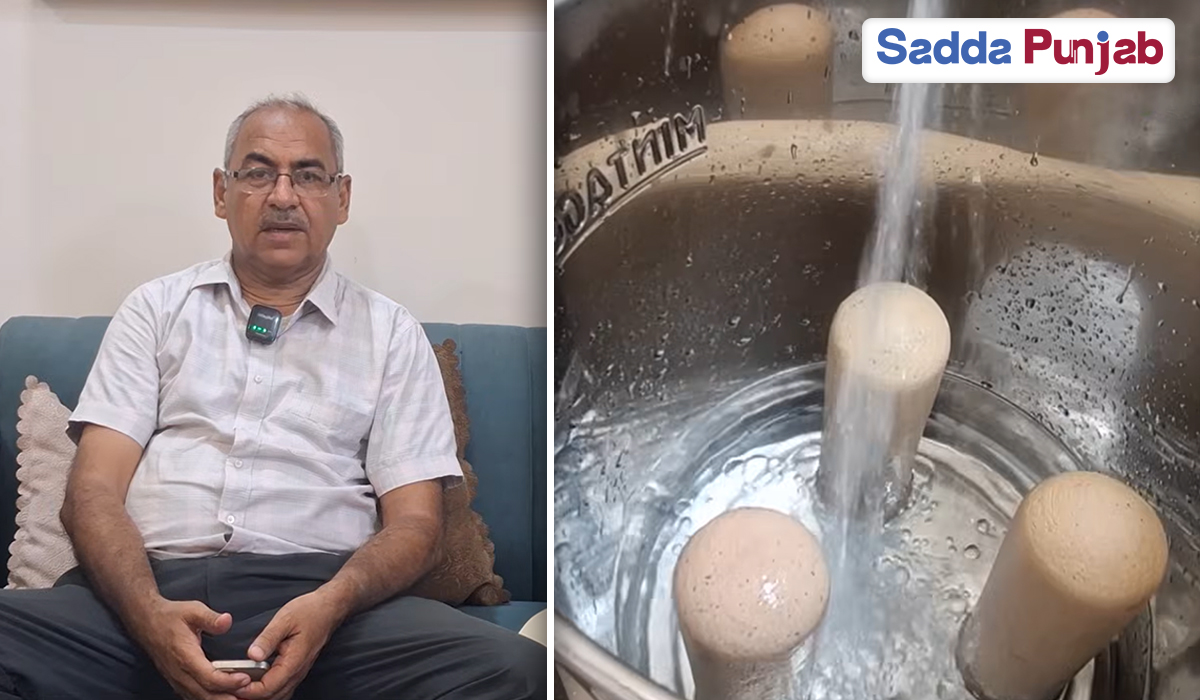

The depleting groundwater levels and deteriorating water quality in Punjab remain subjects of serious concern. During such critical times, Jaspal Monga, a resident of Sri Muktsar Sahib and retired District Education Officer (DEO), has presented an example of natural resource conservation that can guide every citizen. He has developed an incredibly cost-effective and efficient model by collecting rainwater at his home, filtering it through traditional and scientific methods, and using it for drinking throughout the year.
How the Journey of Rainwater Conservation Began
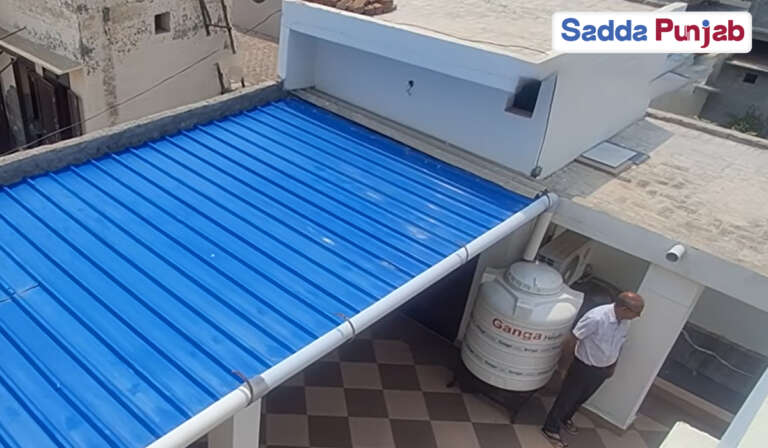
Taking a step toward environmental conservation after his retirement, Jaspal Monga explains that he retired as a District Education Officer on January 31, 2026. On the roof of his house, there was an iron shed of about 250 square feet built for another purpose. Seeing water flow off the roof during the rain sparked the idea of conserving this natural and clean water.
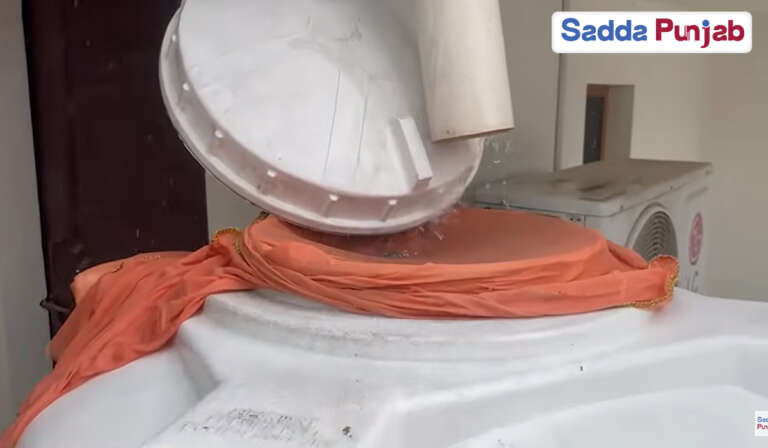
For this purpose, he installed a pipe in front of the shed and arranged to collect the water in two separate tanks. A 550-liter tank was placed on the roof and another 550-liter tank on the ground floor. Through this system, he simultaneously stores about 1100 liters of rainwater during the monsoon, which he uses for drinking and making tea throughout the entire year.
The Scientific Method of Water Collection
Jaspal Monga only stores water during the monsoon season, and there is a scientific reason behind this. He never stores the water from the initial showers. According to him, the Air Quality Index (AQI) of the area remains above 100 on normal days, meaning dust and pollution particles are present in the air. Only after the first four or five monsoon showers, when the environment is cleansed and the AQI drops to 30 or 40, does he store the water from subsequent rains. Furthermore, if there is good rainfall after the tanks are already full, he drains the older water from the bottom tap and refills the tanks entirely with fresh water.
Traditional and Domestic Filtration Method
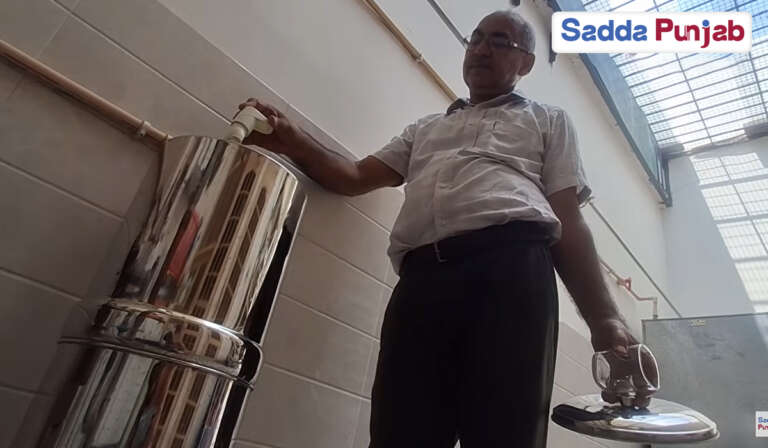
Purifying rainwater does not require any expensive machinery or electricity. Jaspal Monga has adopted a very simple and domestic method to filter it:
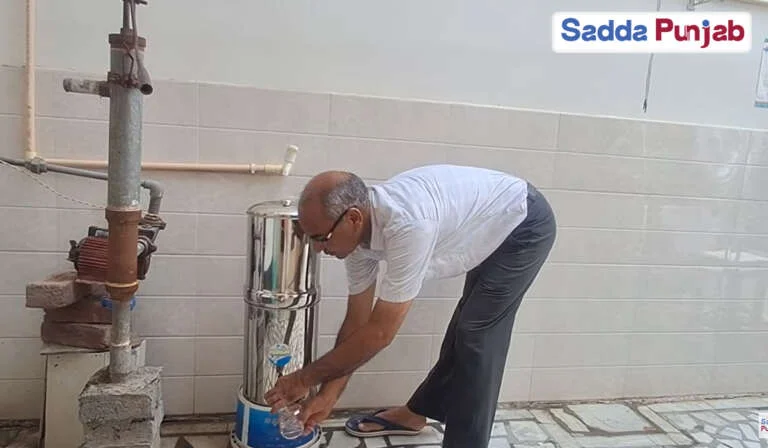
⚬ Steel Candle Filter: Water is drawn from the tank and poured into a traditional two-part steel candle filter.
⚬ Natural Drip: Overnight, the water drips down and collects in the lower chamber, separating even the finest dust particles.
⚬ Earthen Pot (Matka): The filtered water is then stored in an earthen pot, keeping it naturally cool and fresh.
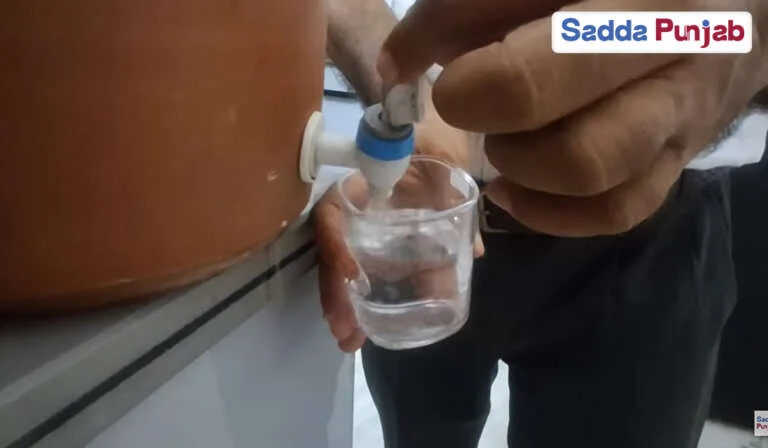
Monga notes that he serves this water to guests at his home and uses it for making tea. He states that the taste of this water is much sweeter and lighter than regular tap or groundwater.
Lab Testing Report: Meeting Purity Standards
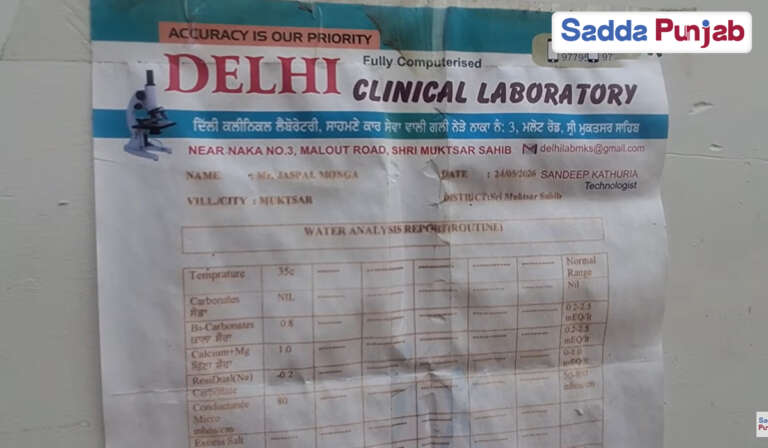
To rule out the possibility of algae or fungus forming from long-term storage, Jaspal Monga had one-year-old stored water lab-tested. The results were highly satisfactory:
⚬ Natural TDS: The TDS (Total Dissolved Solids) of this water was recorded at just 45, which is highly suitable for the human body.
⚬ Hardness: The water’s hardness was only 50, which is soft and significantly lower than the generally accepted limit of 300.
⚬ pH Value: The pH level was recorded at 6.8, perfectly balanced for drinking.
⚬ Other Elements: Nitrates and salinity were found in negligible amounts, and even after a year, there was no algae formation or foul odor.
Concerns Over RO Systems and Water Wastage
Expressing concern over the heavy reliance on RO systems in modern households, Monga points out that to purify 1 liter of water, at least 3 liters are wasted as runoff down the drain. Over a year, this results in millions of liters of pure groundwater being wasted unnecessarily. By utilizing rainwater, this needless depletion of groundwater can be completely halted.
Large-Scale Potential and Future Roadmap
Jaspal Monga believes that with a little planning, domestic water self-sufficiency is entirely achievable. Sharing a mathematical model, he explained that if a house has a roof area of 1000 square feet, an underground water tank the size of a standard room can be built to collect around 30,000 liters of rainwater annually. A family of 2 to 3 people, by using this water economically, can sustain all their drinking, washing, bathing, and gardening needs year-round, completely eliminating their dependence on municipal supply or groundwater motors.
Jaspal Monga’s commendable effort proves that nature has blessed us with the invaluable gift of water; the need is simply to manage it properly. His successful experiment serves as a call to action to adopt rainwater harvesting as a mass movement across every village and city in Punjab. If we take a pledge today to save every drop of rain, future generations can easily be protected from a severe water crisis.


Leave a Comment