

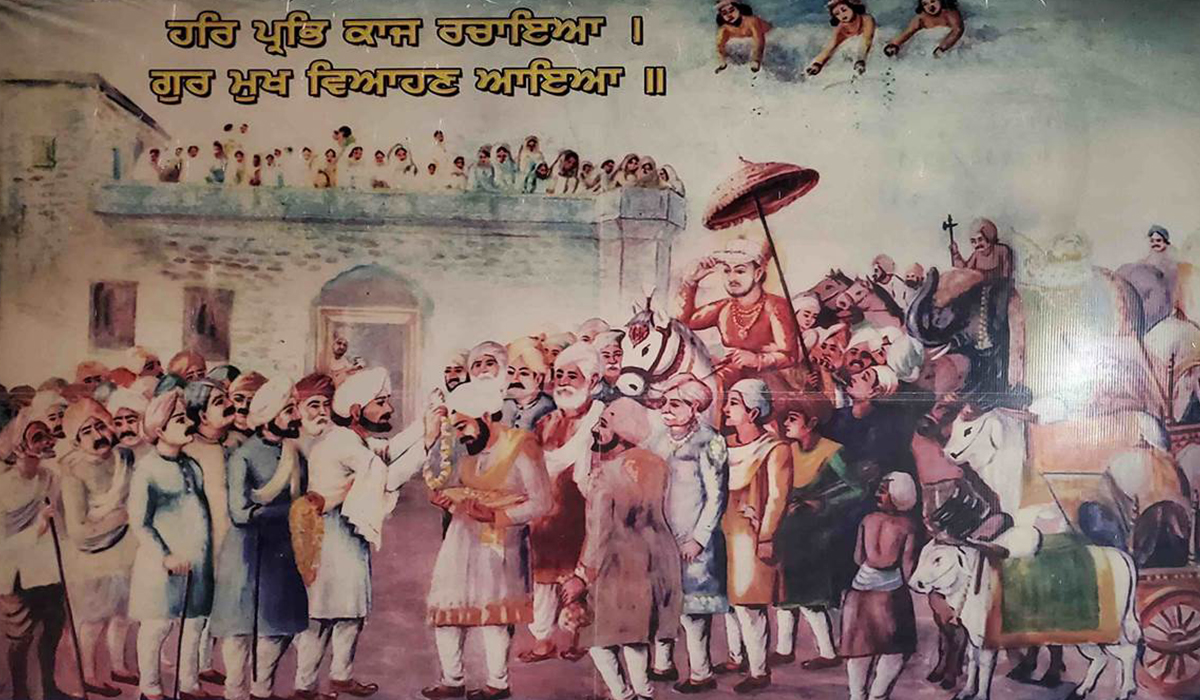

The guide of humanity, the embodiment of peace, and the founder of the Sikh religion, Sri Guru Nanak Dev Ji, was born in 1469 AD in Rai Bhoi Ki Talwandi, present-day Nankana Sahib, Pakistan, at the home of his father Mehta Kalu Ji and mother Tripta Ji. At that time, Indian society was going through a severe political, religious, social, and economic crisis. The society was dominated by high and low caste discrimination, untouchability, superstitions, blind faith, and rituals. The oppression by the rulers and social inequality had made the lives of the common people miserable.
In such a dark environment, the manifestation of Guru Nanak Dev Ji emerged as a divine light, which gave the message of connecting humans with humans, walking on the path of truth, and understanding the existence of one Akal Purakh (Timeless Being). Bhai Gurdas Ji described this divine manifestation in highly impactful words:
“Satgur Nanak Pargateya, Miti Dhundh Jag Chanan Hoa.
Jio Kar Sooraj Nikleya, Taare Chhape Andher Puloa.”
(With the emergence of the True Guru Nanak, the mist cleared and the world was illuminated. Just as when the sun rises, the stars are hidden and the darkness is dispelled.)
Guru Sahib not only bestowed spiritual light but also provided humanity with a path of life that includes honest labor, remembering God’s name, selfless service, sharing with others, and fulfilling family responsibilities. That is why the holy wedding anniversary of Guru Nanak Dev Ji is not merely a remembrance of a historical marriage, but also a symbol of the greatness of householder life and human responsibilities. From childhood, Guru Nanak Dev Ji possessed a unique intellect, deep thinking, and a personality attuned to the divine. Even during his schooling, he expressed such thoughts that amazed the teachers and people of that time. During the Janeu (sacred thread) ceremony, instead of an external thread, Guru Sahib spoke of an internal thread made of the virtues of compassion, contentment, continence, and truth.
Father Mehta Kalu Ji wished for his son to engage in business and take on family responsibilities. Under this intent, he once gave Guru Nanak Dev Ji money to conduct trade, but Guru Sahib used that amount to feed hungry hermits, thereby making the ‘Sacha Sauda’ (True Bargain). This incident made it clear that for Guru Sahib, serving humanity was the greatest trade. Later, he arrived in Sultanpur Lodhi to stay with his elder sister Bebe Nanki Ji and brother-in-law Jai Ram Ji. Here, Jai Ram Ji helped him secure service in the Modikhana (granary) of Nawab Daulat Khan Lodhi. Guru Sahib worked here honestly and treated the needy with deep compassion. The incident of weighing rations while continuously chanting ‘Tera-Tera’ (Yours, Yours) reflects Guru Sahib’s divine devotion and his mindset geared toward public welfare.
Marriage to Bibi Sulakhani Ji and the Unique Baraat from Sultanpur Lodhi to Batala
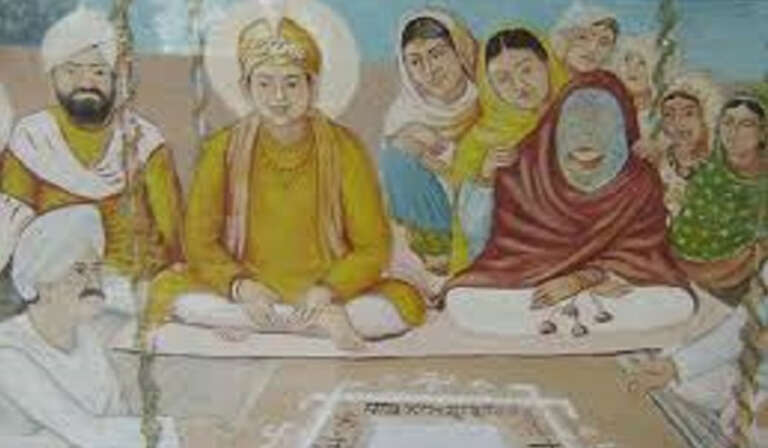
While residing in Sultanpur Lodhi, Guru Nanak Dev Ji’s glory had spread far and wide. Deeply impressed by his high character, humility, truthfulness, and divine knowledge, Batala residents Mul Chand Ji and Mata Chando Rani Ji expressed their desire to marry their daughter Bibi Sulakhani Ji to Guru Nanak Dev Ji. According to historical traditions, the marriage of Guru Nanak Dev Ji and Bibi Sulakhani Ji took place in Batala in 1487 AD. At that time, Guru Sahib was about 18 years old. This marriage was not just the union of two individuals, but a historic milestone that would later highlight the importance of the householder’s path in Guru Sahib’s life.
Guru Nanak Dev Ji’s Baraat (wedding procession) arrived in Batala from Sultanpur Lodhi. The uniqueness of this Baraat was that it included people belonging to various sections of society. In addition to family members and relatives, close companions like Bhai Mardana Ji also accompanied Guru Sahib. Historical sources mention the names of several prominent gentlemen associated with this Baraat. Upon reaching Batala, the procession was warmly welcomed by the townspeople. Bhai Santokh Singh Ji, while mentioning the arrival of the Baraat in Batala in the ‘Sri Guru Nanak Prakash’, wrote: “Nagar Nikat Istit Kari, Sabh Baraat Ne Jaai.” (The entire Baraat went and settled near the town). In this way, Batala became associated with the life of Sri Guru Nanak Dev Ji as a historical place whose significance remains intact to this day.
Gurdwara Kandh Sahib, Gurdwara Dera Sahib, and the Historical Importance of Batala
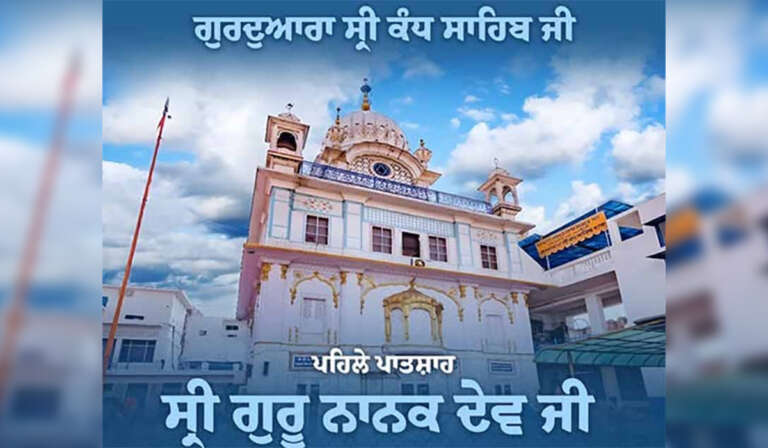
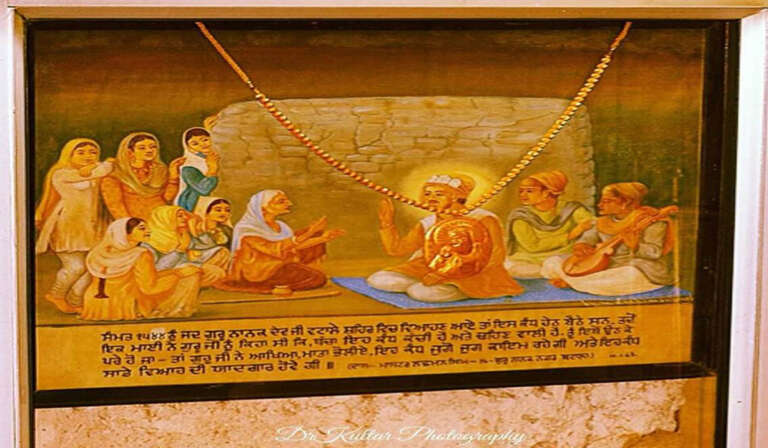
Many incidents that occurred on the land of Batala related to the wedding anniversary of Guru Nanak Dev Ji are still deeply embedded in the public consciousness. Among these, the incident associated with ‘Kandh Sahib’ is particularly famous. According to tradition, during the wedding ceremonies, Guru Nanak Dev Ji was sitting near a mud wall. A fear was expressed that the wall might collapse due to the rain. On this occasion, the words spoken by Guru Sahib and the story of the wall remaining intact are remembered with devotion by the Sikh Sangat. Today, Gurdwara Kandh Sahib graces this holy site. Devotees bow down here in large numbers. On the occasion of the wedding anniversary, special religious congregations take place at this shrine, and the congregation devoutly remembers the historical memories associated with Guru Sahib’s life.
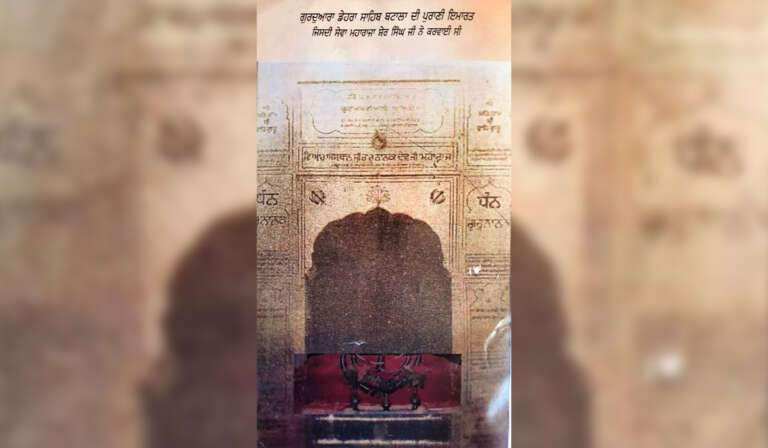
Another prominent shrine related to the marriage of Guru Nanak Dev Ji in the city of Batala is Gurdwara Dera Sahib. According to historical tradition, this is the site where the house of Mata Sulakhani Ji’s parents was located and where Guru Nanak Dev Ji’s wedding was solemnized. Apart from this, Gurdwara Satkartariyan Sahib is also a significant part of Batala’s religious heritage. This shrine is associated with the Sixth Guru, Sri Guru Hargobind Sahib Ji, who visited Batala for the wedding of his eldest son, Baba Gurditta Ji. Thus, having received the touch of the first and sixth Gurus’ feet, Batala holds a special place in Sikh history.
The Wedding Anniversary and the Great Message of Householder Life
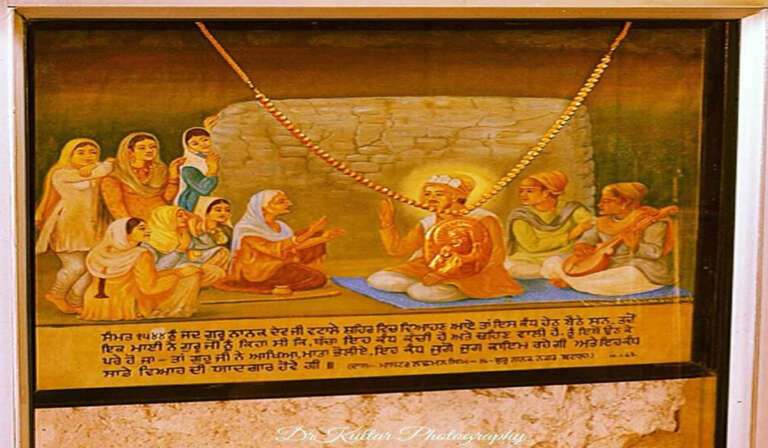
The marriage of Guru Nanak Dev Ji is extremely important for understanding the significance of householder life in Sikh philosophy. At that time, in many religious traditions, detaching from worldly life and performing penance in forests or mountains was associated with spiritual elevation. In contrast, Guru Sahib showed humans the path to living a true life while remaining within the family setting. Guru Sahib fulfilled his family responsibilities after marriage. Two sons, Baba Sri Chand Ji and Baba Lakhmi Das Ji, were born in Bibi Sulakhani Ji’s home. Later, Guru Sahib undertook long journeys to spread the message of truth, Naam, honest labor, and sharing to global humanity. At Kartarpur Sahib, Guru Sahib personally engaged in farming and lived a life of labor and service together with the Sangat. This clearly demonstrates that Guru Nanak Dev Ji’s householder religion was not limited to just raising a family, but was deeply connected with honest labor, service, remembrance of God, and social responsibility.
The Historic Fair of the Wedding Anniversary Continues Even Today
Every year, the wedding anniversary of Sri Guru Nanak Dev Ji is celebrated in Batala with great devotion and enthusiasm. On this occasion, devotees from across the country and abroad arrive in Batala in large numbers. Religious congregations, Kirtan, Katha, Dhadi Darbars, and other events are organized at Gurdwara Kandh Sahib, Gurdwara Dera Sahib, and other historical Gurdwaras. The most unique glimpse of the wedding anniversary is the Nagar Kirtan, which is beautifully adorned in the form of a Baraat. Remembering the historical journey associated with Guru Sahib’s wedding from Sultanpur Lodhi to Batala, the congregation welcomes it at various places. Community kitchens (Langars) are organized along the way, and volunteers serve with selfless devotion. During this time, the entire city of Batala appears steeped in religious fervor. The streets and markets echo with the slogans of Guru Sahib, and the devotees consider themselves fortunate to view the historical Gurdwaras.
The life of Guru Nanak Dev Ji remains a guiding light for humanity even today. He gave humans the message of meditating on God’s name, engaging in honest labor, and sharing a portion of their earnings with others. In today’s materialistic and rapidly changing society, these teachings become even more significant. Guru Sahib opposed the caste system, social hierarchies, and religious divisions. Giving respect to women, he said: “So Kyon Manda Aakhiye Jit Jammeh Rajaan” (Why call her bad, from whom kings are born?). Guru Sahib’s thoughts regarding the environment were also very profound:
“Pawan Guru Paani Pita Mata Dharat Mahat.”
These lines make humans realize their responsibility toward nature. Similarly, Guru Sahib raised a fearless voice against oppression and injustice. In the holy verses uttered during Babur’s invasions, he described the cruelty of the rulers and the agony of the people with immense fearlessness: “Kal Kaati Raje Kasai, Dharam Pankh Kar Udria” (The dark age is the scalpel, the kings are the butchers, and righteousness has taken wings and flown away). Therefore, the wedding anniversary is not just a joyous religious day, but also an opportunity to remember the entire life philosophy of Guru Sahib.
Today, the need of the hour is that we do not view the wedding anniversary merely as a religious fair, but rather make it an opportunity to adopt the life and teachings of Guru Nanak Dev Ji into our own lives. Speaking the truth, working honestly, helping the needy, respecting women, preserving nature, and considering every human equal—this is the true spirit of Guru Nanak Sahib’s wedding anniversary. Echoing from the holy land of Batala, this message of Guru Nanak Dev Ji is just as relevant today—instead of dividing humanity, unite it; instead of spreading hatred, distribute love; and make householder life meaningful through truth, service, and meditation. This is the greatest inspiration of the holy wedding anniversary and the truest tribute to Guru Sahib.


Leave a Comment