
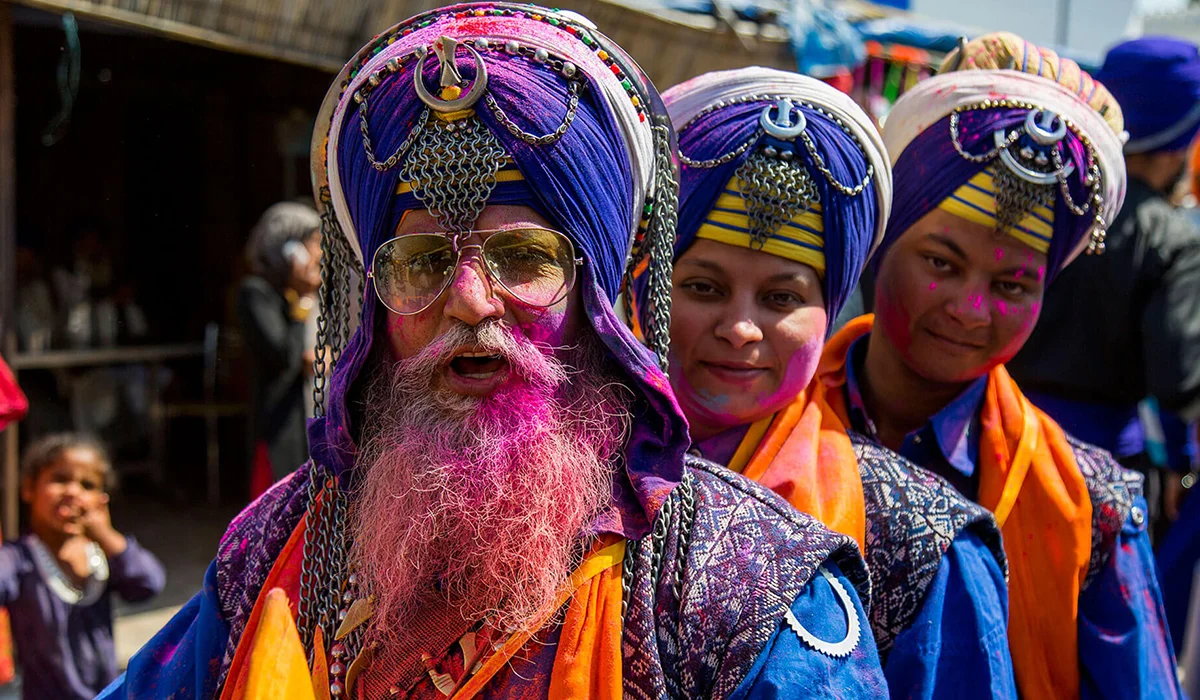

India is home to people of diverse religions, cultures, and traditions. Since every religion has its own distinct festivals, India is often regarded as a land of festivals. Diwali, Eid, Christmas, Raksha Bandhan, and Holi are celebrated across the country with great devotion and enthusiasm. These festivals are not merely expressions of joy; they also symbolize India’s shared heritage and unity.
Holi is celebrated with great excitement throughout India. In some states, the celebrations continue for more than a month. Whatever its historical origins may be, Holi is observed across the country without discrimination of caste or social divisions, with people coming together in a spirit of unity. The ways of celebrating Holi differ from state to state. For example:
The Holi of nawabs, celebrated by applying colors to one another.
The Holi of Rajputs, celebrated with symbolic stick-play.
In Rajasthan, Holi marked by traditional processions.
In Vrindavan, Holi celebrated with the beating of drums.
Holi where young women symbolically strike men as part of traditional custom.
Holi celebrated by throwing colors at passersby.
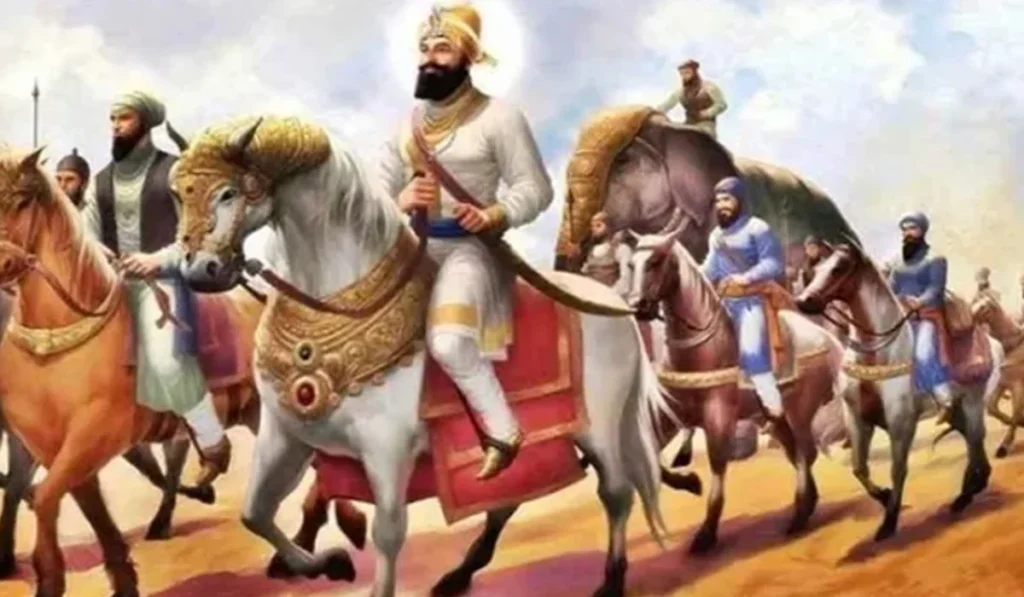
In the late 17th century, after the creation of the Khalsa, the farsighted vision of Satguru Kalgidhar Patshah (Guru Gobind Singh Ji) recognized that festivals like Holi often followed the crowd mentality. He envisioned transforming Holi’s framework among the Sikhs of Punjab into something different—something that would instill the spirit of valor (bir ras) within the Sikh community. He desired that Sikhs prepare for months to demonstrate martial skills and bravery, inspiring not only themselves but others who witnessed their courage.
To instill a sense of optimism, honor, and enthusiasm among the people, Guru Gobind Singh Ji rejected the traditional form of Holi and, at the fort of Lohgarh in Anandpur Sahib, on Chet Vadi Ekam, Samvat 1757 Bikrami (1700 CE), initiated the celebration of Holi in the form of Hola Mohalla. From that time onward, Hola Mohalla became a national gathering symbolizing the rising spirit (chardi kala) of the Khalsa.
Beginning in 1700 CE, Guru Gobind Singh Ji established Hola Mohalla in accordance with independent Sikh thought so that the Khalsa could celebrate a distinct festival reflecting its unique identity.
The word “Hola” is derived from the Arabic word “Hool,” meaning to struggle for a noble cause, to fight with one’s head placed on one’s palm, or to walk upon the edge of a sword. The word “Mohalla” signifies a place where one establishes position after victory. Bhai Kahn Singh Nabha defines “Hola” as an attack or charge. According to Dr. Vanjara Bedi, ‘Mohalla’ is derived from the Arabic word ‘Mahalla,’ meaning a place where one settles after victory.
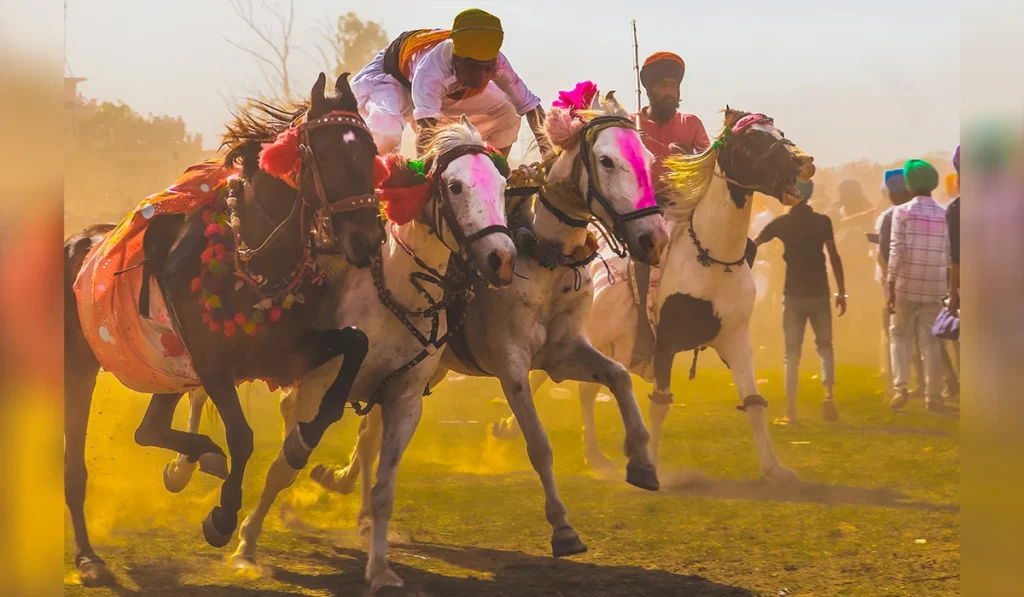
By giving Holi a self-respecting, martial character, Guru Gobind Singh Ji renamed it “Hola Mohalla” in Punjab to make Sikhs courageous and battle-ready. On this day, to display and witness the martial feats of the warrior Singhs, Guru Ji divided the Sikh army into two groups. One group would take defensive positions along the banks of Charan Ganga, while the other would prepare at Qila Holgarh and then advance toward Charan Ganga. The advancing group would treat the defending Singhs as the enemy and launch a charge, resulting in a vigorous mock battle between the two sides.
The group that emerged victorious would be honored by Satguru Kalgidhar Patshah with robes of honor (siropaos). Open cauldrons of karah prasad would be laid out upon white sheets, and the Singhs were permitted to partake freely. The Guru would sit at an elevated place, joyfully observing the spectacle. A grand court would then be held, where armed Singhs demonstrated their martial skills face-to-face. War drums resounded, weapons clashed, victory slogans echoed in the sky, and triumph was celebrated.
Describing the divine glory of Hola Mohalla as a symbol of Khalsa grandeur, poet Sumer Singh writes:
“Ourna ki Holi mam Hola. Kahyo Kripaanidh bachan amola.”
It was by transforming festivals like Holi into occasions of martial spirit that he fought fourteen battles and is remembered for his remarkable resistance and victories.
Hola Mohalla in the Present Day
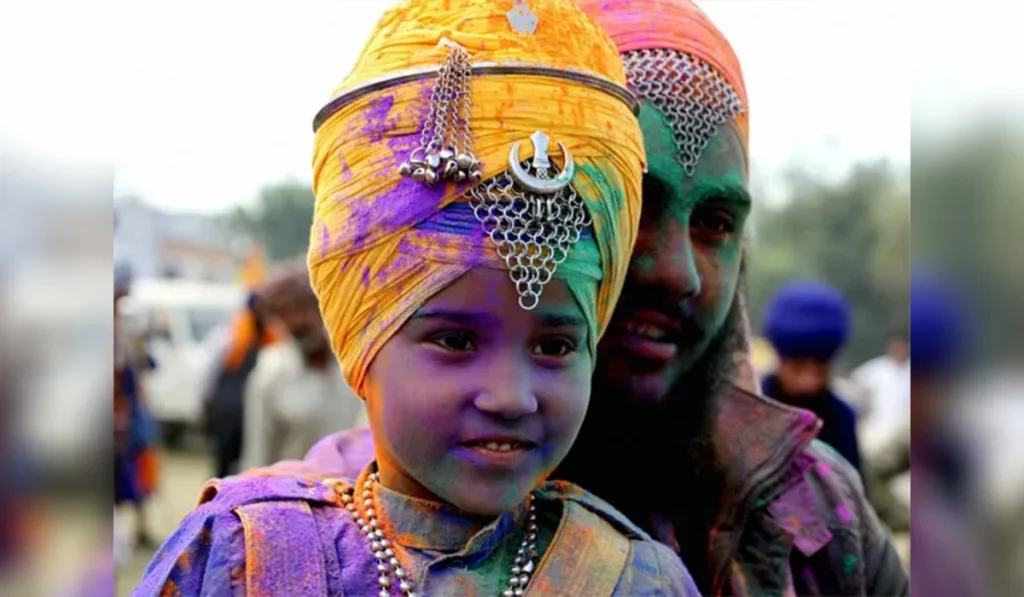
In modern times, the Hola Mohalla initiated by Guru Gobind Singh Ji is celebrated at Kiratpur Sahib and then at Sri Anandpur Sahib. Some historical references also suggest that the earliest observance began near Khizrabad, close to Purkhali and the village of Binderakh, a land sanctified by the footsteps of Guru Gobind Singh Ji.
For three days, the concluding ceremony (bhog) of Sri Akhand Path Sahib is held at Khizrabad, followed by three days at Kiratpur Sahib, and then three days at Sri Anandpur Sahib. Today, however, Sri Anandpur Sahib witnesses a particularly grand gathering of the Khalsa, where an annual procession (Mohalla) is taken out.
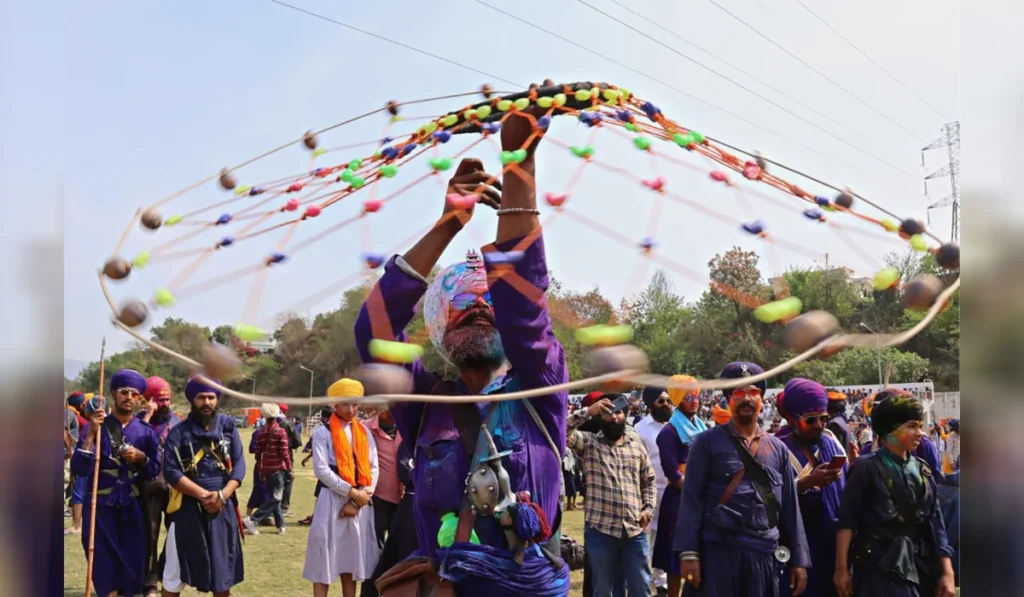
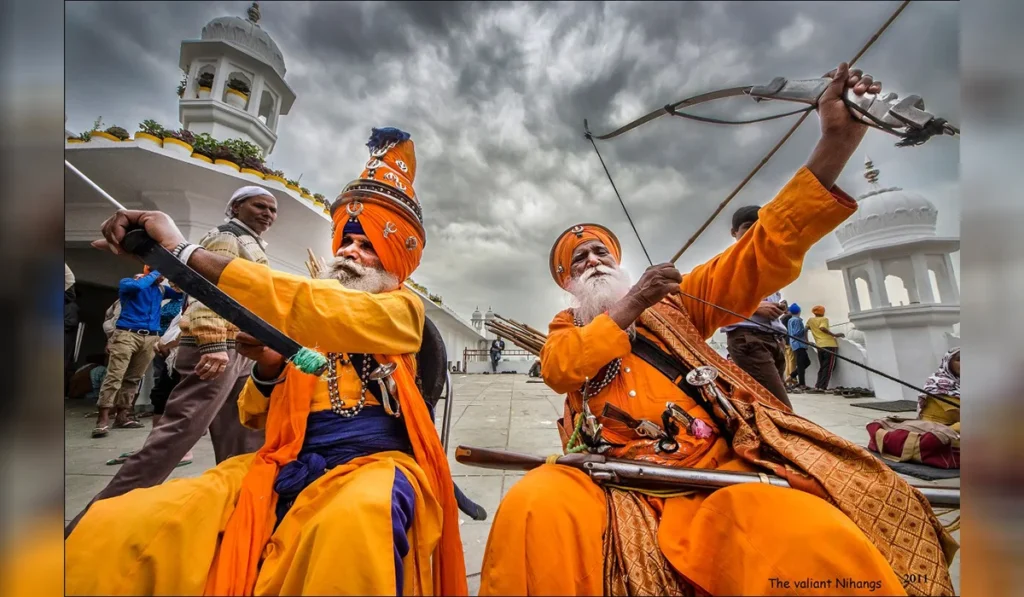
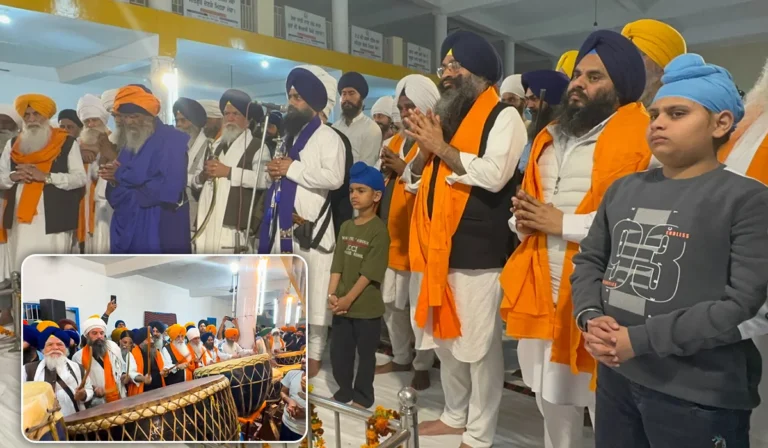
On this day, the Panj Pyare offer ardas and, carrying the Nishan Sahib from Anandgarh Sahib, lead the procession. Nihang Singhs from Punjab and other parts of India participate on horseback, armed with traditional weapons, striking the nagaras (war drums) and raising the slogan “Bole So Nihal, Sat Sri Akal.”
The grand procession moves from Anandgarh Sahib to Mata Jeeto Ji’s shrine, then from Lohgarh to the Charan Ganga Stadium. There, the Khalsa army displays martial skills. Various Gatka demonstrations are performed. Nihang Singhs captivate spectators with remarkable horsemanship. The display of weapons is awe-inspiring. The decorated dumalas (turban styles) of many Nihang Singhs amaze onlookers.
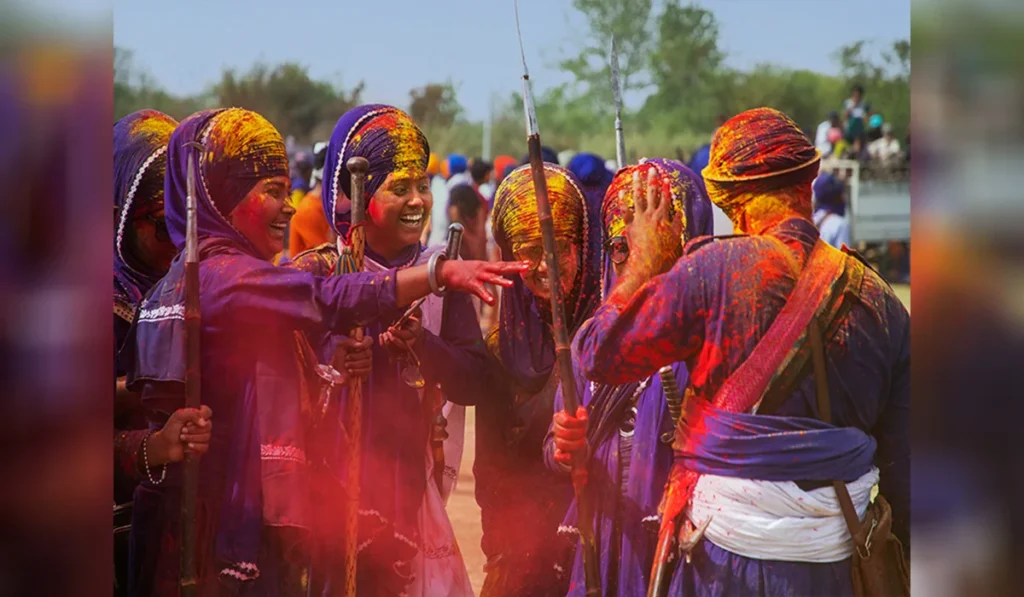
This surging ocean of Hola Mohalla colors the land of Sri Anandpur Sahib in the spirit of Khalsa. In the afternoon, the procession moves toward Takht Sri Kesgarh Sahib. After the conclusion of the Mohalla, ardas is performed, and the Nihang Singhs depart for their respective camps.
The Nihang Singhs have their own distinctive vocabulary and terminology. When they speak in what is known as “Gargajj Bole,” many words can be difficult for ordinary people to understand. For example:
• A lamp is called “ujagar.”
• A stick is called “akaldan.”
• A goat is called “akashpari.”
• Kachhera is called “kachh.”
• Night is called “anjani.”
• Milk is called “samundar.”
• Radish is called “karadi.”
• Buttermilk is called “khara samundar.”
• A donkey is called “chilam.”
• Sugar is called “suah.”
• Saffron is called “haldi,” and so on.
If an ordinary person today hears such speech, they might interpret it entirely differently.
By highlighting the original spirit of Hola Mohalla in the present time, we can free people’s minds from worldly distractions and awaken consciousness. It can instill within society the spirit to stand for truth and justice, along with enthusiasm and the rising optimism of chardi kala.
Leave a Comment