
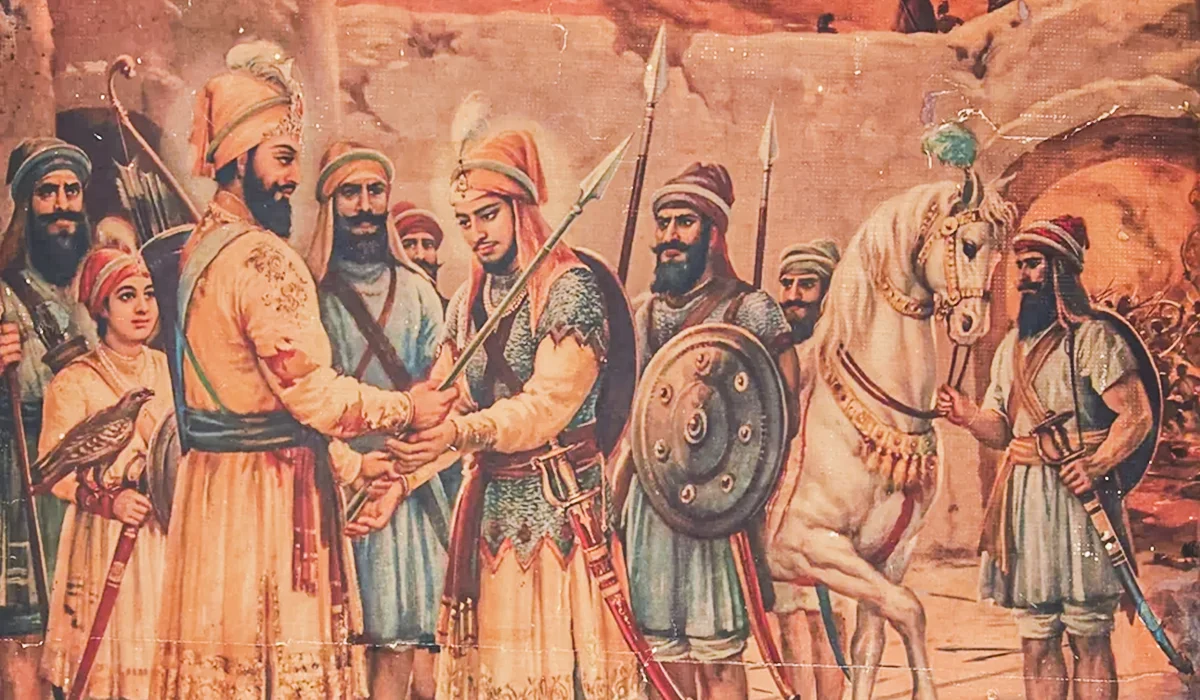

Sahibzada Baba Ajit Singh Ji was born at Paonta Sahib to Sri Guru Gobind Singh Ji and Mata Sundari Ji. He was born after Sri Guru Gobind Singh Ji won the Battle of Bhangani while staying at Paonta Sahib. In the joy of winning the battle, Guru Ji named the Sahibzada Ji Ajit Singh. The Battle of Bhangani (1688) was the first major armed conflict led by Sri Guru Gobind Singh Ji. Naming the Sahibzada “Ajit” (invincible) symbolised not just victory in battle, but the birth of a spiritual–martial legacy that would later define the Khalsa Panth.
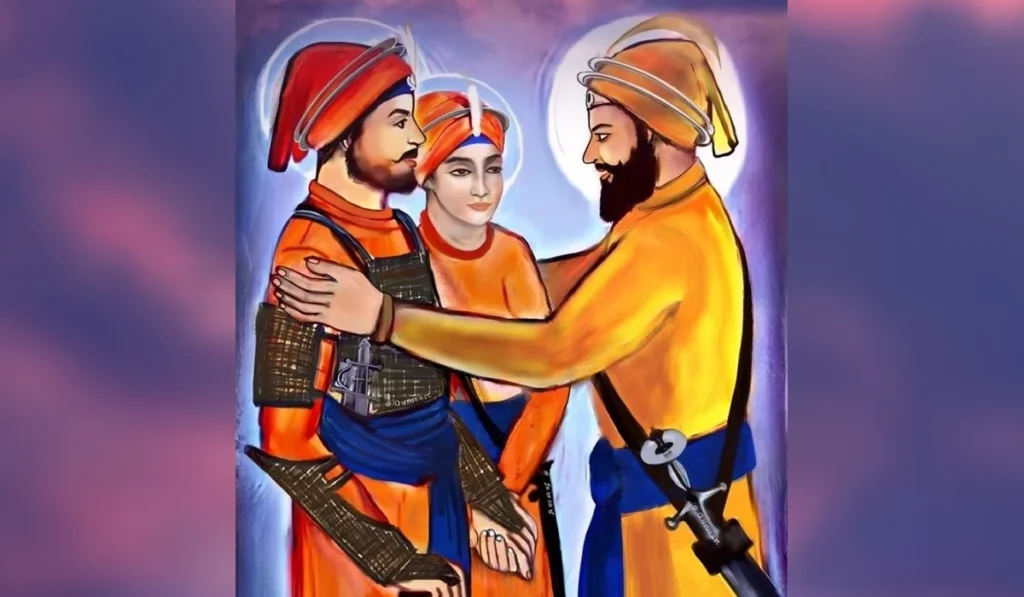
Sahibzada Ajit Singh Ji was the son of Sri Guru Gobind Singh Ji, who led and fought multiple battles against tyranny and injustice. Like his name, Baba Ajit Singh Ji was also truly invincible. His childhood was spent enjoying the warm lap of Mata Gujri Ji, under the care of great Gurmukh warriors like Sri Guru Gobind Singh Ji’s maternal uncle Kirpal Chand Ji. He was taught all kinds of weapons from his childhood. Like Sri Guru Gobind Singh Ji, Sahibzada Ajit Singh Ji was a master of swords and he had no equal in archery. His aim in spear shooting was flawless and he handled heavy weapons such as the saang with exceptional strength and discipline. He was also an expert in horse riding. While living at Sri Anandpur Sahib, he received spiritual, martial, and intellectual training directly under Sri Guru Gobind Singh Ji.
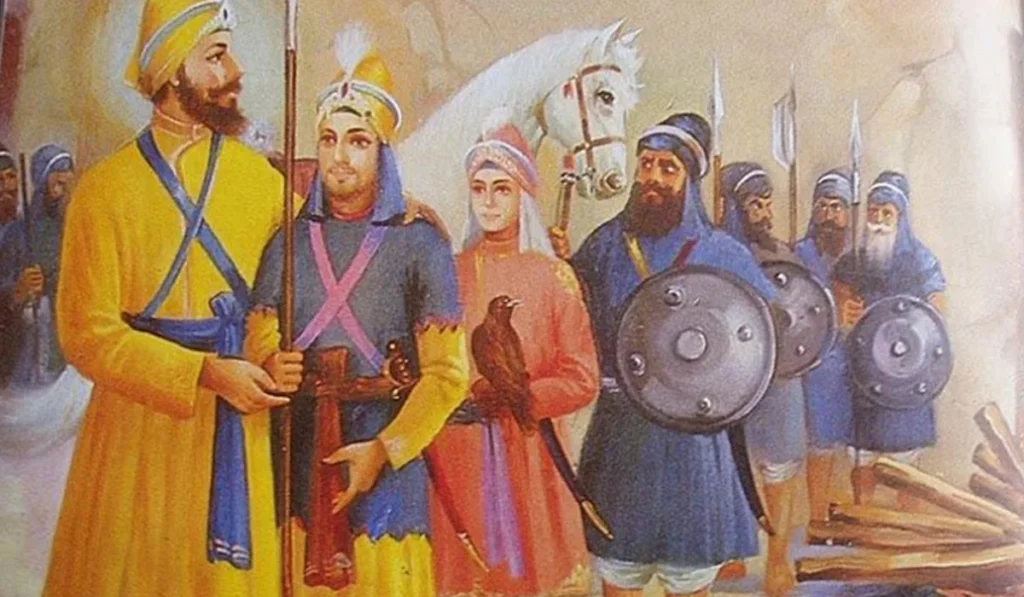
In Sikh tradition, mastery over weapons was inseparable from spiritual discipline. Sahibzada Ajit Singh Ji’s training combined physical strength with humility, restraint, and responsibility — reflecting the Sikh belief that power exists only to protect righteousness, never for oppression.
When the Khalsa Panth was created, he also took Amrit from the five beloved ones. He had memorized a lot of Gurbani by heart and getting up at dawn and performing Nitnem was his daily ritual. Everyone saw his bravery at a young age when he carried away the wife of a poor Brahmin from the village of Bassi, near the village of Chabbewal in Hoshiarpur district. That poor Brahmin came to the Guru’s court and cried out to the Guru. Moved by the injustice faced by the poor Brahmin’s family, Sahibzada Ajit Singh Ji led a jatha of Singhs, under Guru Ji’s command, to punish the oppressor and rescue the woman. Sri Guru Gobind Singh Ji sent a group of Singhs under the leadership of Sahibzada Ajit Singh Ji to punish the tyrant. Sahibzada Ajit Singh reached near Hoshiarpur and punished the said tyrant. A fierce battle took place on both sides. Some Singhs were injured and some were martyred, but the poor Brahmin’s wife was rescued.
This episode is remembered in Sikh history not as an act of aggression, but as an early assertion of Sikh responsibility to protect the oppressed, irrespective of caste or creed — a principle that later became central to the Khalsa’s identity. In memory of this battle, a memorial has been built at Gurdwara Sahib Harian Velan near Bajraur. The history of Ladhewal Shaheedan Mahalpur is also associated with this incident.
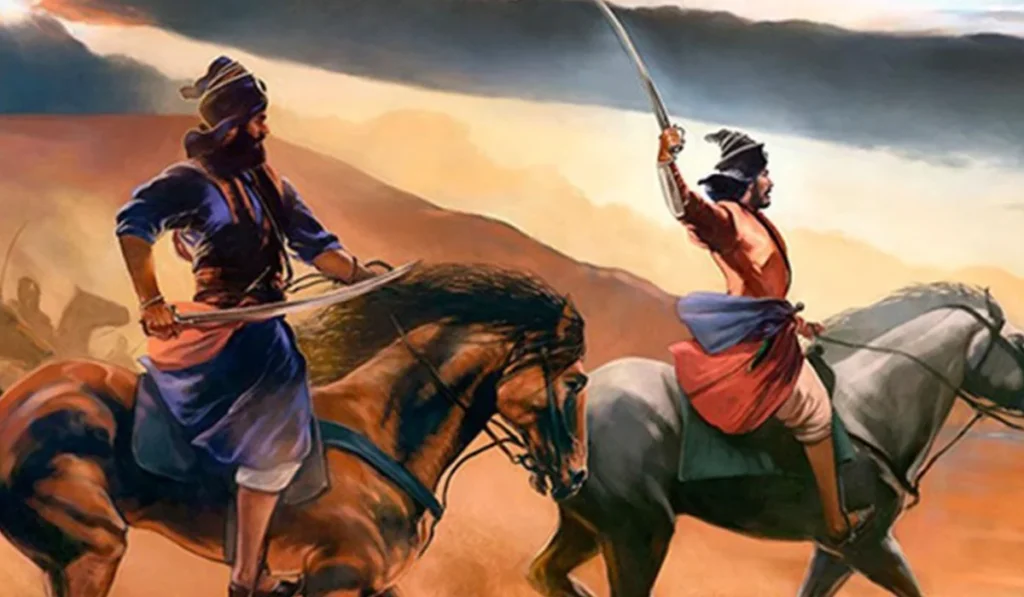
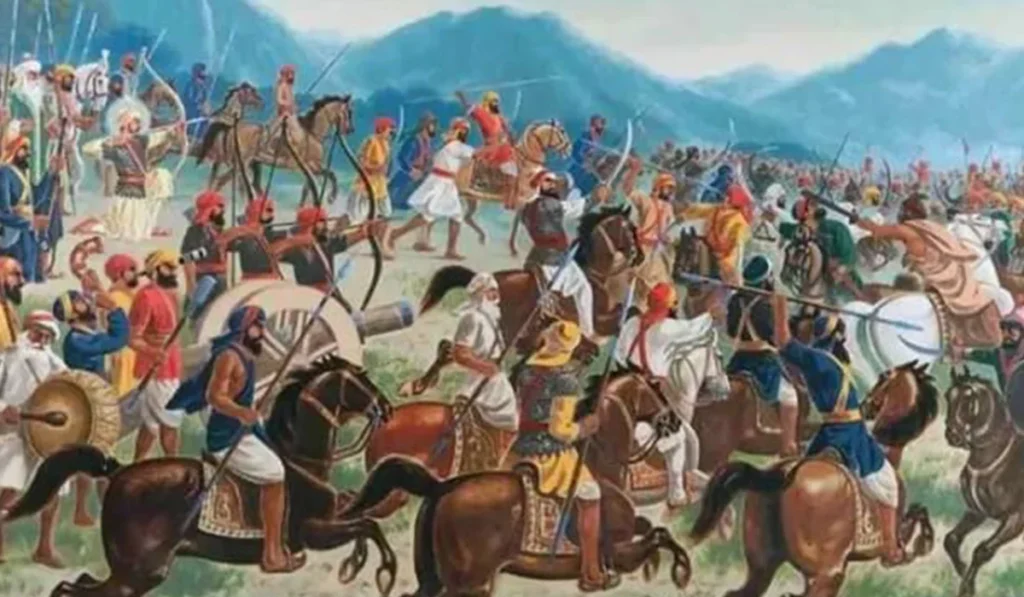
When Sri Guru Gobind Singh Ji left the fort of Sri Anandpur Sahib and the Guru Ji’s family was divided into three parts on the banks of the Sarsa river, you along with your younger Sahibzada Baba Jujhar Singh Ji reached Sri Chamkaur Sahib. The events of Chamkaur Sahib are documented through Sikh historical texts, Persian chronicles, and contemporary poetic accounts. Together, they convey both factual events and the emotional gravity of the battle. Sahibzada Ajit Singh Ji faced a vastly outnumbering Mughal and allied force at Sri Chamkaur Sahib. Baba Ajit Singh Ji entered the battle after getting the permission of Sri Guru Gobind Singh Ji. Contemporary Persian poets like Allah Yar Khan Jogi described this battle in poetic imagery, capturing its intensity and heroism:-
“Gobind’s heart came out of the fort.
Look, he came out of the fort of the government.
He came out of the fort on horseback.
He came out of the fort with a sword in his hand.
What is the meaning of that sword in this tongue?”
It came out of the sheath, it did not come out of this ten.’’
It is said that when Sahibzada Ajit Singh came in front of the tyrants, the enemy trembled after seeing Baba Ji’s fierceness. When Baba Ji swung the sword in his hand, the enemy started to panic.
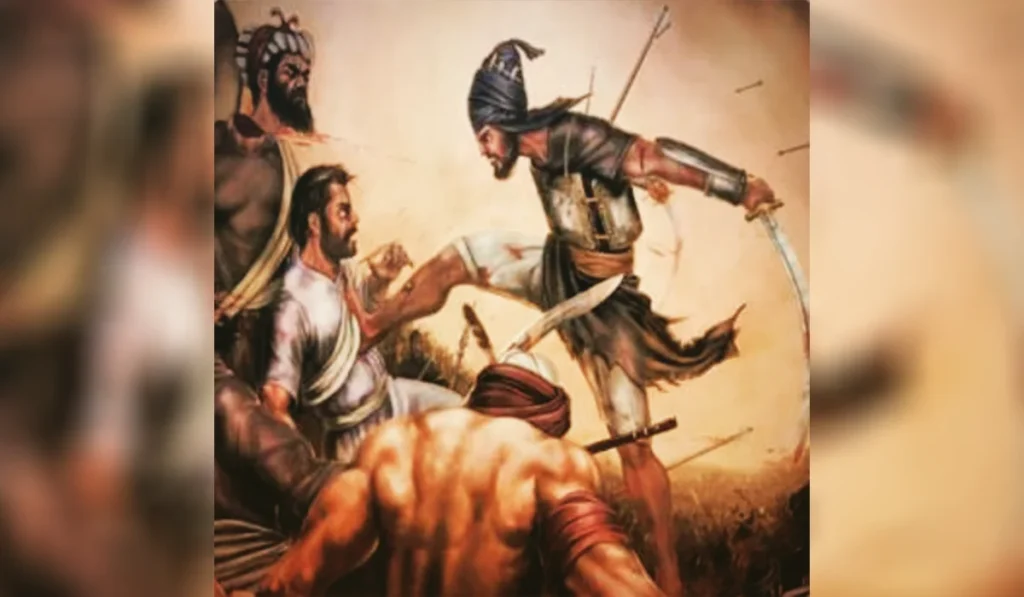
‘‘With that sword in his hand, Gobind’s city was destroyed.
The son’s sword shook the water and the land.
What is there to say about the living, the dead are dead.
There was noise in the crematorium, there was commotion in the mausoleum.’’
Poet Senapati, a contemporary of Guru Gobind Singh Ji, refers to Sahibzada Ajit Singh Ji as “Ranjit Singh” in his composition—a variation accepted by historians due to poetic usage of the time. Although you have mistakenly written Baba Ji’s name as Ranjit Singh instead of Ajit Singh Ji, but since he was a contemporary, his testimony is of great importance.
“Kill the Pathans like this, Jeet Singh, I will do it.
Do so, command the enemy with the sword, and take the weapons.”
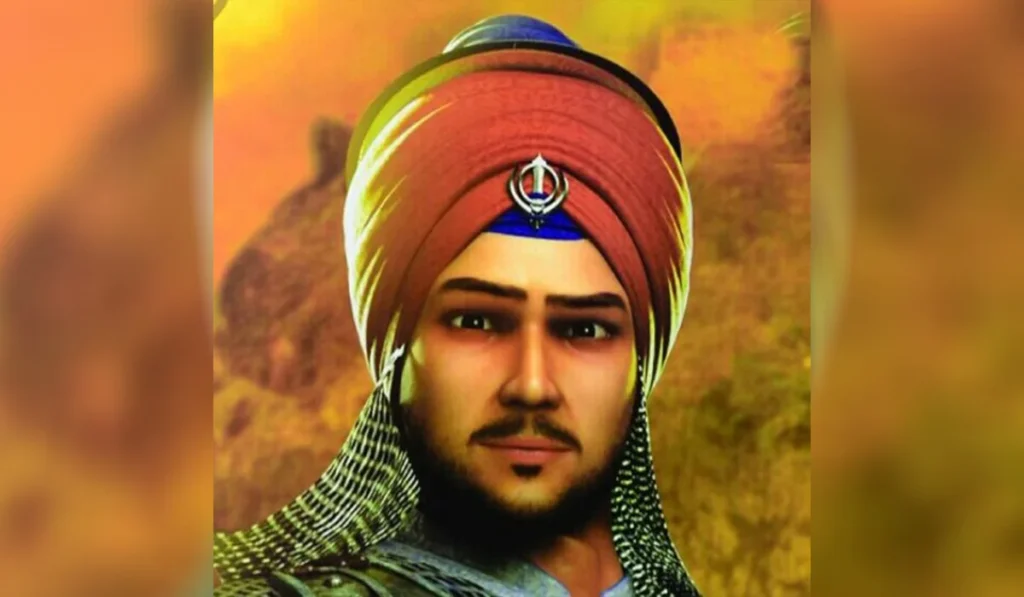
According to the poet, when Sahibzada Ji’s sword broke, he started piercing the enemy with the sword as if a branch had fruits on it.
“Let the Pathans see the whole story.
See what I do, O God, the God.”
And
“I will fight the boars, I will take the sword.
When you kill big boars, you will become the leader of the army.”
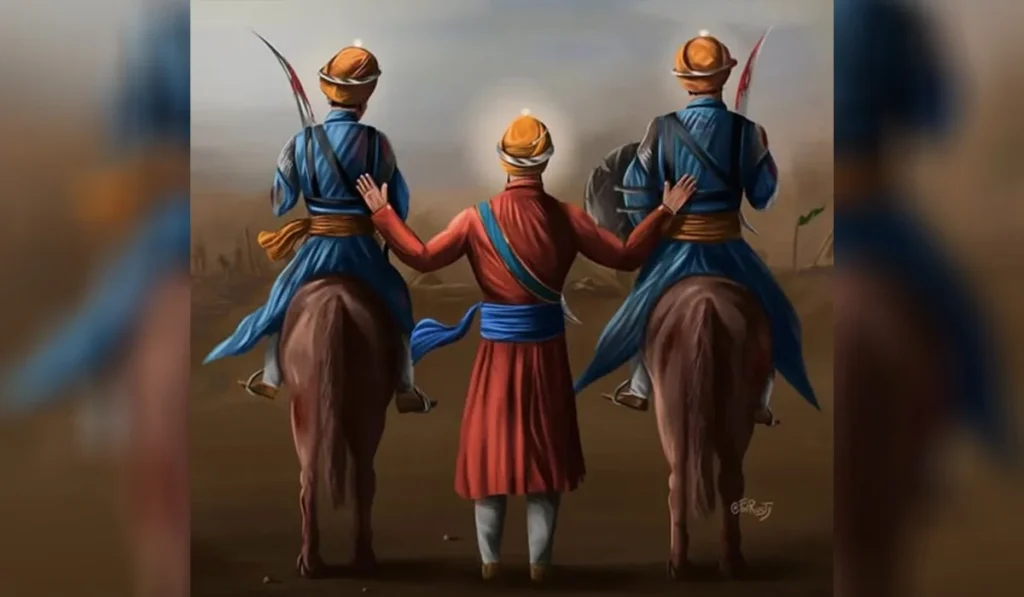
You were riding your horse in the battlefield, encouraging the other Singhs. Wherever Sahibzada Ajit Singh Ji went, the Mughal army would be in a panic. Sri Guru Gobind Singh Ji was also watching his talented son fighting from the fort.
According to Allah Yar Khan Jogi:-
‘‘Prince I Ji-Jah created a chaos.
This army was defeated, sometimes that army was defeated.
He showed great courage with his bravery.
The Satguru called the children from that fort.
Well done, son, you fought with great courage.
Yes, why not, you are the son of Gobind.’’
Sahibzada Baba Ajit Singh Ji was still in his teens when he consciously chose martyrdom. His decision stands as one of history’s most powerful examples of youthful leadership guided by faith rather than fear.
Sahibzada Baba Ajit Singh Ji attained martyrdom at Sri Chamkaur Sahib on 8 Poh Samvat 1761 Bikrami, fighting fearlessly before the eyes of Sri Guru Gobind Singh Ji. The memory of Baba Ji will always be a light and an inspiration for the coming generations. Sahibzada Baba Ajit Singh Ji’s Shaheedi stands as the highest example of youthful courage guided by Dharma, discipline, and devotion to the Guru.

Leave a Comment