
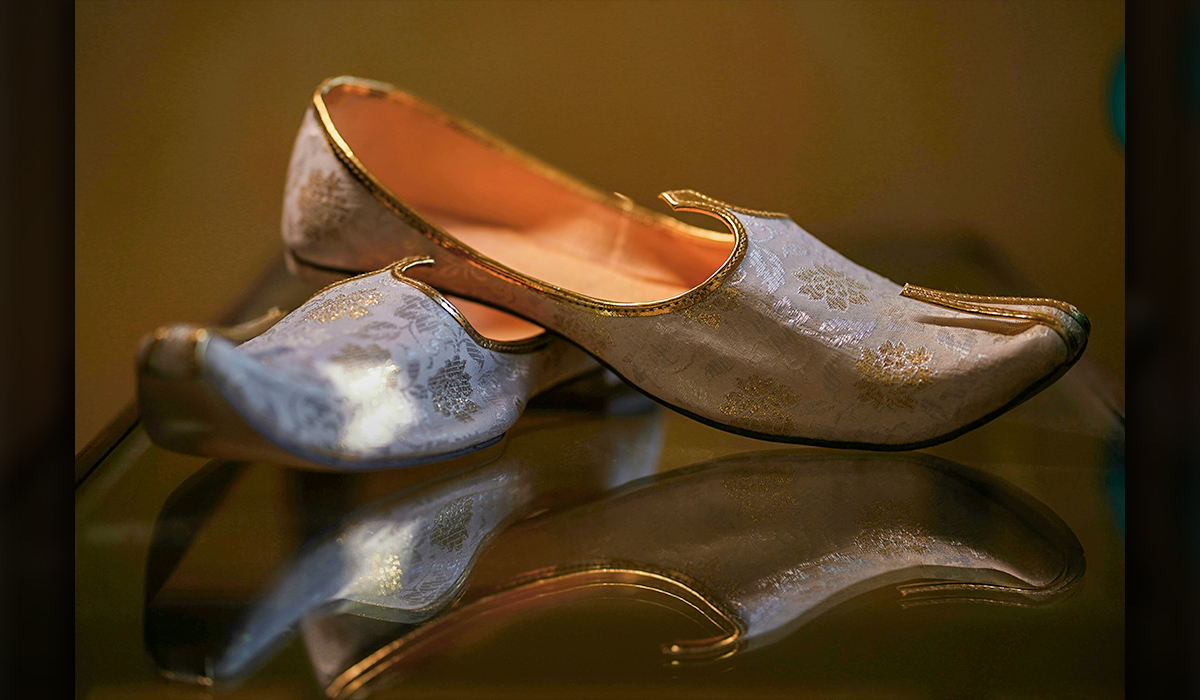

The Punjabi footwear (also known as “jutti”, “khussa”, or “mojri” in different regions) is not just a flat shoe: it is the epitome of centuries-old craftsmanship, regional identity, and changing fashion. From the royal courts of the Mughal era to wedding dresses and the vehicles of global e-commerce, the footwear journey reflects changing tastes, the economy of craftsmanship, and new ways to reach international customers.
Roots and Cultural Significance
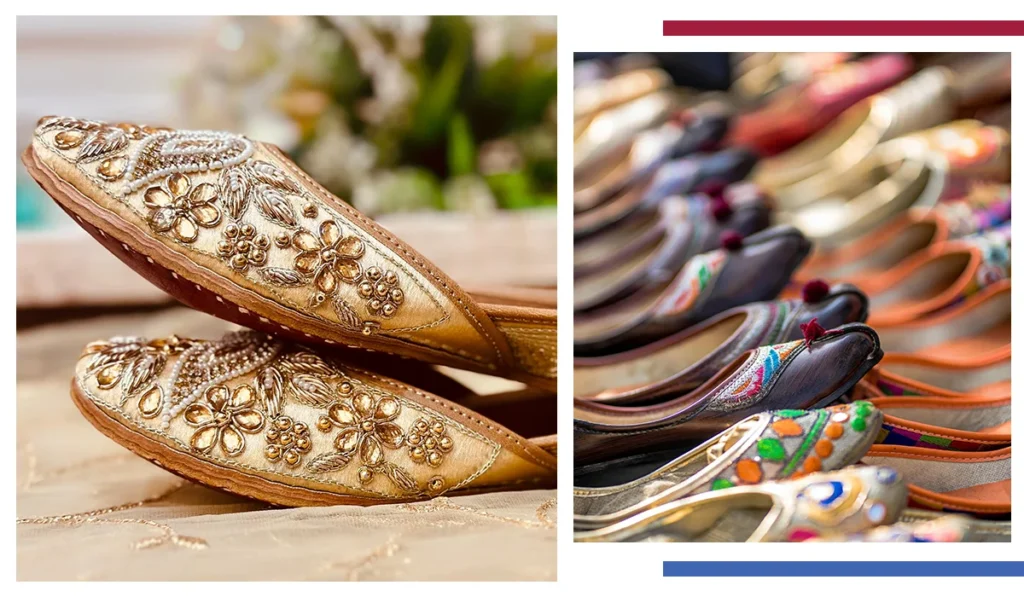
The history of footwear goes back centuries to the royal wardrobes of North India. They were historically made for kings in elaborate designs with gold, silver threads, pearls, and precious stones. Over time, the art spread to Punjab and neighboring regions and became a part of everyday as well as formal wear. This heritage explains why its patterns, techniques and shapes also vary according to sub-regions (e.g. Patiala, Amritsar).
Characteristics, materials and techniques of handmade shoes
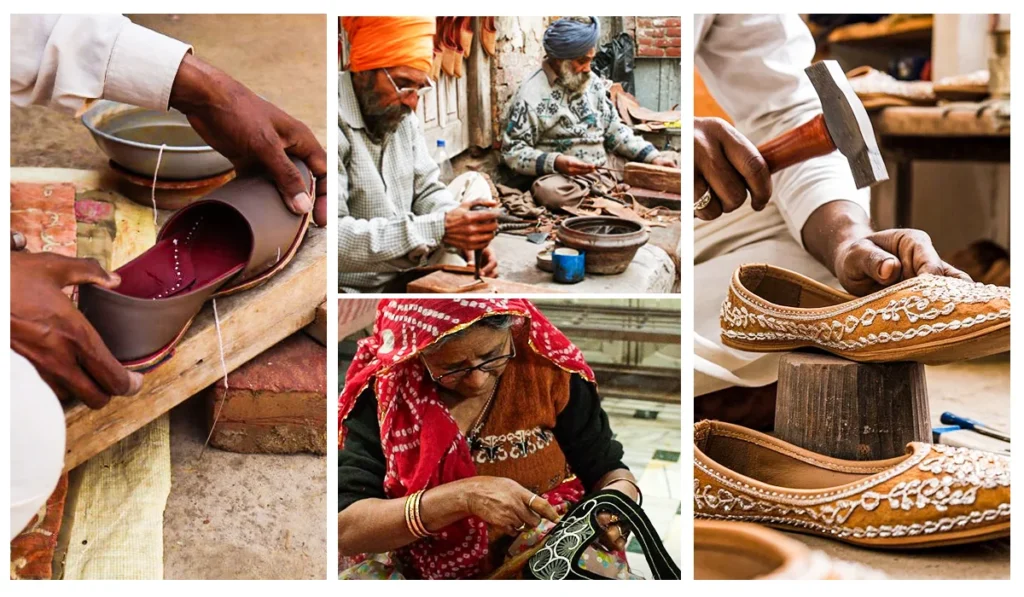
Handmade shoes combine simple raw materials with a surprisingly wide range of manual steps:
Main material: Traditionally tanned leather for the sole and upper, cloth, silk, velvet or brocade for the decorative upper in non-leather versions.
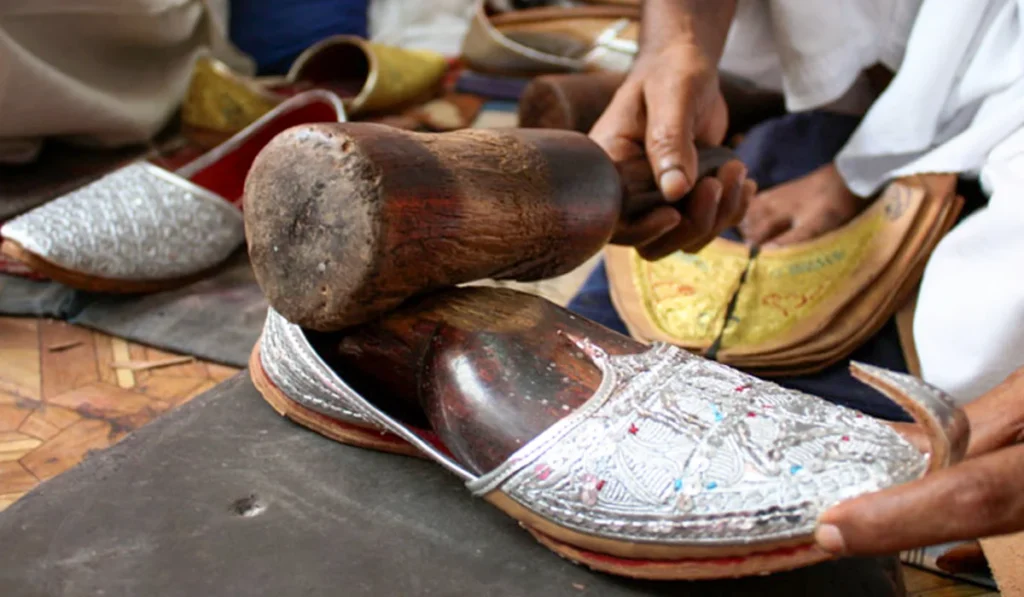
Wooden template and shape: Craftsmen use a wooden template/form to shape and stretch the leather and maintain the shape/fit, this is a simple but important step.
Cutting and stitching: Skilled cutters and stitchers (often called mochis in local usage) hand cut the pieces and sew the upper to the sole using strong threads and hand-stitched seams.
Embellishment: Embroidery techniques range from fine zari and saw work to Phulkari-style embroidery, beading, glass and sequins. Traditional patterns (floral, paisley, geometric) are hand-crafted.
Finishing: The edges, sole polishing and sometimes light padding are manually finished to ensure comfort and longevity.
This multi-level process, in which several artisans bring different skills, is documented in shoe art studies.
Artisan communities and social environment
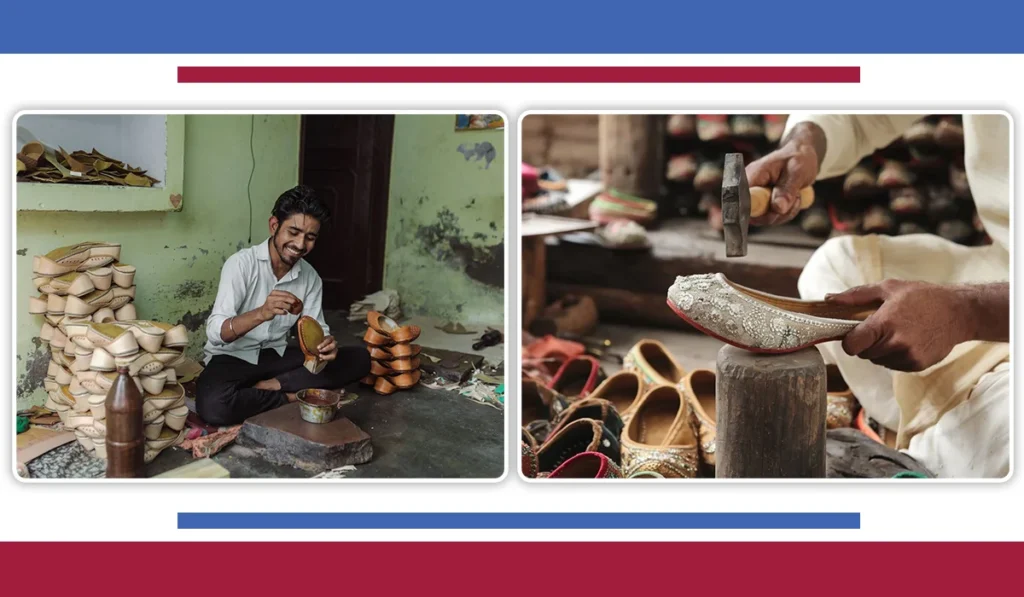
The Punjabi shoemaking process relies on specialized artisan communities (leather, dyeing, stitching, embroidery). This division of labor yields high skills, but the craftsmanship is now fragile. Key challenges include the migration of youth, declining demand for leather, and limited access to markets. Securing the livelihoods of artisans is essential to preserve this tradition and knowledge, keeping this family-run art alive.
Evolution of Design From Tradition to Fusion Fashion
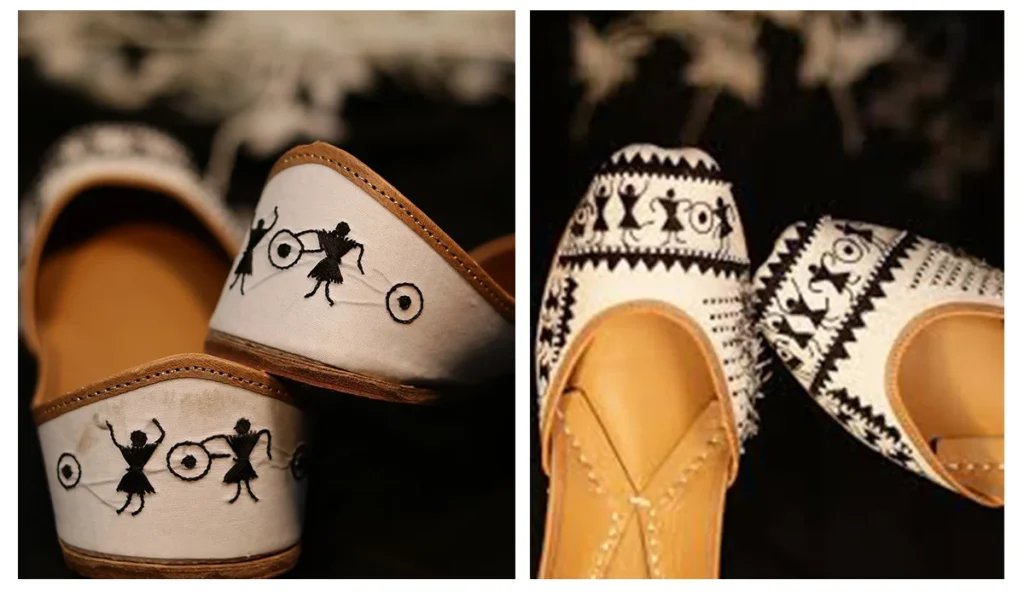
Modern designers and small brands have revived and innovated footwear:
By using non-traditional fabrics (velvet, denim, printed silk) and contemporary colors.
By creating fusion silhouettes (slip-ons, ballet-flat styles) that are compatible with Western wear.
By collaborating with fashion labels and celebrities who bring visibility and premium pricing.
These changes make shoes attractive to young and international buyers as unique and ethical fashion.
Global reach: The overseas journey of Punjabi shoes
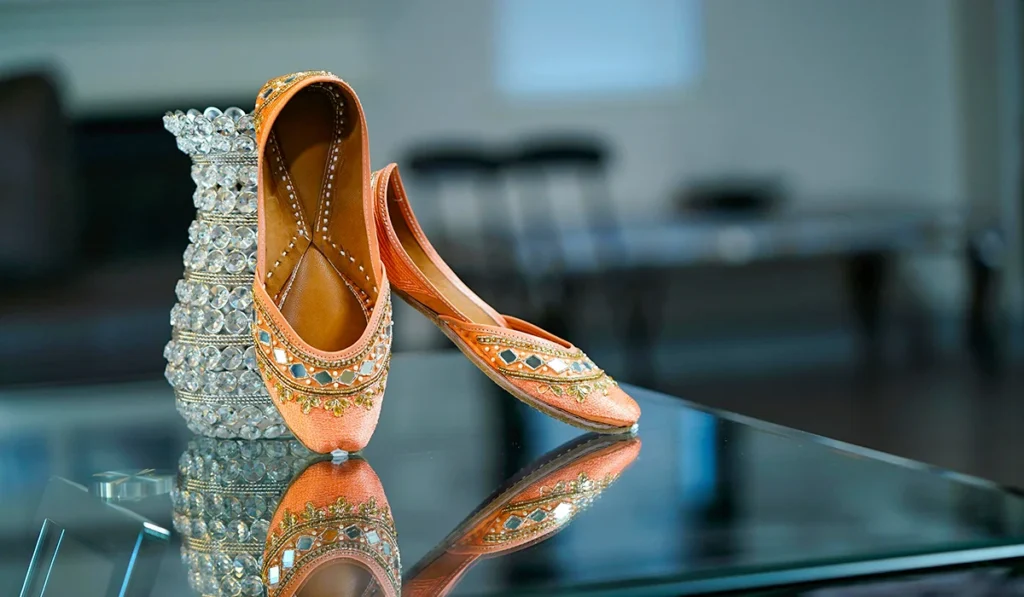
Today, the international availability of shoes depends on several channels:
E-commerce marketplaces and handmade platforms: Global marketplaces like Etsy host many shoe sellers targeting customers in North America, Europe and Australia. These platforms allow small exporters and direct artisans to reach diaspora and non-diaspora customers who value handmade ethnic fashion.
Exporter and trade network: Regional centers (Amritsar, Patiala and nearby towns) include manufacturers and exporters who ship in bulk or in collections to boutiques and wholesalers abroad. Export databases show that India exports Punjabi shoes to several countries, including Canada, the UK and the US, which are among the regular importers.
Trade agreements and policy support: New trade agreements and government policy support are improving international market access for Indian shoes. These macro changes reduce tariff barriers, helping handmade shoes become more competitive abroad and increasing export opportunities.
Branding and storytelling: Successful international sales often combine the quality of the art with brand narratives, origin stories, artisan profiles and evidence of hand craftsmanship, which add perceived value to discerning consumers.
Key challenges
Despite the growing interest, several barriers remain:
Quality standardization and sizing: Handmade goods vary in fit and finish, which can lead to higher return rates and customer dissatisfaction abroad.
Awareness and GI protection: While footwear is celebrated, artisans lack awareness of official GI recognition and legal benefits. This prevents them from getting the right premium price for their products. According to media and art advocates, this area needs urgent attention.
Supply chain pressures: Raw material costs, limited working capital, and competition from machine-made imitations can undercut authentic artisans.
What can help sustain opportunities and art?
Sustainable international trade requires a focus on 3 key areas: adapting skills training and design to global tastes while retaining identity, building better market linkages through export houses and online platforms, and providing policy support (such as export credit and GI protection) to transform artisans’ interest into long-term livelihoods.
Punjabi footwear is a magnificent example of handcraft, culture and creativity. Its international journey continues through e-commerce and fashion collaborations. To maintain it as a vibrant tradition and a global product, artisans, designers and policy makers will have to unite around quality, authenticity and export facilitation, so that it continues to successfully step into the world.

Leave a Comment