


When a blood test costs more than a day’s wages, the sick go without one.
That quiet, grinding reality sits at the heart of a new initiative at Guru Nanak Dev University in Amritsar, where the Sunny Obrai Clinical Lab and Diagnostic Centre opened its doors recently with a stated purpose that is both practical and pointed: to make medical testing affordable for the people who need it most.
The centre was inaugurated jointly by GNDU Vice Chancellor Dr. Karmjit Singh and Dr. Sarbjinder Singh, Vice Chancellor of Sunny Obrai Vivek Sadan in Sri Anandpur Sahib, in the presence of Dr. S.P. Singh Obrai, the Dubai-based industrialist and head of the Sarbat Da Bhala Charitable Trust, who founded and funds the venture.
A Lab Rooted in the Philosophy of Common Welfare

The name of the trust, Sarbat Da Bhala, roughly translates as “the welfare of all” and derives from the Sikh ardas, the daily prayer attributed to Guru Nanak. The phrase has long carried moral weight in Punjab. What distinguishes this effort is that someone has chosen to build institutional infrastructure around it rather than leaving it as an aspiration.
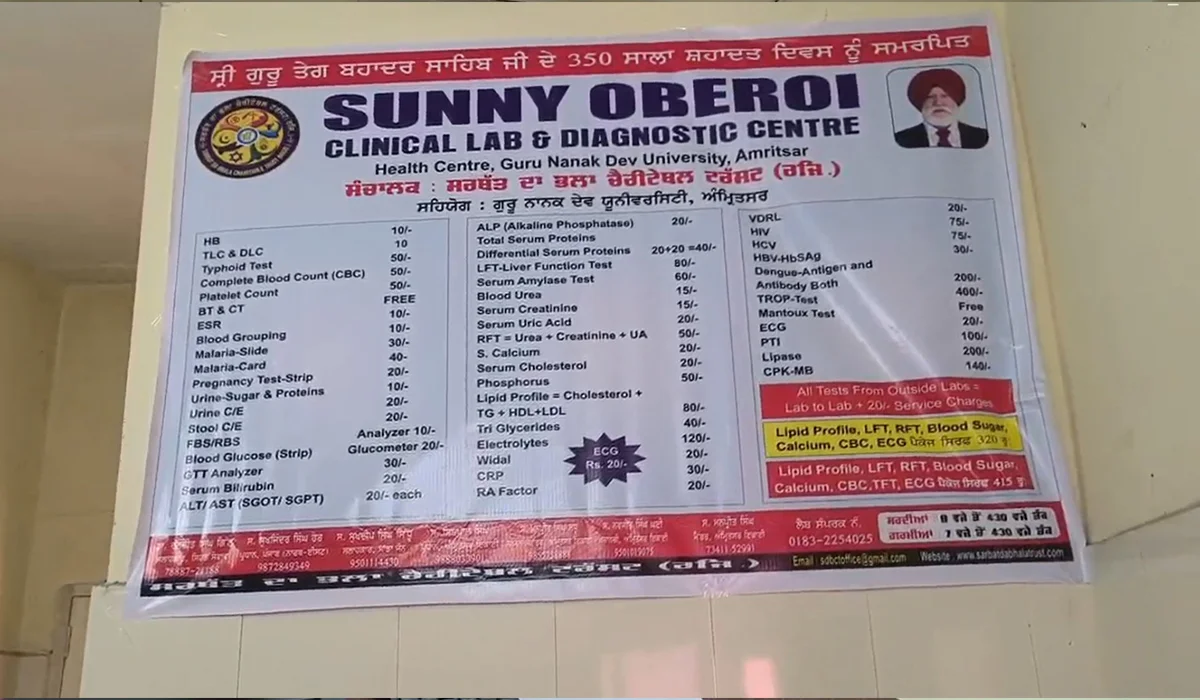
The diagnostic centre is dedicated to the 350th martyrdom anniversary of Sri Guru Tegh Bahadur Ji. This detail frames it not merely as a philanthropic act but as a tribute with historical and spiritual grounding. That combination of purpose and occasion has given the initiative a reception warmer than most ribbon-cutting events attract.
Dr. Obrai, who is 77 years old, has reportedly been travelling continuously across India to oversee the expansion of this network of low-cost laboratories. Those who spoke at the inauguration noted that at an age when most men of his standing would have retired comfortably, he continues to move between cities and villages, attending to what he describes as unfinished work.
The Scale of the Problem
Dr. Obrai was direct about the conditions that necessitated the centre. Rising costs have pushed a significant portion of the population toward delayed diagnosis. People who might act early on a symptom hold back because the test itself represents a financial risk. By the time they seek help, the illness has often advanced.
This is not an abstract observation. In India, out-of-pocket healthcare spending remains among the highest in the world as a share of total health expenditure, and diagnostic costs account for a substantial share of that burden. Private laboratories in cities like Amritsar charge market rates that, by the trust’s own reckoning, are 10 times or more what the tests actually cost to perform at scale.
The Sarbat Da Bhala Charitable Trust has set a target of opening 200 laboratories across India. At the time of this inauguration, 150 of them were already operational, spread across 14 states, including Punjab. In the previous year alone, more than 2.7 million people used these centres to get tests at low cost.
What the Centre at GNDU Offers
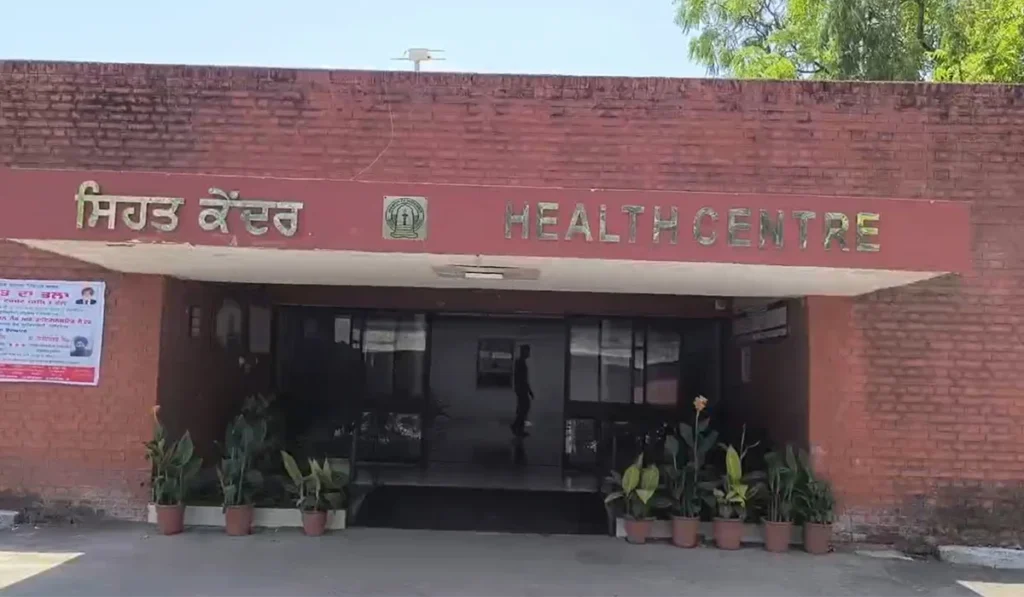
The university campus serves a community of over 15,000 students, teaching staff, and non-teaching employees. Surrounding residential areas bring that number considerably higher. The laboratory is intended to serve all of them.
The pricing structure is the centre’s most significant feature. Tests that would cost between Rs. 4,000 and Rs. 4,500 at commercial laboratories will be available here for Rs. 400. Some routine and essential tests will cost between Rs. 10 and Rs. 50. Several basic screenings will be offered free of charge.
Two additional sample collection centres are planned to open near the university in the near future, reducing travel time for residents in surrounding localities who may not be able to reach the main campus easily.
Reports will be delivered through digital messaging to reduce the need for repeated visits. Patients who have provided samples will receive results on their phones, a small but practical concession to the realities of working-class schedules.
Equipment and Future Services
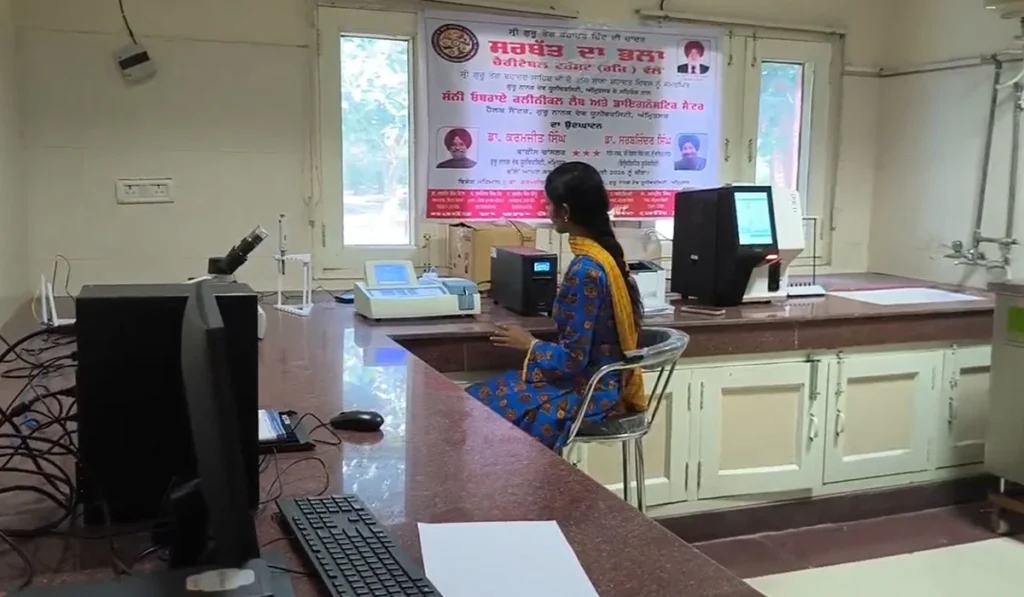
Vice Chancellor Dr. Karmjit Singh noted that the machines installed in the laboratory are current-generation, high-precision instruments. Accuracy matters as much as affordability in diagnostic work. A cheap test that yields an unreliable result serves nobody.
The trust has also outlined plans to expand the centre’s scope over time. Physiotherapy and dental clinic services are being considered as additions, making the facility a more complete outpatient resource rather than a diagnostic point alone. Whether those additions materialise will depend on uptake and funding, but the stated intention suggests the trust views the present laboratory as a foundation rather than a finished project.
The Man Behind It
Dr. S.P. Singh Obrai’s background has been mentioned at several such events across the country, and it came up again here. His family came from Tarabi, a village near Panja Sahib in what is now Pakistan. They were among the millions displaced during the 1947 partition. His rise from that beginning to becoming a prominent figure in Dubai’s business community is the kind of story that lends credibility to public-spirited claims, because it supplies the biographical context that makes the commitment believable.
Vice Chancellor Dr. Sarbjinder Singh, in his remarks at the ceremony, said that at a time when most people of means are occupied with accumulating more, Dr. Obrai spends more than Rs. 2 crore from his own resources every month on public service. That figure, if accurate, represents a level of personal expenditure on social welfare that is uncommon by any standard.
The speakers at the event used the Punjabi word “fakiriyat” to describe Dr. Obrai’s outlook. The word does not translate neatly. It suggests the disposition of someone who lives lightly despite having much, and who feels a genuine calling to serve rather than merely perform service. Whether that characterisation holds up under scrutiny is a matter for closer reporting, but the consistency of the trust’s work across 14 states over several years lends it some credibility.
What It Represents
India has a long history of philanthropic gestures in healthcare, many of which do not outlast the inauguration day photograph. What makes this effort worth watching is its operational scale and the pricing model it has publicly committed to.
A diagnostic centre that charges Rs. 400 for tests priced at Rs. 4,500 in the market will face sustained financial pressure. The trust’s model, operating on a subsidised cost-price basis rather than charity wards within an otherwise commercial structure, requires continuous funding and consistent management. The fact that 150 centres have remained operational across 14 states for long enough to serve 2.7 million people in a single year suggests that the model has not collapsed under that pressure, at least not yet.
The centre at GNDU brings that model into a university setting, where the student population is precisely the demographic most likely to skip a medical test due to cost. Young people living away from home, managing on limited stipends or family remittances, tend to put off health concerns until they become difficult to ignore. A laboratory on campus, priced at a tenth of market rate, removes the financial excuse that most commonly leads to delay.
Dr. Obrai, speaking at the inauguration, framed the entire effort in terms of Guru Nanak’s teaching that the welfare of all is not a sentiment but a responsibility. Whether one holds that teaching is sacred or simply good moral philosophy, the diagnostic centre at GNDU is an attempt to give it a physical address.
Also present at the event were Registrar Dr. K.S. Chahal, Dean Academic Dr. Harvinder Singh, Dr. Daljit Singh Gill from the trust, District President Sishpal Singh Ladi, District General Secretary Manpreet Sandhu, Navjit Singh Ghai, and other dignitaries.
Leave a Comment