


Amritsar, known as the city of the Guru, is famous not only for its spirituality but also as a witness to the bravery and cultural legacy of Sikh rule. Located in the heart of the city, Gobindgarh Fort is one of Punjab’s select historic monuments that tells the story of Maharaja Ranjit Singh’s great empire and the rising spirit of the Sikh community.
The history of this fort is deeply connected with Sikh history and with Maharaja Ranjit Singh himself. Even today, its strong walls reflect a legacy of warfare, resilience, and Punjabi cultural richness, connecting visitors to a glorious past.
Historical Background and Construction

The history of Gobindgarh Fort begins in the mid-18th century. Originally, the foundation of the fort was laid by Gujjar Singh Bhangi, a chief of the Bhangi Misl, and for that reason it was first known as the “Fort of the Bhangis.”
However, its real development and present form are credited to Maharaja Ranjit Singh.
In 1803, Maharaja Ranjit Singh brought the fort under his control. He renamed it Gobindgarh, after the tenth Sikh Guru, Sri Guru Gobind Singh Ji. It is regarded as one of the first major forts in Punjab to have been built entirely on the plains. Maharaja Ranjit Singh entrusted its administration to his trusted minister Hakim Azizuddin.
Importance in the Defense of Amritsar
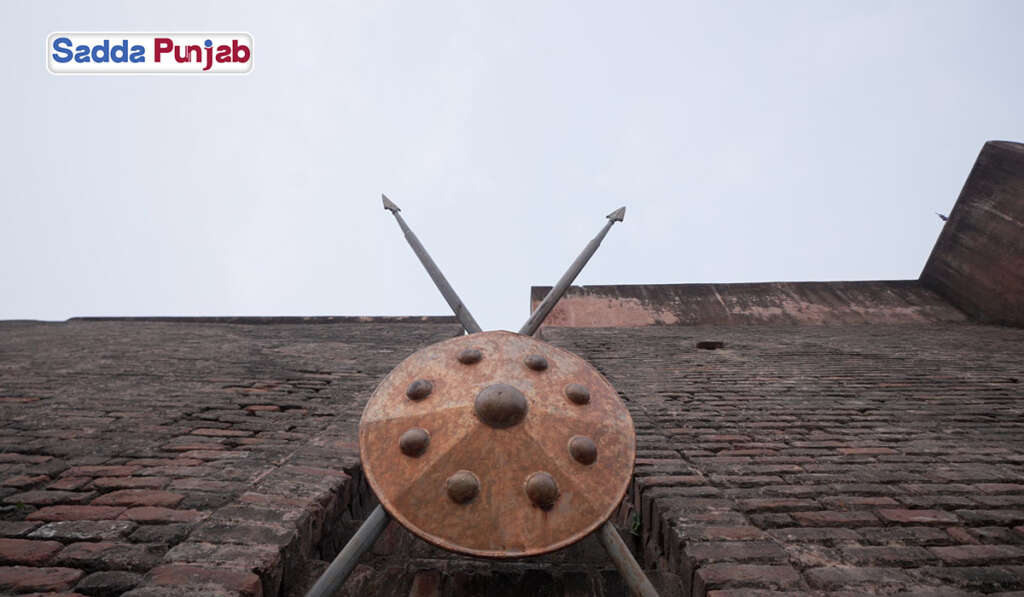
For Maharaja Ranjit Singh, this fort was not merely a residence or a treasury. It served as a strong shield for the protection of Amritsar city and Sri Harmandir Sahib.
To strengthen the security of the city, Maharaja Ranjit Singh had twelve historic gates built around Amritsar, including Hathi Gate, Hall Gate, Lahori Gate, Hakima Gate, and Khazana Gate. Gobindgarh Fort stood at the center of this defensive network as an impregnable stronghold, from where the city could be watched and protected.
Distinctive Features of the Fort and Its Museums
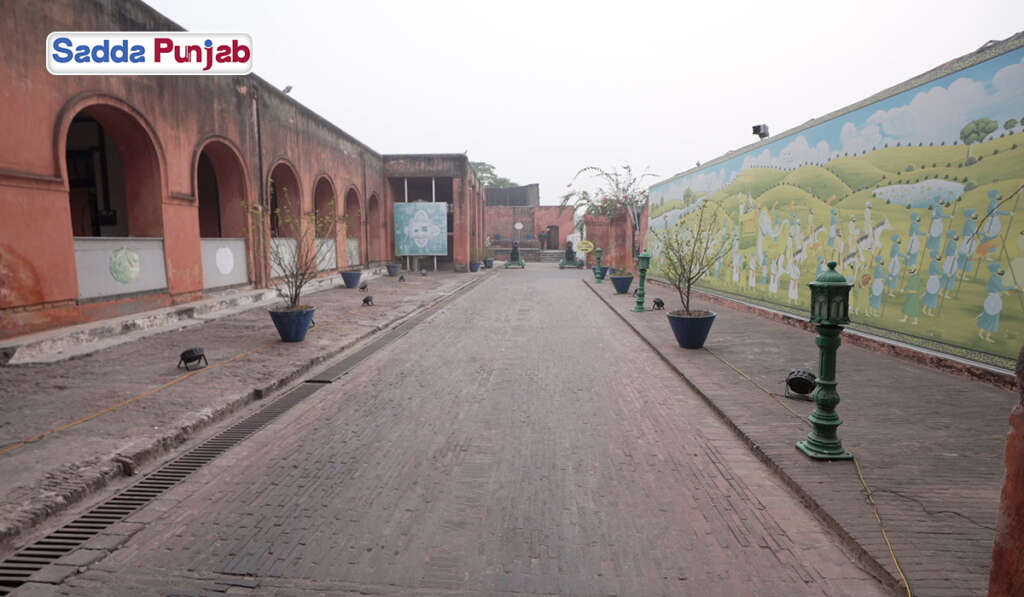
The fort houses many elements that offer a glimpse into the technical skill and rich heritage of that era. Today, the fort has been transformed into a living museum.
Toshakhana (Royal Treasury)

This was one of the most important sections of the fort. It housed Maharaja Ranjit Singh’s royal treasury.
Most notably, the world-famous Koh-i-Noor diamond is said to have remained here for a considerable time. Today, a replica of the Koh-i-Noor and coins from that period are displayed here, reflecting the economic power of the Sikh state.
Weapon Museum

This museum displays historical weapons used by Sikh forces. Among the most striking exhibits are daggers made of ivory, decorated with intricate work in gold and emeralds.
These weapons were not merely instruments of war; they were also fine examples of artistic craftsmanship.
Camel Gun

Another notable feature of the fort is the 8-foot-long camel gun. This was a type of artillery mounted on the back of a camel.
Because of its mobility and effectiveness, it may be compared to a kind of portable battlefield weapon of its time. It stands as a symbol of Maharaja Ranjit Singh’s military foresight.
Turban Museum

The turban, or dastar, holds a place of great importance in Sikh tradition. This museum presents different styles of turbans and explains their significance in Sikh culture in a very engaging way.
Tales of Valor: Hari Singh Nalwa

The history of the fort remains incomplete without mention of Maharaja Ranjit Singh’s great general Hari Singh Nalwa. Stories of his bravery still echo through the fort’s legacy.
It is said that he once fought and killed a lion with his bare hands, after which the title “Nalwa” became associated with his name.
The British Period and Its Link to Jallianwala Bagh

After the death of Maharaja Ranjit Singh in 1839, the Sikh Empire began to weaken. By 1846–47, British control over Punjab had deepened, and eventually the region came under their rule.
This was also the dark period during which the British seized the Koh-i-Noor diamond and sent Maharaja Ranjit Singh’s youngest son, Maharaja Duleep Singh, to England.
One painful aspect of the fort’s history is its connection to the Jallianwala Bagh massacre.
According to historians, on 13 April 1919, General Dyer issued the order for firing on unarmed civilians from his office located in this fort. The military detachment that carried out the massacre is also said to have moved out from here.
This remains one of the darkest chapters in the fort’s history, reminding us of British brutality and the sacrifices made during India’s freedom struggle. Even today, the walls of the fort stand as silent witnesses to that tragedy.
After Independence and the Present-Day Status of the Fort

During the Partition of 1947, Gobindgarh Fort played another important historical role. Thousands of refugees displaced from Pakistan were given shelter within its strong walls. After independence, the fort remained under the control of the Indian Army for a long period, which meant that public entry was restricted. Finally, in 2011, the Central Government handed the fort over to the Punjab Government. After about five to six years of restoration and conservation work, it was opened to the public and tourists in 2016.

Today, the fort hosts a daily light and sound show, through which the history of Punjab is brought to life once again.
Gobindgarh Fort is not merely a structure made of bricks and stone. It is a living symbol of Punjab’s pride, honor, and struggle. It reminds us how a great ruler planned the defense of his land, and how the passage of time brought both glory and sorrow to this fort.
Today, it remains a major attraction for visitors and an important link connecting future generations with their rich heritage.

Leave a Comment