

Whoever has truly loved—it is almost impossible that they have not longed for absolute solitude. This solitude is a primal desire, an unheard prayer of lovers against the injustices of the world.
The way Sahiban, as imagined by the poet Peelu, gives voice to this longing is unparalleled in world literature.
The Collector of Legends: Richard Temple
There once was Sir Richard Temple, who came to India during the time of the East India Company. Deeply interested in museums and folklore, he later became the Chief Commissioner of the Andaman Islands.
Wherever he was posted in India, Temple collected local stories and created historically valuable compilations. He documented dialects, idioms, and oral traditions.
In 1879, while serving as a cantonment magistrate in Punjab, he invited local storytellers (miraasis) and recorded numerous folk tales such as Sassi-Punnun, Puran Bhagat, and others.
Published in three volumes as The Legends of the Punjab, one of the most compelling narratives in this collection is the tragic love story of Mirza and Sahiban, believed to be around four centuries old.
The Love Story of Mirza and Sahiban
Mirza and Sahiban fall in love at a young age while studying together. Their engagement is arranged. Mirza is unmatched in archery, and Sahiban is renowned for her beauty.
However, due to family disputes, the engagement is broken, and Sahiban is promised to someone else.
She sends word to Mirza through a loyal servant. Despite ominous signs and family resistance, Mirza rides to meet her on his mare.
Sahiban is confined in her home. To reach her, Mirza gets a thousand iron nails made and uses them to scale walls and rescue her.
They flee together—but soon her family begins chasing them.
The Turning Point
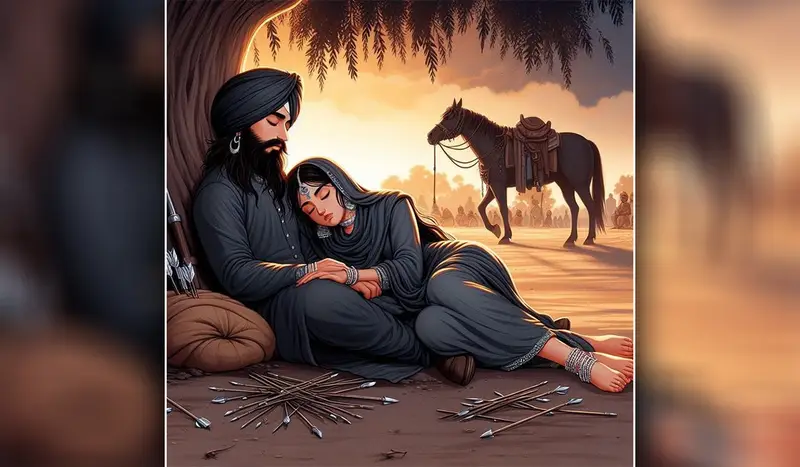
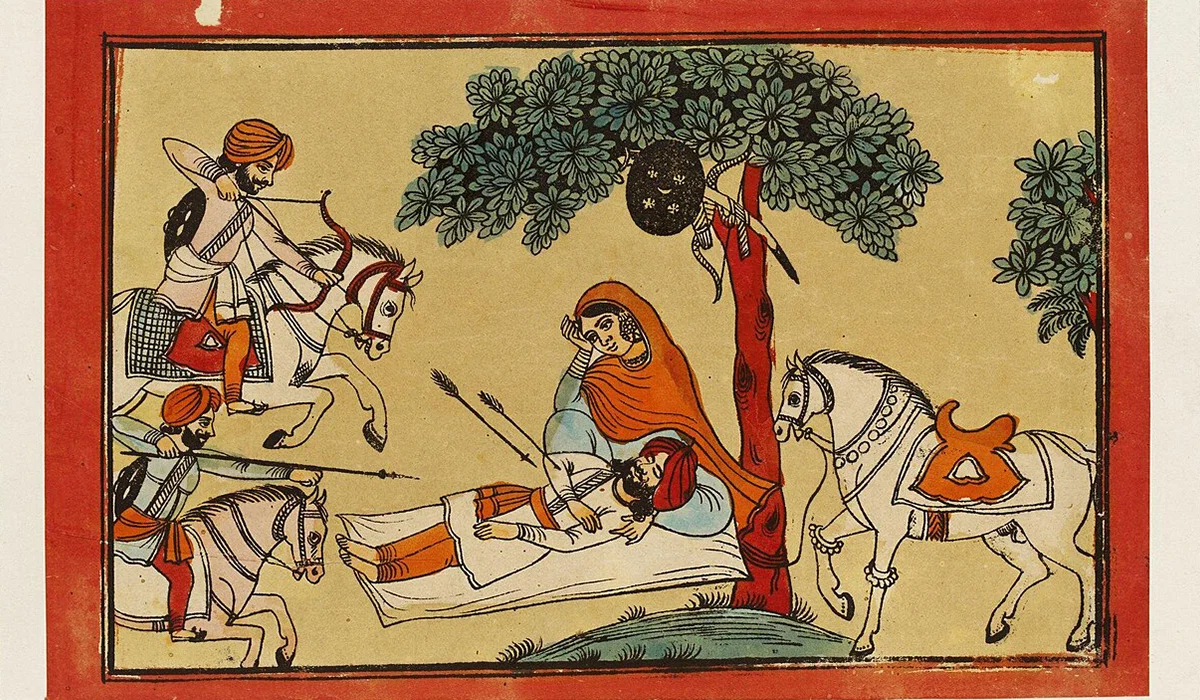
Believing themselves safe, the lovers rest under a tree. Mirza falls asleep.
Sahiban hears approaching horses and urges him to flee. Confident in his archery, Mirza says his 300 arrows are enough to defeat anyone and goes back to sleep.
Sahiban faces an impossible choice:
her brother… or her beloved.
She looks at the sleeping Mirza—and breaks all his arrows.
Mirza is killed.
In different versions of the story, Sahiban either:
• is killed, or
• takes her own life using the broken arrows
From Persian Influence to Punjabi Poetry
The story was shaped in poetic form by Peelu, inspired in part by Persian romance traditions like Yusuf-Zulaikha.
Some references suggest:
• early versions date back to around 1090 CE
• Peelu’s poetic rendering emerged around 1625 CE
Punjab: Land of Love and Labor
Punjab has long been a land of both labor and love.
Stories like Heer-Ranjha, Laila-Majnu, and Mirza-Sahiban have shaped its emotional and cultural landscape for centuries.
To truly understand Punjab’s soul, one must go beyond popular music and listen to traditional renditions—like those of Tufail Niazi or Ustad Nusrat Fateh Ali Khan, who brought these love legends to life.

Sahiban’s Prayer
Before meeting Mirza, a restless Sahiban goes to the shrine of Mukeem Shah and makes a haunting prayer:
Hujre Zah Mukeem de, ik jatti arz kare
Main bakra deniyan, pir mere sir da sai mare
Panj satt maran gawandhna, raindiyan nu taap chadhe
Hatti sade karad di, jitthay diva nitt bale
Kutti mare fakir di, jihdi taun taun nitt kare
Galian hovan sooniyan, vich Mirza yaar phire
She prays:
• Let my would-be husband die, and I will offer a goat
• Let the gossiping women die, and the rest fall ill
• Let the shop that stays lit at night burn down
• Let the barking dog die
• Let the streets fall silent
• So that Mirza and I may walk freely
A Prayer That Cuts Through Time
For centuries, lovers have longed for solitude.
But a prayer as raw, as unsettling, and as heartbreakingly honest as Sahiban’s is rare.
It lays bare a truth:
love, when trapped by society, does not just seek union—it seeks escape, even at the cost of the world itself.

Leave a Comment