

In Tehsil Ajnala, which falls under Sri Amritsar Sahib, at a distance of 13-14 km from Amritsar, Gurdwara Guru Ka Bagh is associated with the memory and historical legacy of Sri Guru Tegh Bahadur Ji, within the wider tradition established by the Sikh Gurus. When Baba Banda Singh Bahadur established the Khalsa Raj in Punjab, after that the Misls came into existence and the Sikh Raj was established.
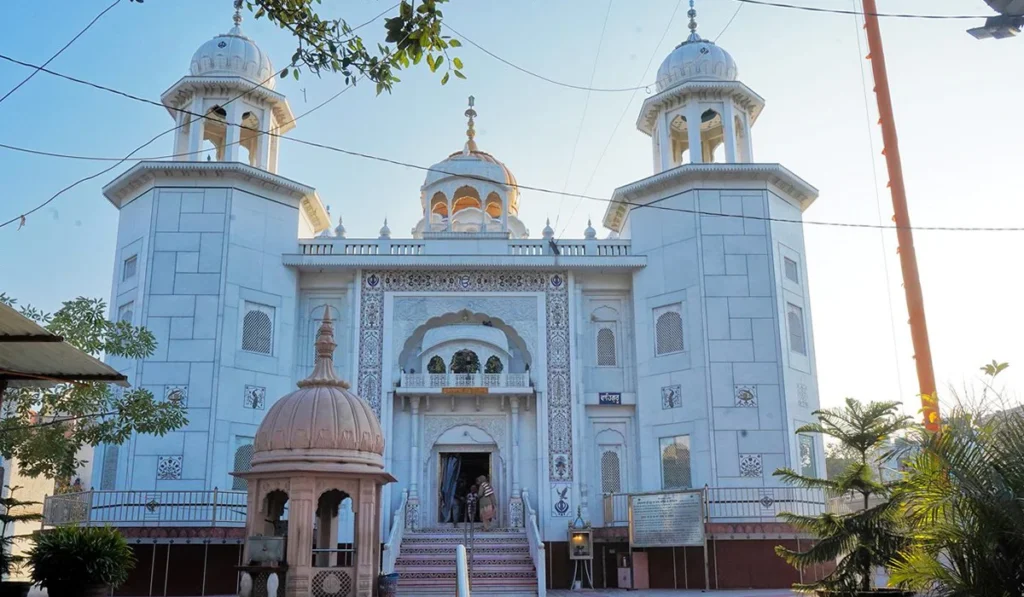
At that time, the Sikh chiefs, accepting the opinion of the Sangat of the area, appointed an Udasi Sadhu to manage and look after the affairs of this Gurdwara Sahib, as was a common practice during that period. This Udasi Sikh Mahant continued to look after the management of the Gurdwara Sahib for many years. In the meantime, when the Gurdwara Reform Movement was going on to manage all the Gurdwaras according to Gurmat Maryada, there were discussions to take the management of Gurdwara Guru Ke Bagh in their own hands. At that time, the Mahant of Gurdwara Guru Ke Bagh was a person named Mahant Sundar Das, whose conduct, according to contemporary Sikh accounts, was widely criticized for moral and administrative lapses, including indulgence in intoxicants and unethical living.
At this time, the Shiromani Gurdwara Parbandhak Committee had come into existence and the people of the area also complained to the Shiromani Gurdwara Parbandhak Committee about Mahant Sundar Das. The Shiromani Gurdwara Parbandhak Committee appointed the President of Amritsar District to meet Mahant Sundar Das and persuade him to follow the Gurmat Maryada, but the Mahant was not one to accept so quickly. On 31 January 1921, a large gathering of all the Panth Dardis was held at Gurdwara Guru Ka Bagh. Although there was a lot of anger among the people on this occasion, the leading Sikhs tried to explain Mahant Sundar Das once again, keeping the congregation in order. He was told that instead of having relations with many women, he was advised to regularize his personal life through marriage, accept Amrit, and continue serving the Gurdwara Sahib under the authority of the Shiromani Gurdwara Parbandhak Committee. In front of all the congregation, the Mahant accepted these conditions and even signed the agreement. On the spot, an 11-member committee was also formed for the management of this Gurdwara Sahib. Moreover, on 8 February 1921, the Mahant appeared before Sri Akal Takht Sahib and while apologizing for his past mistakes, he also took Amrit. His name was Joginder Singh and the woman he married was named Gian Kaur.
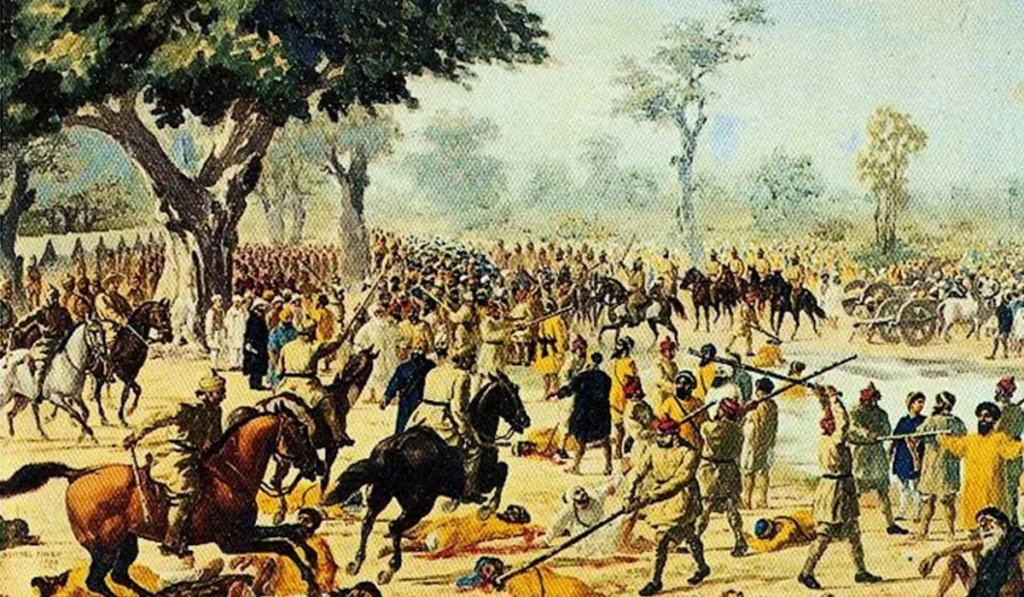
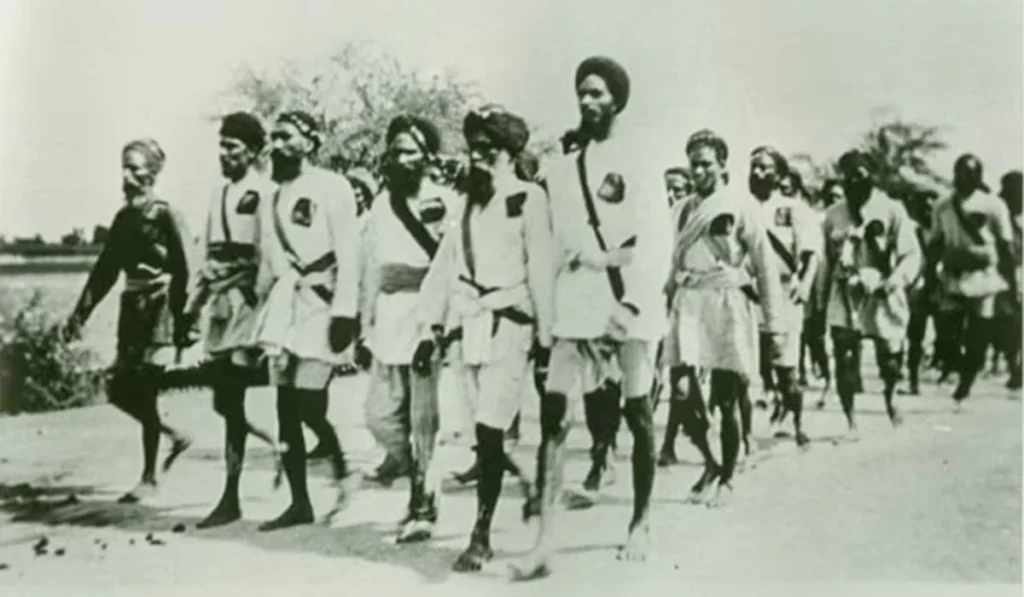
He remained well for some time, but when after the Nankana Sahib massacre, the government started cracking down on the reformers of the Gurdwara administration and the Akalis, Mahant Sundar Das alias Joginder Singh became a troublemaker again and resorted to the same tricks as before. On 23 August 1921, the Shiromani Gurdwara Parbandhak Committee sent a group of Sikhs to capture this Gurdwara Sahib. The Mahant was also not sitting idly by and sought the help of the police. The Superintendent of Police confirmed that the arrangements were in order when the Akalis took over the place, but instead deployed police to protect the Akali administrators. For some time everything went smoothly, but on August 8, when some dried kikars were cut and brought for the langar of the Gurdwara Sahib, the Mahant accused them of theft and got 5 Akalis arrested on August 9. On the same day, these five Akalis were sentenced to six months of imprisonment along with a heavy monetary fine, as recorded in official proceedings of the time. After this, wood continued to come from the same common land for the langar, but no one said anything. Finally, from August 22, the arrests of Sikhs started in earnest. By August 25, 210 Akalis had been arrested. Soon, protests spread all over against this action of the government, due to which the Sikhs started forming groups and making arrests. By November, according to Akali and contemporary movement records, the number of Sikhs arrested had crossed 5,600, including members of the Shiromani Gurdwara Parbandhak Committee.
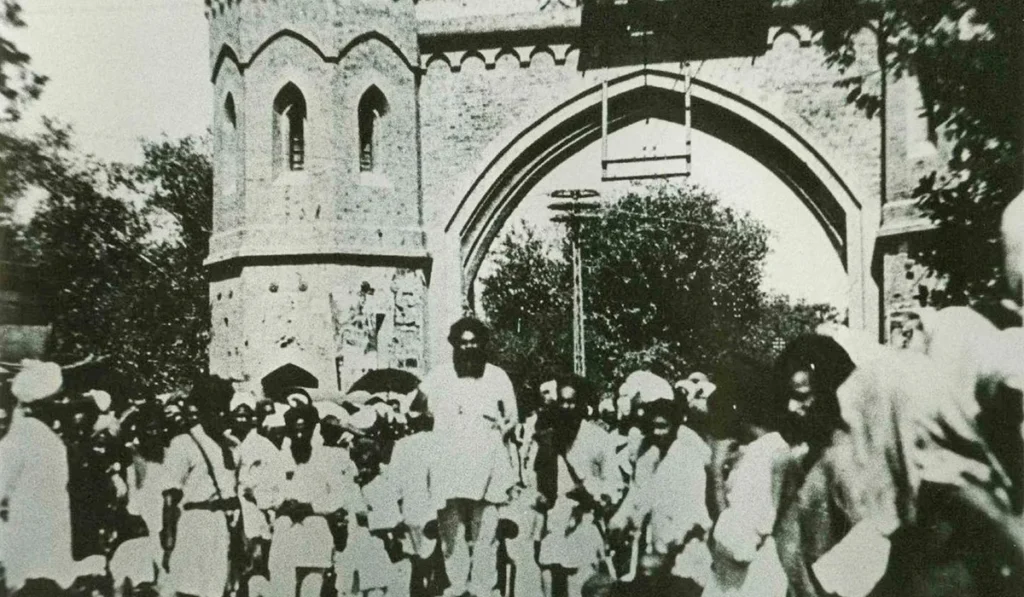
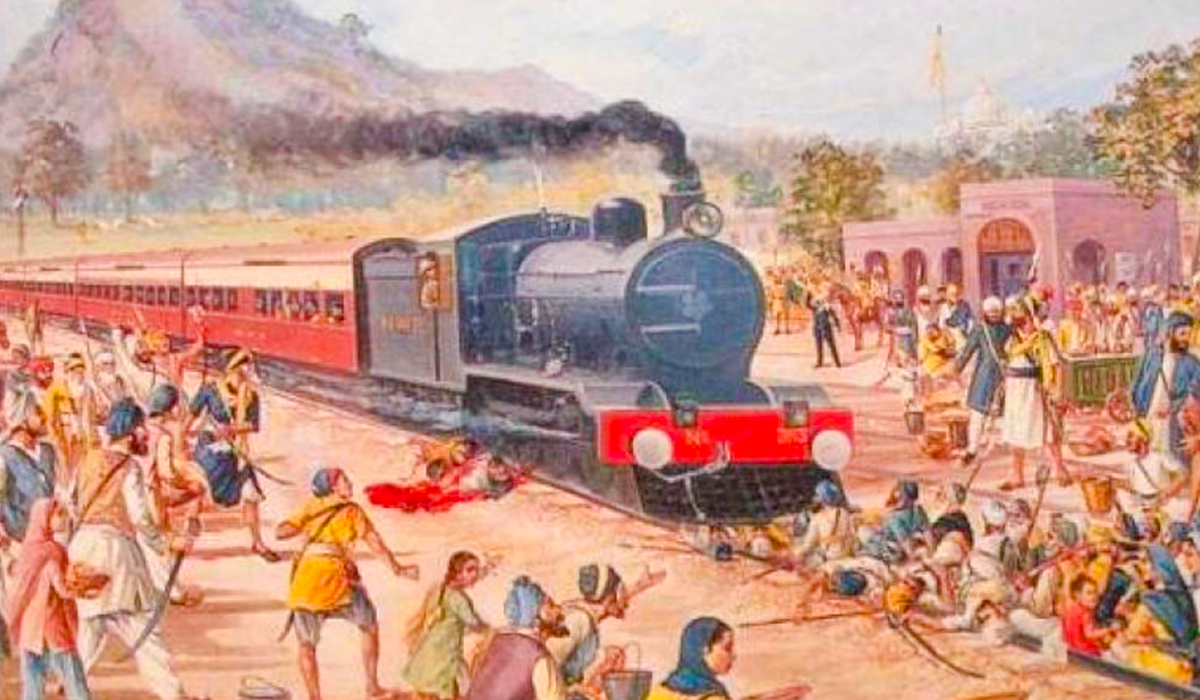
When a group of Singhs arrested in the Guru Ke Bagh Morcha were being sent to Attock Jail and they were sent by train, the Sangats would serve the group and provide langar at every station the train passed through. When the administrators of Gurdwara Panja Sahib came to know that this group was going towards Attock, they appealed to the station master posted at the railway station to stop the train at Panja Sahib for some time so that the Sangats of Panja Sahib could also serve the group. The station master refused to stop the train. The train came near Panja Sahib station and here Bhai Pratap Singh and Bhai Karam Singh sat on one of the tracks each. The driver started blowing whistles from a distance but these Sikhs did not move from there. Seeing them, other Sikhs also sat on the train line. Once, instead of stopping the vehicle, the driver increased its speed and both Bhai Karam Singh and Partap Singh were crushed under the wheels of the vehicle and martyred. Seeing them martyred, the rest of the Sikhs lay down on the railway line. When the driver saw that no Sikh was moving aside, he was forced to stop the vehicle. Although two Sikhs were martyred, they served the Sikh group that was being taken prisoner with great enthusiasm. Even today, the memory of the Panja Sahib incident and the martyrdom associated with it makes one’s hair stand on end. This incident will continue to inspire generations to come.


Leave a Comment