


Ranghrete Guru Ke Bette – Bhai Jaita Ji
Looking at the pages of India’s medieval history, it becomes clear that the country was deeply trapped in evils such as caste, social hierarchy and discrimination. These practices were dominant in Hindu society. With the arrival of Guru Nanak Patshah, Sikhism came into existence. The people of Punjab found relief from these hollow customs when Guru Nanak laid the foundation of Sikhism and challenged such empty rituals.
Many Punjabis from the Dalit community, who could not receive the dignity they deserved in Hindu society, became followers of Sikhism. Sikhism gave no place to such social evils. The tradition of Sangat and Pangat, which began from the time of Guru Nanak Patshah, clearly showed that caste, hierarchy and discrimination had no place in Sikh faith.
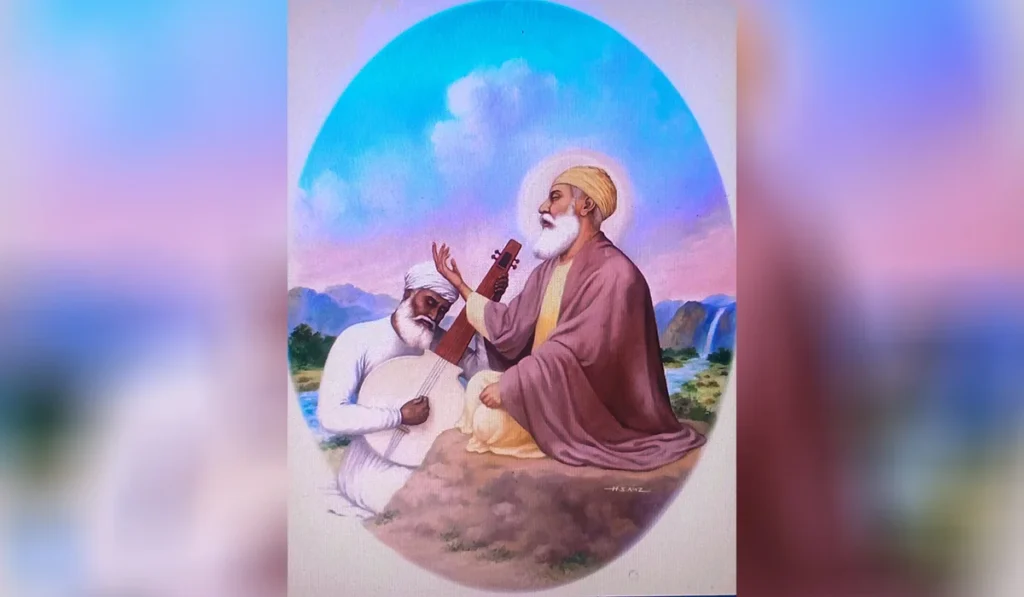
During Guru Nanak Patshah Ji’s travels, his companion Bhai Mardana also belonged to the Mirasi community and came from a Dalit background. Since Baba Nanak’s time, many Dalit families had been connected with Sikhism. One such Dalit family, during the time of Guru Tegh Bahadur Ji and Guru Gobind Singh Ji, was the family of Bhai Jaita Ji. This family was deeply devoted to the Guru’s house, and Bhai Jaita Ji was an ardent devotee of the Guru.
Bhai Jaita Ji’s great-grandfather, Bhai Kalyana, who lived in Kathunangal near Amritsar, became a follower of Sikhism during the time of Mughal emperor Jalal-ud-din Muhammad Akbar. Bhai Kalyana served the fourth Guru, Guru Ram Das Ji, and the fifth Guru, Guru Arjan Dev Ji, with great devotion. He became a firm devotee of the Gurus.
After Bhai Kalyana, his son Bhai Sukhbhan, who was a noted music scholar of his time, left Kathunangal and moved towards Delhi. Being a skilled musician, Bhai Sukhbhan opened a music school near Delhi in the village of Rai Sina. He named it Kalyan Ashram after his father. With time, this Kalyan Ashram came to be known as Kalyane Di Dharamshala. Whenever Punjabis travelled to Delhi, they would stay at this dharamshala.
There is also evidence of this dharamshala from Guru Tegh Bahadur Ji’s journey to Assam. On 20 January 1670, while returning from Assam, Guru Tegh Bahadur Ji stayed at this Kalyane Di Dharamshala near Delhi. Bhai Sukhbhan’s son Jasbhan also became a great music scholar in Delhi. Bhai Jasbhan was an ardent devotee of the Sikh Guru Sri Har Rai Ji, and his music was well known across Delhi.
Bhai Jasbhan’s two sons, Aagya Ram and Sadanand, carried forward the family’s reputation in music and began singing Gurbani in a musical form. Bhai Sadanand earned a good name in the work of Gurbani preaching and would recite Gurbani for large gatherings of Sikhs in Delhi. Just as Bhai Mardana Ji had helped Guru Nanak Patshah in spreading Gurbani, Bhai Sadanand helped Guru Tegh Bahadur Ji in the same mission.
When Guru Tegh Bahadur Ji was travelling towards the east, Sadanand Ji accompanied him. In Patna, Bihar, which was then under the Mughal empire, Bhai Jaita was born to Mata Premo in the house of Sadanand on 13 December 1661. While living in Patna, Bhai Jaita Ji gained expertise in music and martial arts. He also learned horse riding and archery.
When Guru Tegh Bahadur Ji returned from Assam towards Punjab, the Sikh Sangat also moved towards Punjab. Bhai Sadanand left Delhi and settled in Punjab. He went near Ramdas in Amritsar and stayed with Bhai Gurditta Ji, the great-grandson of Baba Budha Ji. It was here that Bhai Jaita Ji was married to Bibi Raj Kaur, daughter of Bhai Surjan Singh Ji. Four sons were born to Bhai Jaita Ji: Bhai Gulzar, Bhai Gurdial, Bhai Sukha and Bhai Sewa.
Because of his old connection with Delhi, Bhai Jaita Ji often travelled to the city. His uncle Aagya Ram’s family lived near their ancestral dharamshala. This family also held a respected position among the Sikhs of Delhi. Since Bhai Jaita Ji travelled frequently to Delhi, he knew all the routes leading to the city. He was familiar with the royal Mughal road as well as other routes through villages and forests. Whenever the royal Mughal road was closed or blocked under Mughal orders, Bhai Jaita Ji used these alternate village routes to travel between Delhi and Punjab.
After Guru Tegh Bahadur Ji settled in Anandpur Sahib, Sikh devotees came from faraway places to visit him. Bhai Jaita Ji also visited Anandpur Sahib with his family. Guru Tegh Bahadur Ji was living peacefully in Anandpur Sahib with his mother Mata Nanaki Ji, his wife Mata Gujri Ji and his son Gobind Rai. Guru Tegh Bahadur Ji preached Sikhism among the Sangats of Punjab and held daily kirtan.
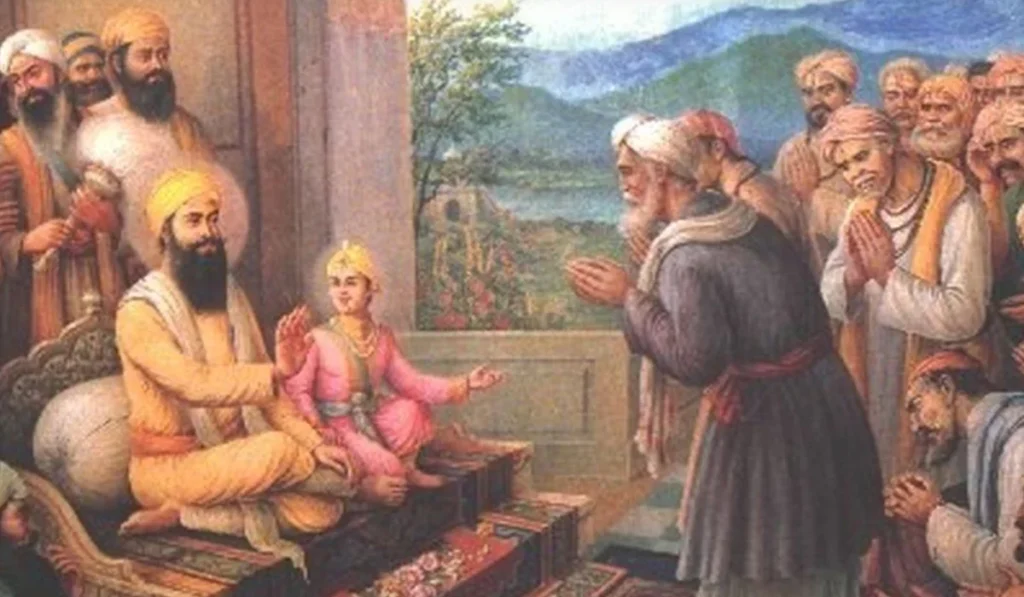
During this time, a group of Kashmiri Pandits, distressed by the oppression of the Kashmiri governor Iftikhar Khan, reached Sri Anandpur Sahib under the leadership of Pandit Kirpa Ram Dutt. Their plea before Guru Tegh Bahadur Ji was that the Kashmiri governor was forcing them to convert their religion. They had come to the Guru’s house seeking help. After hearing the full account, Guru Tegh Bahadur Ji told the Kashmiri Pandits to go and tell the governor of Kashmir that if he could convert Tegh Bahadur, the ninth light of Guru Nanak Patshah, to Islam, then all Kashmiri Pandits would accept Islam.
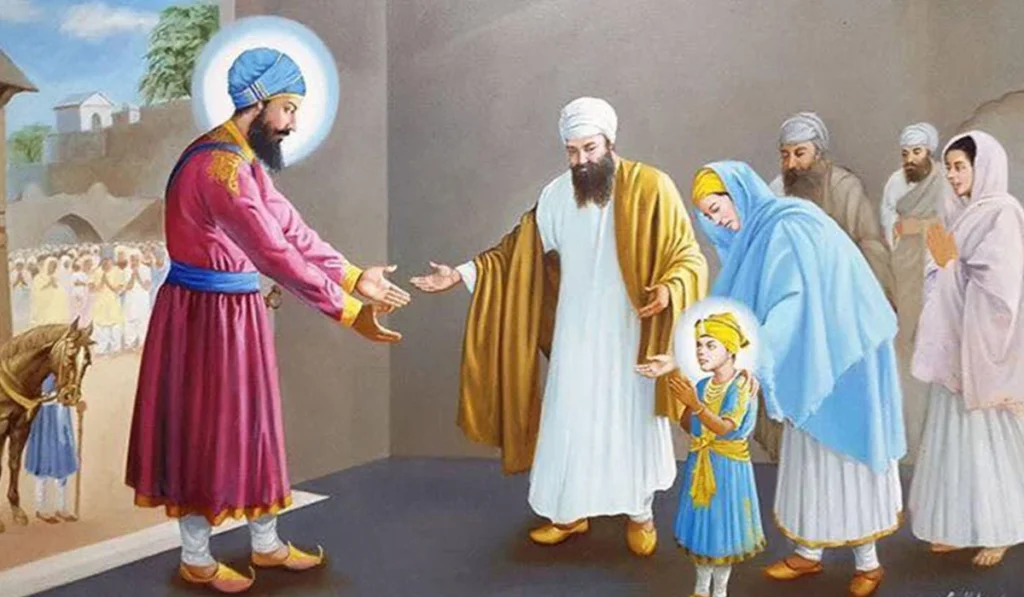
Sitting in the court, Guru Tegh Bahadur Ji also said that the time was demanding the sacrifice of a great person. Hearing this, young Gobind Rai Ji said, “Father, who could be greater than you?”
After this, Guru Tegh Bahadur Ji decided to go to Delhi and reason with the Mughal emperor Aurangzeb. If the time demanded sacrifice, Guru Tegh Bahadur Ji decided to offer that sacrifice himself. Guru Tegh Bahadur Ji was neither a Hindu nor did he wear the tilak or janeu. Yet he chose to sacrifice himself to protect another faith and its symbols. This decision reflected his deep love for humanity.
“Tilak janju rakha Prabh ta ka,
Keeno bado kalu meh saka.”
Several months had passed since Pandit Kirpa Ram Dutt’s group had returned from Anandpur Sahib with the Guru’s assurance. Information had reached Kashmir governor Iftikhar Khan that Guru Tegh Bahadur Ji himself would appear before Mughal emperor Aurangzeb for the protection of Hindus. Guru Tegh Bahadur Ji had prepared his course of action. The Sangat was invited, and a large gathering took place in Anandpur. Bhai Jaita Ji also reached Anandpur with his family.
Guru Tegh Bahadur Ji spoke openly to the Sangat and shared his decision to go to Delhi. There was a divine glow on Guru Ji’s face, and the same glow rose in the hearts of the Sangat. Now the full responsibility had to be placed on the innocent shoulders of young Gobind Rai. Since the decision to go to Delhi had been made, Guru Ji followed the tradition and placed the spiritual tilak on Gobind Rai’s forehead, giving him strength and reassurance.
Mata Gujri Ji, with great courage, understood the future. Guru Ji placed young Gobind Rai in the care of his maternal uncle Kirpal Chand and said, “Now Gobind is your responsibility.” He instructed him to take full care of his education. Guru Ji’s elder sister Biro was also watching her brother with tearful eyes, full of love. Her only prayer was that her brother’s honour remain intact. Her sons Sango Shah, Gulab Chand, Jeet Mal, Ganga Ram and Mahari Chand stood firmly with young Gobind Rai like brothers.
Now the time had come to leave Anandpur. Guru Ji’s decision gave meaning to the words of Bani:
“Baanh jina di pakariye, sir deejai baanh na chhodiye.”
When Guru Tegh Bahadur Ji left Anandpur, five Sikhs were ready to accompany him with devotion and courage. Among them were Bhai Mati Das and Bhai Sati Das, sons of the devoted Bhai Hiranand, Bhai Dyal Das Parmar, Bhai Uda and Bhai Jaita Ji.
Guru Ji made the first stop at Kiratpur Sahib, where Sangat from nearby villages came to meet him. Guru Ji explained his plan. The next morning, they departed. Near Ropar, at a place called Malikpur Ranghran, Guru Ji was arrested. He was first kept imprisoned for some time in the fort of Bassi Pathana and then taken to Delhi.
As per Guru Ji’s instruction, only three Sikhs, Bhai Sati Das, Bhai Mati Das and Bhai Dyal Das Ji, were arrested with him. In Delhi, because Aurangzeb was not present, the subedar, the kotwal of Chandni Chowk and the qazi placed three conditions before Guru Ji. The first was to accept Islam. The second was to perform a miracle. The third was to prepare for death.
Guru Ji rejected the first two conditions. He said his faith was dearest to him and he could not accept another religion. He also said that miracles had no place in Sikhism, so he would not perform any miracle. For the third condition, he said he was fully prepared.
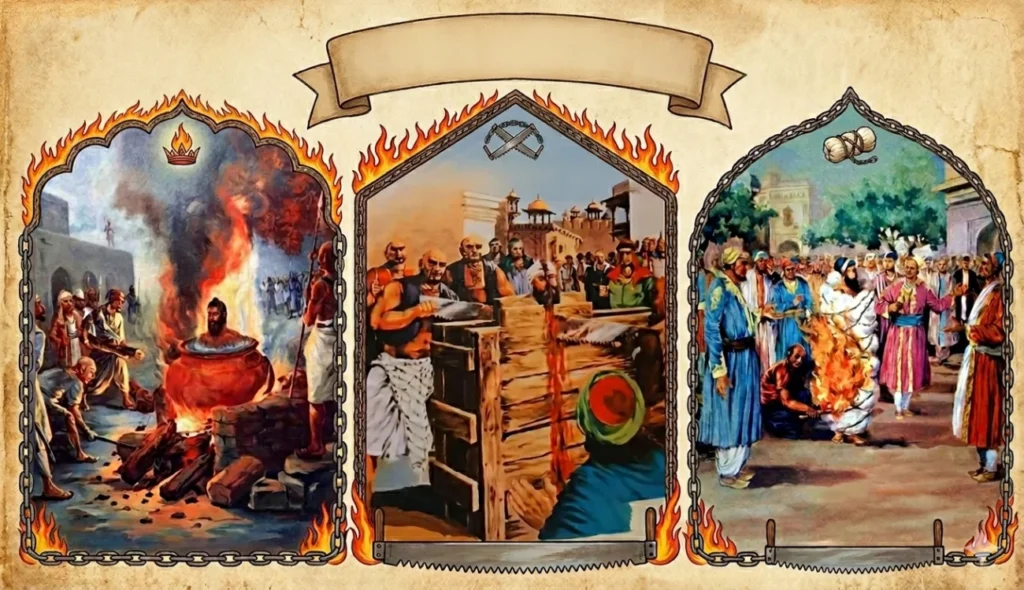
In November 1675, before Guru Ji’s eyes, Bhai Dyal Das was boiled in hot water, Bhai Mati Das was sawn alive, and Bhai Sati Das was burned alive. Yet Guru Ji remained unwavering. Seeing Guru Ji’s firmness, under Aurangzeb’s orders, Guru Tegh Bahadur Ji was beheaded in Chandni Chowk.
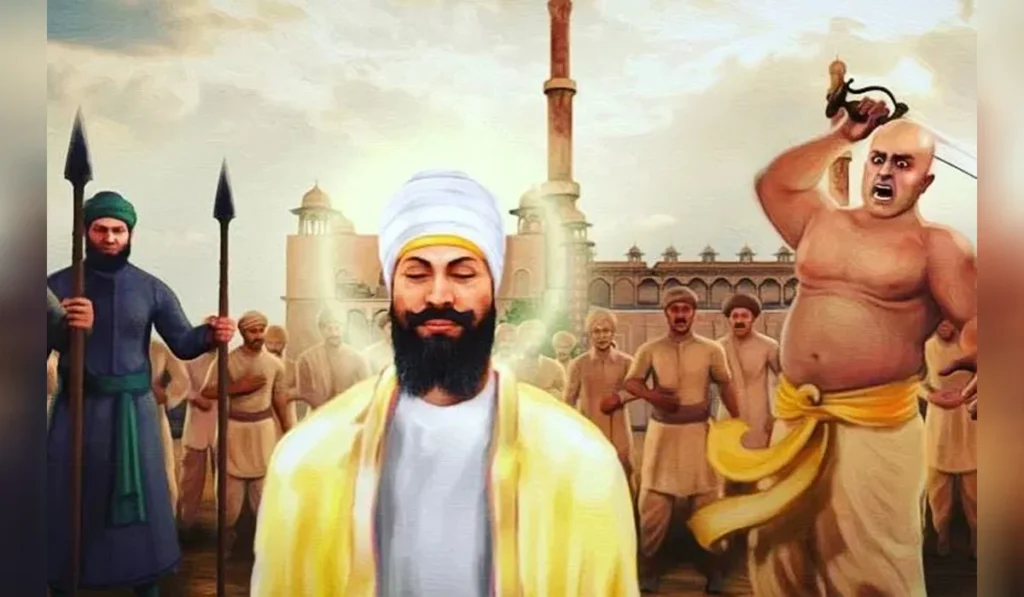
Guru Ji sacrificed himself to resist oppression, tyranny and injustice. A remarkable event followed.
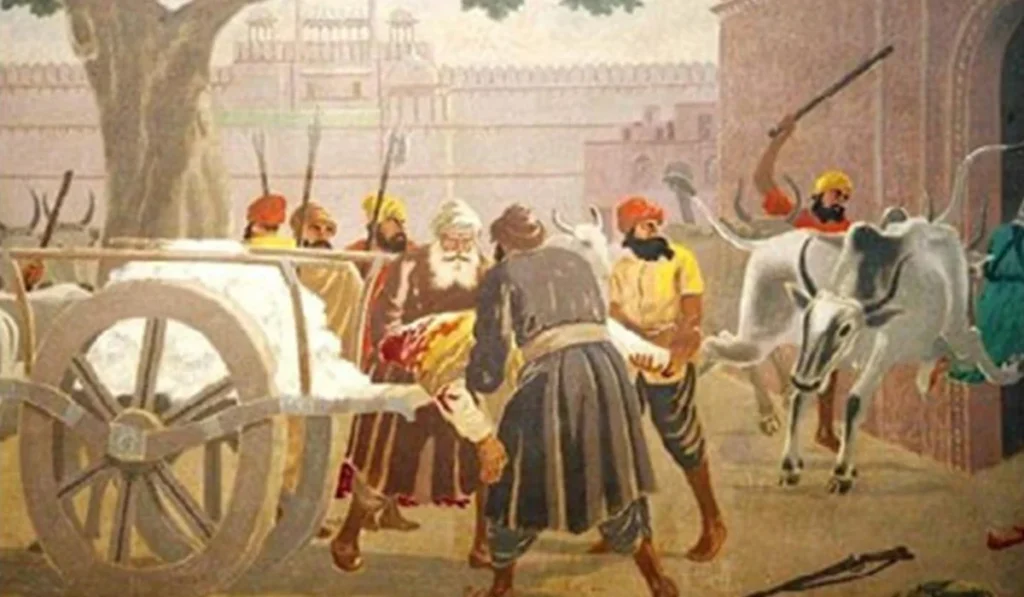
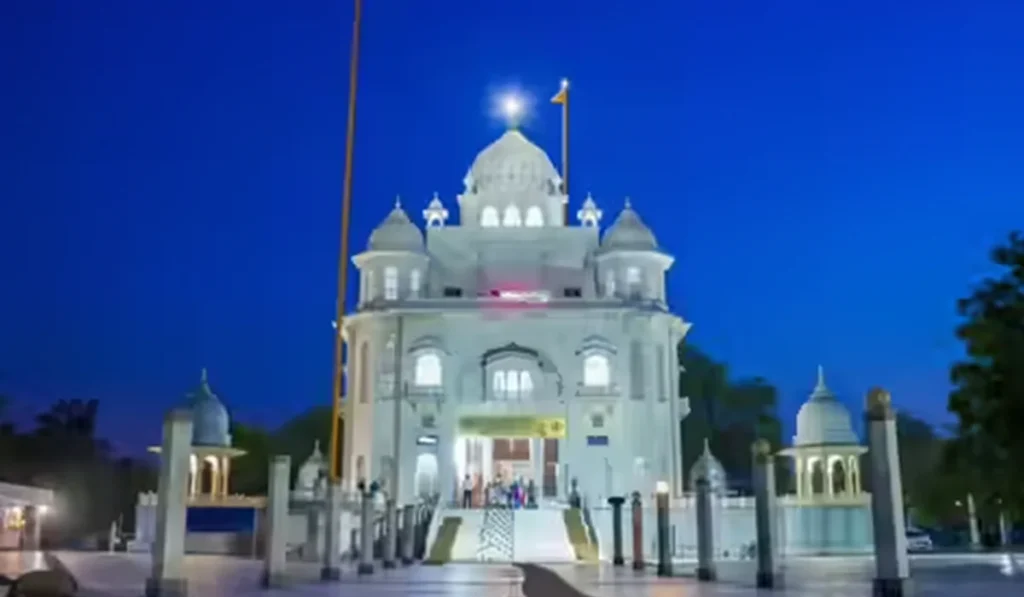
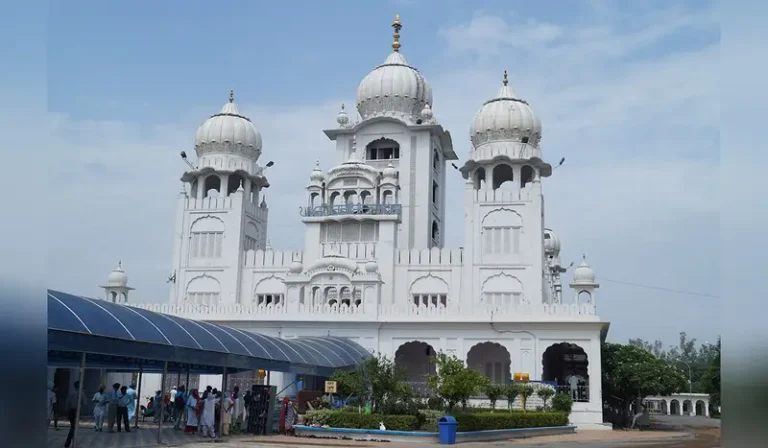
Bhai Lakhi Shah Vanjara took Guru Ji’s body to his home and set his own house on fire to perform the cremation. Today, Gurdwara Rakab Ganj Sahib stands at that site.
At the same time, Bhai Jaita Ji, an ardent devotee of the Guru’s house whose family had an old bond with the Guru’s household, decided to take Guru Ji’s severed head to Anandpur. The Mughal order was strict. There was heavy security. But with the grace of the Almighty and Bhai Jaita Ji’s courage against the Mughal rule, Bhai Jaita Ji, Bhai Nanu Ram Dilwali and Bhai Ude Rathore succeeded in taking the head out of Delhi.
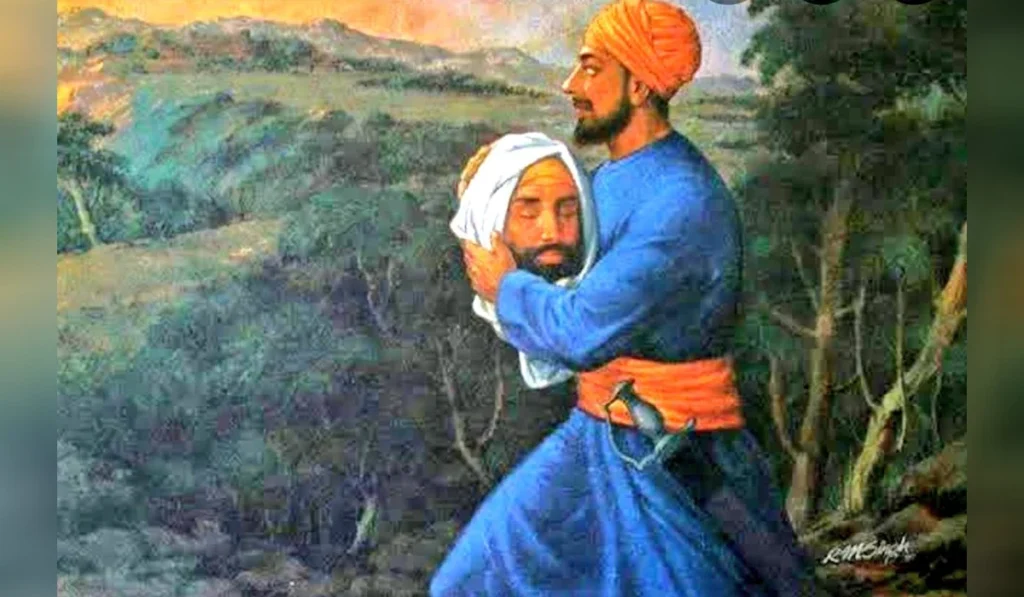
Bhai Jaita Ji knew several alternate routes out of Delhi. After spending the night in Delhi, he began the journey early in the morning, carrying Guru Ji’s head with him. They crossed the Yamuna river. Bhai Nanu Ram Dilwali and Bhai Ude Rathore were with him. After walking the whole day, Bhai Jaita Ji and his companions made their second halt near Karnal, in the village of Tarawari. There, they spent the night at the house of Bhai Deva Ram, a devotee of the Guru’s house who worked as a washerman.
The next morning, they began the third stage of the journey. Avoiding the Mughal authorities, they reached the banks of the Tangri river near Ambala. There were many Sikh families in the area, but Bhai Jaita Ji arranged to stay only with Bhai Ramdev. At night, the three Sikhs, who during the day moved separately as if they did not know each other, came together again.
The next morning, after taking leave of Bhai Ramdev, they began the fourth stage of the journey. They crossed the Ghaggar river and moved through Punjab’s villages, wandering, stumbling, facing hardship and cutting through forests, until they reached Vevangarh near Kiratpur Sahib.
A message was sent to Anandpur, and they were instructed to stop there. Young Gobind Rai, Mata Nanaki Ji and Mata Gujri Ji came from Anandpur to Kiratpur Sahib with Sikh devotees, carrying a beautiful palanquin decorated with flowers.
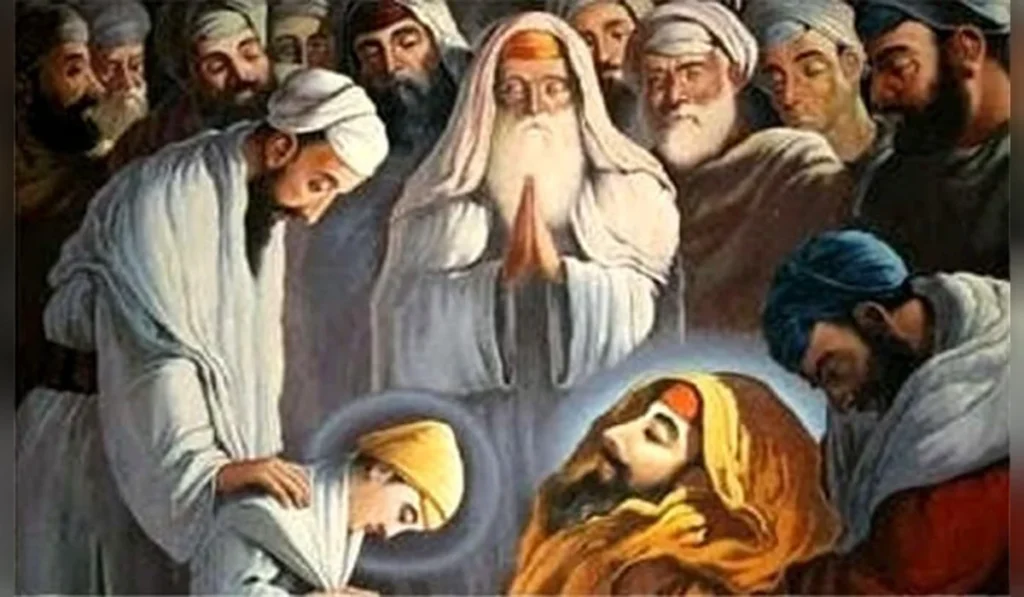
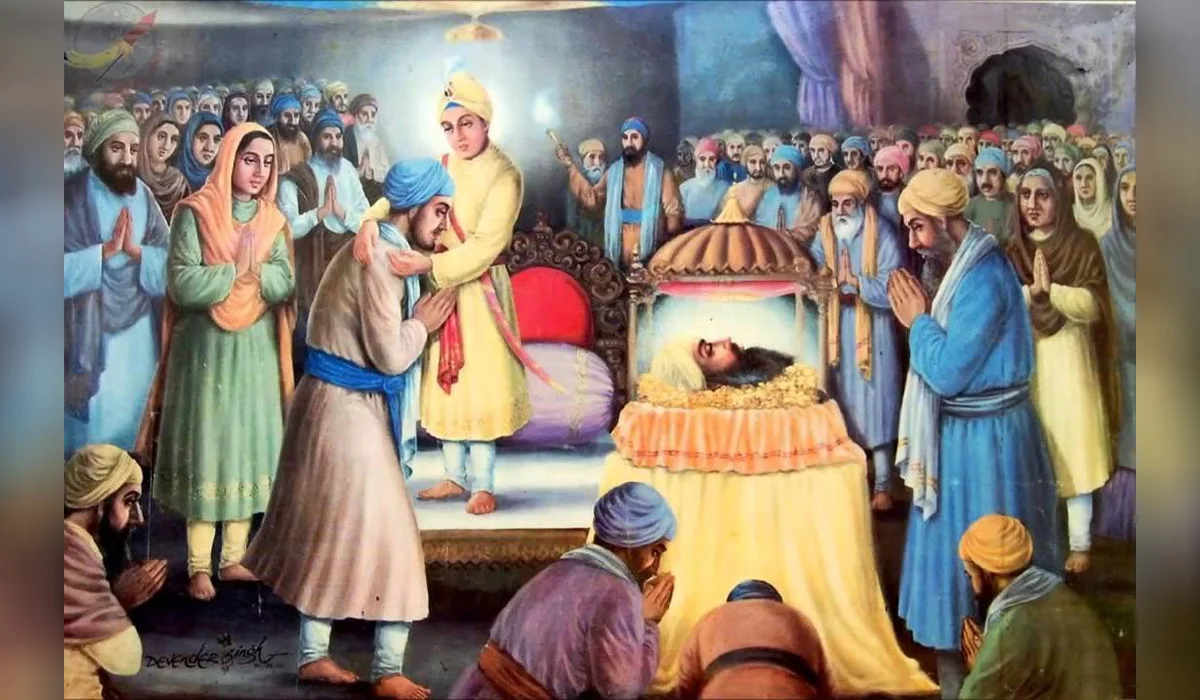
Bibi Biro and her five sons, Guru Tegh Bahadur Ji’s elder brother Suraj Mal and his family members also reached Vevangarh. At Vevangarh, they listened carefully to the entire account from Bhai Jaita Ji. Seeing Bhai Jaita Ji’s great and difficult service, young Gobind Rai embraced him and blessed him with the words:
“Rangrete Guru Ke Bete”
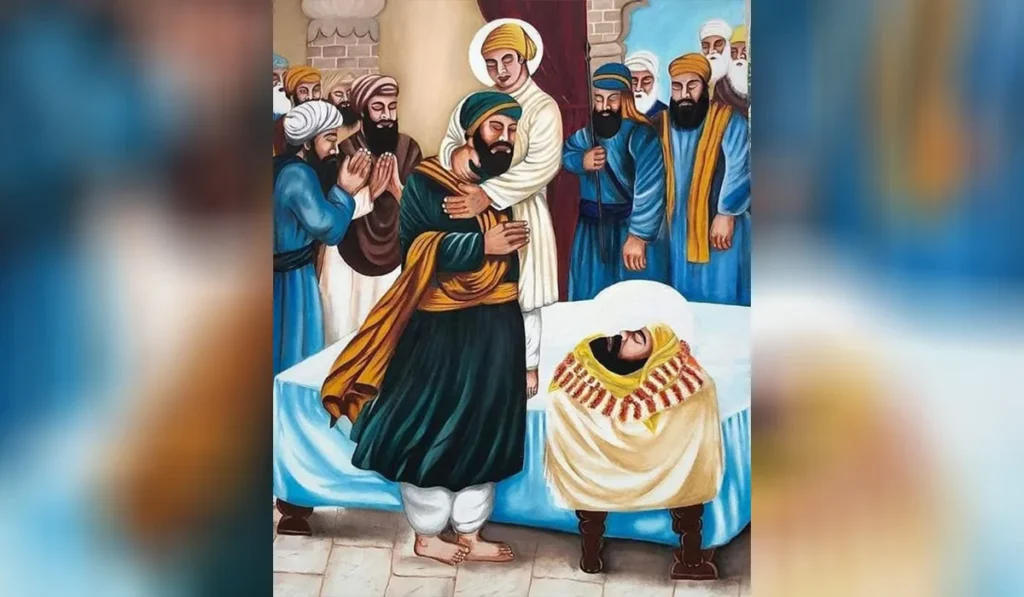
Bhai Jaita Ji handed Guru Tegh Bahadur Ji’s head to young Gobind Rai Ji with great reverence and respect. Gobind Rai Ji placed the head respectfully in the palanquin. Everyone bowed and had darshan one by one. The entire Sangat carried the palanquin on their shoulders turn by turn, chanting Satnam-Waheguru, and entered Anandpur with the Guru’s head.
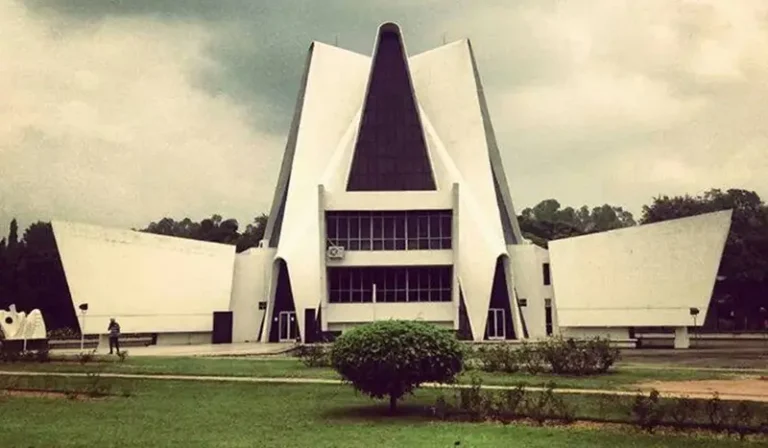
The head was kept in the house for one night. On the fifth day, in front of Guru Ke Mahal, young Gobind Rai prepared the sandalwood pyre with his own hands and placed the head on it. The entire Sikh Sangat, with tearful eyes and broken hearts, bid farewell to Guru Ji. Today, Gurdwara Sis Ganj Sahib stands at the site of that cremation, in front of Guru Ke Mahal.
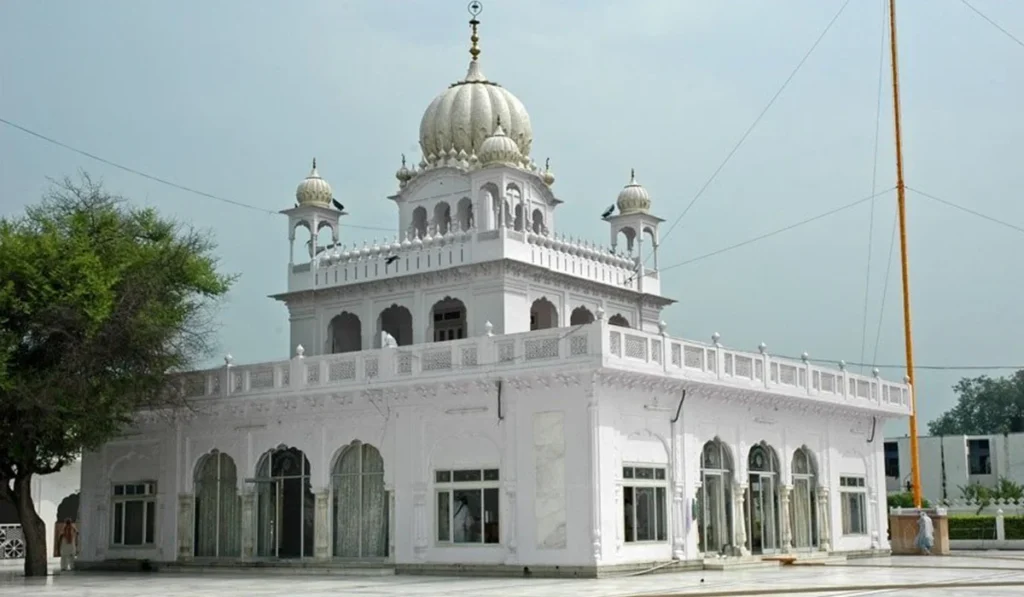
This was the first event in world history where one person’s body was cremated at one place, Delhi, and the head of the same person was cremated five days later at Anandpur Sahib, 320 kilometres away. Bhai Jaita Ji maintained his bond with the Guru’s family in a truly unique way. After this, Bhai Jaita Ji remained with Guru Gobind Rai Ji in Anandpur Sahib. He supported Guru Ji in the battles he fought.
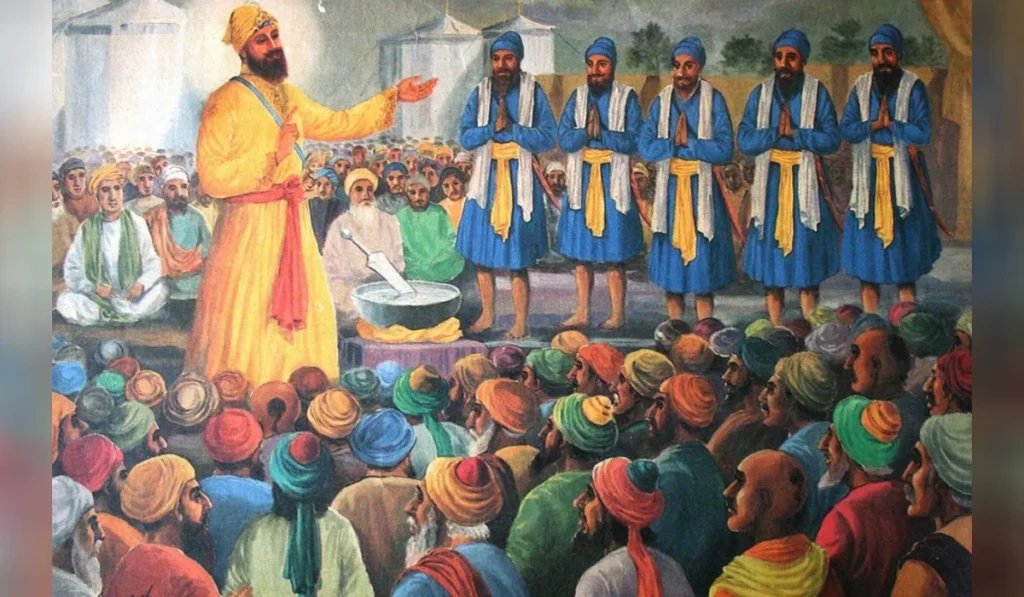
In April 1699, when Gobind Rai Ji created the Khalsa Panth on Vaisakhi and gave birth to a distinct Sikh nation, Bhai Jaita Ji also received Amrit of the Khande-Baate and became Bhai Jeevan Singh. His entire family joined the Khalsa in the Guru’s house and received the Guru’s blessings.
When Guru Gobind Singh Ji left Anandpur Sahib, Bhai Jeevan Singh sacrificed his life in 1704 while protecting the Guru’s house and the Sikh nation. As long as the world exists, Guru Tegh Bahadur Ji’s sacrifice for the welfare of humanity, human rights, equality and freedom in society can never be forgotten. Along with it, the story of Bhai Jaita Ji carrying Guru Ji’s head with deep reverence from Delhi to Anandpur Sahib in Punjab will always reflect his unmatched bravery. This 320-kilometre journey represents Bhai Jaita Ji’s silent, one-sided conversation with the sacred head of Guru Tegh Bahadur Ji.
Leave a Comment