
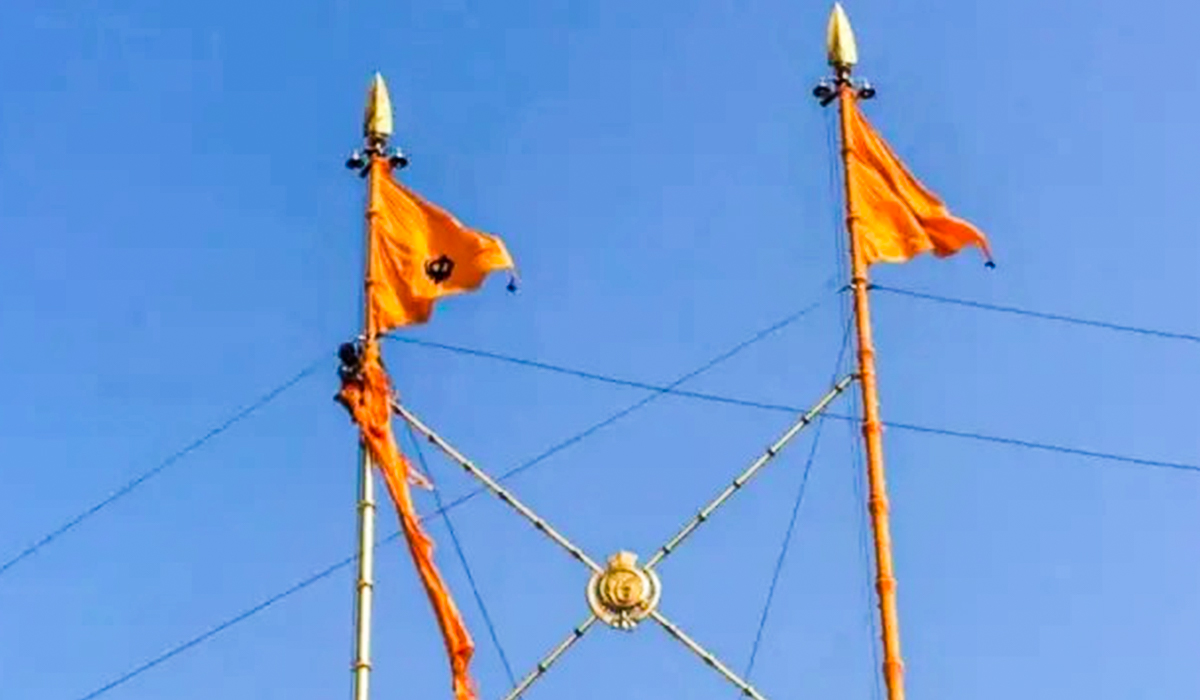

The concept of Miri-Piri in Sikhism was formally introduced by the Sixth Sikh Guru, Sri Guru Hargobind Sahib Ji. However, the foundations of both Piri (spiritual authority) and Miri (temporal responsibility) are already present in the Bani of Sri Guru Nanak Dev Ji.
Guru Nanak Dev Ji proclaims:
“If you desire to play the game of love,
then step onto My path with your head placed on your palm.
Once you set foot on this path,
offer your head and do not turn back.”
Bhagat Kabir Ji, too, presents the synthesis of Piri and Miri in powerful imagery within his Bani:
“The war-drum resounds in the sky; the battle standard is raised.
The brave warrior has entered the battlefield now is the time to fight.”
“He alone is known as a true warrior
who fights for righteousness.
Even if he is cut limb by limb,
he does not abandon the field.”
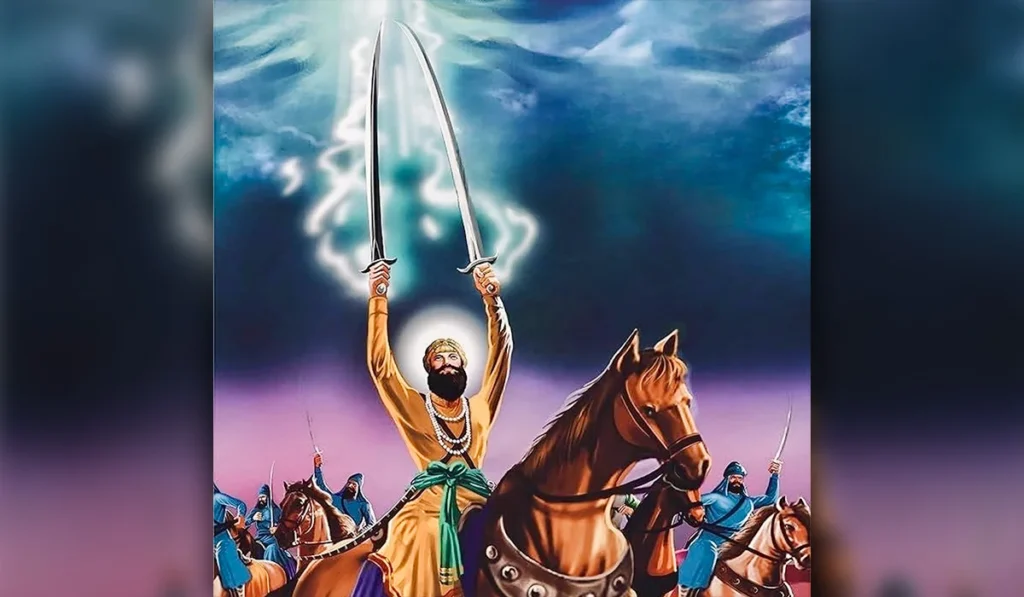
According to the Mahan Kosh, the word Miri signifies sovereignty or kingship. Just as Mir refers to a ruler, terms like authority, leadership, and governance are associated with Miri.
Piri, on the other hand, is connected with devotion and spirituality. The word Pir denotes a spiritual guide or religious teacher.
“Pir, prophets, and saints, none remain permanently.”
The lives of the Sikh Gurus are exemplars of Piri. The Gurus continuously spread spiritual teachings. However, after Sri Guru Arjan Dev Ji was brutally tortured and martyred on the hot plate (Tatti Tavi) in Lahore, Guru Hargobind Sahib Ji, following the completion of the Sehaj Paath in Guru Arjan Dev Ji’s memory, declared that henceforth he would embody both Piri and Miri.
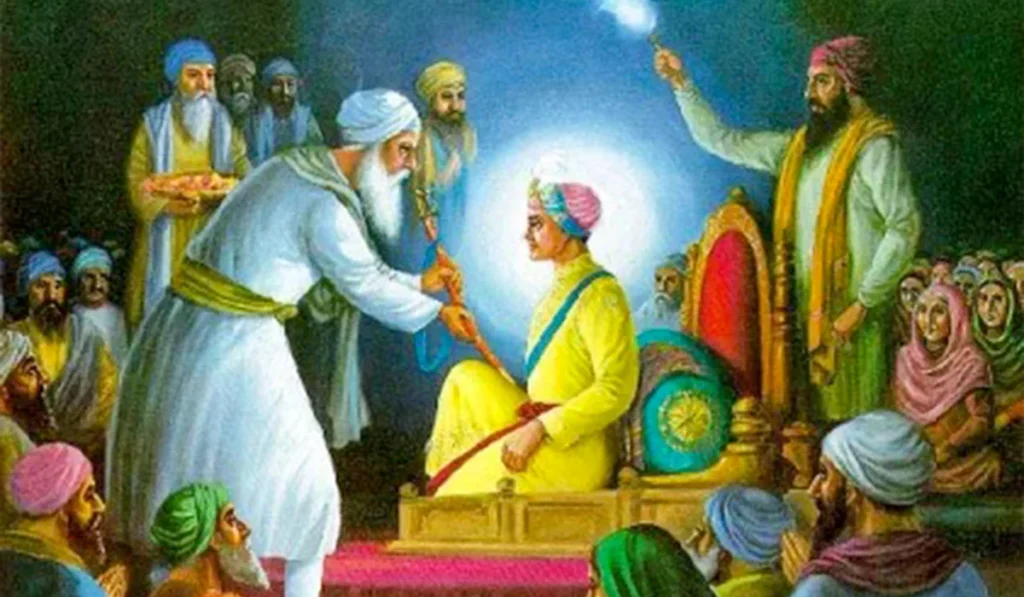
When Baba Buddha Ji came to install Guru Hargobind Sahib Ji on the Guruship, Guru Ji instructed him to bring two swords, one symbolizing Miri and the other Piri. Some claim that Baba Buddha Ji initially placed one sword on the wrong side, prompting Guru Ji to ask for another sword instead of removing it. However, this interpretation is incorrect. Every act of the Sikh Gurus was deliberate and farsighted. The command to Baba Buddha Ji was preordained.
Thus, in 1606 CE, during the formal investiture, Baba Buddha Ji adorned Guru Hargobind Sahib Ji with two swords. At that moment, Guru Ji announced that henceforth he would bear arms, sit upon a throne, and raise an army. People would no longer need to approach courts or police stations; justice would be dispensed directly from the Guru’s throne. This declaration was a direct challenge to the Mughal emperor in Delhi.
Up to the Fifth Guru, the tradition of wearing the Seli Topi a symbol of spiritual authority was followed. Guru Hargobind Sahib Ji respectfully set it aside, adopted the Kalgi (plume), and established an armed force. To ordinary observers, this appeared to be a departure from earlier traditions, but in truth, it was a continuation of an evolving Sikh discipline.
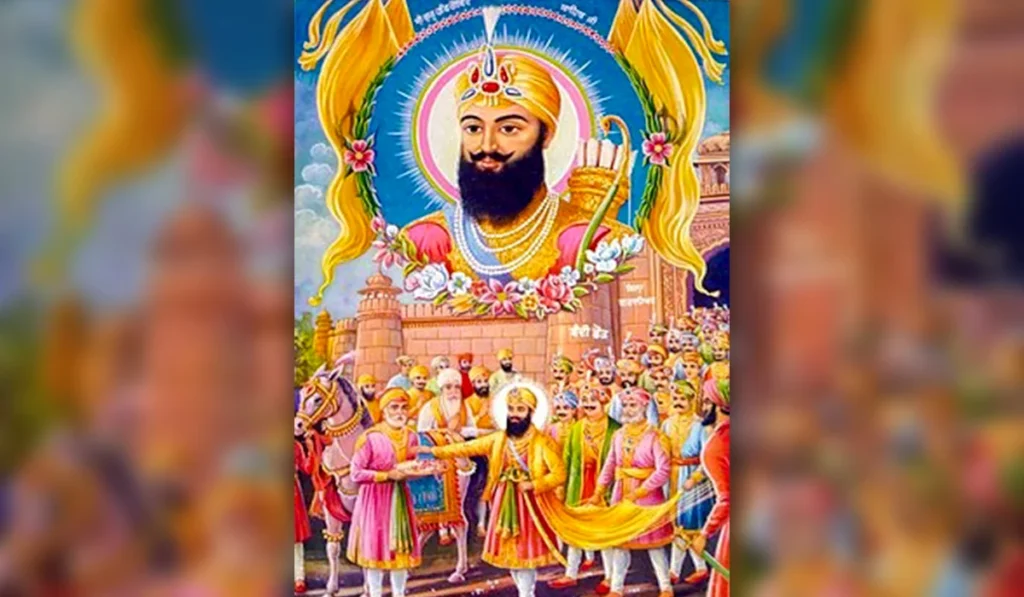
In the Sikh Ardas, the phrase “Deg Tegh Fateh, Bhirh Ki Paij, Panth Ki Jeet, Sri Sahib Ji Sahai” clearly reflects the Miri–Piri philosophy.
Deg represents Langar and nourishment (Piri), while Tegh symbolizes the sword (Miri). Victory is sought through both.
Guru Gobind Singh Ji, in the Chandi Charitar / Chaubis Avtar, also prays to the Timeless One for both Deg and Tegh:
“May Deg and Tegh prevail throughout the world;
protect me, and let no enemy overpower me.”
The word Miri originates from the Persian Mir, meaning leader or ruler, symbolizing mastery over the temporal world. Piri comes from Pir, meaning spiritual guide, representing victory over spiritual ignorance. Though these two swords are distinct, when worn, they cross over the chest and back, symbolizing that dignified life requires both spiritual awareness and worldly responsibility.
Guru Hargobind Sahib Ji organized an armed force and fought four battles, none for territorial expansion but solely to resist oppression. He emerged victorious in all. Hence, he is remembered as the Master of Miri-Piri.
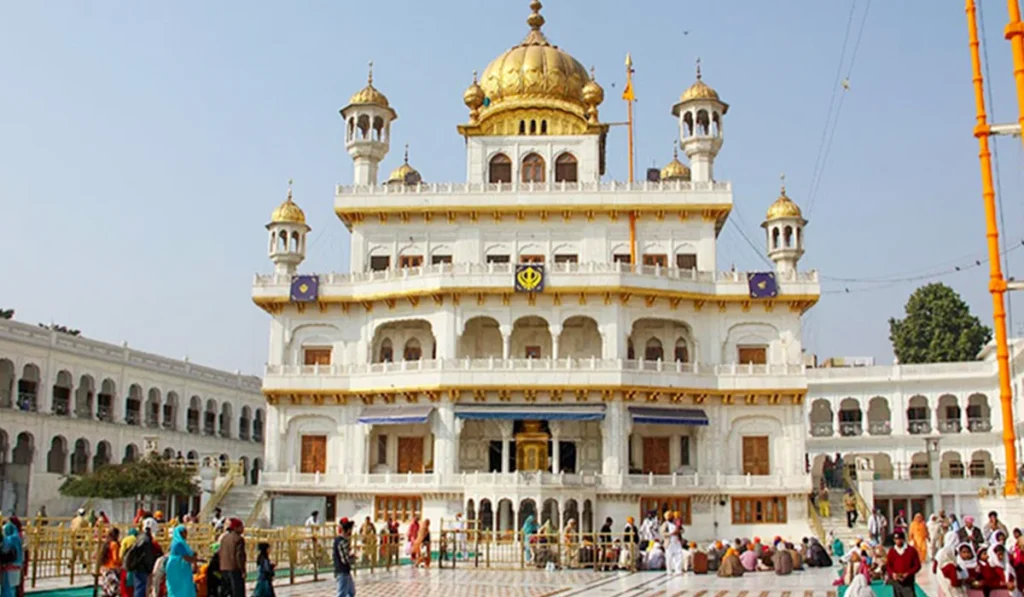
Guru Hargobind Sahib Ji was only eleven years old when Guru Arjan Dev Ji was martyred. Despite Emperor Jahangir’s decree prohibiting private platforms taller than two feet, Guru Ji established the Akal Takht Sahib, twelve feet high, directly facing Sri Harmandir Sahib higher than the emperor’s throne itself. From the Akal Takht, Guru Ji guided Sikhs spiritually, resolved disputes, and administered justice.
Guru Gobind Singh Ji completed the Miri–Piri vision by creating the Khalsa Panth, the army of the Timeless One. The Khalsa raises the sword only to defend the oppressed, the weak, and the voiceless.
The greatest embodiment of Miri–Piri is Sri Harmandir Sahib and the Akal Takht Sahib standing opposite each other. From the Akal Takht, Harmandir Sahib is visible, but from within Harmandir Sahib, the Akal Takht is not visible signifying that while exercising temporal authority, one must remain spiritually anchored, but in pure spirituality, one must rise above worldly power.

Leave a Comment