


In the Indian state of Punjab, the festival of Vaisakhi is celebrated with deep devotion and reverence. Although the background of Vaisakhi was cultural, after the advent of Guru Nanak Dev Ji, this festival in the Sikh world became coloured with religious significance. In the spring season, when the wheat crop ripened, the farmers of Punjab, since ancient times, would pray for the safe arrival of the harvest into their homes, and in the joy of prosperity entering the household, they would gather together, sing boliyan aloud, and celebrate.
With the passage of time, fairs of Vaisakhi began to be organized in many villages and towns situated along the flowing waters of Punjab. Among the farmers of Punjab, a custom developed that on this day, whether the wheat was fully ripe or not, they would certainly begin the harvest ceremonially by cutting it with a sickle. Along with the wheat crop, even those trees which had lost their colour in autumn after shedding their leaves would come back into bloom in spring. This beautiful atmosphere of nature also inspired the farmer to celebrate this festival in a cultural manner.
In the first Var composed by Bhai Gurdas Ji, which narrates the life of Guru Nanak Dev Ji, the line:
Kar kar andar dharamsaal hove keertan sada visoa
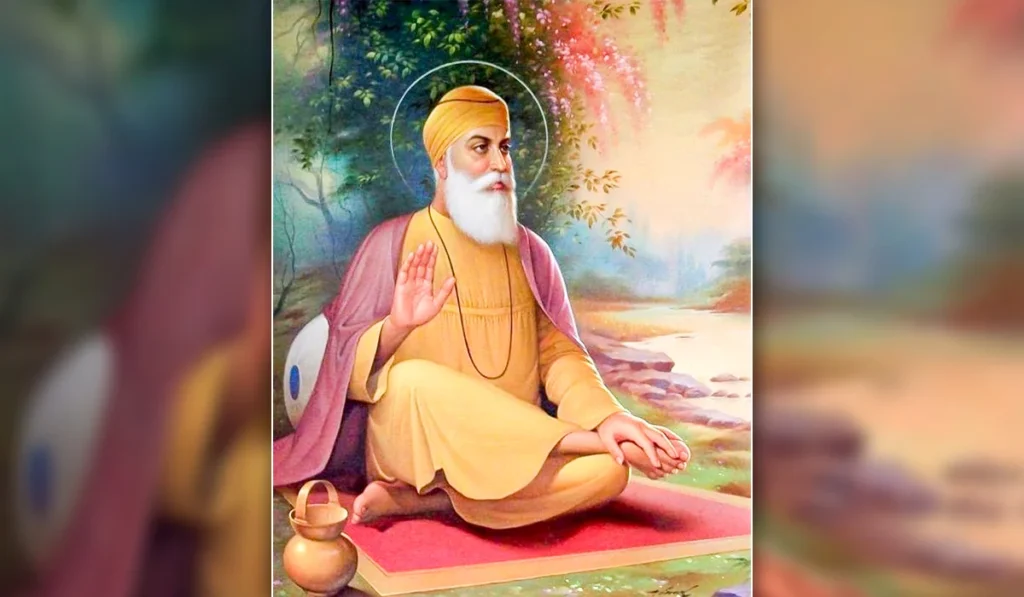
clearly indicates that Guru Nanak Dev Ji’s birth anniversary was on Vaisakhi. Visoa means Vaisakhi. From the very birth of Guru Nanak Dev Ji, the day of Vaisakhi began to acquire not only a cultural but also a religious colour.
According to Mehma Prakash by Sarup Das Bhalla, Guru Amar Das Ji, on the suggestion of Bhai Paro, organized a grand gathering at Goindwal Sahib on the day of Vaisakhi in connection with the celebration of Guru Nanak Dev Ji’s Prakash Purab. With the passage of time, such gatherings began to be held at many other religious places as well. The purpose of gathering at the Guru’s house on Vaisakhi was to strengthen mutual love and steadfastness toward Gurmat principles. It is recorded in verse:
Likh Paro sabh desh pathaaya.
Sun sabh sangat at sukh paaya.
Sabhan visoa din man sarsan.
Bade bhaag paavai gur darsan.
The Sikh sangat, longing for the Guru’s love, would gather at the Guru’s house on Vaisakhi and celebrate the day like a festival. Every year, this day of Vaisakhi continued to be observed in the Sikh world with great devotion. But the Vaisakhi of 1699 holds a special significance in Sikh history.
The day of Vaisakhi in 1699 is prominently recorded in the religious history of the world. On this day, the Tenth Master, the all-sacrificing Sri Guru Gobind Singh Ji, the tenth light of Guru Nanak, created the Khalsa Panth at Sri Anandpur Sahib. By creating the Khalsa Panth, Sri Guru Gobind Singh Ji brought forth a revolutionary chapter in the religious history of the world.
In the year 1699, Sikhs from different places came to Sri Anandpur Sahib on the call of Guru Gobind Singh Ji on the day of Vaisakhi. At that time, Guru Gobind Singh Ji was residing at Sri Anandpur Sahib. Keeping in view the needs of the time and the prevailing social and religious circumstances, Guru Gobind Singh Ji gave the Sikhs a distinct identity.
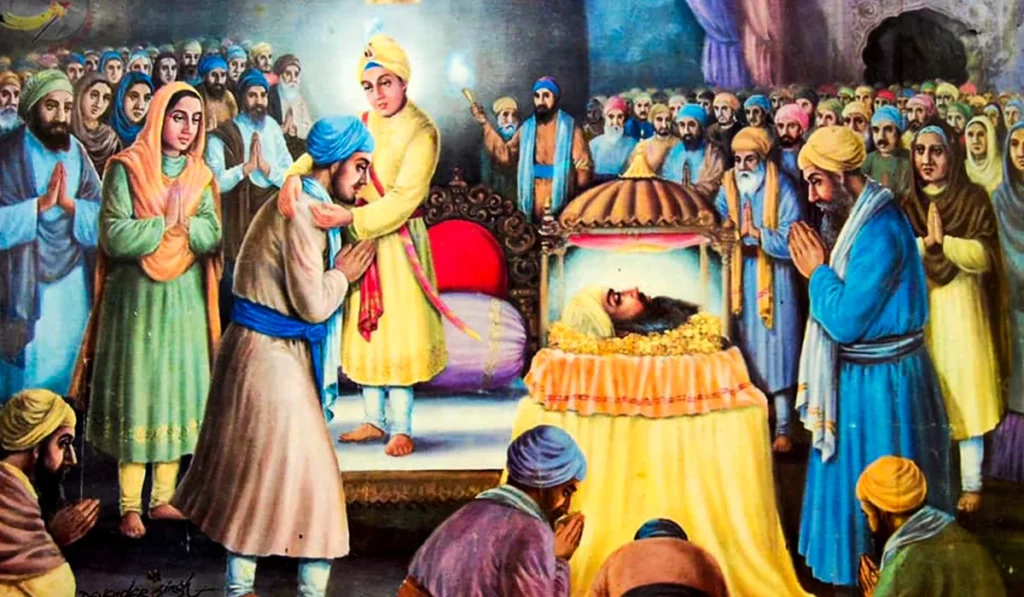
In 1675, when Guru Gobind Singh Ji was only nine years old, he himself performed the cremation of the head of his father, Guru Tegh Bahadur Ji, in front of his home. Guru Tegh Bahadur Ji had been martyred in Chandni Chowk, Delhi, and from there his severed head was brought to Sri Anandpur Sahib by Bhai Jaita Ji, Bhai Nanu Ram Ji, and Bhai Udo Ji. After performing the cremation of the head, Guru Gobind Singh Ji sat upon a platform, Akal Bunga Sahib, and addressed the Sikh sangat. He asked Bhai Jaita Ji that when the head of our Guru, my father, was severed from his body and such cruelty was inflicted upon him, were there no Sikhs present in Chandni Chowk?
Bhai Jaita Ji replied that Sikhs must indeed have been there, but, Guru Ji, no one could be recognized as a Sikh. No one could tell who was Sikh, who was Hindu, and who was Muslim. Upon hearing this, Guru Gobind Singh Ji said that if Sikhs could not be recognized, then he would create such Sikhs who would stand recognizable among hundreds of thousands.
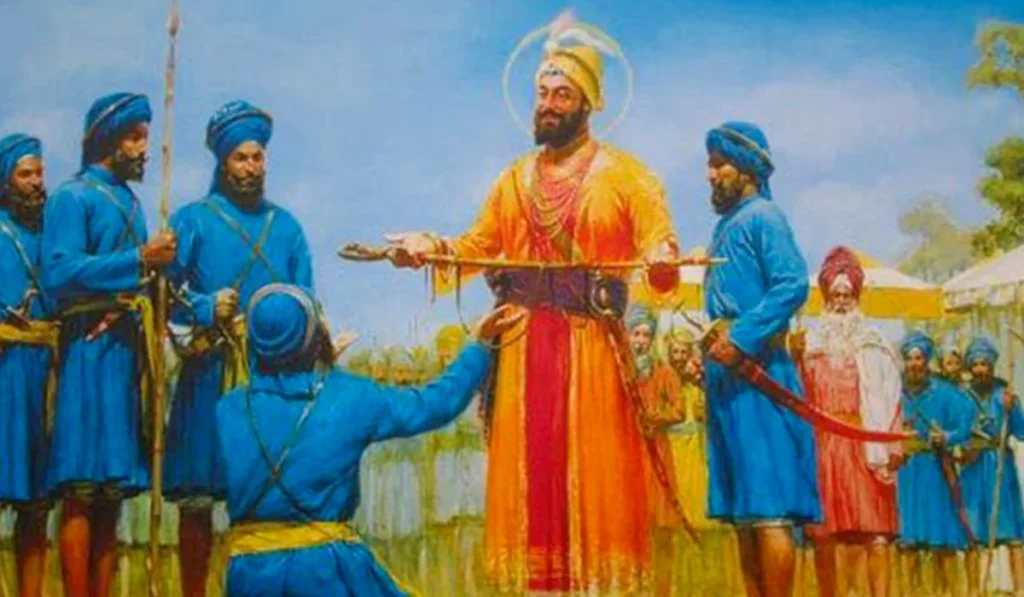
These words spoken in 1675 were fulfilled by Guru Gobind Singh Ji on Vaisakhi day, 13 April 1699, through the creation of the Khalsa. From 1675 to 1699, Guru Gobind Singh Ji must have celebrated Vaisakhi every year with his Sikh devotees, but in 1699, the day of Vaisakhi seemed most suited to the needs of the time, and Guru Gobind Singh Ji gave the Sikhs a distinct identity on that day.
Because Punjab was the north-western gateway of India, its people had endured on their chests the attacks of raiders such as Alexander, Muhammad-bin-Qasim, Ghaznavi, Ghori, and Babur. By creating the Khalsa Panth, Guru Ji reconnected the people of Punjab with their true identity. This unparalleled act of the Tenth Master lifted people who had been trampled and living a life of slavery for centuries, filling them with self-confidence and raising them to the skies.
The day of Vaisakhi of 1699 at Sri Anandpur Sahib was a trumpet call for struggle against oppression, injustice, discrimination, falsehood, hypocrisy, caste division, and inequality. On this very Vaisakhi day, Sri Guru Gobind Singh Ji abandoned the old practice of charan pahul and prepared Khande di Pahul in an iron bowl. The day of Vaisakhi in 1699 presents another unique scene: on that same day, Guru Gobind Singh Ji first blessed the Panj Piare with Amrit, and then himself received the Amrit of Khande di Pahul from those five beloved ones and changed from Gobind Rai to Gobind Singh.
This incomparable moment presents such a vision of Guru and disciple in which there is no distinction between the two. Bhai Gurdas Ji praises this scene in the words:
Wah wah Gobind Singh aape Guru chela
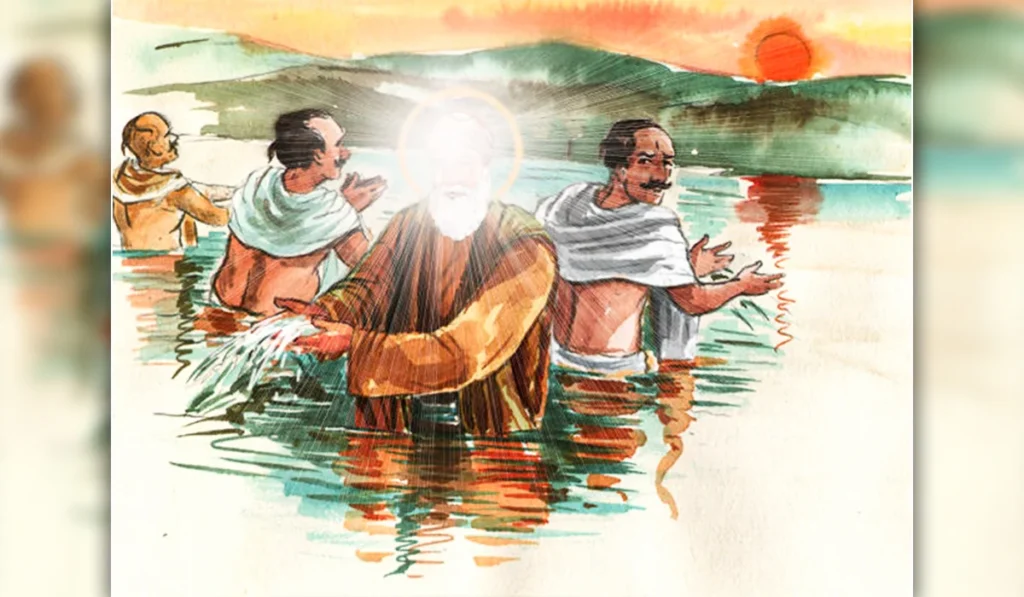
The vision of Sri Guru Gobind Singh Ji was to expand and complete the spiritual awakening initiated by Guru Nanak Dev Ji. Just as Guru Nanak Dev Ji, on Vaisakhi day at Haridwar, challenged the hollow rituals of the Brahmanical world by offering water in the opposite direction to the crowd and brought people out of superstition and illusion, in the same way Guru Gobind Singh Ji, in 1699, according to the needs of the time, guided society and gave the Sikhs a distinct identity in the form of the Khalsa, and thus created saint-soldiers in the Sikh world.

Leave a Comment