
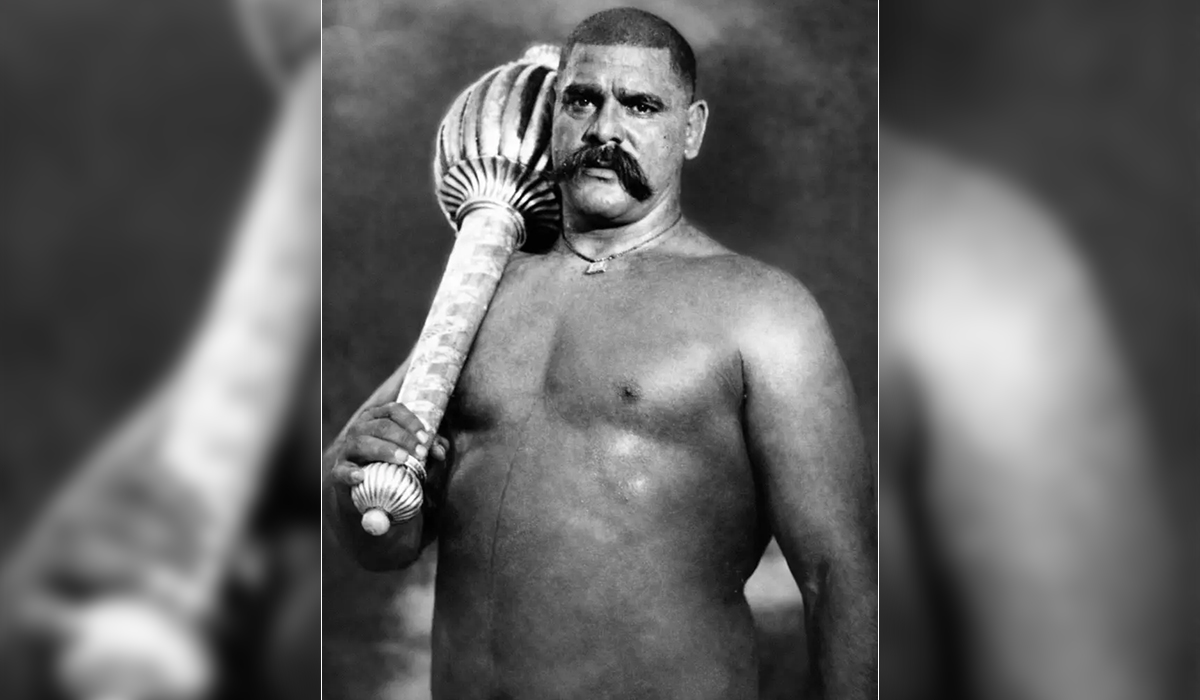

Gama Pehlwan has now become an inseparable part of the legends of the Indian subcontinent. Remembering him evokes a deep and endless sense of nostalgia. In the collective memory of the subcontinent, his name stands as a symbol of extraordinary strength, determination, and indomitable confidence.
Time has passed, generations have changed, yet the story of Gama continues to shine in popular memory like an old heroic saga that brings an entire era alive before our eyes.
Stories of Strength and Cultural Memory
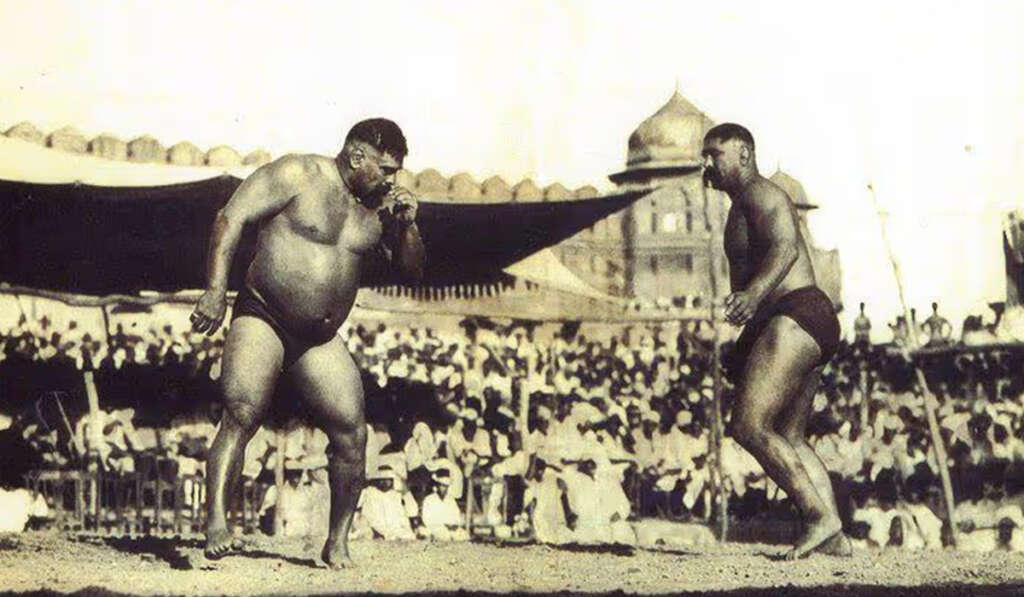
Stories—both real and exaggerated—about wrestlers and their strength have always been an integral part of the cultural and social traditions of India.
For instance, there is a famous tale about Punjabi wrestler Kikkar Singh Sandhu. It is said that once his teacher asked him to bring a thin neem twig for brushing teeth. Kikkar Singh felt that bringing just a twig would be disrespectful. So, he uprooted an entire neem tree and carried it on his shoulder to the akhara.
Whether this story is true is difficult to verify, but it reflects the larger tradition of heroic exaggeration in wrestling folklore.
Rise of Gama Pehlwan
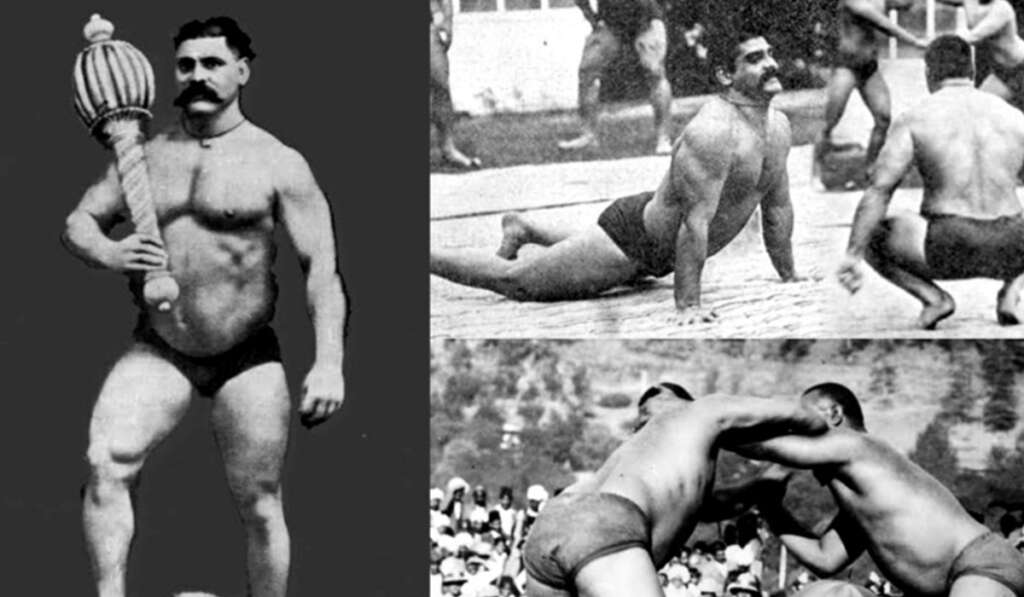
The first true champion wrestler to emerge from the Indian subcontinent and enter the realm of legend was Gama Pehlwan, whose real name was Ghulam Mohammad.
Born in 1882 in Amritsar to wrestler Mohammad Aziz, Gama became known as Rustam-e-Zamana.
A widely cited claim about his career is that over nearly 50 years, he fought around 5,000 bouts and was never defeated.
Early Promise
At the age of 10, Gama participated in a strength competition in Jodhpur, where around 400 wrestlers competed. He made it to the final fifteen, impressing the Maharaja of Jodhpur, who reportedly declared him the winner.
The following years were dedicated to intense training.
At the age of 19, Gama challenged India’s champion Rahim Baksh Sultaniwala. After a tough two-round contest, Gama defeated the much larger opponent.
Dominance and the London Challenge (1910)
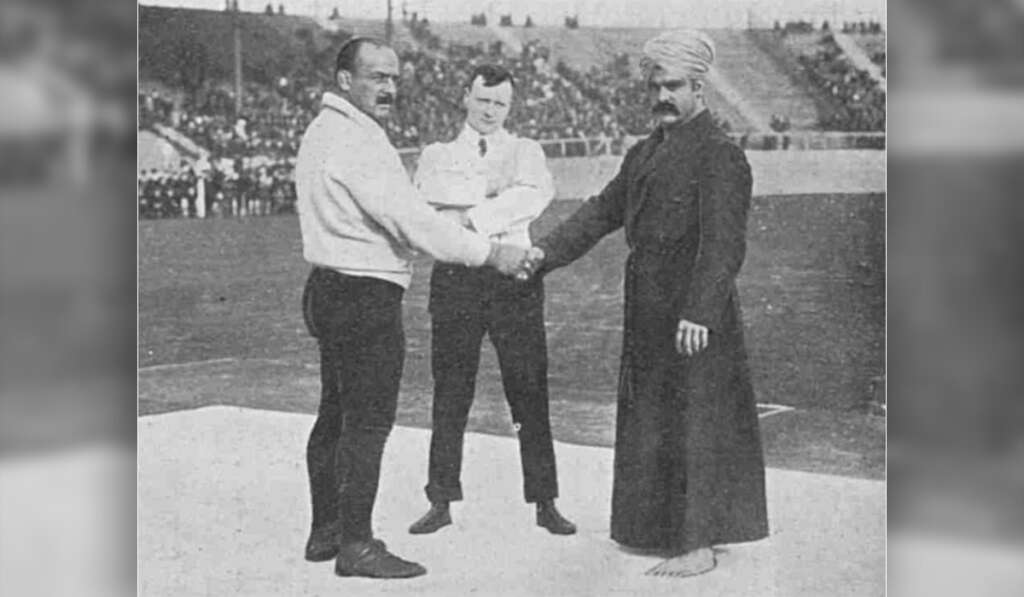
By 1910, Gama had defeated most major wrestlers in the subcontinent.
That year, promoter R.B. Benjamin took Gama and his younger brother Imam Baksh to England. There, Gama issued an open challenge:
He would defeat any three wrestlers of any weight category within 30 minutes.
Initially, no one took this seriously.
He challenged world champion Stanislaus Zbyszko and Frank Gotch. Eventually, American wrestler Benjamin Roller accepted.
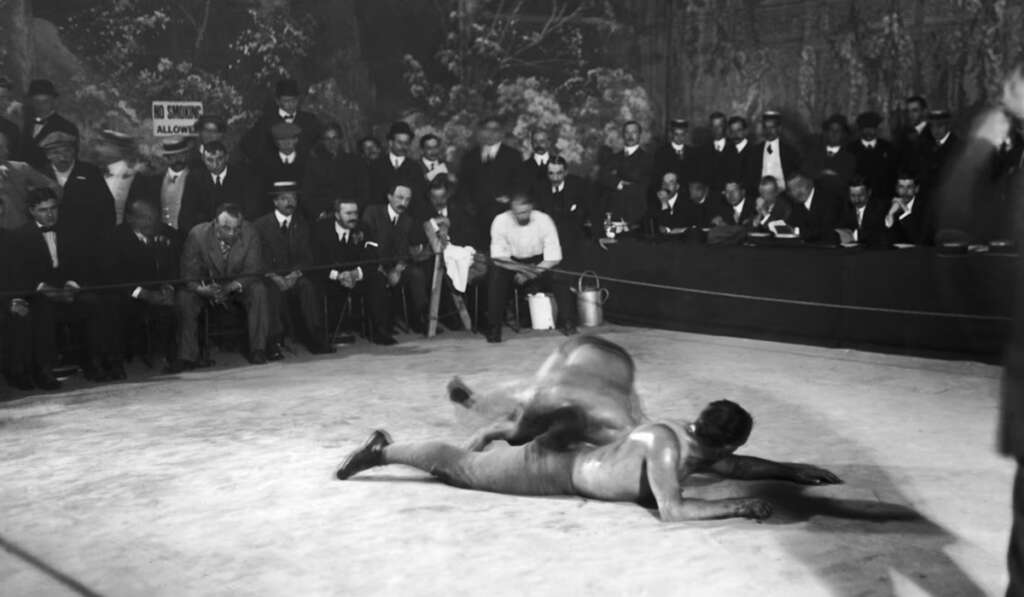
Gama defeated Roller in just 1 minute 40 seconds in the first round. He then went on to defeat wrestlers from France, Switzerland, and Sweden.
World Champion Recognition
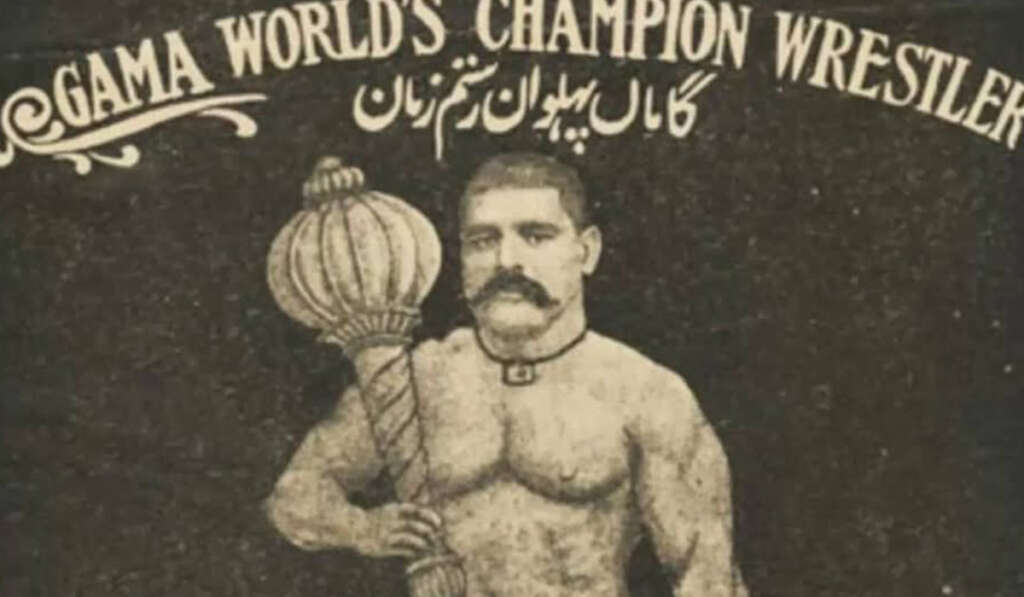
Finally, Stanislaus Zbyszko accepted Gama’s challenge.
On 10 September 1910, Gama dominated the match. A rematch scheduled for 17 September did not take place, as Zbyszko reportedly did not appear. Gama was then awarded the John Bull Belt and recognised as world champion.
He further challenged himself by offering to wrestle 20 opponents consecutively, promising to bear all expenses if defeated. No one accepted.
Return to India and Continued Victories
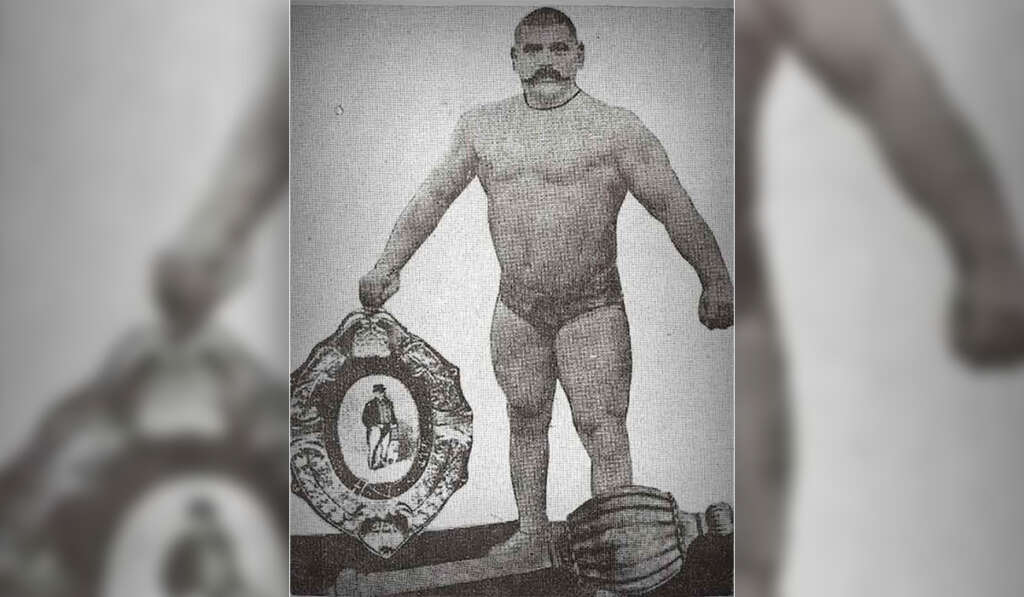
After returning to India, Gama again defeated Rahim Sultaniwala, retaining his title of Rustam-e-Hind.
He also defeated another major wrestler, Pandit Biddu.
One of the most remarkable moments of his later career came in 1927, when he defeated Zbyszko again—this time in just 21 seconds.
Partition and Later Life
After Partition, Gama moved to Pakistan, where he passed away in 1960.
In an interview later in life, he described Rahim Sultaniwala as his greatest rival and said:
“In our sport, a stronger and more capable opponent is treated as a teacher. I defeated him twice, but I never forgot to touch the dust of his feet to my forehead.”
A Story from Partition
In early 1947, Gama settled in Lahore’s Mohini Road, where most of his neighbours were Hindu.
During Partition violence, he assured them that he would protect them till his last breath.
When rioters arrived one day, Gama and his family stood in a line. As the first attacker advanced, Gama struck him with a slap so powerful that he was thrown back. According to the narrative, no further violence occurred in that locality.
Later, with tears in his eyes, Gama escorted his neighbours safely to the border, providing them with supplies for a week.
Legacy Beyond Generations
Pakistani journalist Majid Sheikh recounts an incident in Kolhapur, Maharashtra, where Gama’s grandson was to participate in a wrestling match.
Nearly two lakh people gathered to watch. Many were poor farmers who believed witnessing the descendant of Gama was a once-in-a-lifetime moment.
Heavy rains continued for 14 hours, turning the ground into mud. Yet not a single person left. Some took shelter, while most stood in the open.
Among them were descendants of families whom Gama had once helped during Partition.


Leave a Comment