

The first Sikh Guru, Sri Guru Nanak Dev Ji, laid the foundation of Sikhism and spread its teachings, influencing millions of people across regions. As Sikhism began to flourish across regions and even beyond India, certain political and religious groups, along with some Rajput hill rulers, began opposing the growing Sikh institutions.
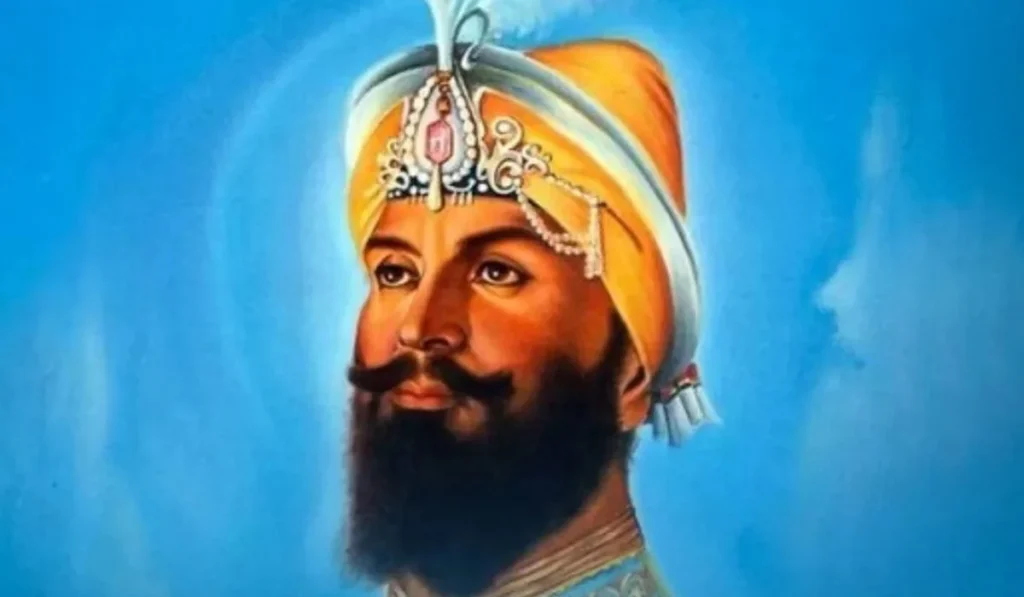
This conflict reached its peak during the time of the tenth Sikh Guru, Sri Guru Gobind Singh Ji, also known as Kalgidhar Patshah.
One of the earliest major battles Guru Gobind Singh Ji fought against the hill rulers was the Battle of Bhangani, which took place on 15 April 1687. In this battle, the Sikh army led by Guru Gobind Singh Ji emerged victorious.
Even before this battle, Guru Gobind Singh Ji had founded a new town called Paonta Sahib, about seven miles from the site of Bhangani. The word Paonta means “a place where the foot rests.”
It was here that 500 Pathan soldiers who came to join Guru Gobind Singh Ji through the recommendation of Pir Buddhu Shah, came to meet Guru Gobind Singh Ji. Their recommendation had been made by Pir Buddhu Shah, a devoted follower of the Guru.
Political tensions after the Battle of Bhangani
Following the Battle of Bhangani, Guru Gobind Singh Ji achieved another significant victory in 1691, known as the Battle of Nadaun.
Although Guru Gobind Singh Ji supported the hill rulers against the Mughal administration during this conflict, over time these same Rajput hill rulers began to grow jealous of the Guru’s rising influence and popularity.
After the death of Raja Bhim Chand of Bilaspur, his son Ajmer Chand ascended the throne on 16 September 1692. Ajmer Chand had long harbored jealousy toward Guru Gobind Singh Ji.
On Ajmer Chand’s advice, the hill rulers of the region wrote a petition to Emperor Aurangzeb, stating that they were unable to defeat Guru Gobind Singh Ji’s Sikh army. They requested that the emperor send a renowned Mughal general with an army. The hill rulers assured Aurangzeb that they would assist the Mughal forces in order to prevent the emergence of a new independent Sikh power under Mughal rule.
Upon reading the petition, Aurangzeb became enraged and issued a proclamation:
Whoever captures Guru Gobind Singh Ji alive or dead from Anandpur will be appointed a commander in the imperial army.
Syed Khan’s Mission
At that time, Syed Khan, a brave general in the Mughal army who had already achieved several victories in Aurangzeb’s southern campaigns, volunteered to undertake the mission.
He marched toward Anandpur Sahib with a large army, determined to please Aurangzeb.
While traveling with his forces from Delhi toward Anandpur Sahib, Syed Khan reached Sadhora. There he decided to halt briefly because his foster sister Nasiran, who had been married into the household of Pir Buddhu Shah, lived there.
Nasiran’s Warning
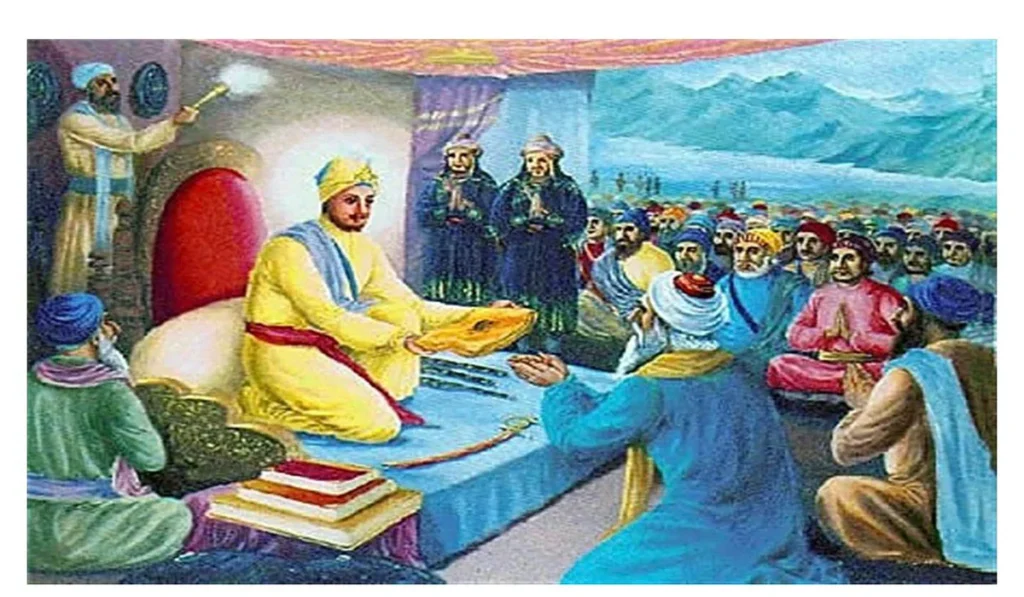
Pir Buddhu Shah was a devoted follower of Guru Gobind Singh Ji. During the Battle of Bhangani he had sacrificed two sons and five hundred Pathan followers in support of the Guru.
When Nasiran learned about Syed Khan’s campaign against Guru Gobind Singh Ji, her eyes filled with tears. With deep emotion she said to him:
You are marching with evil intentions against Guru Gobind Singh Ji, whom many consider a divinely inspired leader who came to relieve the suffering of the world. May God defeat your plan and may the Kalgidhar Patshah bless you with His grace. He knows what lies within every heart.
Syed Khan was shocked to hear these words.
Nasiran explained to him that people are remembered in history for their good deeds, while tyrants are remembered with hatred. She urged him to abandon his mission and return.
Syed Khan replied that sisters usually bless their brothers, but she seemed to be discouraging him. Nasiran answered that she was not cursing him; rather she was trying to save him from earning a curse. She prayed that Guru Gobind Singh Ji would bless him with wisdom.
The Siege of Anandpur
Though Syed Khan left the next day, Nasiran’s words had deeply affected his mind.
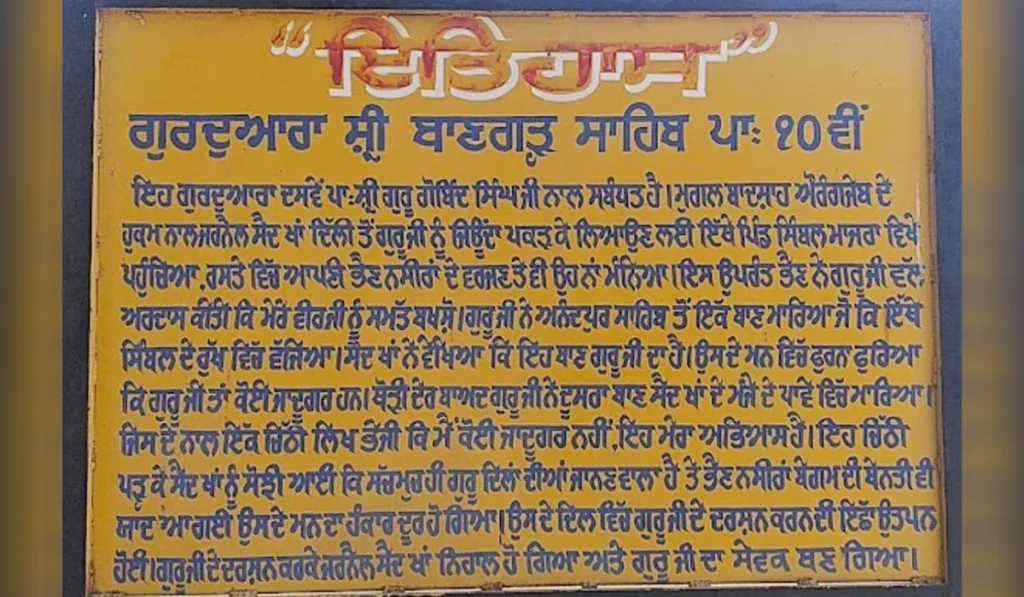
He advanced toward Anandpur Sahib and ordered his army to surround the city. His forces laid siege to Anandpur, while Syed Khan himself set up camp about fifteen miles away in the village of Simbal Majra.
Meanwhile Nasiran prayed sincerely to God that her brother might receive wisdom.
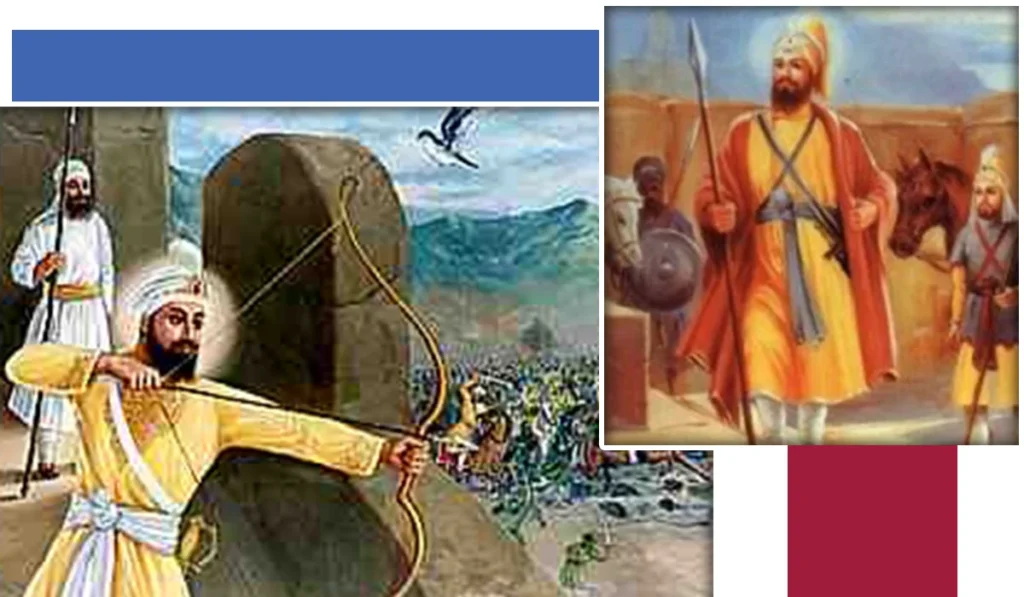
To break Syed Khan’s arrogance, Guru Gobind Singh Ji fired an arrow from Anandpur Sahib which struck a Simbal tree near Syed Khan’s camp.
When Syed Khan investigated the matter and learned that the arrow had come from Guru Gobind Singh Ji, he wondered whether the Guru possessed supernatural powers or divine insight to know exactly where he was camped.
Soon afterward another arrow arrived, carrying a letter, and struck the leg of Syed Khan’s bed.
The letter read:
Syed Khan, I am neither a magician nor a mind reader. This is simply the result of my training and skill.
As soon as he read this message, Nasiran’s words returned to Syed Khan’s mind.
The Meeting with Guru Gobind Singh
Syed Khan requested a meeting with Guru Gobind Singh Ji, abandoning his arrogance.
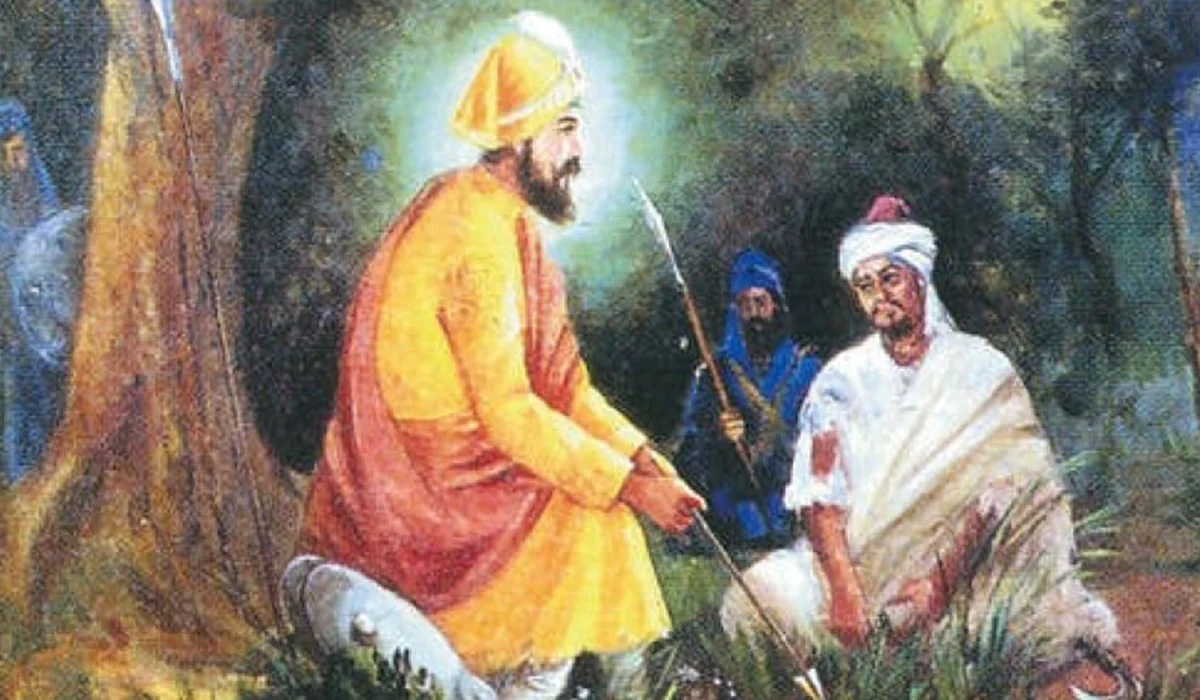
But when Guru Gobind Singh Ji appeared before him, Syed Khan was overwhelmed by the radiance of the Guru’s presence. Unable to bear the divine aura, he began to cry out:
Khudā āyad! Khudā āyad! ke man āyad khudā bandah?
Haqīqat dar mizāj āyad ke murdah rā kunad zindah.
Meaning:
People, God has come! Or perhaps a beloved servant of God has come.
Divine truth has appeared in human form to bring the spiritually dead back to life.
Syed Khan fell to the ground in prostration and repeatedly bowed at the Guru’s feet.
Syed Khan’s Transformation
Witnessing this, Syed Khan was deeply shaken by what he heard.
With humility, Syed Khan told Guru Gobind Singh Ji that he now considered himself the Guru’s servant and was ready to fight the Guru’s enemies.
However, Guru Gobind Singh Ji refused. He instructed him:
Use whatever breaths remain in your life in the remembrance of God. Dedicate yourself to divine devotion and make your life meaningful.
Syed Khan then informed his army that he was no longer their commander and that they were free to return to Delhi. He declared that he would now devote himself to worship.
A Life of Devotion
Syed Khan withdrew to the hills of Kangra, living a life of spiritual discipline and meditation. Over time he became a spiritually experienced man.
Later he met Guru Gobind Singh Ji again at Damdama Sahib and received the Guru’s blessings.
According to Principal Satbir Singh, Syed Khan remained a devoted follower of Guru Gobind Singh Ji and accompanied him even until Nanded Sahib.
When Pir Buddhu Shah and Nasiran learned of this transformation, they thanked God repeatedly and understood the power of sincere prayer.
A Wider Pattern
Syed Khan was not the only one.
Several Mughal commanders who had initially marched to confront Guru Gobind Singh Ji were eventually transformed by his spiritual influence.


Leave a Comment