

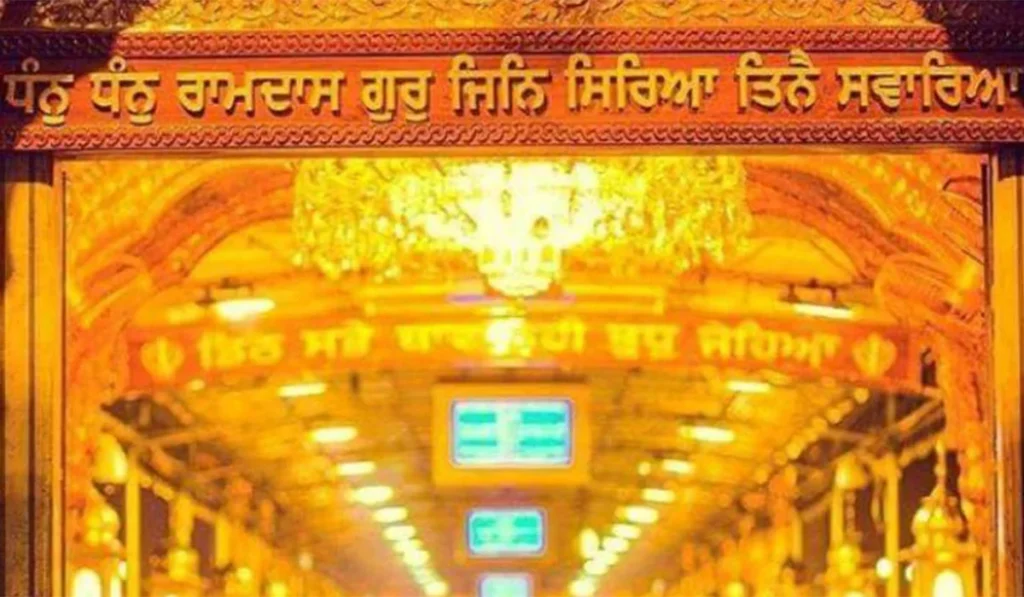
“Dhan Dhan Ramdas Guru, Jin Siriya Tinai Swariya.”
The fourth Satguru of the Sikhs, Sri Guru Ram Das Ji, was born on 24 September 1534 AD in Chuna Mandi, Lahore, into the Sodhi family. His father was Sri Haridas Ji and his mother was Mata Daya Kaur Ji. His childhood name was Jetha Ji. At a very young age, Jetha Ji lost his parents and became an orphan.
His maternal grandparents lived in Basarke Gillan village, the ancestral village of Sri Guru Amar Das Ji. Although there was poverty in his maternal home as well, his grandparents became his guardians. To support the household and repay their care, Jetha Ji began selling ghungnian (boiled pulses), as was common among poor families of that time. Whatever little he earned helped the family survive, yet it was his nature that whenever someone in need came to him, he would never turn them away.
At that time, Sri Guru Amar Das Ji resided at Goindwal Sahib, and the sangat of Basarke Gillan regularly visited Goindwal for Guru Darshan. Once, Jetha Ji accompanied his grandmother to Goindwal Sahib. From that day onward, he did not return. He stayed there and dedicated his life to the seva of Guru Ghar. Even while performing seva, Jetha Ji continued selling ghungnian to sustain himself.

Only the Guru Himself knows the depth of the Guru’s grace. In a short time, Jetha Ji became extremely dear to Guru Amar Das Ji, who lovingly addressed him as Ram Das. This name was bestowed upon him by the Guru. Even today, Sodhi Sultan Satguru continues to bless the world.
Guru Amar Das Ji had two daughters. His elder daughter, Bibi Dani Ji, was married to Bhai Rama Ji, while his younger daughter Bibi Bhani Ji had reached marriageable age. One day, Mata Ram Kaur Ji requested Guru Ji to find a suitable groom for Bibi Bhani Ji. Around the same time, Jetha Ji returned after selling ghungnian. Seeing him, Mata Ram Kaur Ji remarked that the groom should be like him. Guru Amar Das Ji responded that such a groom could indeed be found. Without questioning Jetha Ji’s lineage or background, Guru Amar Das Ji embraced his beloved disciple and chose him. On the same day, Jetha Ji was engaged to Bibi Bhani Ji, and they were later married on 22 Phaggan, Samvat 1610.
From this union were born three sons: Baba Prithi Chand Ji, Baba Mahadev Ji, and Sri Guru Arjan Dev Ji. Even after marriage, Jetha Ji continued to live at Goindwal Sahib, as Guru Amar Das Ji had also kept Bhai Rama Ji within his household.
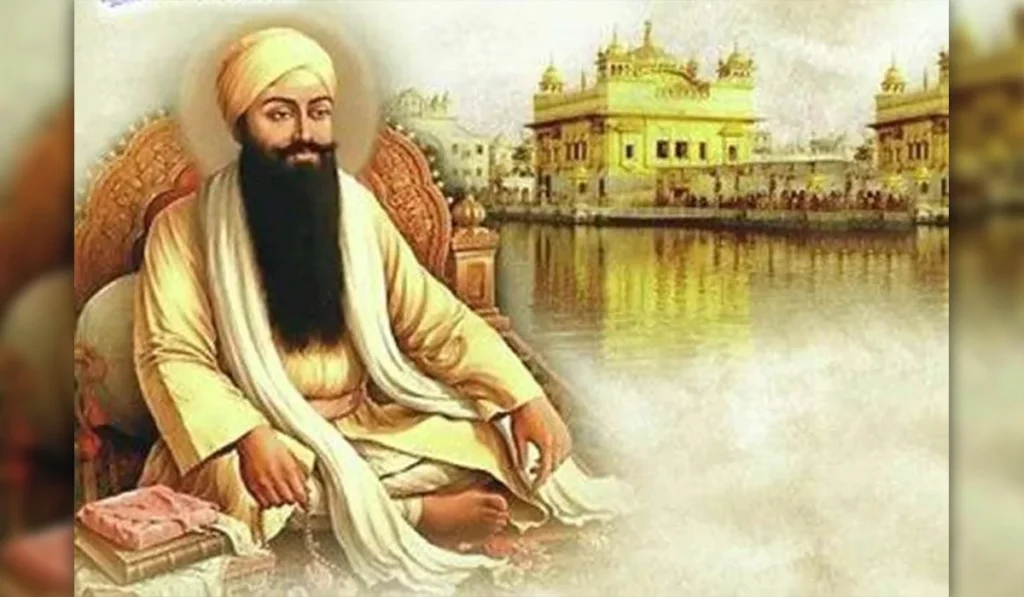
Recognising his spiritual worth, Guru Amar Das Ji installed him as the Fourth Guru of the Sikh Panth on 1 September 1574 AD (Bhadon Sudi 15, Assu 2, Samvat 1631) and formally bestowed upon him the name Guru Ram Das.
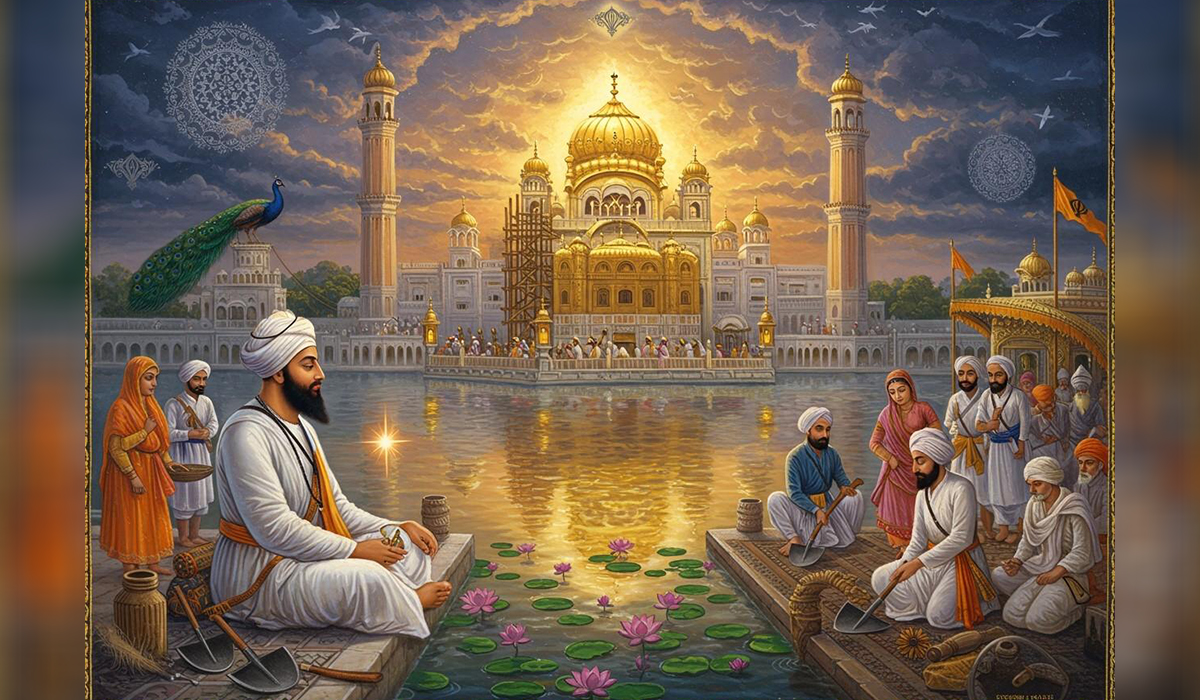
With the Guru’s permission, Guru Ram Das Ji initiated the digging of Santokhsar Sarovar and later laid the foundation of the city of Amritsar. For this purpose, land measuring around 500 bighas was acquired from the proprietors of Tung village. Scholars Principal Teja Singh Ji and Dr Ganda Singh Ji mention in Sikh History that after assuming Guruship, Guru Ram Das Ji shifted his residence from Goindwal to Amritsar.
According to the Amritsar Gazetteer, during the reign of Emperor Akbar, Guru Ji acquired the site of Amritsar along with adjoining land, after compensating the local landowners. In return, 700 Akbari rupees were paid to the proprietors of Tung village. Guru Ji then got the sacred tank excavated and laid the foundation of the city, which came to be known as ‘Chak Guru’, ‘Chak Ramdas’ or ‘Ramdaspura’.
Guru Ji invited people belonging to 52 professions to settle there and establish their livelihoods. The main marketplace was known as ‘Guru ka Bazar’. In due course, this city emerged as one of the major centres of trade in North India.
Guru Ram Das Ji also established a disciplined daily routine for the Gursikhs. The following verses, composed by Guru Ji, describe the spiritual discipline of a Gursikh. Their meaning is rendered here in simple English for understanding:
One who calls himself a Sikh of the True Guru
Should rise early and meditate on the Name of the Lord.
Rising early, bathing, and meditating upon the Naam,
By reciting the Guru’s Word, all sins are washed away.
Throughout the day, Gurbani is sung,
And the Naam is remembered with devotion.
One who meditates on the Lord with heart and soul
Becomes beloved of the Guru.
Nanak seeks the dust of such a Gursikh,
Who forever chants the Name of the Lord.
Alongside this, Satguru Ji established Rehat (Guru Maryada)—the disciplined way of life for the Sikhs. His guidance emphasised righteous action, devotion, and living in harmony with divine will.
Guru Ram Das Ji began the preparation of the Amrit Sarovar, which was later completed by Guru Arjan Dev Ji, at the centre of which Sri Harmandir Sahib was constructed. Guru Ram Das Ji composed the four Lavan in Raag Suhi, recited during Anand Karaj. He also composed hymns in Raag Vadhans, similar in spirit to the Ghoriyan sung at weddings. His Bani appears in 30 raags, including several new musical measures.
Finally, Guru Ram Das Ji returned to Goindwal Sahib, where on 1 September 1581 AD (Bhadon Sudi 3, Assu 2, Samvat 1638), he merged with the Divine after handing over the Guruship to his younger son, Sri Guru Arjan Dev Ji.


Leave a Comment