
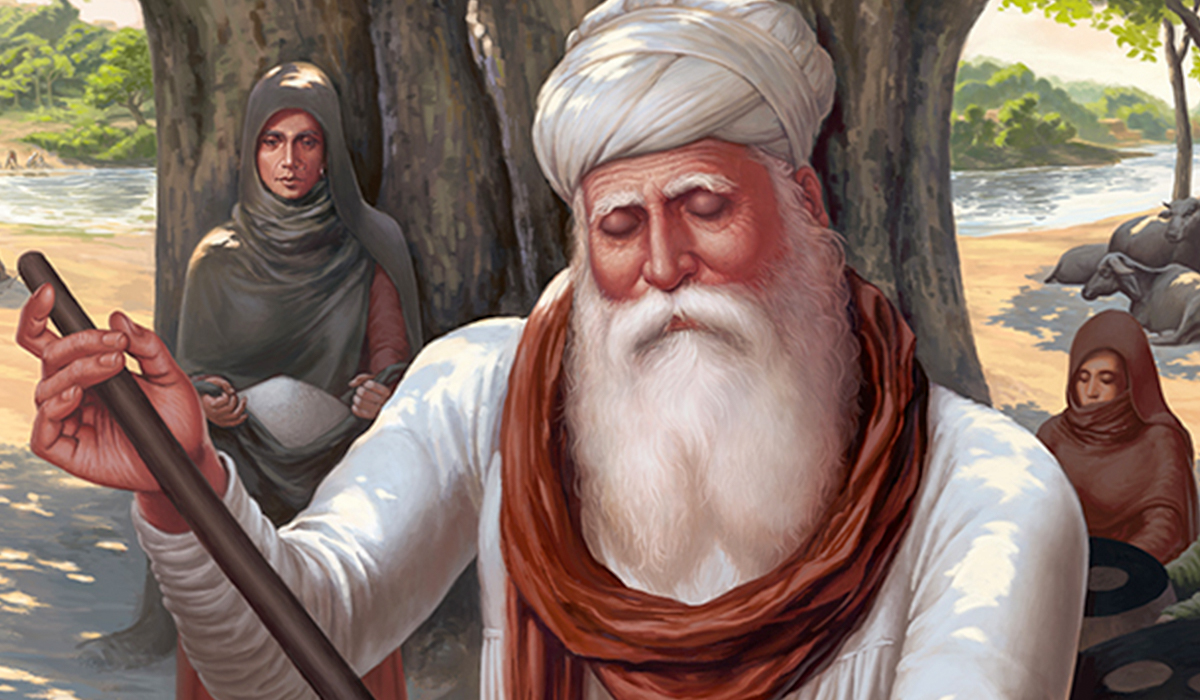

The blessed Guru Amardas Ji was born on 5 May 1479 AD … in the village of Basarke Gillan, in the Majha region of Punjab, from the womb of Mata Sulakhni Ji (Lakhmi Ji) at the home of Tej Bhan Bhalla Khatri Ji. His parents were very religious and had a high and pure life, from whom Guru Ji also had religious interests from the beginning. He was the third Satguru of the Sikhs. He was born ten years after Sri Guru Nanak Dev Ji in his worldly life. Even when he sat on the Guru’s throne, he was the oldest and he also lived the longest. Bhatt Sahiban Ji writes in his praise:
Bhalo prasidh tejo tanau kalarjōṛ kar dhariāu.
Soī nām bhagat bhavajal haran gur Amar Dās te pāiāu.
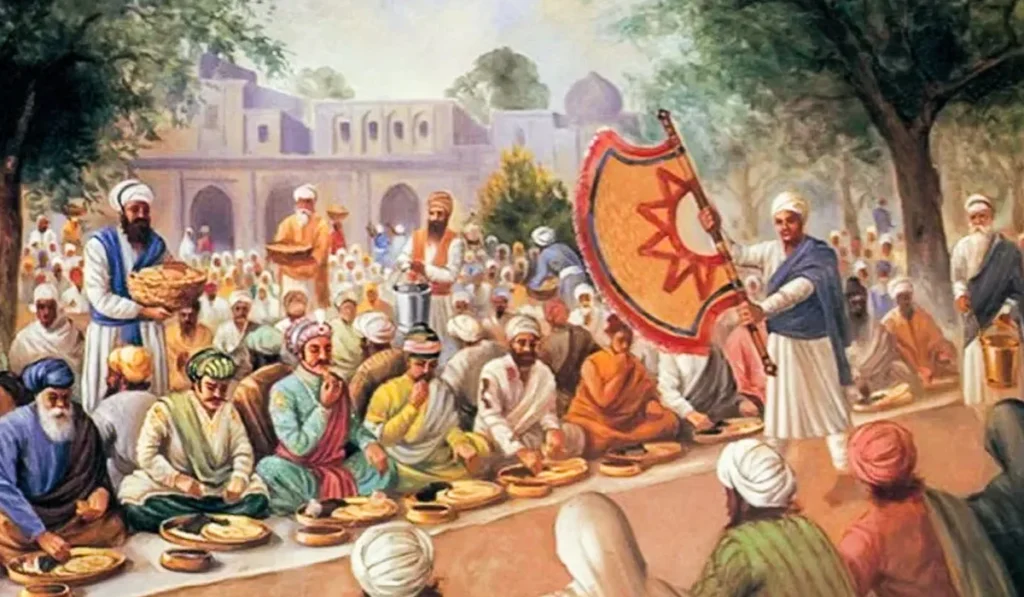
Guru Amardas Ji made many revolutionary changes. He did the greatest work of Sangat Pangat. At Goindwal Sahib, it was famous that if someone wants to go to see Guru Ji, then first he has to sit with everyone in the Pangat and eat langar. The practice of ‘Pahlon Pangat Pachai Sangat’ was started by the third Satguru Ji. He was a staunch Vaishnav and like his father, he used to go to see Ganga Ji every year. At the age of 24, he was married to Ram Kaur (Mansa Devi Ji), daughter of Sri Devi Chand Behl Khatri of Sankhatre village. Aap Ji had two sons, Baba Mohan Ji and Baba Mohri Ji, and two daughters, Bibi Dani Ji and Bibi Bhani Ji. Aap Ji continued to visit Ganga Ji for 20 years. When he was returning from his 20th pilgrimage, a sadhu asked him who his Guru was, and when Amar Das Ji replied that he had none, the sadhu remarked that without a Guru one cannot attain spiritual peace.. That sadhu said that unless a person takes refuge in a Guru, he cannot get spiritual peace.
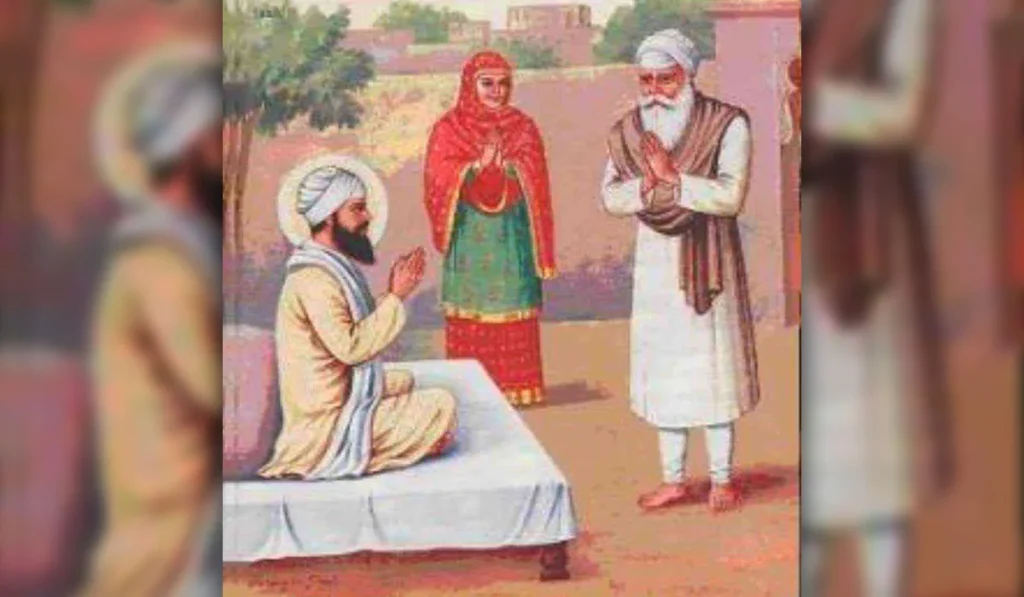
Aap Ji became very restless after hearing this and could not sleep the whole night. Aap Ji was very worried about being a Guru. In the morning, the words of Sri Guru Nanak Dev Ji reached his ears and in a sweet voice, none other than Bibi Amro Ji was singing these words. Milk was also being churned along with it. Bibi Amro Ji was the daughter of Sri Guru Angad Dev Ji, who was married to Aap Ji’s brother’s son. You used to sit in the place of Bibi Amro’s father-in-law, but after hearing the voice of Gurbani, you could not stay and leaving aside worldly customs and manners, you went and stood near Bibi Amro. Bibi Amro was singing these words:
Karaṇī kāgad man masvāṇī burā bhalā doū lekh pae.
Jiō jiō karaṇī upar likhīai tiō tiō dokh daiā pae.
The mind does not know what is in your heart.
Hari Bisrat Tere Gun Galya.
1. Jali Rain Jalu Din Hua Jeti Ghari Fahi Teti.
Rasi Rasi Chog Chugeh Nit Phasih Chhootsi Mude Kawan Guni.
2. Kaya Aruna Manu Vich Loha Panch Agni Titu Lagi Rahi.
The coals of sin are read, the mind is burned with the sun’s thoughts, O my Lord. 3.
Fear that the gold of the man will return if he finds the Guru.
One name is Amrit, O God, Nanak is pleased with the body. 4.
You said, daughter, whose Kalam are you singing? Bibi Amro told you that he is singing the Bani of Sri Guru Nanak Dev Ji and in his place today Guru Angad Dev Ji is sitting, who is my father. You said, ‘Daughter, can you make me see those great men?’ Bibi Amro agreed. At that time, your worldly age was about 61 years and after a few days, you went to Khadoor Sahib with Bibi Amro Ji so that you could see Guru Angad Dev Ji.
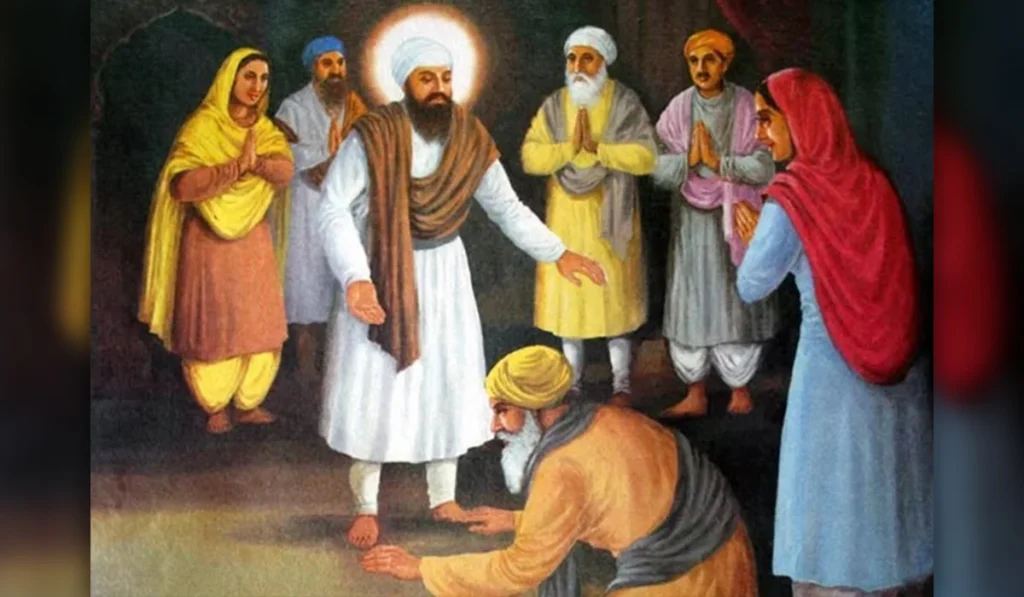
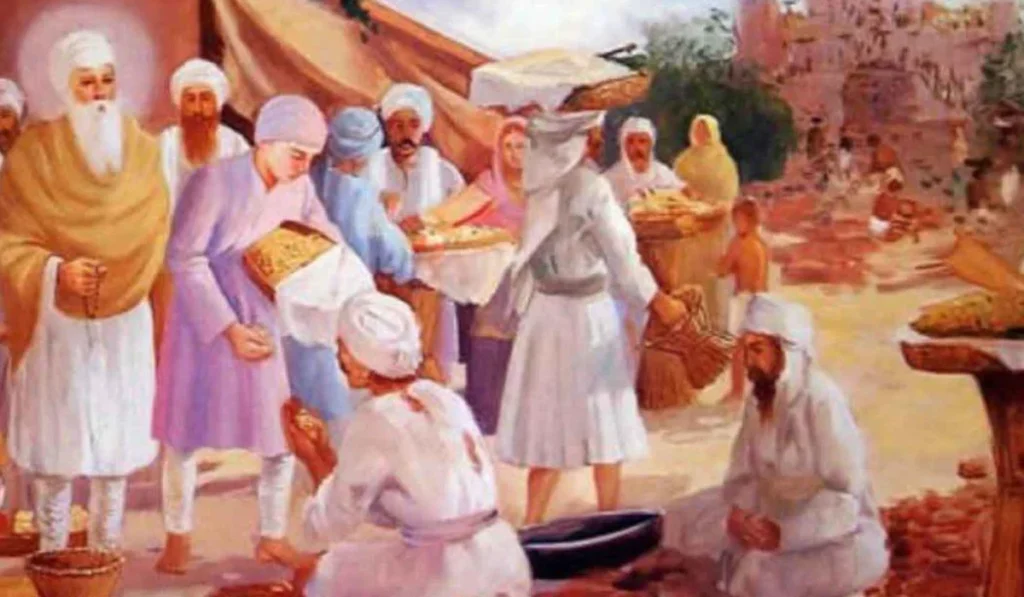
He had the darshan of Guru Angad Dev Ji and remained forever a Guru. Although he was a close friend of Guru Ji and Guru Angad Dev Ji also wanted to stand up and welcome him in respect, keeping worldly relations in mind, he already fell at the feet of Guru Sahib. He stayed at Khadoor Sahib and started serving the Guru Ghar. Cleaning the utensils in the langar, arranging water for the congregation and bringing fresh water from the Beas River for Guru Ji’s bath became part of his daily routine. Due to his immense service and his attainment of divine knowledge, Guru Ji considered him the most suitable for the Guruship and appointed him as the third Guru on 29 March 1552 AD.
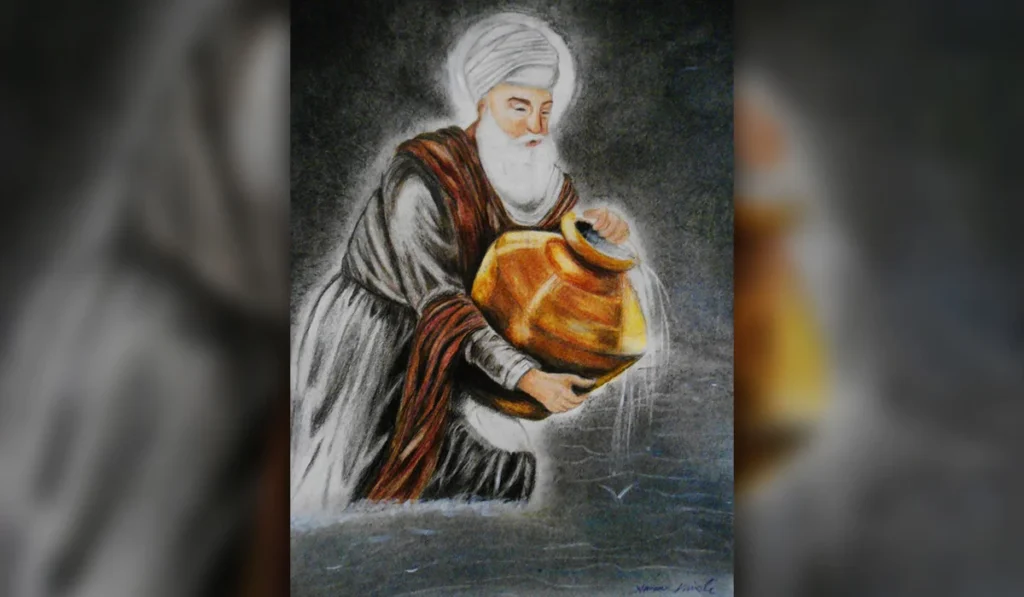
After becoming Guru, he did many revolutionary works. He established a town called Goindwal and built a baoli there to alleviate the water shortage of the people. Along with religious and spiritual education, he also made tireless efforts to eliminate social evils. He strongly opposed the practice of Sati.
Satīā eh na ākhīan jo maṛiā lag jalan.
Nānak satīā jāṇīan ji birhe choṭ maran.
Even so, whoever knows Satya, remains content.
He who serves his Lord, rises up and rises every day.’’
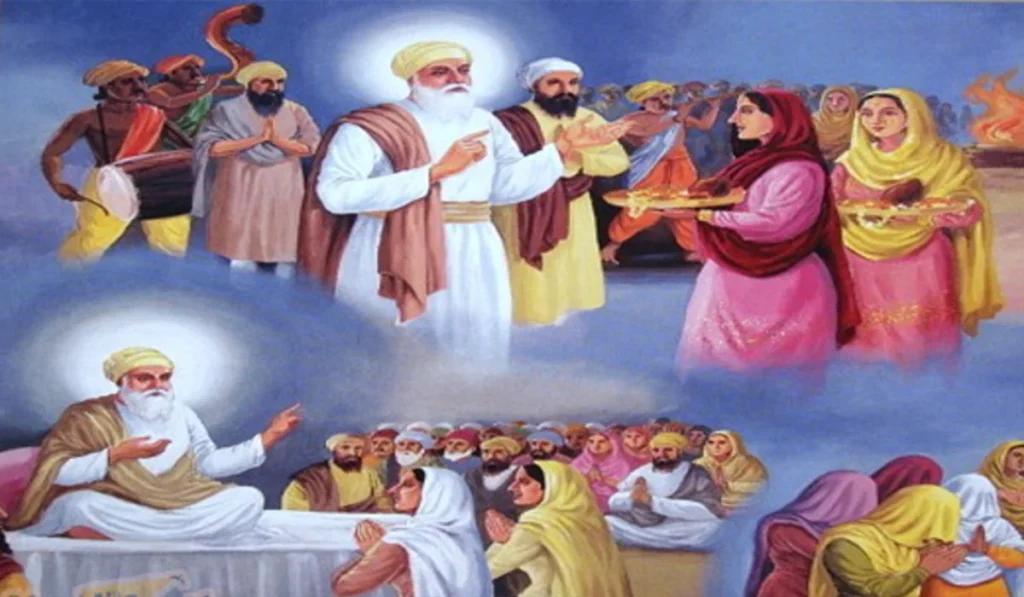
He strongly discouraged the practice of veiling and affirmed the dignity and equality of women. He opposed the prohibition of widow remarriage and upheld a widow’s right to remarry freely at her own will. He raised his voice against untouchability and casteism and called everyone the children of one Father God. Emperor Akbar and the king of Haripur also had to sit in the pangat with everyone before seeing Guru Ji and eat langar. Guru Ji’s langar arrangement was so good and the quality of the langar was so good that even Emperor Akbar could not remain without praising him. Satta Ji says about Guru Ji’s langar in his var:
Rozānā khāṇā ghī maiḏā khichṛī āe.
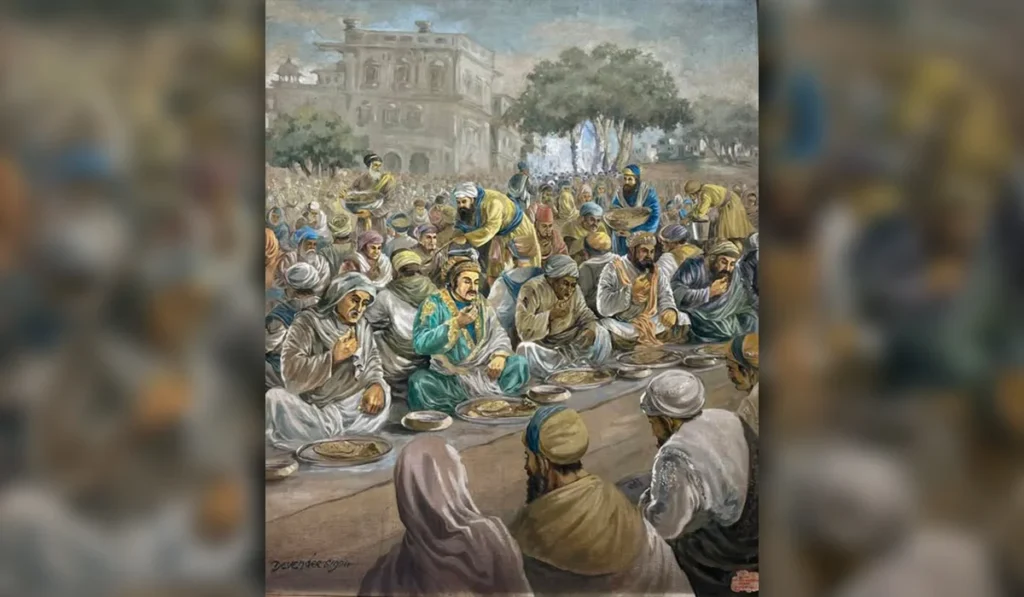
Whatever rations came in Guru Ji’s langar, they were finished every night and thrown away. Impressed, the emperor wanted to give a land for the langar. Guru Ji refused, saying that this langar runs only with the hard work of the Gursikhs. Then Akbar, considering Bibi Bhani Ji as his daughter, named a large land in the name of Bibi Bhani Ji. Where the area of Bir Baba Buddha Ji is today, that land was named in the name of Bibi Bhani Ji by the emperor. On the advice of Guru Ji, the emperor also got the tax levied on Hindu pilgrimages and Hindus waived.
Breaking the caste system, he first cured a leper Prema and then married her to Matho, the daughter of Lion Uppal. He also married Sachan Sach without considering caste. Not only that, he married others without considering caste. He also married daughters according to the same rules. He married his daughter Bibi Bhani Ji to Jetha Ji, who was considered an orphan, and his elder daughter Bibi Dani Ji to Bhai Rama Ji, an ordinary Sikh.
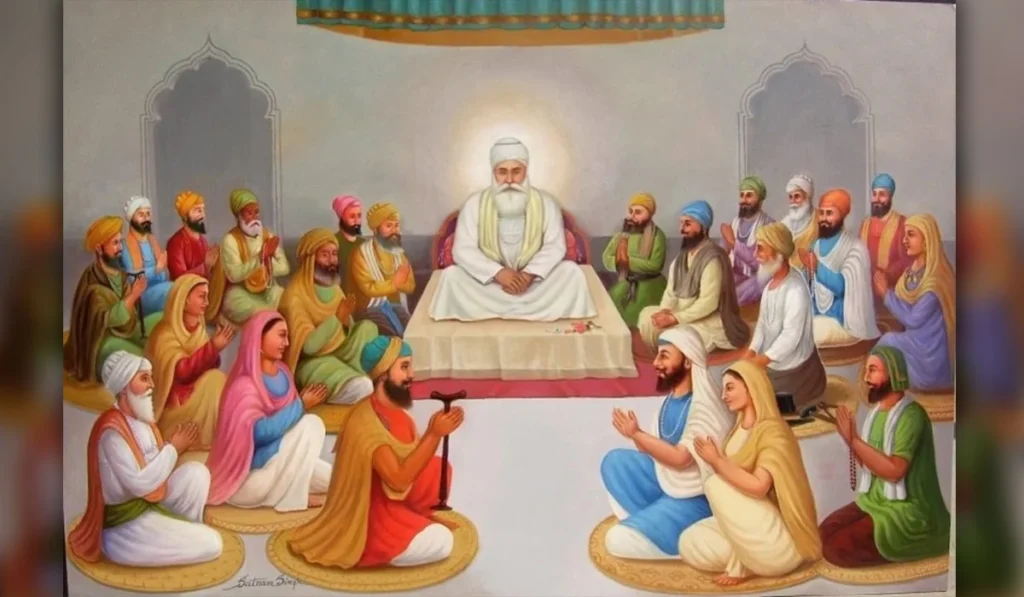
He not only talked about giving women equal status with men, but practically gave everyone equal rights in the langar and in the congregation. He ended the tradition of women removing their veils. He stopped all the bad customs that existed after the death of a person. For the propagation of Gursikhism, he divided the entire country into twenty-two parts and established twenty-two Manjis and also appointed 22 preachers. This was the vision of the Guru. The authority of these Manjis was not only extended to Punjab but also to the islands outside India. The heads of the 22 Manjis were not only Sikhs but people of different castes who had risen above the caste system. Allahyar Khan, who was previously a Muslim, was also the head of a Manji. Murari, who had recovered from leprosy, was also appointed as the head of a Manji. Sachan Sach, Sadharan, Sukkhan, Handal, Kedari, Kheda, Gangu Shah, Darbari, Paro, Phera, Bua, Beni, Mahesha, Mai Das, Manak Chand, Raja Ram, Rang Shah, Rang Das and Lalo were all appointed as the heads of Manjis and sent for preaching. Along with this, Aap Ji also blessed 52 generations who were very devotedly engaged in Sikh preaching. During the time of Guru Ji, Sikhism spread a lot and people of every caste and religion started embracing Sikhism. It was he who instructed Guru Ram Das Ji to establish the city of Sri Amritsar Sahib to establish a great center of Sikhism.
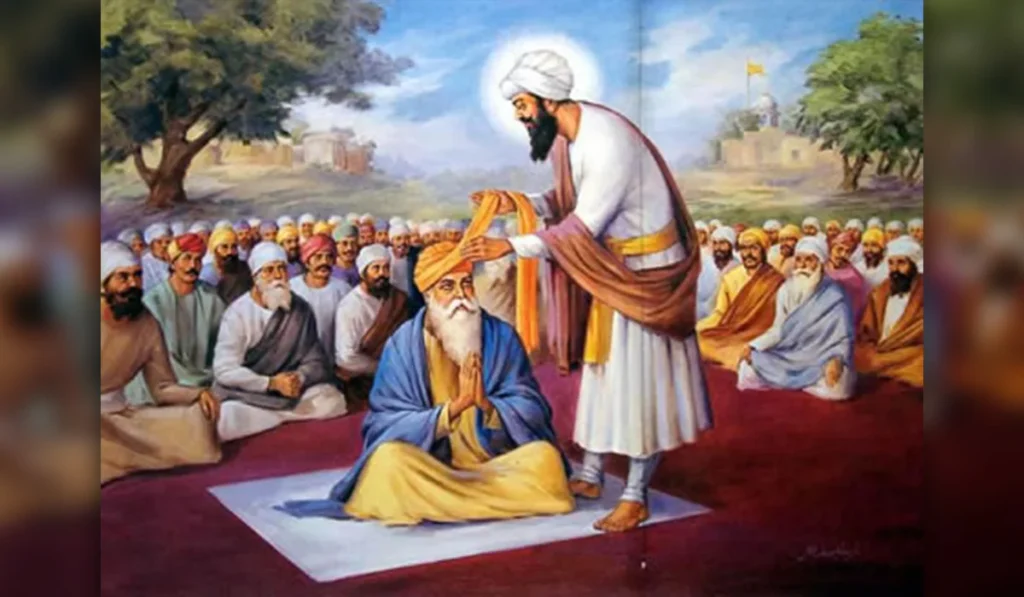
Guru Ji considered his two sons Baba Mohan Ji and Baba Mohri Ji unfit to become the head of Sikhism and named Bhai Jetha Ji Ram Das and appointed him as the fourth Guru. Guru Ji appointed Guru Ram Das Ji as his Guru on 1 September 1574 AD (2 Assu Sammat 1631) and passed away.
Bhat Kirat Ji writes about him:
Nānak nām arādh nirmal.
Angad te Amar Dās pargaṭiā.
Gur gur kar sadā salāhīai.

Leave a Comment