


Guru Nanak Dev Ji undertook many long journeys to spread the message of humanity, love, and equality. These journeys are known as the Udasi travels. Through these journeys he travelled widely across India, Tibet, Sri Lanka, Arabia, and Central Asia. It is believed that he undertook five major Udasis, which took about twenty-four years to complete.
Between 1500 CE and 1524 CE, Guru Nanak covered nearly 28,000 kilometres on foot. During these travels he engaged in dialogue with scholars, fakirs, and ordinary people, and opposed caste discrimination, superstition, and religious hypocrisy. His companion Bhai Mardana travelled with him and played the rabab. Through these journeys Guru Nanak spread the message of Naam (remembrance of the Divine), truth, and service, laying the foundation for Sikhism.
Journey Through Uttarakhand
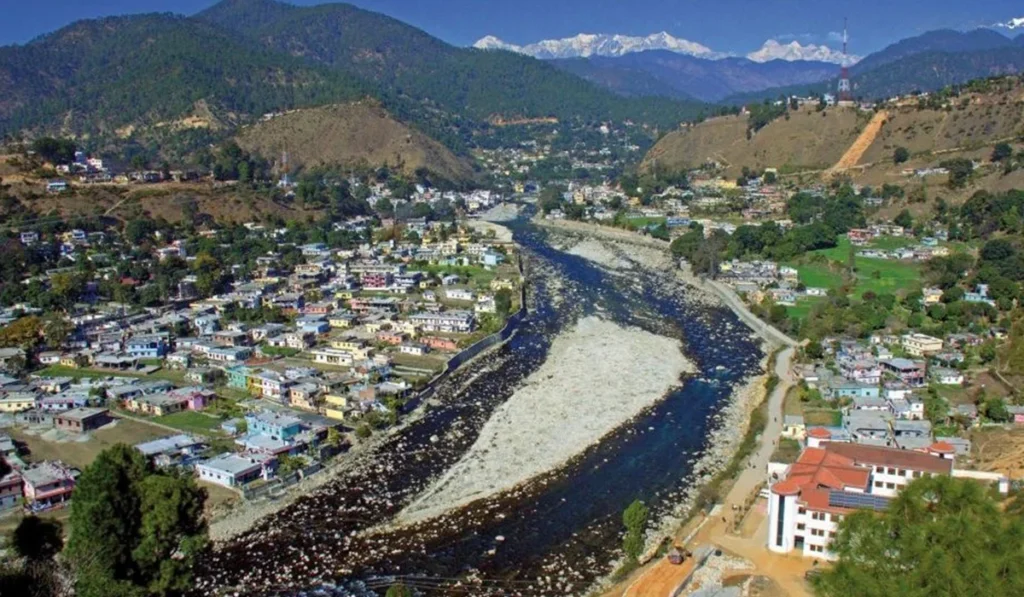
During his third Udasi, Guru Nanak Dev Ji is believed to have travelled through Uttarakhand on his pilgrimage to Kailash-Mansarovar. The traces of this journey through the difficult Himalayan passes and valleys can still be found today in various places across the Kumaon and Garhwal regions.
The ancient town of Bageshwar, located at the confluence of the Saryu and Gomti rivers in Kumaon, is considered a witness to this journey. When Guru Nanak returned from Kailash-Mansarovar and arrived there, the region was ruled by a king who had no children. Because he had no heir, the king remained deeply distressed.
Someone advised him that if he performed human sacrifice to please God, he would be blessed with a son. Desperate to have a child, the king was willing to go to any extent. Every day his soldiers would seize a person from the town and bring him for sacrifice. Gradually, this atmosphere of superstition and fear spread like a shadow over the lives of the townspeople. The people were forced to live in helpless terror.
Guru Nanak’s Arrival
Around this time Guru Nanak Dev Ji arrived in Bageshwar along with his companions Bhai Mardana and Bhai Bala. According to tradition, he camped on the banks of the Gomti River. After bathing, Guru Ji asked Bhai Mardana to play the rabab and, with the gentle proclamation “Vaani has come!”, began singing Gurbani.
The divine singing of Guru Nanak filled the hearts of the local people with a new sense of hope.
At the same time, the king’s soldiers were searching for someone to sacrifice. Terrified people began running in all directions. The soldiers seized Guru Nanak Ji and Bhai Mardana by force and brought them before the king.
According to the tradition, the moment the king saw Guru Nanak Ji, he was deeply moved by his radiance and peaceful presence.
The King’s Transformation
Guru Nanak then spoke to the king in simple yet profound words. He explained that all creation is the offspring of the same Divine Being. Killing living human beings and offering them to lifeless idols cannot please God. The true path of religion lies in compassion, truth, and love, not in violence and fear.
The king’s heart changed. He bowed before Guru Ji and asked forgiveness for his actions, seeking guidance.
According to tradition, Guru Ji advised him to light a lamp daily and remember God with a sincere heart. The king followed this instruction and soon he was blessed with a son. He considered this a result of Guru’s grace.
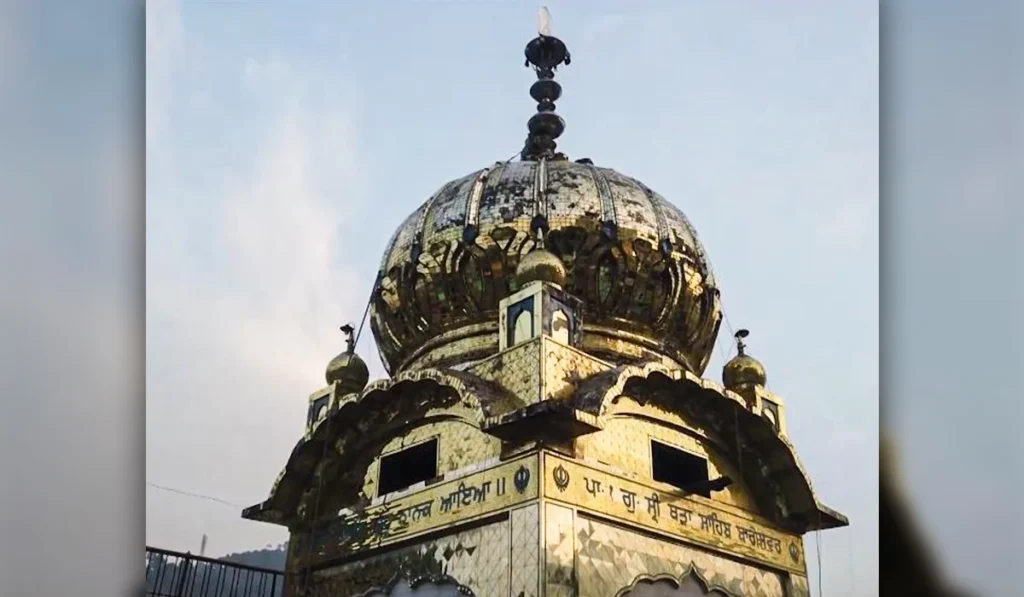
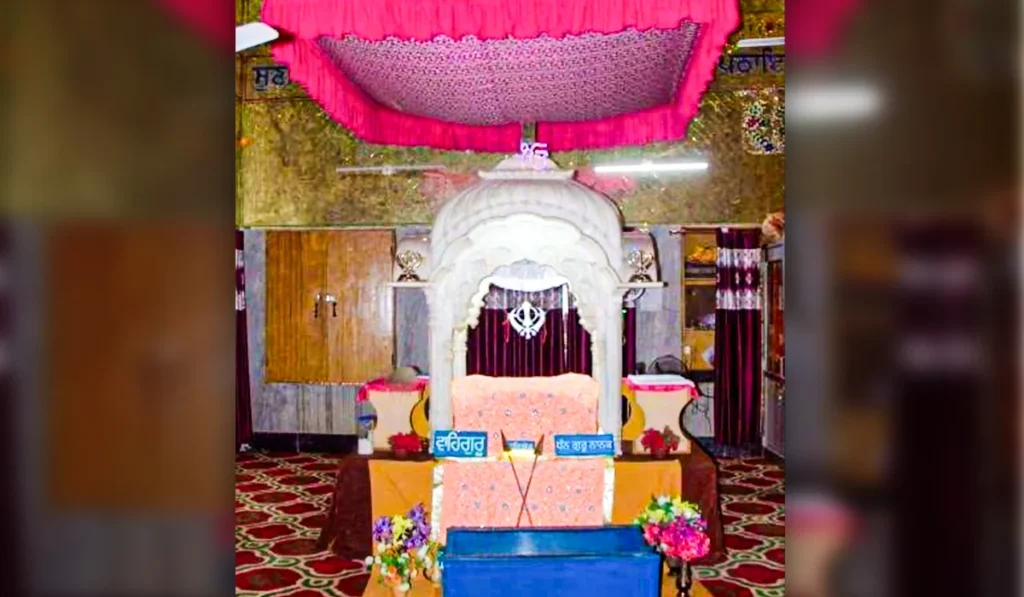
Out of gratitude, he donated the land where Guru Nanak had stayed. That place later became known as Gurdwara Thada Sahib.
Even today, the gurdwara established through Guru Nanak’s blessings is regarded as one of the most revered religious sites in the Kumaon region.
The Legend of Peepal Sahib
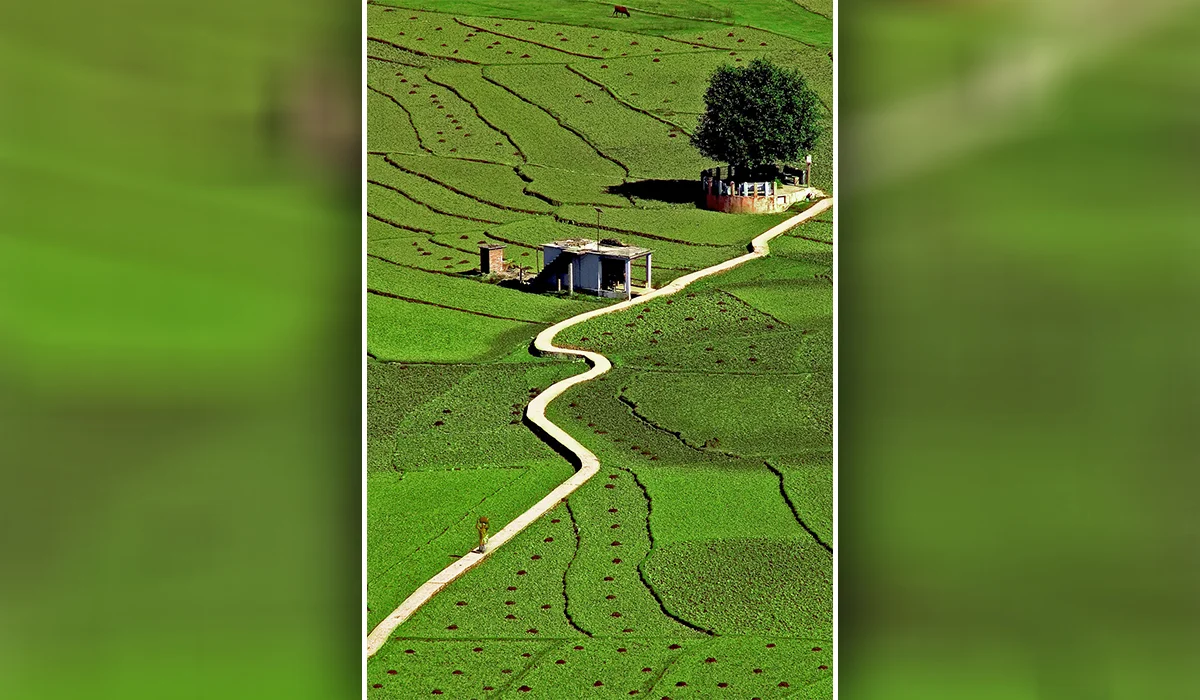
Another popular legend associated with Bageshwar is known as Peepal Sahib. It is said that Guru Nanak Dev Ji sat under a dry peepal (sacred fig) tree near the banks of the Gomti or Saryu river. Through his presence and kirtan, the dried tree became green again.
Even today devotees remember that green tree standing in the fields as Guru’s Peepal or Peepal Sahib.
This story is not merely a tale of a miracle. Rather, it symbolises the life philosophy of Guru Nanak, which emphasizes the unity between the animate and the inanimate, between human beings and nature.
Other Sites in Uttarakhand
References to Guru Nanak’s travels in Uttarakhand are also found at other places. For example, Nanakmatta Sahib in Udham Singh Nagar is also associated with his third Udasi, where another story about a peepal tree turning green is widely known.
Thus the Himalayan region of Uttarakhand was not only part of Guru Nanak’s geographical journey but also a centre of deep spiritual dialogue and transformation.



Leave a Comment