



In today’s world, smartphones and the internet have become an inseparable part of our lives. However, the most significant and concerning impact of this digital revolution is being seen on our children.
The growing addiction to mobile phones and the unmonitored use of social media have created serious risks for children’s mental, emotional, and social development.
Digital Growth vs Digital Risks
In the digital age, the internet, smartphones, and social media have influenced every aspect of human life. From access to information to education, entertainment, and communication, digital platforms have become essential to modern society.
However, with increased use of technology, new social and psychological challenges are also emerging, especially among children and adolescents.
Ban or Balanced Use?
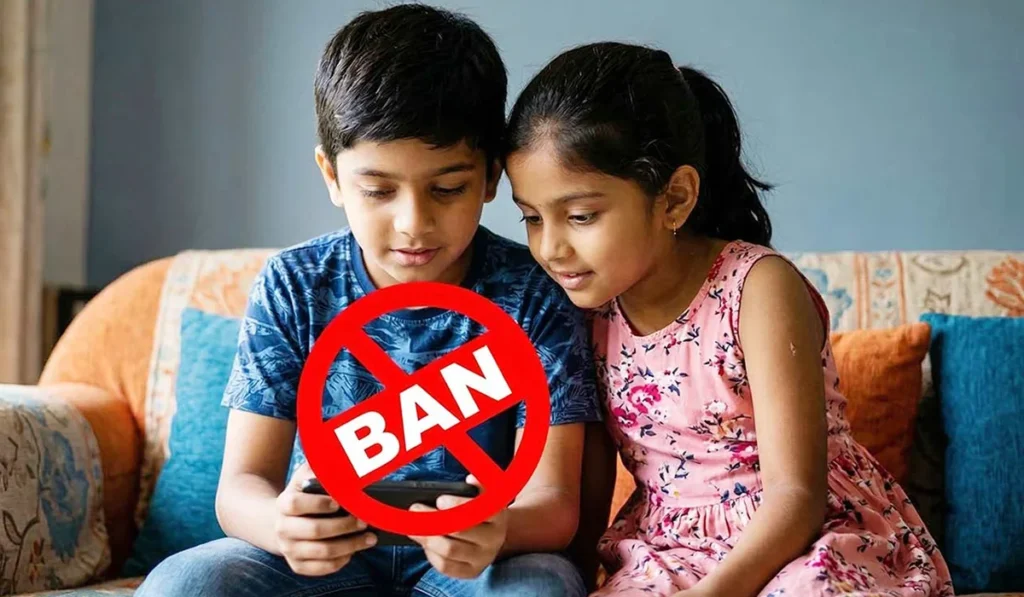
Experts suggest that digital content cannot be the same for all age groups. It should be divided into three broad categories:
Ages 8–12
• Suitable content: animations, educational games, science-based content, moral stories
• Children at this age are highly impressionable
• Exposure to violent or disturbing content should be strictly avoided
Ages 13–16

• Need more analytical and educational content
• Examples: science, history, career guidance, healthy relationship content
• Age verification systems should be mandatory to restrict inappropriate access
18+ Youth
• Full freedom can be given
• But responsible usage remains essential
Is a Complete Ban Effective?
There is often a demand in society to impose a complete ban on social media for children.
However, experts and policymakers believe that such bans can backfire. When something is restricted, children may develop greater psychological curiosity toward it.
In such cases, young users may secretly access the internet’s “dark web” or unsafe spaces, which can be even more dangerous.
A Global Concern, Not Just Punjab

This issue is not limited to Punjab or India.
Countries across the world are attempting to regulate children’s digital access:
• Australia has recently moved toward restricting social media use for children under 16
• Indian states like Karnataka and Andhra Pradesh are also considering age verification and access limitations
Research Insights: Impact on Mental Health
A study conducted by Punjabi University found that addiction to smartphones and social media is significantly affecting the mental, emotional, and social development of young people.
Research indicates increasing cases of:
• Depression
• Anxiety
• Reduced attention span
• Declining academic performance
As one expert rightly said:
“Young minds are highly sensitive, and unregulated exposure to digital platforms can have long-term effects on behaviour, values, and mental health.”
Punjab Government Initiatives

The Punjab government has taken several practical steps to address this challenge:
Cyber Jaago Campaign
• Run by Punjab Police’s cybercrime division with IT department support
• Teachers from 3,968 government high schools trained as “Digital Advisors”
• They guide students on:
Cyberbullying
Fake news
Explicit content
Screen-time limits
Integrated Cyber Helpline
• Cyber helpline 1930 linked with Dial 112 emergency system
• Enables quick reporting of:
Online fraud
Cyber harassment
Child-related digital crimes
Project Jeevan Jyot 2.0
• District-level task forces formed
• Focus on preventing online exploitation of children
• Ensures rapid response and protection
Legal Framework and Future Strategy

Under India’s Information Technology Act, 2000, rules can be framed to enforce age verification on social media platforms for minors.
Additionally, platforms can be required to implement child-specific filters and safeguards.
However, this issue cannot be solved by regulation alone.
The Way Forward: Shared Responsibility
A sustainable solution requires collaboration between:
• Parents → Set digital schedules and monitor usage
• Teachers → Educate students about online risks
• Society → Encourage healthy digital behaviour
• Government → Strengthen policy and enforcement
In the age of AI, children should be given access to the digital world, but also a strong protective shield in the form of:
• Awareness
• Supervision
• Age-appropriate guidelines
Children are our future. They do not need digital addiction; they need digital literacy and wisdom.



Leave a Comment