
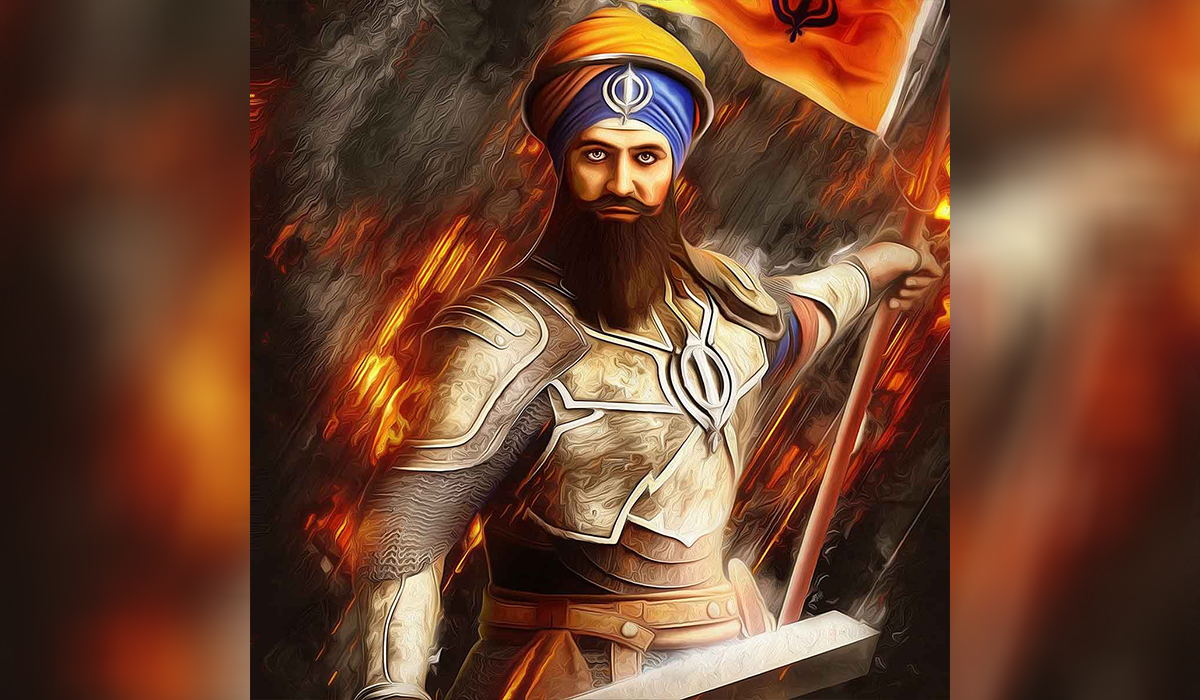

Banda Singh Bahadur’s Victory That Ended Wazir Khan’s Terror
A governor who buries children alive does not expect to answer for it. Wazir Khan, the Nawab of Sirhind, must not have imagined he would have to pay for his actions year later. But, on 12 May 1710, his luck ran out.
To understand what happened at Chappar Chiri that morning, one must go back six years to the cold banks of the Sarsa River and the deserted fort of Anandpur Sahib, where a family was torn apart, and a faith was pushed to its limits.
The Crimes That Demanded an Answer
In December 1704, under relentless pressure from Mughal forces and the hill chieftains who had sworn safe passage but then broken their word, Guru Gobind Singh was compelled to abandon the fort of Anandpur Sahib. What followed was not merely a military retreat. It was a catastrophe visited upon a family.
At the Sarsa river crossing, the Guru’s household was separated in the chaos. His two younger sons, Baba Zorawar Singh and Baba Fateh Singh, were taken captive along with their grandmother, Mata Gujri, and brought to Wazir Khan in Sirhind before. The boys, aged nine and seven, refused to abandon their faith. Wazir Khan had them bricked alive within a wall. Mata Gujri was martyred in the cold tower where she had been imprisoned. The two elder sons fell in battle at Chamkaur.
The men most directly responsible for these killings came from Samana. The executioner who had beheaded Guru Tegh Bahadur in Delhi was a Sayyid from that town. The same town supplied the fatwas and the two Afghan headsmen who killed the young Sahibzadas. Sirhind and Samana had become, in the minds of the Sikhs, the twin seats of organised cruelty. And Wazir Khan stood at the centre of it.
The Man Sent to Settle Accounts
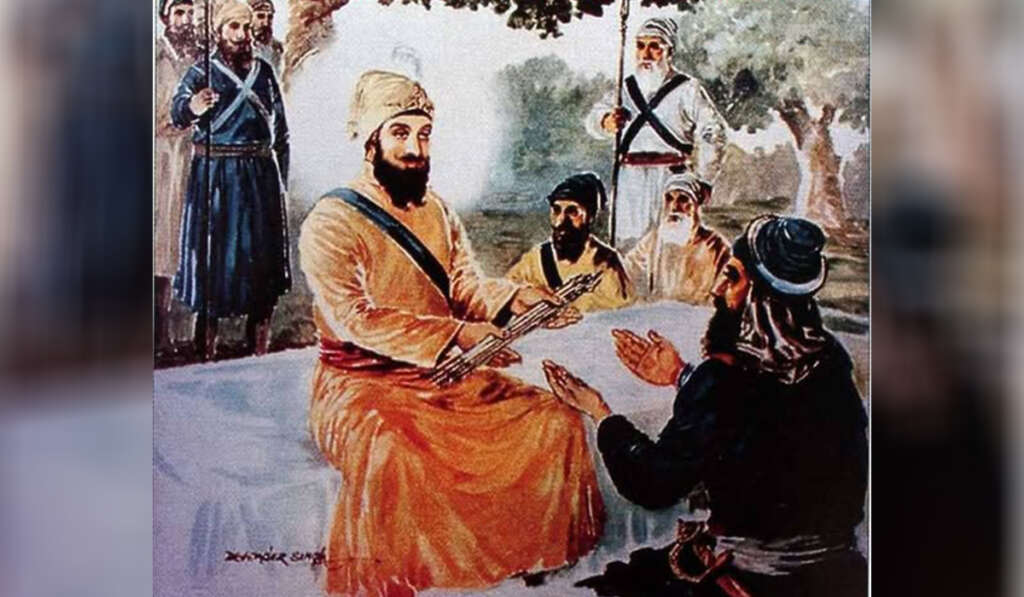
After Aurangzeb died, Guru Gobind Singh travelled south to meet Prince Muazzam, who would rule as Bahadshah. It was in the Deccan that the Guru encountered a fierce ascetic called Madho Das Bairagi, a man who had cultivated extraordinary discipline and withdrawn entirely from worldly affairs.
The Guru sat in his hermitage without permission. When Madho Das returned and found a stranger at ease in his home, he attempted every trick in his practice to unsettle the visitor. Nothing worked. He finally stood before the Guru and said, “I am your slave.”
The Guru accepted him. Madho Das received the Khalsa initiation and the name Banda Singh Bahadur. He was given letters of authority to the Sikhs of Punjab, a coconut as a mark of command, and five arrows from the Guru’s own quiver. He was sent north with a mission that the Guru himself described not as revenge but as the establishment of justice.
The Khalsa Assembles
When word reached the scattered Sikh jathas across the Punjab that Guru Gobind Singh had appointed Banda Singh as the Panth’s commander and that Sirhind was the objective, men came from every direction. Fateh Singh, grandson of Bhai Bhagtu, arrived early with his men. Karam Singh, Dharam Singh, and Nagahia Singh from the line of Bhai Rupa came with their own companies. From Saloudi came Ali Singh and Mali Singh. The Phulkian house, represented by Ram Singh and Tarlok Singh, sent soldiers and supplies even though the chiefs themselves did not march.
Within a matter of months, armed Sikhs from the Majha, the Malwa, and the Doaba had converged into a force that dwarfed anything Banda Singh had carried from the south. These were men who had taken the double-edged sword’s initiation from Guru Gobind Singh himself and had absorbed the teaching that tyranny is not to be endured but confronted. They did not march for plunder. They marched because they had been waiting for exactly this.

Banda Singh first struck Samana, the town of the executioners. Three days of fighting ended in a Khalsa victory. He held the town for eight days, then moved through Ghuram, Thaaska, Shahbazgarh, and Kunjpura, the natal village of Wazir Khan himself. He took Kapuri, where a local administrator named Qadam Din had built a long record of assault against Hindu women and commoners. Qadam Din was killed. Sadhaura and Mukhlispur followed.
As Banda Singh turned toward Sirhind, the jathas from Anandpur Sahib and Kiratpur joined the column. By the time the Khalsa came within a day’s march of the city, the army had grown into a force that could not be measured easily.
The Battle of Chappar Chiri
Wazir Khan had not been idle. He raised the Haidari standard, declared the coming battle a jihad, called Muslim soldiers from across the Punjab, and framed the fight in religious terms designed to produce a maximum response. He had a cannon. He had trained cavalry. He had the resources of one of the Mughal Empire’s most prosperous provincial capitals.
The Sikhs had swords against cannon, spears against war elephants, and a shared memory of what Wazir Khan had done to two small boys and an older woman in a cold tower.

On 12 May 1710, at the plain of Chappar Chiri, ten to twelve miles from Sirhind, the two forces met. The fighting was severe. Many Sikhs were killed. Wazir Khan personally rode out to Baba Baj Singh with a lance. Baj Singh seized the lance, wounded the governor’s horse, and took an arrow in the arm for his trouble. As Wazir Khan drew his sword and pressed forward, Bhai Fateh Singh, who stood close by, cut him from shoulder to hip. The governor fell. His army dissolved.
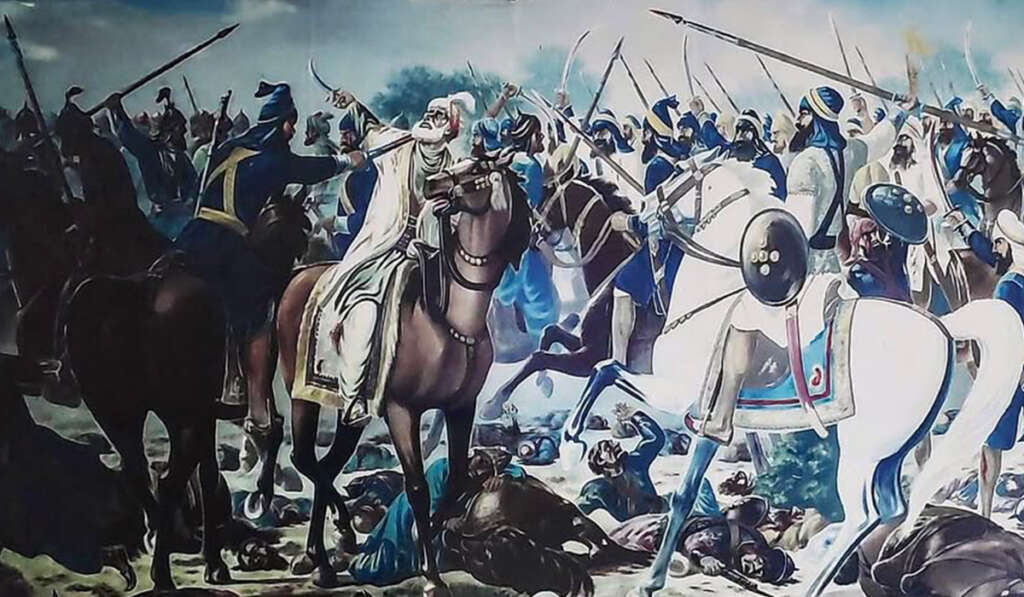
The Khalsa’s battle cry rose over Sirhind. The Nishan Sahib was planted in the city. Succha Nand, the Diwan who had actively worked to condemn the young Sahibzadas, was put to death. Every man identified as a direct participant in the events of 1704 was killed. Banda Singh, however, spared Malerkotla entirely. It was Sawab Sher Mohammad Khan who raised his voice in formal protest at the Sirhind court when the sentence on the children was announced. That act of conscience was remembered and honoured.
The Shape of What Followed

Baba Baj Singh was appointed Governor of Sirhind. Ali Singh of Saloudi became his deputy. Samana was placed under the administration of Fateh Singh. Thanesar was assigned to Ram Singh and Baba Binod Singh.
Banda Singh Bahadur then extended Khalsa authority across a wide belt of northern India. He planted the Khalsa standard in the Yamuna-Ganges Doab, took Saharanpur and Jalalabad, brought Jalandhar Doab under control, and carried the campaign through Amritsar, Batala, Kalanaur, and Pathankot. He issued coins in the names of Guru Nanak and Guru Gobind Singh. Sirhind alone yielded an annual revenue of fifty lakh rupees.
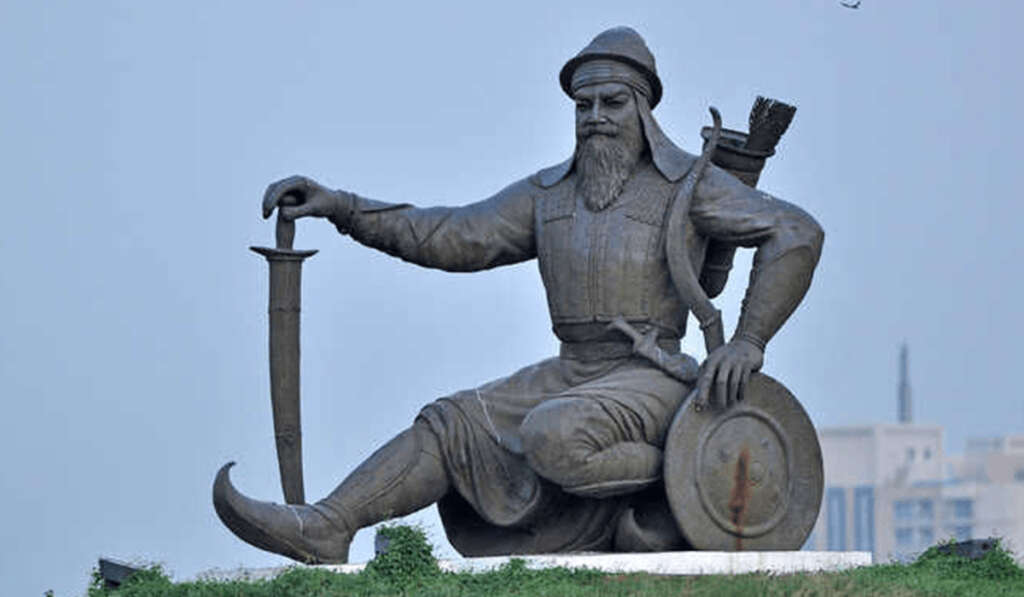
He abolished the zamindari system across the territories he controlled and returned ownership of agricultural land to the farmers who worked it. He promoted men from lower castes to senior military positions, a deliberate reversal of the social order into which they had been born.
His campaign was never directed against Muslims as a community. Peace-minded Muslims supported him alongside Hindus. His violence was specific. It was aimed at cruelty in office and at those who had used state power to kill the defenceless.
The Mughal state eventually caught him at Gurdas Nangal with seven hundred of his men. He was taken to Delhi, where his young son Baba Ajay Singh was killed before him, followed by his companions one by one. Banda Singh Bahadur did not break. In June 1716, he was executed.
He had set out not to destroy a city but to end a particular era of licensed brutality. On 12 May 1710, he succeeded.
Leave a Comment