

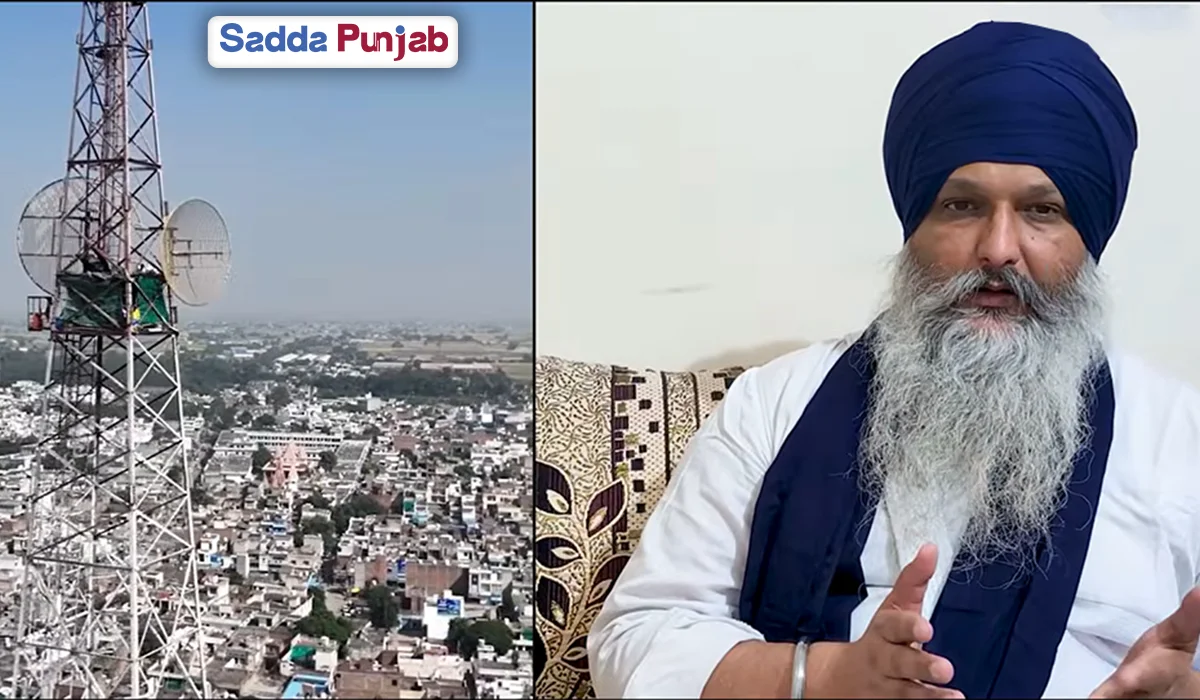

Punjab has long been known as the land of courage, where the Sikh community has repeatedly made sacrifices to uphold the honour of their Guru. In this legacy, the name of Gurjit Singh Khalsa from Samana, Patiala, has now been added. Through the “Khalsa Dharam Yudh Morcha,” he undertook an extraordinary protest to demand stronger action against incidents of sacrilege of Guru Granth Sahib Ji.
In a recent interaction, Gurjit Singh shared his experience of spending 18 months and 12 days atop a tower, turning his protest into a symbol of resilience and faith.
The Trigger: Pain That Turned Into Protest

Gurjit Singh explains that repeated incidents of sacrilege had deeply hurt the Sikh psyche. Each such incident felt like a wound to the collective conscience.
* He describes reaching a point of “do or die” determination
* According to him, routine protests on the ground were often ignored
* This led him to choose a high-visibility, high-risk form of protest — climbing a tower
For him, it was not just a protest, but a call to awaken attention.
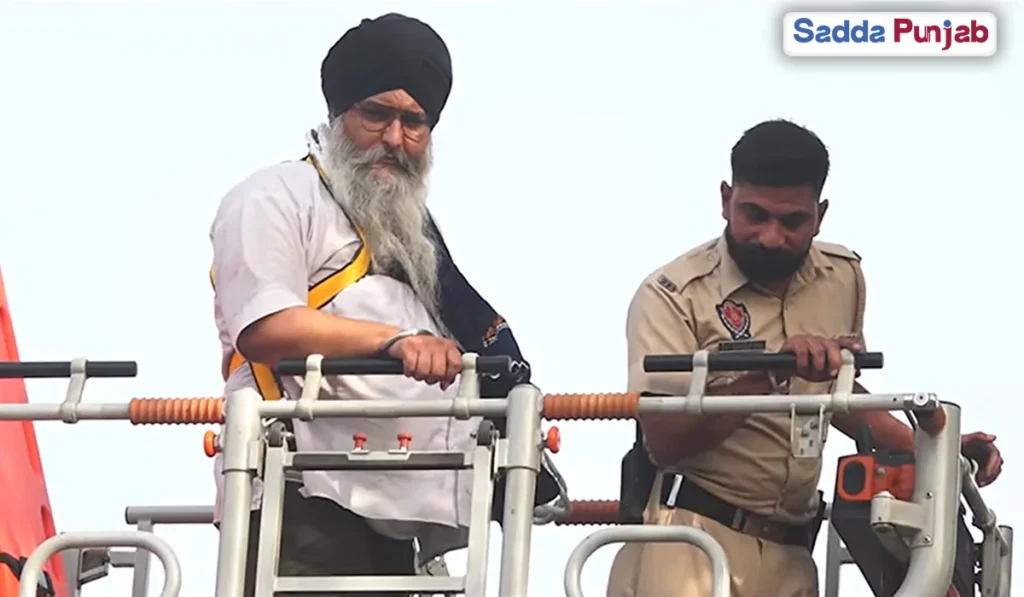
18 Months on a Tower: A Test of Endurance

Spending over a year and a half on a small wooden plank is physically extreme. Yet Gurjit Singh frames it differently:
* He describes the experience as being “in the Guru’s protection”
* Harsh weather, physical discomfort, and isolation were constant challenges
* Despite this, he says faith replaced fear and discomfort
This part of the story is less about logistics and more about mental and spiritual endurance.
The Demand and Its Historical Context
The demand for stricter anti-sacrilege laws is not new.
* It traces back to 1982 Anandpur Sahib Resolution discussions
* Over decades, successive governments were accused of ignoring the issue
* This protest aimed to push the demand into actionable policy space
Eventually, the Punjab government agreed to move toward stronger legal provisions, which supporters of the movement see as a key outcome.
A Message to the Community
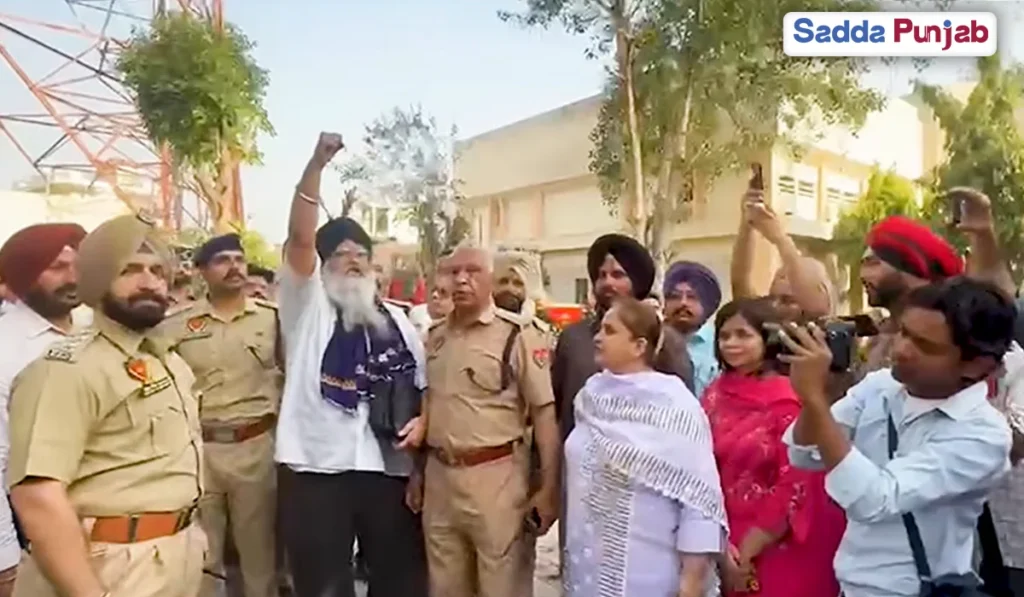
After the protest, Gurjit Singh appealed to the Sikh community with a clear message:
* Stay connected to Guru Granth Sahib Ji
* Avoid following misleading or exploitative figures
* Strengthen unity through faith and discipline
His appeal frames the issue not just as legal or political, but deeply spiritual.
Why This Story Matters
This episode stands out for a few reasons:
* Duration: 18 months is an unusually long continuous protest
* Method: Non-violent but high-risk symbolic resistance
* Impact: Renewed debate around sacrilege laws in Punjab
* Narrative power: A blend of faith, protest, and identity
At the same time, it’s important to note that such movements are often viewed differently by different groups — politically, socially, and legally. The full impact of the demands depends on how policies are implemented going forward.
The Larger Takeaway
Gurjit Singh Khalsa’s protest reflects a broader pattern seen in Punjab’s history — where faith, identity, and resistance often intersect.
Whether one views it as a spiritual stand, a political pressure tactic, or a social movement, it undeniably raises a central question:
How does a society respond when faith and justice feel threatened at the same time?
That question remains open — and relevant.

Leave a Comment