
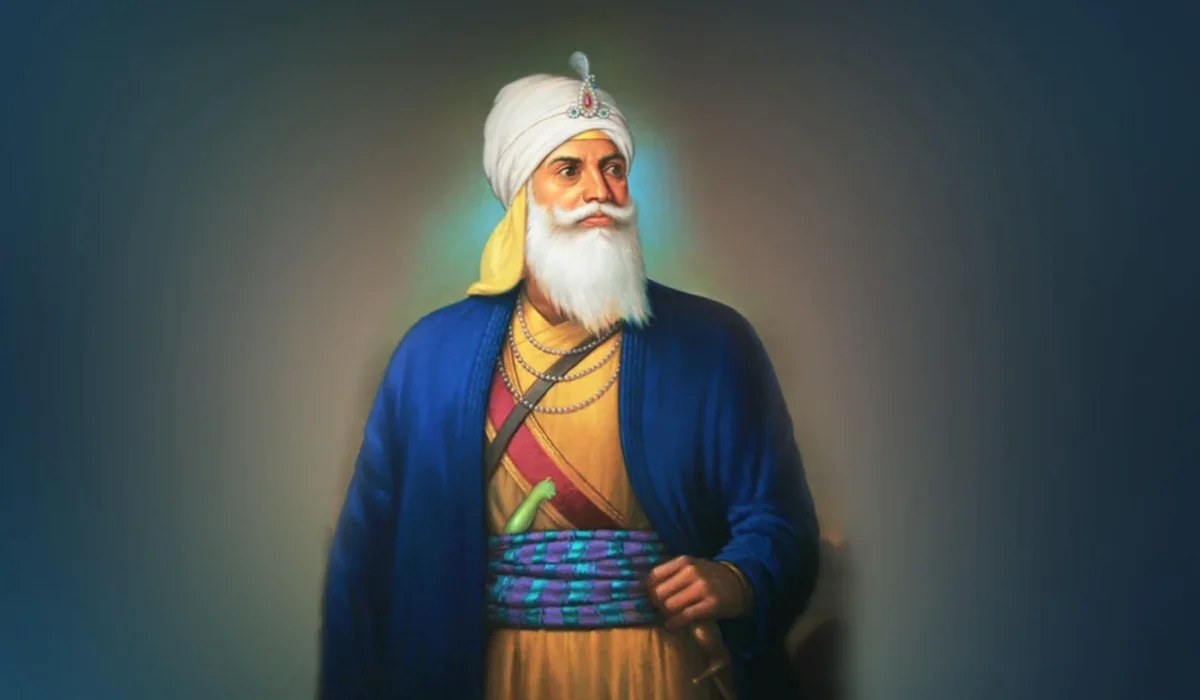

Sikh history is full of sacrifices, martyrdoms, massacres, and massacres. If we look at the history of the world, these facts come to light that the number of sacrifices and martyrdoms that have come to the share of Sikh history is not the share of any other nation. A martyrdom like the martyrdom of the ninth Guru Nanak Patshah of the Sikhs, the ninth light of the Sikhs, Guru Tegh Bahadur Ji, is not found on any page of world history. Guru Tegh Bahadur Ji was martyred during the time of Mughal Emperor Abu-Zafar-Muhi-ud-Din Muhammad Aurangzeb and Guru Gobind Singh Ji also had to leave the fort of Anandpur Sahib. Aurangzeb and the Mughal emperors after him wanted to end the Sikhs’ search for freedom from Punjab. But the Khalsa established by Guru Gobind Singh Ji was on the rise day by day. If we talk about the time after Baba Banda Singh Bahadur, then in the 18th century, the Sikh community suffered a lot. The Sikhs made many sacrifices, many martyrs were killed. But still, in this century, the Sikh community also produced a great warrior, whose name is famous among the Sikh community as Jassa Singh Ahluwalia. Sardar Jassa Singh Ahluwalia was a high-ranking Jathedar and a brave warrior of the Panth. Whose heart was full of pride and desire to live with freedom. This diamond emperor of the Sikh Panth was born on 03 May 1718 AD in the house of Sardar Badar Singh in the village of Ahlu in Lahore. According to the record of Jassa Singh Ahluwalia in the Kapurthala state, the elders of Jassa Singh were Bhatti Rajputs from Jaisalmer. According to the facts, the Rajput king of Jaisalmer, Rana Hari Rai, left Jaisalmer and came to Punjab because he had refused to marry his niece to the Mughal emperor Jalal-ud-din Muhammad Akbar. The descendants of Rana Hari Rai intermarried with the Jats and one of them, Sadhu Singh, married into the Kalal (Kaler) family and called himself Ahluwalia Kaler. Jassa Singh Ahluwalia was born to Sardar Badar Singh, the great-grandson of Sardar Sadhu Singh. Sardar Jassa Singh was only five years old when his father’s shadow lifted from his head. Being a devotee of Guru Gobind Singh Ji, Mata Sundari Ji took Jassa Singh and his mother to Delhi in 1723 AD. Where Jassa Singh was educated and brought up. While living in Delhi, Jassa Singh Ahluwalia acquired knowledge of Gurmukhi Sikhism, Persian language and also learned to sing kirtan with two taras (a small form of tanpura). In 1730 AD, Jassa Singh Ahluwalia’s maternal uncle Sardar Bagh Singh brought him to Punjab with him. Mata Sundari Ji gave Jassa Singh a shield, a quiver of arrows and a silver spear at the time of farewell. Mata Sundari Ji took care of the boy’s higher education and also wrote a letter to Nawab Kapur Singh for the education of weapons. Nawab Kapur Singh made Jassa Singh his adopted son and gave him religious and moral education. From March 1733 AD until the death of Nawab Kapur Singh in 1753 AD, Jassa Singh Ahluwalia became Nawab Kapur Singh’s shadow and remained with him. On the day of Diwali in 1745, the entire army of Budha Dal and Tarna Dal was divided into 25 divisions. Horsemen were included in these 25 divisions and Nawab Kapur Singh was made the supreme commander of these groups and Jassa Singh Ahluwalia was appointed the head of one of these groups. Sardar Jassa Singh Ahluwalia gained more recognition among the entire Sikh community when on the day of Baisakhi in 1748 AD, the Gurmata was passed at Akal Takht in Amritsar Sahib in the presence of Sarbat Khalsa and Jassa Singh Ahluwalia was appointed the head of the entire army of Dal Khalsa. Nawab Kapur Singh, a day before his death, left his son Khushal Singh and appointed Sardar Jassa Singh Ahluwalia as the head of the entire Sikh community on 09 October 1753. Thus, Sardar Jassa Singh Ahluwalia worked for the advancement of the Sikh community as the fourth Jathedar of the Budha Dal and as the Jathedar of the Akal Takht from 9 October 1753 to 23 October 1783.
Sardar Jassa Singh Ahluwalia’s maternal uncle Sardar Bagh Singh Ji was the founder of the Ahluwalia Misl. Since he had no sons of his own, he also made Sardar Jassa Singh the Sardar of the Ahluwalia Misl. Sardar Jassa Singh Ahluwalia led the Sikh Panth well in Chhota Ghallughara. During this time, his status had become so high in the Sikh community that the Sikhs considered it an honor to take Amrit from his hands. After the death of Zakaria Khan, his son Yahia Khan was also bent on erasing the name and mark of the Sikhs. Under his instructions, Diwan Lakhpati Rai and his brother Jaspati Rai were taking action against the Sikhs. Before the small Ghallughara 1746, when the Sikhs were camped in Aminabad, the residents of the village of Godawala informed the Faujdar of Aminabad, Jaspati Rai. At that time, the Sikhs were camped in Gurdwara Rori Sahib near Aminabad with 2000 horsemen. The Diwan sent a message that they should immediately leave that Gurdwara, but the request made by the Sikhs is as follows:
The Singhs have been suffering from hunger for many days.
I have written and sent a prayer to this Khalsa Jaspati.
I have read this letter to Jaspati.
We are not yours.
We are Turks.
We want to take the price of the goods.
I will buy you the city.
After reading this reply, Jaspati Rai attacked the Sikhs with his elephants and horses. A brave Sikh recruit named Nibahu Singh grabbed the tail of Jaspati Rai’s elephant and with lightning speed, severed Jaspati Rai’s head from the torso. When this news reached Diwan Lakhpati Rai, he asked Yahia Khan to take action against the Sikhs. Yahia Khan gave Diwan Lakhpati Rai a large amount of wealth and while taking action against the Sikhs, a small battle took place in Chhamb and Kathua of Kahnuwal in 1746. In which the Sikhs suffered losses. This group of Sikhs was led by Sardar Jassa Singh Ahluwalia and Sardar Sukha Singh Mardi Kambo. On 12 June 1746, Sardar Jassa Singh Ahluwalia, with his political acumen and foresight, brought the Sikhs out of this danger. Although the Sikhs were massacred, the intention of Diwan Lakhpati Rai was not fulfilled. Similarly, after becoming the Sardar of the entire Sikh community in 1753, Jassa Singh Ahluwalia worked for the betterment of the Sikh community. In 1761 AD, when Abdali was returning after defeating the Marathas after winning the third battle of Panipat, Jassa Singh Ahluwalia along with his Sikhs attacked him several times using guerrilla warfare and looted a lot of his treasure. At the same time, he freed the captive women who were being imprisoned and humiliated by the Durranis and brought them back to their homes, which is why the Sikh community of Punjab also calls him the second Bandi Chod in the history of the Sikhs after Guru Hargobind Sahib. In protest against this action, Abdali launched a sixth attack on Punjab in 1762 AD. When Abdali returned in 1761, Jassa Singh Ahluwalia and his Sikh Jathedars had captured Lahore. The Lahore Darbar was now under the control of the Khalsa. The Sikh community had now practically become the masters of Punjab. The Sikh Panth had made Sardar Jassa Singh Ahluwalia the master of the kingdom by giving him the honour of ‘Sultan-ul-Qaum’. It was at this time that Jassa Singh Ahluwalia had issued the first Khalsa currency and minted coins in the name of the Gurus. The inscriptions on the coins bear the following evidence;
Deg O Tegh Fateh, Nusrat Badrang.
Yafat Az Nanak Guru Gobind Singh.
When Abdali got information about this, he launched a sixth attack on Punjab in 1762 AD and a great massacre took place. With this attack of 1762, the Sikhs were massacred in an area of 20 miles from ‘Kup-Rohira to Gehlan’. Whether children, women or the elderly, everyone was massacred. In this great massacre, about 30,000 Sikhs were martyred in one day. All the generals of Dal Khalsa fought together. Jassa Singh Ahluwalia, Jassa Singh Ramgarhia, Sardar Charat Singh Shukerchakkia, Sardar Sham Singh Karosinghia and other Sikh generals showed the essence of bravery. When the battle ended, Sardar Jassa Singh had 22 wounds on his body and Charat Singh had 19 wounds on his body. Sardar Jassa Singh Ramgarhia and Sardar Sham Singh Karosinghia were also bleeding. According to Panth Prakash written by Bhai Rattan Singh Bhangu:
Jassa Singh ate and got injured,
Taubhi Singh Ji Ladato Jaye.
The Sikhs suffered a lot after the war ended, but with the firm determination of Sardar Jassa Singh Ahluwalia and deep and brave thinking, the Sikhs surrounded Nawab Jain Khan of Sirhind after Abdali’s return. Now the Khalsa state had again come under the control of the horses of the Sardars from Ravi to Delhi. In 1774 AD, Jassa Singh Ahluwalia conquered the Kapurthara state from Ibrahim and declared Kapurthala the capital of the Dal Khalsa. It seemed that the great Ghallughara of 1762 proved to be the foundation of the Khalsa state in a way. After the death of Abdali, the Sikhs were now fearless and impartial. But unfortunately in 1783 AD, the brave warrior of the Sikh Panth, Sardar Jassa Singh Ahluwalia, passed away. Sardar Jassa Singh Ahluwalia’s funeral was performed near the house of Baba Atal in Amritsar. Before his death, he bestowed the leadership of his misl on Bhag Singh, son of his brother Gurbaksh Singh. Due to his lifelong struggle, sacrifice for the Sikh community and political acumen, he was called a great warrior of the 18th century. It is useless to write and read the Sikh struggle of the 18th century without him.
Leave a Comment