
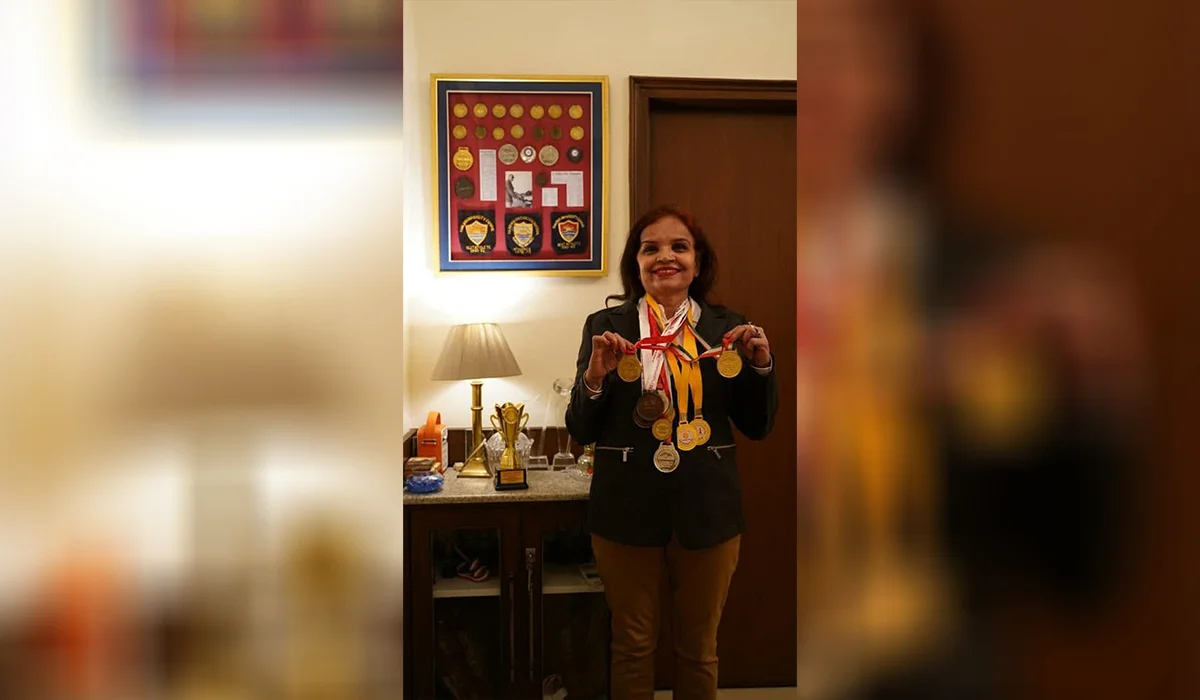

Two major brain surgeries, years of recovery, family responsibilities, and a wait that stretched across four decades. After all this, 65-year-old Opinder Kaur Sekhon from Chandigarh stepped onto an international stage in Malaysia and returned with four medals.
In doing so, she not only fulfilled a dream that had remained unfinished for 40 years but also demonstrated that some journeys take a lifetime to reach their destination.
At the 38th Malaysian International Masters Athletics Championship held in Kuala Lumpur this month, Opinder Kaur was competing against athletes from different countries. But in many ways, she was also racing against the four decades that had kept her dream on hold.
For most competitors, it was another event on the sporting calendar. For Opinder, it was the culmination of a journey that had begun in the university grounds of Punjab nearly forty years ago. Life responsibilities interrupted her sporting career. Illness tested her resolve. Yet she eventually arrived at an international podium.
By the end of the championship, she had won four medals—gold in the 400 metres and discus throw, and silver in the 100 metres and 200 metres. The achievement itself is impressive. The story behind it makes it extraordinary.
The Making of a Champion
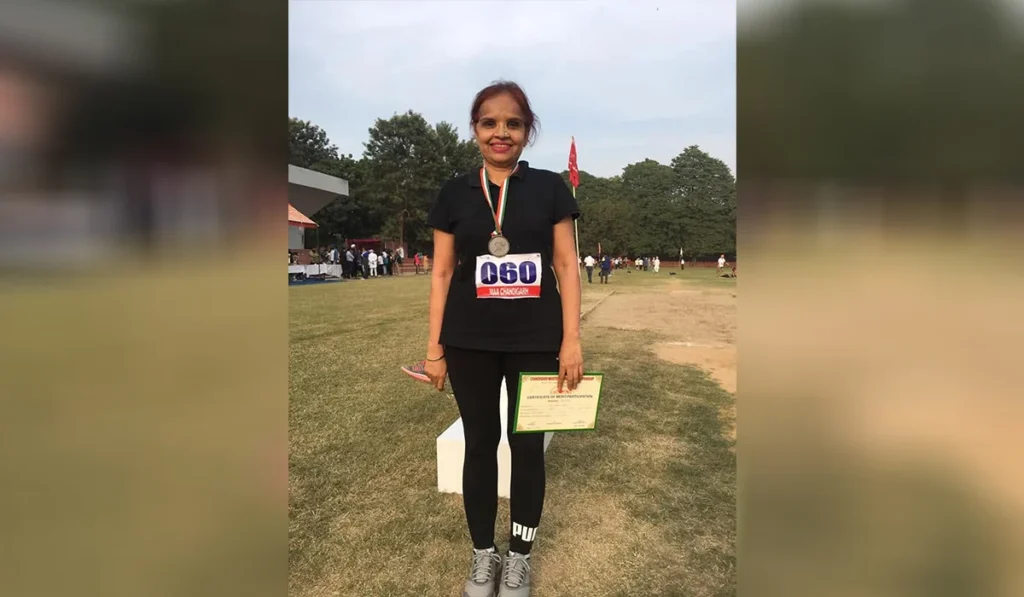
Long before she became a familiar name in Masters Athletics, Opinder Kaur was one of Punjab University’s brightest sporting stars during the early 1980s. Whenever her name was announced at a competition, victory was often expected. She was named Punjab University’s Best Athlete in both 1981-82 and 1982-83. In 1984, Punjabi University, Patiala, also honoured her as its Best Athlete.
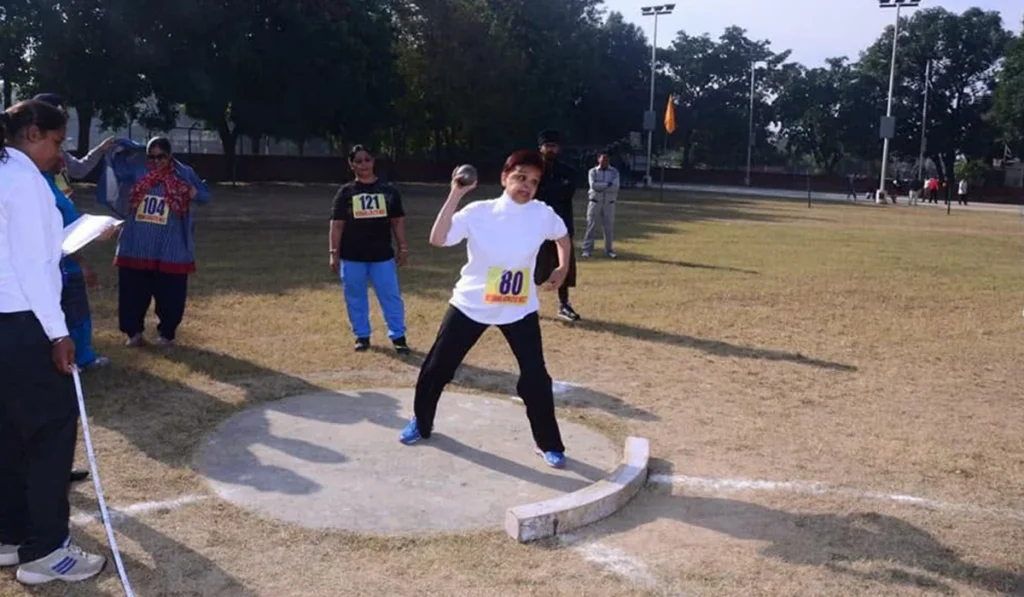
She was not merely a runner. Whether it was track events, field events, or hockey, she excelled across disciplines. She possessed speed, discipline, and a fierce competitive spirit. At the time, few could have imagined that her greatest triumph would arrive more than four decades later.
When Life Changed the Course
Every story has a turning point.
For Opinder, that moment arrived in 2000 when she was diagnosed with a brain tumour and underwent surgery. For an athlete, the body is the most valuable asset. For someone who had built her identity through sport, the diagnosis was not merely a medical challenge—it was a challenge to her confidence, independence, and future.
The woman known for her speed on the track suddenly found herself struggling with the demands of everyday life. As she slowly recovered from that setback, another blow arrived in 2013 when meningitis forced her to undergo a second major brain surgery.
Two serious operations. Years of treatment and recovery. For many people, such experiences would mark the end of any sporting ambitions. But Opinder Kaur refused to surrender.
Finding Her Way Back to the Track
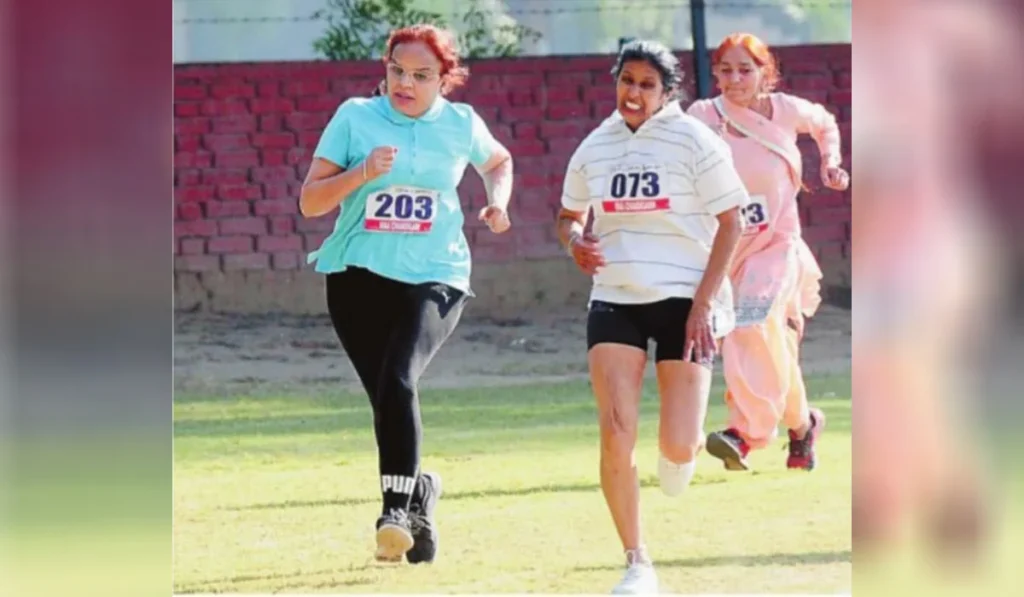
Comebacks are rarely dramatic. More often, they begin quietly—with a few careful steps, a short run, and a gradual rebuilding of trust in one’s own body. Following her recovery, Opinder returned to athletics. Initially, medals were not her goal. She simply wanted to reconnect with the part of herself that illness had taken away.
She participated in the Chandigarh Veterans Athletics Championship and began winning medals again. These victories were about far more than podium finishes. They represented the return of her confidence and identity.
“Sports gave me strength, passion, and happiness,” she says.
Athletics became more than a sport—it became her pathway back to life.
A Second Innings Bigger Than the First
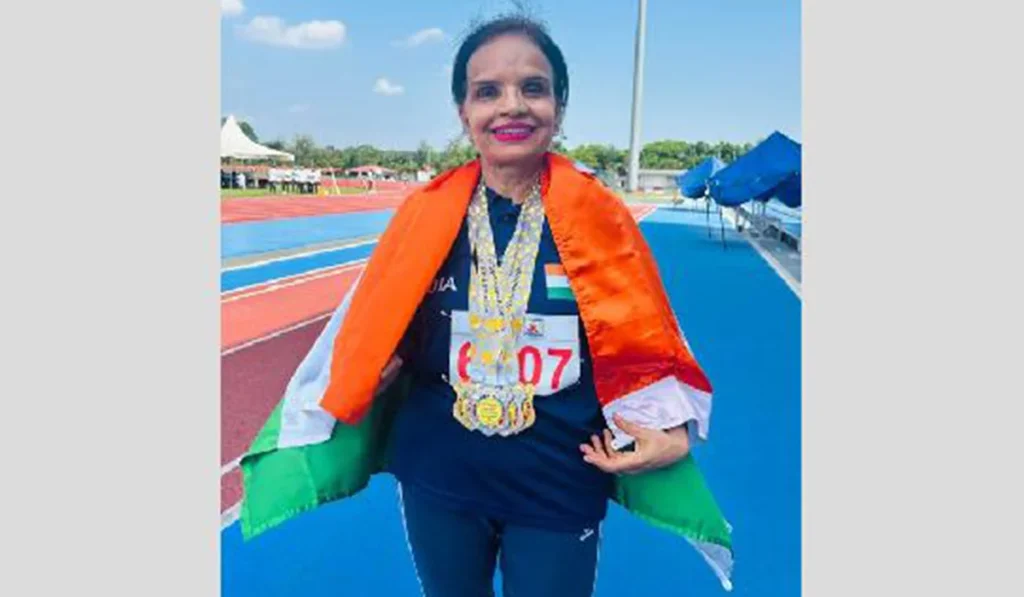
While many former athletes spend their later years reminiscing about past achievements, Opinder was creating new ones. Training regularly at Chandigarh’s Sector-7 Sports Complex, she began competing in national Masters Athletics championships.
In 2022, she won gold at the National Masters Championship in Kerala.
In 2023, she secured silver at the championship in Kurukshetra.
Earlier this year, she claimed gold medals in both the 100 metres and 200 metres at Talwandi Sabo.
She followed that with four gold medals at the Khelo Masters National Games in Chandigarh.
Today, her collection includes more than 150 medals.
The years may have passed, but her competitive spirit remains as youthful as ever.
International Recognition After Forty Years. Despite all these achievements, one dream remained incomplete: representing India on an international stage. Most athletes receive that opportunity in their youth. Opinder received it at the age of 65.
This was not merely a wait measured in years. It was a wait shaped by illness, responsibilities, setbacks, and an unwavering dream. When the opportunity finally arrived, she seized it.
In Kuala Lumpur, she won gold in the 400 metres with a timing of 1:42.35.
She added another gold in the discus throw with a throw of 14.75 metres.
Silver medals followed in both the 100 metres and 200 metres.
In every event she entered, she finished on the podium.
A Story Bigger Than Sport. Opinder Kaur’s story extends far beyond athletics. It reflects the journeys of countless women who postponed their dreams while prioritising family responsibilities. It challenges the assumption that age limits ambition. And it demonstrates that determination can often prove stronger than illness.
The four medals she won in Kuala Lumpur will eventually become statistics in record books. But for Opinder, they represent something far more meaningful. They are proof that the promise she made to herself forty years ago remained alive: No matter how long the race takes, I will reach the finish line.
That is why these medals are not merely pieces of metal. They are rewards for four decades of patience, perseverance, courage, and hope. And that is why Opinder Kaur Sekhon’s victory belongs not only to her, but to everyone who has ever postponed a dream without allowing it to die.
Leave a Comment