

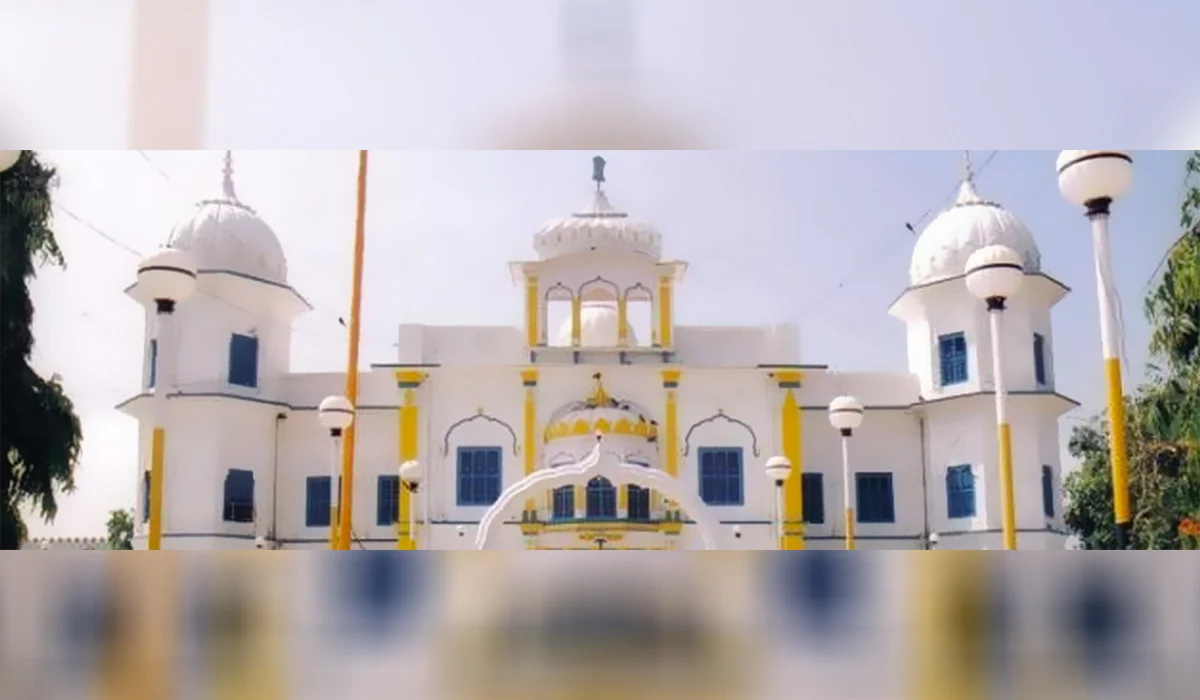

Few institutions have influenced Sikh religious education as deeply as Damdami Taksal. Its origins are linked to one of the most significant chapters in Sikh history, when Guru Gobind Singh devoted time to the preservation, interpretation, and teaching of Gurbani after years of military struggle. What began as a centre for the correct understanding of Sikh scripture gradually evolved into one of the most respected educational traditions within the Sikh Panth.
For more than three centuries, Damdami Taksal has remained associated with the study of Gurbani, the preservation of correct pronunciation, and the transmission of Sikh teachings from one generation to another. Its story is closely connected with the development of Sikh scholarship and the efforts made to ensure that Gurbani was both recited and understood in its true spirit.
The Historical Background
Following the martyrdom of Guru Tegh Bahadur in 1675, the nine-year-old Guru Gobind Singh assumed the responsibility of leading the Sikh community. During the following years, he transformed the Sikhs into a confident and organised force capable of defending religious freedom and human dignity.
The creation of the Khalsa in 1699 marked a turning point in Sikh history. Guru Gobind Singh gave the Sikh community a distinct identity and encouraged Sikhs to live without fear while remaining devoted to spiritual discipline and righteous conduct.
Anandpur Sahib became the religious and political centre of the Sikh community during this period. Daily congregations, recitation of Gurbani, and spiritual discussions formed an important part of life there. Alongside military preparation, the Guru consistently stressed the importance of connecting with Gurbani and understanding its message.
A Lesson on the Importance of Correct Gurbani Recitation
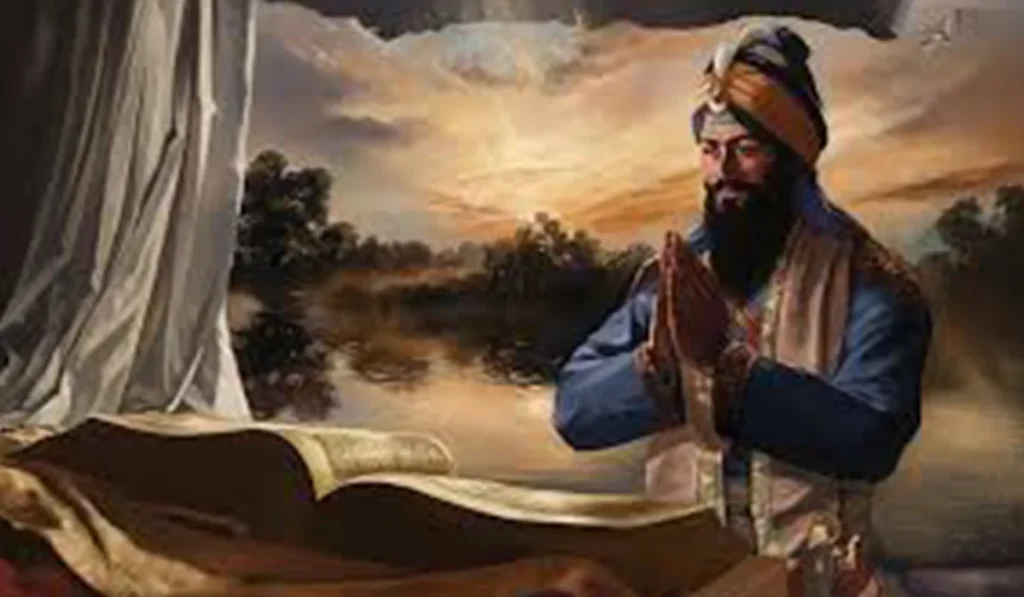
A well-known tradition associated with the origins of Damdami Taksal centres on an incident at Anandpur Sahib.
During the early hours of one morning, a Sikh devotee was reciting Gurbani from memory. While reading a verse from Dakhni Oankar,
“Karte Ki Miti Karta Janai Kai Janai Guru Surah”
He incorrectly pronounced a word that altered the meaning of the line. Guru Gobind Singh heard the recitation and instructed him to read the Gurbani correctly.
The devotee did not initially realise his mistake. Later, when the matter was brought before the Guru, he explained that even a small change in pronunciation could alter the intended meaning of Gurbani.
Guru Gobind Singh clarified the correct interpretation of the verse and demonstrated how a single word could completely change its spiritual message. The incident left a deep impression on those present and highlighted the importance of understanding Gurbani rather than merely reciting it.
According to Sikh tradition, this discussion encouraged several Sikhs to request systematic instruction in Gurbani and its meanings. They wished to learn not only the correct pronunciation but also the deeper significance of the sacred text.
The Beginning of a Great Educational Tradition
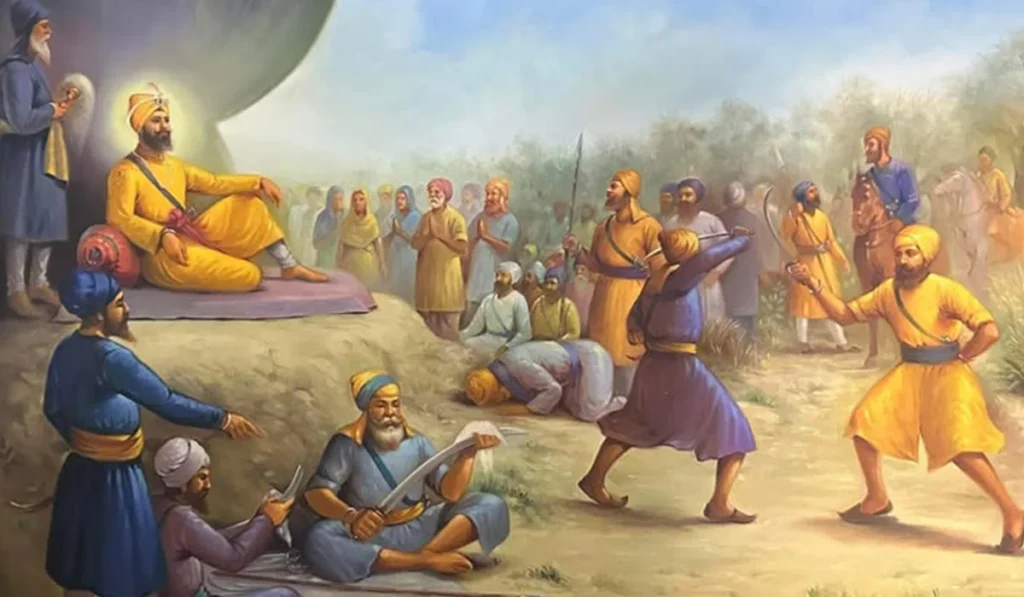
Guru Gobind Singh reportedly assured the Sikhs that a proper opportunity for such study would come when circumstances allowed. At that time, continuous military conflicts demanded his full attention.
After the major battles of Anandpur Sahib, Chamkaur, and Muktsar, Guru Gobind Singh reached Talwandi Sabo, now known as Takht Sri Damdama Sahib in Punjab’s Bathinda district.
It was here that a remarkable educational effort began.
The Guru instructed his followers to obtain the earlier recension of Guru Granth Sahib associated with Kartarpur. When that effort proved unsuccessful, he dictated the entire scripture from memory while Bhai Mani Singh served as the principal scribe.
During this period, Guru Gobind Singh supervised the preparation of the recension that included the bani of Guru Tegh Bahadur. Alongside the writing of the scripture, detailed explanations and interpretations were provided to selected Sikh scholars.
Historical Sikh sources describe how groups of devoted Sikhs gathered daily to study Gurbani under the Guru’s guidance. These lessons focused on pronunciation, meaning, interpretation, and spiritual understanding.
Many Sikh scholars regard this period at Talwandi Sabo as the foundation of the educational tradition that later became known as Damdami Taksal.
Why Talwandi Sabo Became Known as Guru Ki Kashi
Talwandi Sabo gained exceptional importance during Guru Gobind Singh’s stay there.
The Guru spent several months teaching, writing, and guiding the Sikh community. Because of the extensive learning that took place at the site, it earned the title “Guru Ki Kashi,” meaning the Guru’s centre of knowledge.
The location became a major centre for Sikh scholarship. Students travelled there to learn Gurbani, Sikh philosophy, and religious discipline.
The educational atmosphere established at Talwandi Sabo helped shape generations of Sikh scholars and preachers.
Bhai Mani Singh and Baba Deep Singh
Two of the most respected Sikh figures associated with this tradition are Bhai Mani Singh and Baba Deep Singh.
Bhai Mani Singh was entrusted with important responsibilities related to Sikh scripture and later served at Harmandir Sahib in Amritsar. He played a crucial role in preserving Sikh teachings and promoting the study of Gurbani.
Baba Deep Singh, one of the most revered Sikh warriors and scholars, continued the educational work associated with Talwandi Sabo. His dedication to Sikh learning helped strengthen the institution that would later become known as Damdami Taksal.
Both figures are remembered not only for their scholarship but also for their unwavering commitment to Sikh principles.
The Evolution of Damdami Taksal
Over time, the educational tradition established under Guru Gobind Singh developed into an organised institution.
Within the Sikh tradition, Guru Gobind Singh is regarded as the founder of Damdami Taksal. Successive leaders continued the work of teaching Gurbani, explaining Sikh doctrine, and training students in correct recitation.
Through the centuries, the institution was led by several respected scholars and saints who maintained its emphasis on scriptural study and religious education.
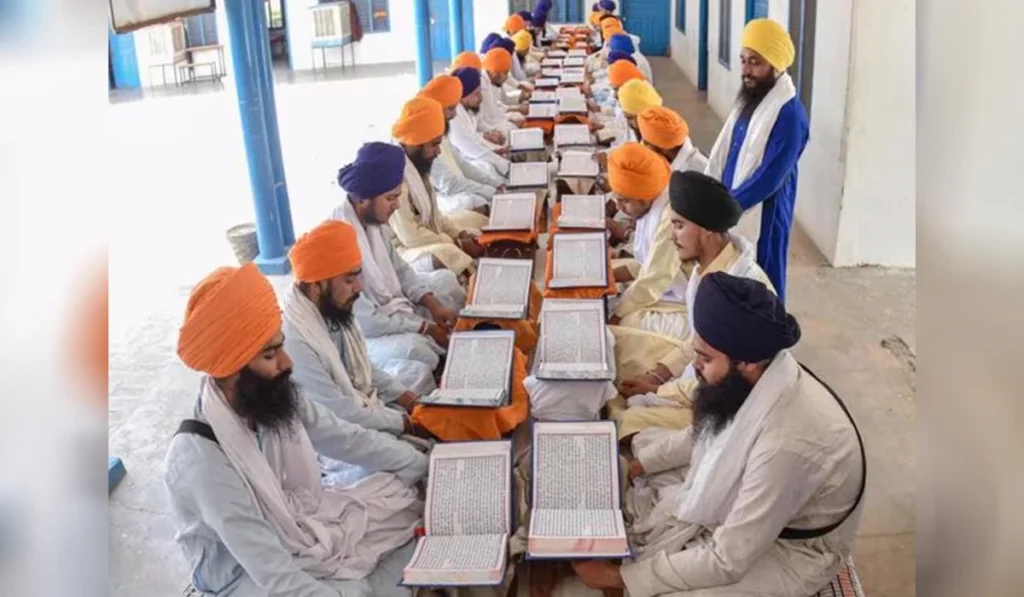
The Taksal became particularly known for preserving the correct pronunciation of Gurbani, often referred to as Santhiya. Students received extensive training in reading scripture accurately and understanding its meanings.
This educational approach ensured that Sikh teachings were passed from teacher to student through direct instruction.
Damdami Taksal in the Modern Era
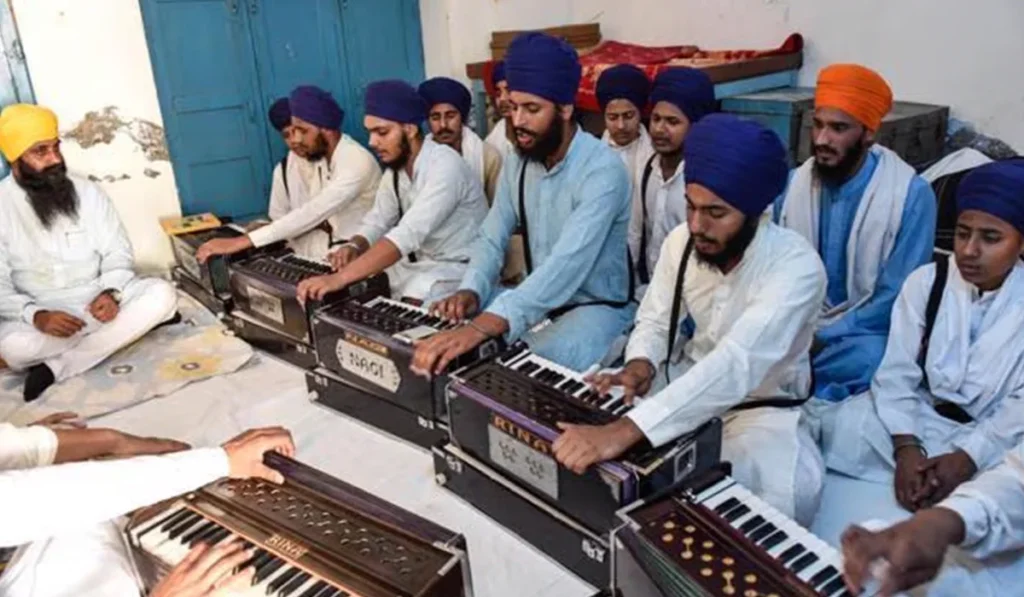
Today, Damdami Taksal remains one of the most recognised Sikh educational institutions.
Its principal centre at Mehta in Amritsar district is widely known as Gurdwara Gurdarshan Parkash. The institution continues to provide instruction in Gurbani, Sikh history, Sikh ethics, and traditional religious practices.
Students study Gurmat, scriptural interpretation, Sikh Rehat Maryada, and the principles that guide Sikh life. The institution also organises religious gatherings, kirtan programmes, educational seminars, and outreach activities to strengthen awareness of Sikh teachings.
Over the decades, Damdami Taksal has played a significant role in promoting religious education across Punjab and beyond. Its influence extends through preachers, scholars, and students who continue to carry its teachings to Sikh communities around the world.
Continuing a Legacy of Learning
The story of Damdami Taksal is ultimately a story about the preservation of knowledge.
Its roots lie in the conviction that Gurbani should be understood with care, recited correctly, and studied deeply. From the lessons imparted by Guru Gobind Singh at Talwandi Sabo to the educational programmes conducted today, that objective has remained largely unchanged.
In an age when religious understanding can often become superficial, institutions devoted to careful study continue to hold an important place. Damdami Taksal remains one of the most enduring examples of that tradition within the Sikh Panth.
More than three hundred years after its origins, it continues to serve as a centre of learning, interpretation, and spiritual education, carrying forward a legacy that began with the teachings of Guru Gobind Singh himself.

Leave a Comment