
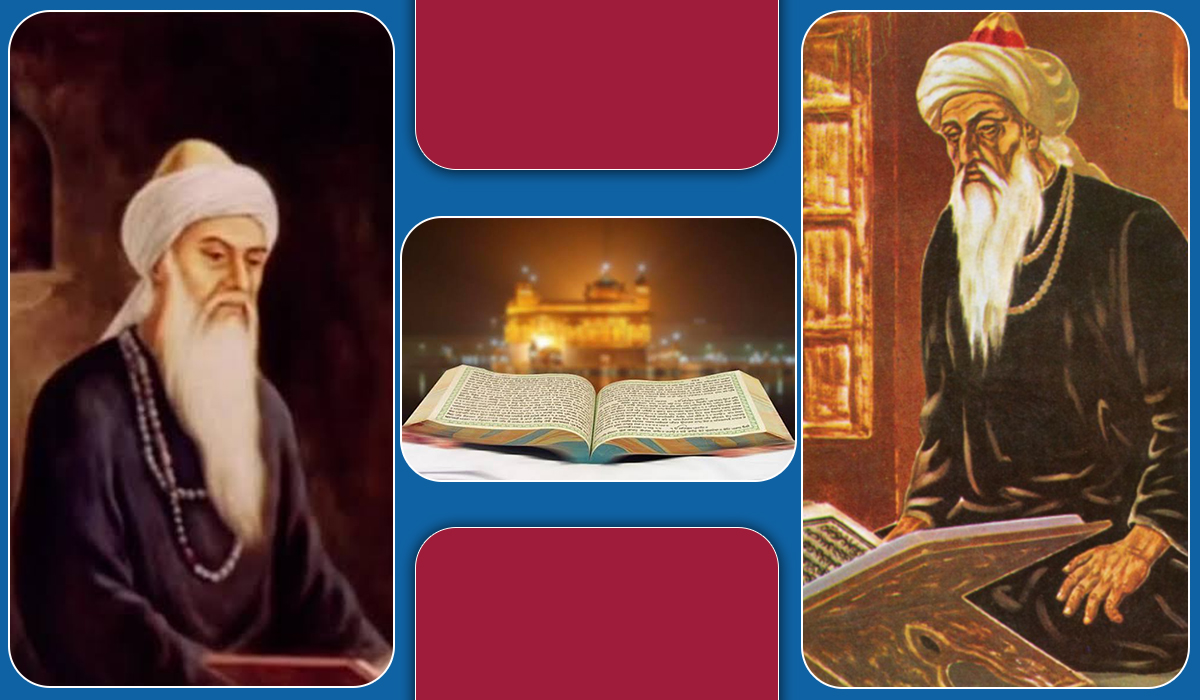

Sri Guru Granth Sahib is the Shabad Guru of all humanity. For the welfare of the universe, the fifth Guru, Sri Guru Arjan Dev Ji, with the help of the writer Bhai Gurdas Ji, compiled the divine words of the Gurus, Bhagats and the Sikh devotees close to the Guru Ghar in Adi Granth Sahib. The Bani of the Bhagats, free from the narrow boundaries of religion, caste, place, language, poverty, wealth, etc., which fully reflects the philosophy of Gurmat, was included in Adi Granth. Bhagat Bani made the hidden ones feel equality from birth, gave the message of universal brotherhood, awakened the feeling of self-respect and sparked an ideological revolution against the inhumane behavior based on caste and religion in contemporary society. 15 Bhagats started an ideological dialogue by awakening the hidden ones against the evils born in Hinduism and Islam. Bhagat Bani brought about a major change in the social, economic, political and cultural levels at the ideological level to overcome the declines in the society of that time. It gave a unique identity to the Indian society by giving the message of abandoning animal instincts and creating an ideal society based on moral values. By instilling a sense of humanity in the people who had been subjected to humiliation for centuries, it created a welfare society where there was no high or low.
The Bani of six of the Gurus, Guru Nanak Dev Ji, Guru Angad Dev Ji, Guru Amardas Ji, Guru Ramdas Ji, Guru Arjan Dev Ji and Guru Tegh Bahadur Ji, were given special status in the Guru Granth Sahib Ji. Apart from the Gurus, the hymns of 15 Bhagats, including Bhagat Jaidev, Baba Sheikh Farid, Bhagat Sadhana, Bhagat Trilochan, Bhagat Namdev, Bhagat Sain, Bhagat Ramanand, Bhagat Ravidas, Bhagat Kabir, Bhagat Beni, Bhagat Dhanna, Bhagat Pipa, Bhagat Surdas, Bhagat Bhikhan and Bhagat Parmanand, are also recorded. Apart from these, the hymns of 11 Bhats, including Kal, Nal, Gayand, Bhikha, Sal, Kirat, Bhal, Mathura, Bal, Jalap, Haribams, are recorded. Apart from the Gurus, Bhagats and Bhats, the hymns of four close Sikhs of the Guru Ghar, who have been recognized in the Sikh community or these Sikhs have been given a high status among the Sikhs, have also been included in the Adi Granth. Among them are the names of Bhai Mardana, Rai Balwandi, Sata Doom and Baba Sundar. Before the creation of Adi Granth, Baba Farid, Bhagat Kabir Ji and Guru Ravidas Ji directed the entire hiddenness towards the right direction with their composed Bani. They tried to remove the entire humanity from the diseases like discrimination, oppression, high and low, discrimination in the society. Bhagat Ravidas was a contemporary of Guru Nanak Dev Ji, but Baba Farid and Bhagat Kabir Ji had already fulfilled the responsibility of bringing social reforms with their written words before Guru Nanak Dev Ji. Historians believe that Sufism was prevalent in India before Guru Nanak Dev Ji. Sufism is a complementary ideology of Islam. The birthplace of Sufism was Arabia. With the passage of time, Lahore became the first base of Sufism in Punjab. The word Sufi is derived from Saf which means row, meaning those who used to stand in the first row and recite the name, were called Sufis. Sufis were very strict with the Sharia and the birth of Sufism is believed to have been from Hazrat Muhammad Sahib. Living in the will of God was their important principle. Among these radical Sufis, the names of Baba Farid, Dada Ganjbakhsh and Bu Ali Qalandar are worth mentioning. In Sufiism, the Murshad was given the highest place. Their 4 famous sects were Chishti, Suharwardi, Qadri and Naqshbandi. The center of Chishti was Delhi, the center of Suharwardi was Multan, the center of Naqshbandi was Sirhind. Baba Farid’s verses are also recorded in the Adi Granth for the same reason that he took the initiative to reform the society and the entire society. Baba Farid is called the first Sufi poet of Punjabi. Baba Farid’s birth is considered to be in 1173 AD and the time of his reformation in the afterlife is considered to be 1266 AD. Baba Farid was declared as the tenth successor of the Chishti sect. He was born in the village of Khotwal in Multan district to father Jamaluddin Suleman and Bibi Karsum. His guru was Khwaja Bakhtiar Kaki and his successor was Nizamuddin Auliya. Baba Farid’s tomb is located in Pakpattan. There are 130 verses under the name of Baba Farid in the Guru Granth Sahib Ji, out of which 112 are of Farid Ji and 18 are of the Gurus. Which include 04 of Guru Nanak Dev Ji, 05 of Guru Amar Das Ji, 01 of Guru Ram Das Ji and 08 of Guru Arjan Dev Ji.
Four verses of Farid Ji are recorded in two ragas Asa and two ragas Suhi in the Guru Granth Sahib.
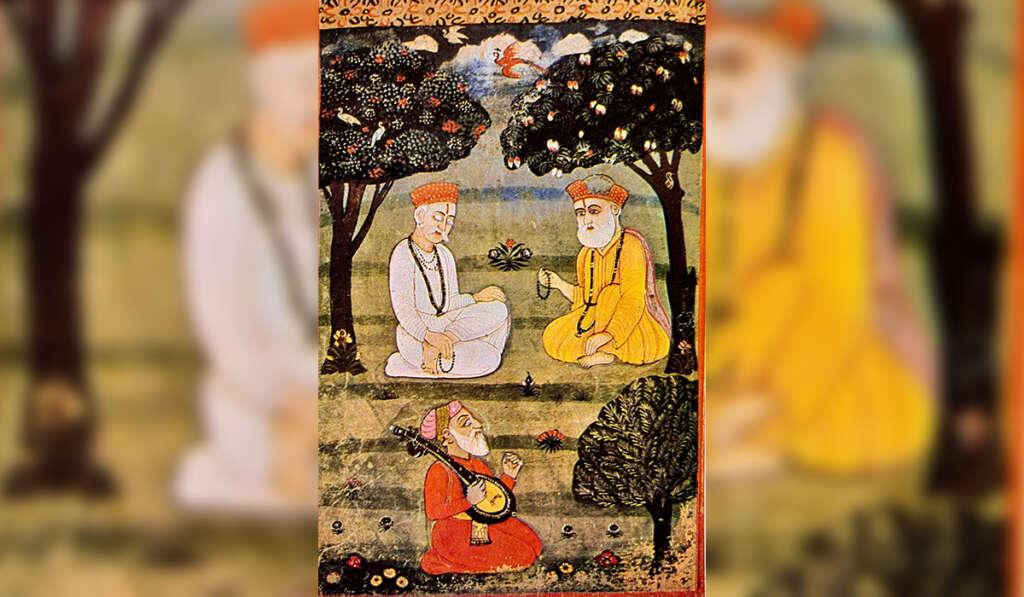
In raga Asa:
Dilhu Mohabbat Jinn Sei Sachya.
He said, “Faridu Pyaare Alh Lage”.
In the Raga Suhi:
Tapi tapi luhi luhi haath maroroo.
The time of tying the boat is not possible.
These four verses are recorded in the Guru Granth Sahib Ji. Some of the main lines of Sheikh Farid Ji are as follows:
Awake, Farida, sleep, spend the morning in peace.
If you do not raise your head, then lift your head.
The wall is made of wood, the kicharku is strong.
Farida keeps the raw material, the kicharku is water.
Baba Farid Ji, with his Bani, has explained the society of that time, the conditions of the society and has also given this lesson to the entire humanity that it is very important to have stability, equality and freedom in the society. Baba Farid Ji has tried to remove the evils of the society by addressing himself.
While Baba Farid Ji tried to make the society a stable institution before Guru Nanak Dev Ji or before the creation of Guru Granth Sahib, Bhagat Kabir Ji made his due contribution from the Bhakti movement. The Bhakti movement began in the eighth century in South India. The Bhakti movement is a movement that emerged from Shaivism and Vishnuism. The path of Bhakti emphasizes emotional unity with God after knowledge and action. Bhagat Ramananda is considered to be the founder of the Bhakti movement. The two major streams of Bhakti poetry are Nirgun Dhara and Sargun Dhara. Bhagat Kabir Ji was born in 1398 AD and till 1518 AD, Bhagat Kabir Ji contributed his due share to bring equality and freedom in the society and to remove social evils. Bhagat Kabir Ji was a disciple of Ramanand and was a resident of Uttar Pradesh. Kabir Ji is believed to have been born in 1398 from the womb of a Brahmin widow near Banaras. Bhagat Kabir Ji is believed to have belonged to the Julah caste. His wife’s name was Loi and he had a son Kamal and a daughter Kamali. Bhagat Kabir Ji created a sense of unity by uttering the words ‘Hindu Musalman Ka Sahib Ek’ by removing the growing gap between Hindus and Muslims. Due to which he has been known as half Hindu and half Muslim. Bhagat Kabir Ji was against incarnation and worship of gods and goddesses, but still Bhagat Kabir Ji has accepted the greatness of the Vedas and has written:
Bed katab kahhu mat phothe, photha jo na bichaarai ||
Bhagat Kabir Ji was the first such poet who expressed doubt on the greatness of kings. Bijak Kabir Granthawali, Sakhi Kabir and Anurag Sagar are the main works of Aap Ji. Bijak is considered to be the most authentic work of Bhagat Kabir Ji. Among all the Bhagats, the most number of Bani of Bhagat Kabir Ji is recorded in Sri Guru Granth Sahib. Kabir Ji has recited 225 Shabads in 17 Ragas. Apart from this, 243 Shlokas are recorded in Sri Guru Granth Sahib under the title of Bavan Akhri, Vaar Satvi and Shloka Bhagat Kabir Ji. The details of the 17 ragas used by Bhagat Kabir Ji are as follows:
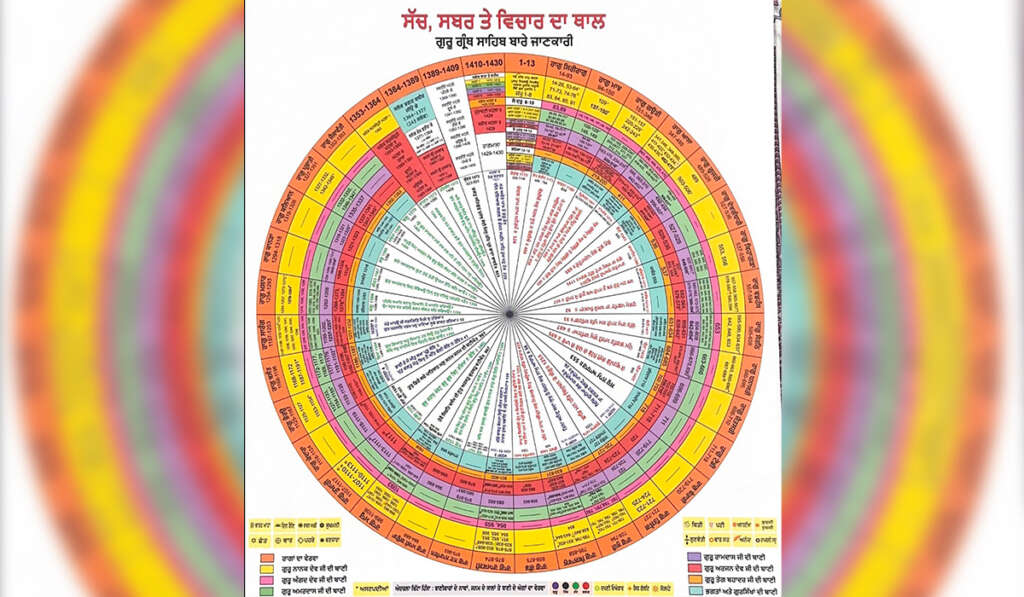
Raag Siri 02 words
Raag Gauri 74 words
Raag Asa 37 words
Raag Gujri 02 words
Raag Sorathi 11 words
Raag Dhanasri 05 words
Raag Tilang 01 words
Raag Suhi 05 words
Raag Bilawal 12 words
Raag God 11 words
Raag Ramkali 12 words
Raag Maru 12 words
Raag Kedara 06 words
Raag Bhairau 20 words
Raag Basant 07 words
Raag Sarang 03 words
Raag Prabhati 05 words
Among these ragas, the Bani of Bhagat Kabir Ji is recorded in the Guru Granth Sahib Ji. Some of the prominent lines of Bhagat Kabir Ji are as follows:
Avali Allah Nuru Upaya Kudrati Ke Sab Bande ||
One light has given birth to all the world, who is good or bad? ||1||
The sound of the sky blows, the enemy strikes Baba Farid Ji and Bhagat Kabir Ji have given a new direction to the society with their words. They tried to remove the prevailing high-low, discriminatory tendency in the society. Historians believe that Sri Guru Nanak Dev Ji, who was the first Guru of the Sikhs, collected the words of Bhagat Kabir Ji and Baba Farid Ji from their places during his travels and wrote them in his own words and handed them over to Guru Angad Dev Ji. Guru Angad Dev Ji added the words to his own and handed them over to Guru Amardas Ji. After Guru Amardas Ji, these words reached Guru Ramdas Ji and after Guru Ramdas Ji, these words reached Guru Arjan Dev Ji. Guru Arjan Dev Ji, the fifth light of Nanak Patshah, got the words of the five Gurus recorded in the Adi Granth from Bhai Gurdas Ji and along with them, he got the words of the Bhagats Bhats and other Sikh devotees of the Guru Ghar recorded in the Adi Granth. It is necessary to understand that while recording the verses in the Guru Granth Sahib Ji, Guru Arjan Dev Ji never thought that any devotee or Bhatt was from the Sikh religion or Hindu or Muslim. He gave such a form to the composition of the Adi Granth that caste, discrimination, high and low, these evils were eliminated in it. By recording the verses of these devotees, these Bhatts and the Sikhs of the Guru in the Sri Guru Granth Sahib, he gave the Sikh religion and this great scripture of the Sikh religion the status of holiness and presented a great and unparalleled example of humanity. The Sikh religion has respected all religions since that time till today and due to the inclusion of the verses of these devotees Bhatts in the Sri Guru Granth Sahib, the Adi Granth in the Sikh religion, this scripture belongs to the Hindus and the Muslims as much as to the Sikhs.


Leave a Comment