
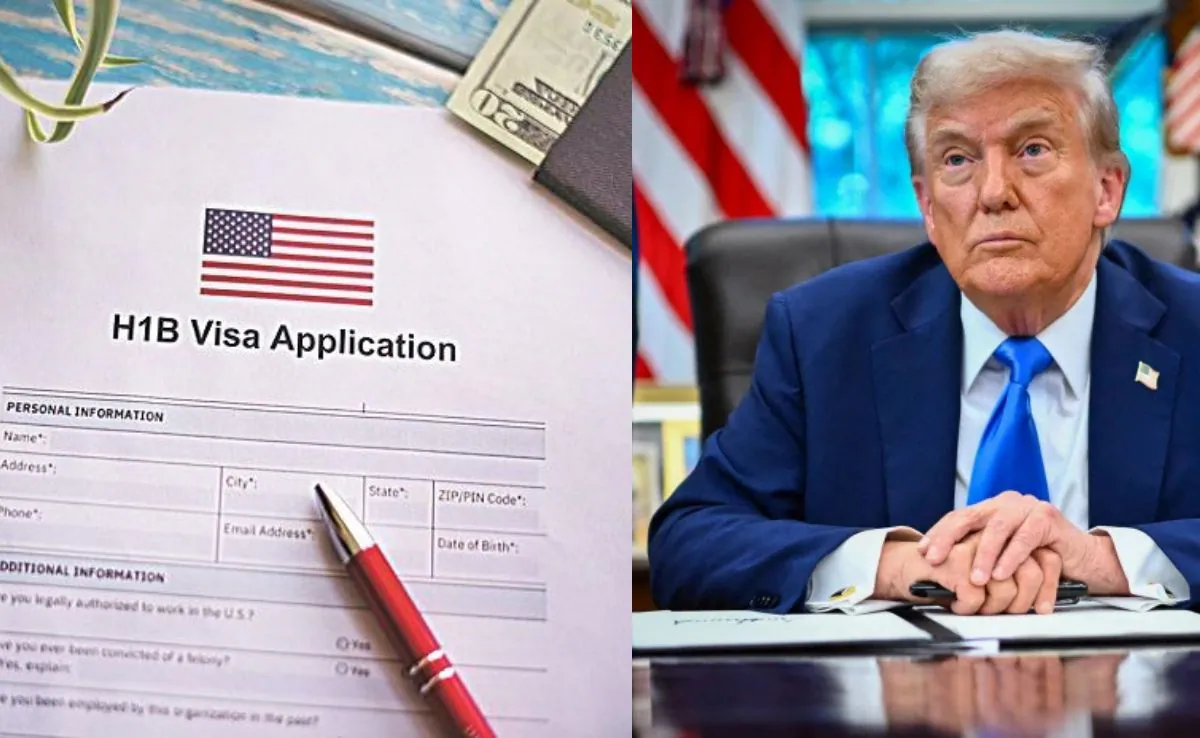

A new decision by the Trump administration in the United States could shatter the dream of Indians who wish to work abroad.
The most popular work visa in the United States is the H-1B visa, which is in Donald Trump’s sights. The Trump administration has decided to increase the fee for this visa to more than $100,000. The Donald Trump administration on Monday issued a proposed rule aimed at formally implementing a fee of more than $100,000 on the H-1B visa for foreign workers. Trump had temporarily implemented this fee last year, but the courts had stopped it. There was a lot of controversy after this decision by Trump. This new proposal has now been introduced. The increase in the H-1B visa fee will be particularly difficult for Indians, who are the biggest beneficiaries of this visa. The US Department of Homeland Security has proposed a fee of $103,265 for a new H-1B visa, which would be approximately Rs 98,86,389 in Indian currency.
What Is the H-1B Visa?
The H-1B visa is a work visa that allows American companies to hire educated and specially skilled individuals from other countries. This visa is generally issued for IT, engineering, medical, research, finance and other professional fields. In simple words, if an Indian or foreign citizen is offered a job by an American company, and the job requires specific qualifications, the company can allow them to work in the United States through an H-1B visa. Under this, 65,000 general visas and an additional 20,000 visas for foreign students who have received higher education from American universities are available every year. The visa is generally issued for a period of three to six years.
Difficulties for Indian Professionals Will Increase
If this rule is implemented, costs could increase significantly for companies hiring foreign workers in the United States, and Indian professionals are expected to be the most affected. Indian professionals form the largest share of this visa programme. According to official figures, in the financial year 2025, around 70 per cent of H-1B workers were Indians. Chinese citizens came second with around 12 per cent. Therefore, the new fee could significantly affect Indian workers.
Who Could Be Given an Exemption?
However, the relief is that the proposed fee will not apply to all H-1B cases. Foreign nationals already living in the United States on student visas will not have to pay this fee when they obtain an H-1B. Similarly, this fee will not apply to the renewal of existing H-1B visas. The real concern is for Indians and other foreign professionals whom American companies want to hire directly from abroad.
The most important point is that this fee of $103,265 will be separate from the existing H-1B application fee. This means that applicants may have to pay this amount in addition to the existing tariff.
The new fee proposed by the Department of Homeland Security (DHS) was published in the Federal Register on Monday. Public comments on the proposal have been invited for the next 30 days. It is believed that the rule could be finalised by the end of the year.



Leave a Comment