

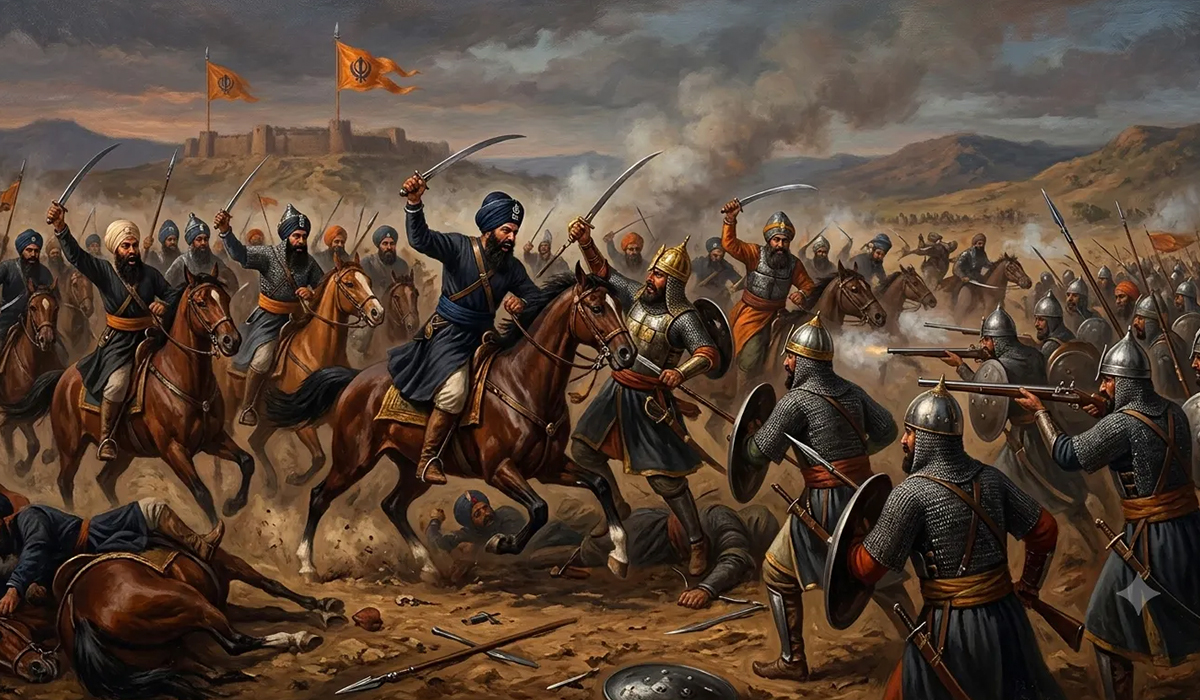

Eight centuries of kings and governors, and a clan blessed by the Sikh Gurus, sit behind a surname now making global headlines for gangland murder — a look at what “Brar” actually carries
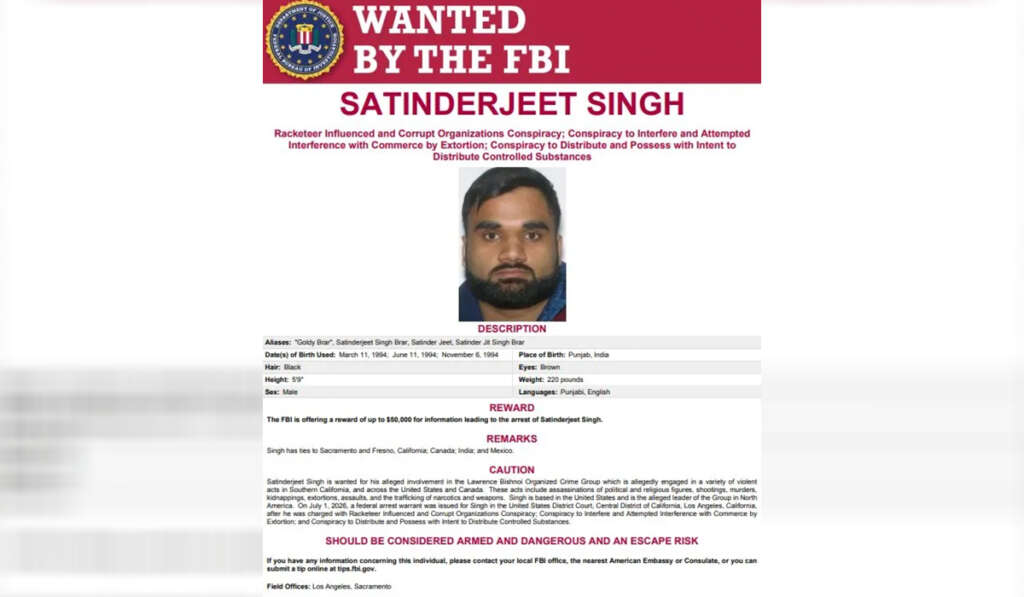
The surname “Brar” is in the international news this week for reasons no member of the clan would welcome — a story that has spread like wildfire within the Indian diaspora abroad, as well as throughout India and elsewhere. On July 7, 2026, the U.S. Department of Justice unsealed three grand jury indictments naming 37 defendants as part of a joint American, Canadian and European operation codenamed Hard Ball — among them Satinderjeet Singh, publicly known as Goldy Brar, named as the North American commander of jailed gangster Lawrence Bishnoi’s crime syndicate, accused with him of ordering the June 2023 assassination of Hardeep Singh Nijjar; the FBI has placed a $50,000 bounty on his arrest, and he remains at large. Bishnoi himself was born Balkaran Brar, into a Hindu Jat family that had adopted the Bishnoi sect, shedding both given name and birth surname on the way to becoming the underworld’s most recognisable brand, while Goldy Brar — Satinderjeet Singh Brar, a Jat Sikh from Sri Muktsar Sahib — appears to have kept his, “Goldy” merely a nickname layered on top.
It is worth asking, then, what “Brar” has actually meant for the seven centuries before this one.
Rao Brar’s Line
The Sidhu clan of Punjab traces its descent to Sidhu Rao, a Bhatti Rajput of Jaisalmer lineage who married into a Gill Jat family around the 13th century, founding a line that merged fully into the Jat community. The Rajasthan connection runs deeper than a single ancestor: the Bhatti line traces back through Rawal Jaisal — the 12th-century founder of Jaisalmer, whose fort city gave the princely state of Jaisalmer its name — and further still to Rao Bhati, the clan’s 3rd-century apical ancestor, credited in tradition with founding Bathinda itself. Sidhu Rao descended from this same Jaisalmer house, several generations removed, before his marriage into the Gill Jats pulled the family out of pure Rajput status and into the Jat community of Punjab’s Malwa belt — meaning the Sidhu-Brars, and by extension the Phulkian Maharajas of Patiala, Nabha and Jind, share a remote common ancestor with the Bhati Maharawals who ruled Jaisalmer State in Rajasthan right up to Independence. His descendants split into several branches — Bhaike, Pirkotias, Rosse, Meharmia, Manoke, and Harika-Brar. Several generations down the Harika-Brar line came Rao Brar, roughly tenth in descent from Sidhu Rao: a warrior-chieftain who reclaimed territory around Bathinda and gave his name to the Brar clan, one of the dominant powers of Punjab’s Malwa region by the late medieval period. Rao Brar’s own sons founded further branches — Dull’s line produced the rulers of Faridkot, while Paur’s line produced Phul, ancestor of the “Phulkian” houses of Patiala, Nabha and Jind.
By the time the British catalogued Punjab’s ruling families, the Sidhu-Brar clan controlled an extraordinary spread of territory: the three principal Phulkian states of Patiala, Nabha and Jind; Faridkot, descended directly from Rao Brar’s eldest line; Kotkapura, a related Brar house founded by Nawab Kapura Singh Brar; and the smaller principalities of Malaudh and Kaithal. After Partition, Patiala, Nabha, Jind and Faridkot came together as PEPSU before merging into the reorganised state of Punjab — a princely footprint few other Jat clans in North India could match.
From Rajput Lineage to the Khalsa: Three Gurus, One Clan
The Sidhu-Brars’ passage into Sikhism was not a single event but a relationship built across three successive Gurus. It began with Chaudhary Phul — the eponymous ancestor of the Phulkian houses — who as an orphaned boy was taken by his uncle to Guru Hargobind Ji, the sixth Guru; some accounts hold it was Guru Har Rai Ji, the seventh, who later blessed him more fully, promising that his house would become a great “Charity House” whose horses would one day graze the land between the Yamuna and the Sutlej — a prophecy the Phulkian states would go on to fulfil almost to the letter.
The relationship deepened decisively under Guru Gobind Singh Ji. In a hukamnama dated 2 August 1696, addressed to Phul’s sons Rama and Tiloka, the Guru called on them to bring their cavalry to his aid against the Hill Rajas, writing: “I am much pleased with you. Your house is my own… your house is my refuge.” That line — tera ghar mera asai — became the enduring motto of the House of Patiala, and Sikh tradition holds it is the reason none of the eleven Sikh misls ever moved against the Phulkian states despite occasional friction between them. Rama and Tiloka were formally baptised into the Khalsa with Khande di Pahul at Damdama Sahib by Guru Gobind Singh Ji’s own hand — the moment the clan’s Sikh identity was sealed beyond dispute. It was this same trust, extended a decade earlier to Phul’s sons, that the Guru would draw on again in 1705, this time on behalf of the wider clan rather than one branch of it.
An Uncomfortable Chapter, and a Redeeming One
The clan’s record is not without its own complications — and honesty requires acknowledging one. In 1705–06, after slipping out of Chamkaur and resting at Dina, Guru Gobind Singh Ji reached Kotkapura and asked its Sikh chief, Nawab Kapura Singh Brar, for the use of his fort to make a stand against the pursuing Mughal army. Wary of provoking direct Mughal retaliation, Kapura declined. Had he agreed, the decisive battle that instead unfolded at Khidrana — Muktsar — might have been fought at Kotkapura itself. The Guru moved on, unaided, to Dhilwan Kalan.
But the story did not end there, and this is where the Brar name redeems itself within the same campaign. Kapura went on to assist Guru Gobind Singh Ji covertly at the Battle of Muktsar itself, and was formally baptised into the Khalsa by the Guru’s own hand that same year. And it is in the Zafarnama — the Guru’s Persian epistle of defiance and victory to Aurangzeb, composed and dispatched from the village of Kangar, adjoining Dina, in what is today Bathinda district, not too far from author’s ancestral village of Gumti Kalan — that the clan receives its most extraordinary vindication. Inviting the Emperor to meet him face to face at Kangar, Guru Gobind Singh Ji guarantees his safe passage in these words: “On the way there will be no danger to your life, for the whole tribe of Brars accepts my command.” The most powerful monarch on the subcontinent was offered safe conduct through hostile country on nothing but the Guru’s word that the Brars would honour it.
The clan’s public record extended well into modern politics, too: Harcharan Singh Brar of Sarai Naga, in the same Sidhu-Brar heartland as the Faridkot and Kotkapura houses, served as Governor of Odisha and then Governor of Haryana in the late 1970s before returning to Punjab, where he was sworn in as Chief Minister on 31 August 1995 in the aftermath of Beant Singh’s assassination and steered the state through one of its most volatile transitions.
The Lineage Outlasts the Headline
Set against eight centuries of that record — Rajput kings of Jaisalmer, princely houses that ruled a third of Punjab, a clan trusted enough by the tenth Guru himself to vouch for an emperor’s safety in his own hand, and a state chief minister who also served two governorships — the criminal enterprise currently trading on the Brar name amounts to a rounding error, however loudly the American indictments echo this month. Balkaran Brar chose to erase the name rather than carry it; Satinderjeet Singh Brar aka as Goldy Brar carries it toward an FBI wanted poster rather than anything his ancestors — Rajput, Sikh, princely, or political — would recognise as their own. Names outlive the men who misuse them; this one has already outlived far worse.

Leave a Comment