


A Tireless Life Without Leave
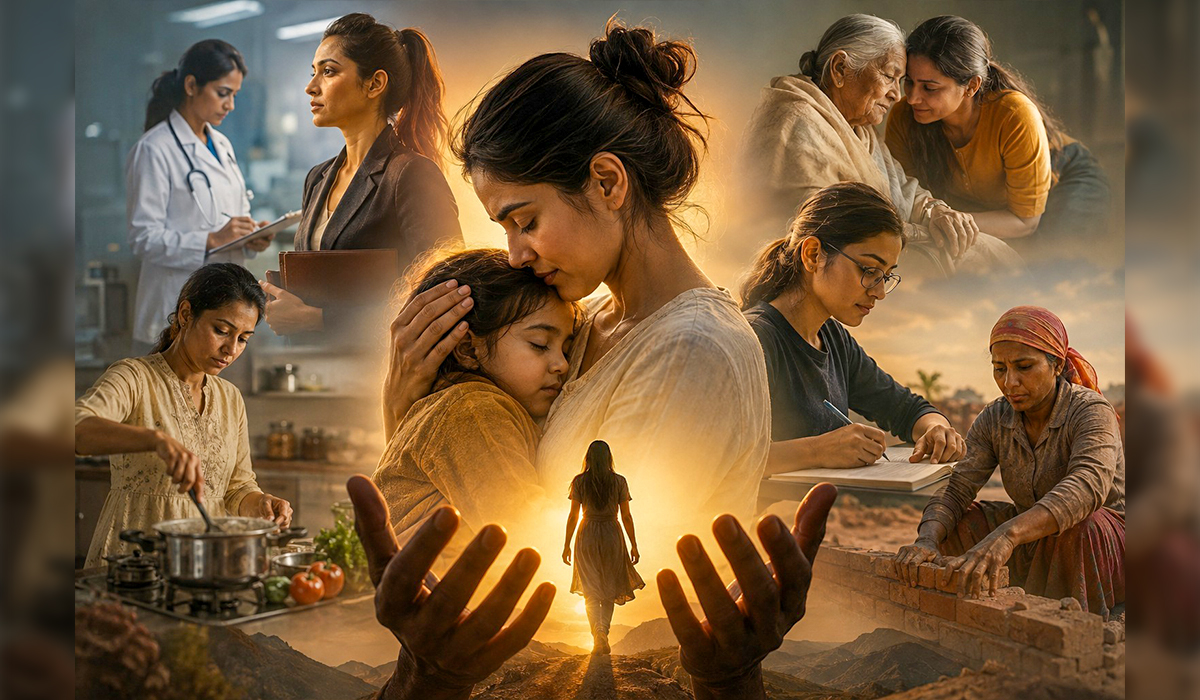
The word “mother” itself represents an ocean of affection, sacrifice, dedication and unconditional love, a relationship that is difficult to compare with any other.
In society, almost every government or private job, business or form of labour comes with weekly holidays, festival breaks or sick leave. But in a mother’s life, the word “leave” barely exists. She often spends a lifetime caring for her children and family.
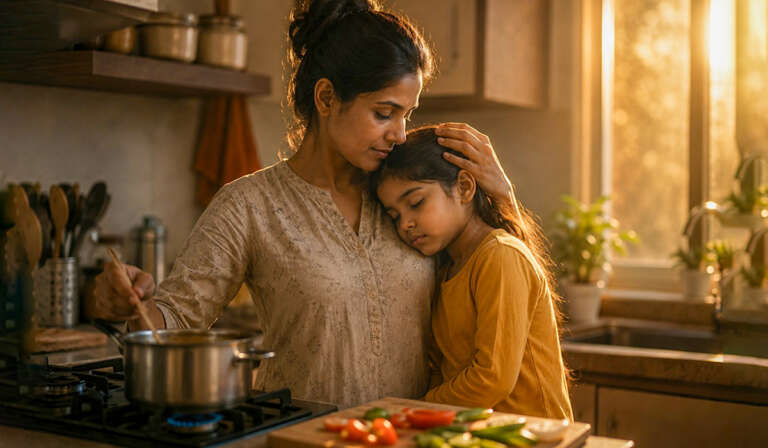
Her day begins long before sunrise, while the rest of the household is still asleep. It usually ends only after everyone else has gone to bed.
From making the morning tea to cleaning up the kitchen at night, a large part of her day is spent meeting the needs of the family.
Cooking, washing clothes, cleaning the house, helping children with their studies, caring for them and looking after elderly family members become part of her everyday routine.
Yet the irony is that despite all this effort, her labour is often not even recognised as “work”.
People casually say:
“She stays at home.”
But the truth is that she works 365 days a year, without salary and often without a day off. The value of her contribution cannot be measured merely in money.
The Double Burden of Working Women
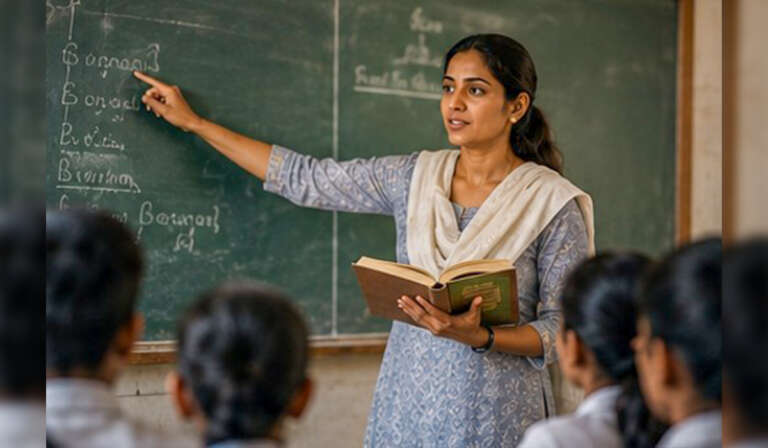
If the life of a homemaker is challenging because of domestic responsibilities, the situation of a working woman can be even more complicated.
Women today are stepping outside their homes to become financially independent and are working in offices, schools, hospitals, factories and many other sectors.
But their domestic responsibilities have not necessarily reduced in equal measure.
Along with professional duties, women are often expected to manage the household, raise children and fulfil family and social responsibilities.
After working eight to ten hours in an office, many women return home tired only to begin what feels like a second shift.
Managing the kitchen, checking children’s schoolwork and completing household responsibilities can continue late into the night.
Despite this, society often expects her to remain both a “perfect professional” and a “perfect homemaker.”
If something at home is left unfinished, she is often the first person questioned.
This double burden remains one of the harsh realities of many modern women’s lives.
The Long Shadow of Patriarchy
For centuries, patriarchal social structures have denied women equal rights.
History contains countless examples of women having to struggle for dignity, freedom and basic rights.
Social customs and patriarchal thinking often defined women primarily through their relationship with men. In some eras, they were given an inferior social status and even described in deeply derogatory terms.
Society took a long time to accept women as individuals with identities of their own.
But history is not only a story of women’s suffering.
It also contains examples of women who created space for themselves through knowledge, courage, resilience and struggle, opening pathways for future generations.
Guru Nanak Dev Ji’s Revolutionary Thought
In the 15th century, Sri Guru Nanak Dev Ji challenged many religious superstitions and social inequalities prevalent in society.
His teachings on the status of women also presented a profound and remarkably progressive perspective.
In a verse recorded on Ang 473 of Sri Guru Granth Sahib Ji, Guru Nanak Dev Ji says:
“Bhand jammeeai bhand nimmeeai bhand mangan veeahu
Bhandahu hovai dosti bhandahu chalai rahu
Bhand mua bhand bhaleeai bhand hovai bandhan
So kio manda aakheeai jit jameh raajaan”
The question raised by Guru Nanak Dev Ji is simple yet profound: Why should a woman be called inferior when it is through women that human beings, including kings, are born?
This was not merely praise for women. It was a powerful challenge to the patriarchal thinking of the time.
Guru Nanak Dev Ji did not view women only as mothers, wives, sisters or daughters. His teaching highlighted their inherent human dignity and equal worth.
From Ancient Times to the Present
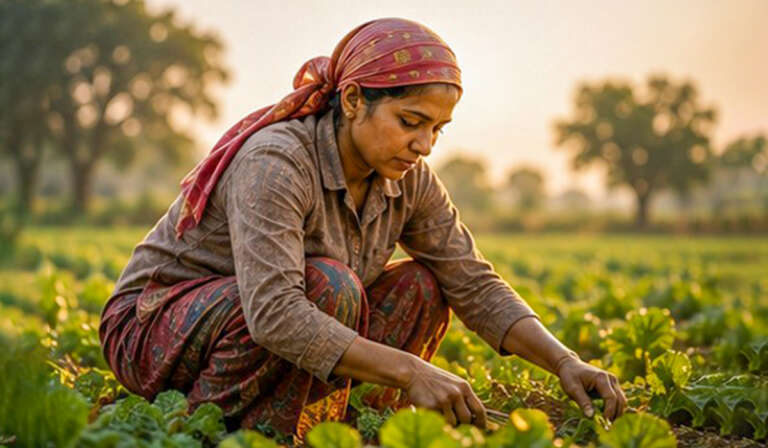
Indian history contains references to learned women such as Gargi, Maitreyi, Ghosha and Apala, who established their intellectual identities and participated in philosophical and scholarly discussions.
Over time, however, social, economic and political conditions changed.
Various social practices and patriarchal structures imposed greater restrictions on women’s freedom. Caste and social inequality further intensified the difficulties faced by women from marginalised communities.
Despite this, saints, Sufi thinkers and social reformers repeatedly raised their voices for women’s dignity and education.
Reformers such as Raja Ram Mohan Roy, Ishwar Chandra Vidyasagar and Mahatma Jyotiba Phule also played important roles in advancing social change.
But changing centuries-old attitudes was never easy.
Women had to travel a long road to secure their rights, and even today that journey remains incomplete.
Education and Economic Independence Changed the Picture
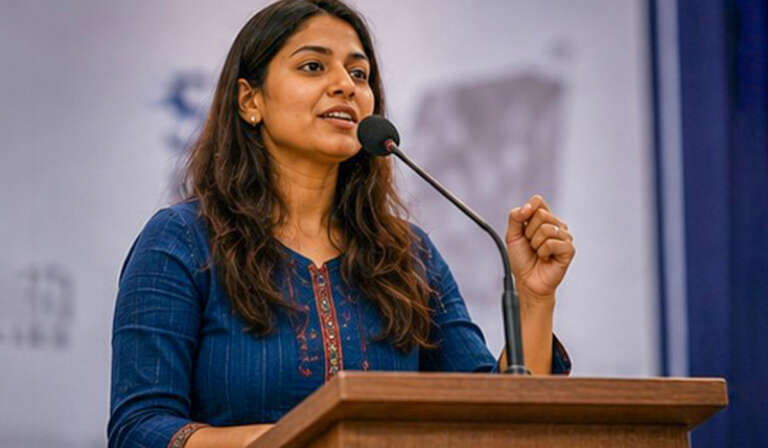
In the modern era, education has transformed women’s lives.
It has not only given women knowledge but also greater awareness of their rights and the confidence to make their own decisions.
Women today are no longer confined to the home. They are proving their abilities in administration, politics, science, space research, sports, business, banking, art, literature, the armed forces and almost every other field.
Yet this picture of progress is still incomplete.
Many women in rural areas and economically weaker households continue to lack access to quality education, employment, healthcare and safe environments.
For many, even making independent decisions about their own lives remains difficult.
Women’s empowerment, therefore, cannot stop at education. Economic independence is equally important.
Much Still Needs to Change
Even in the 21st century, many long-standing problems affecting women continue to persist.
Domestic violence, dowry, child marriage, gender discrimination and sexual harassment at workplaces have not disappeared.
In many families, the birth of a daughter is still not celebrated in the same way as the birth of a son.
Despite laws and increased awareness, discriminatory attitudes have not completely vanished.
One of the deeper contradictions is that society often celebrates successful women but is not always equally willing to provide them with the freedom, support and opportunities needed to reach that position.
For women from poor families, the struggle can be even harder.
They too have ambitions and dreams, but financial hardship, family responsibilities and social restrictions often silence those aspirations.
Change Must Begin at Home
Respect for women and women’s rights should not be limited to March 8 or ceremonial speeches.
If meaningful change is to happen, it must begin at home.
Daughters and sons must be given equal opportunities.
The belief that housework is solely a woman’s responsibility must change.
Boys should also be taught household work, and men must share domestic responsibilities equally.
Women do not need only protection. They also need the right to make decisions about their education, careers, marriage and lives.
When a girl receives an education, becomes financially independent and stands on her own feet, the benefits extend beyond her as an individual.
The impact reaches her family and, ultimately, society.
Women Need Equality, Not Merely Respect
Women do not need to be described as helpless or pitied.
They need rights, dignity and equality.
Instead of viewing a woman only in relation to others, as a mother, daughter, sister or wife, society must first learn to recognise her as an independent human being.
The idea of “respecting women” becomes meaningful only when that respect is visible in her freedom, her choices and her rights.
These poetic lines beautifully capture the suppressed potential within women:
“I understand the knowledge of melody,
I am a flute capable of music.
Yet because of your rejection,
I have been turned out of tune.”
There is no shortage of ability within women.
They have dreams, talent, courage and the desire to reach the sky.
What is needed is the gradual dismantling of the social restrictions, outdated attitudes and discriminatory barriers that stand in their way.
Perhaps the truest beginning of respect for women would be this:
Let a mother have a day off. Let a daughter have the freedom to choose her dreams. And let every woman have the right to decide the course of her own life.
That is the real journey from respect for women to women’s rights.


Leave a Comment