


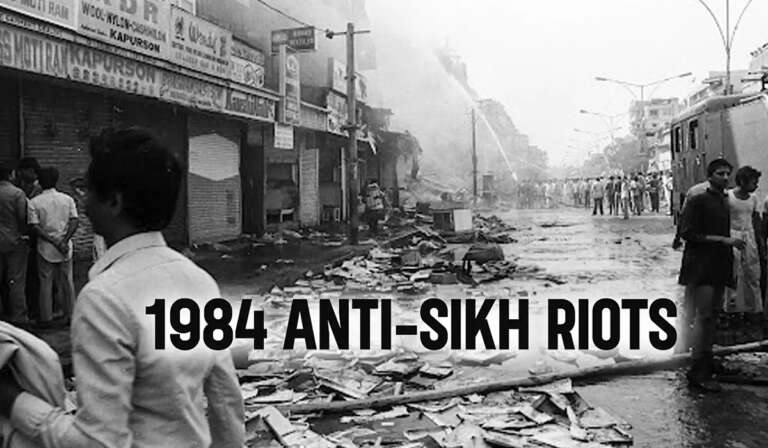
The period of November 1984 is among those dark chapters of Indian history whose pain has not faded even after decades. After the assassination of then Prime Minister Indira Gandhi on 31 October 1984, horrific violence targeting the Sikh community took place in Delhi and several other parts of the country. A large number of Sikhs were killed in Delhi, homes and shops were set on fire, and families were uprooted.
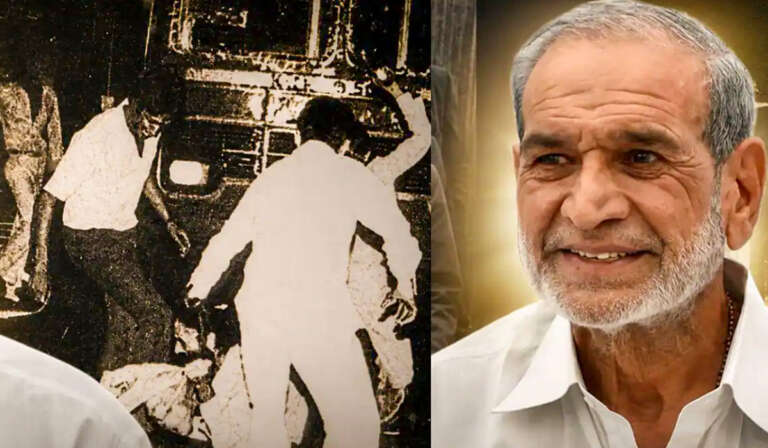
Among the cases related to this violence, the name of former Congress MP Sajjan Kumar remained one of the most discussed. After a legal battle that continued for many years, the Delhi High Court on 17 December 2018 overturned the lower court’s decision acquitting him and, in the Raj Nagar case, sentenced him to life imprisonment on serious charges including conspiracy and murder. The court described the 1984 killings as extremely grave incidents in the context of crimes against humanity.
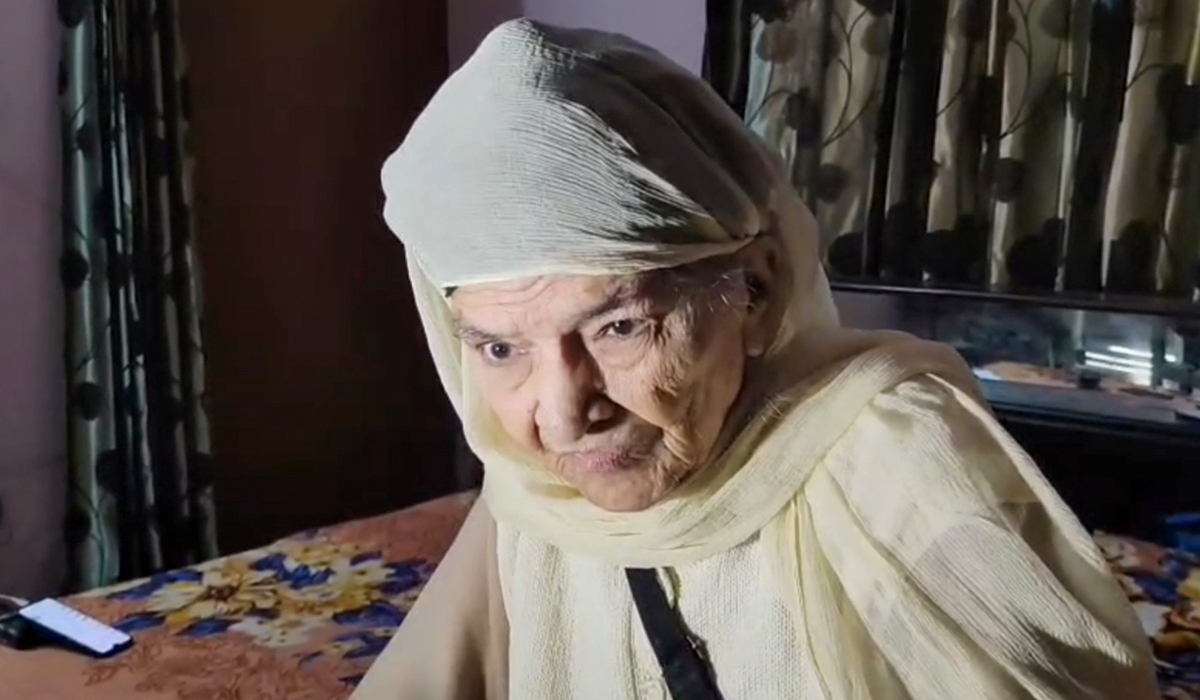
In this long legal battle, the testimony of Bibi Jagdish Kaur remained extremely important. She not only carried in her heart the devastation that had befallen her family, but also stood firm and narrated it before the court. Her struggle became an example of how, even in a battle for justice that continues for decades, the voice of a victim can ultimately reach the court.
The Full Story of the Raj Nagar Massacre
During the violence of November 1984, an incident in Raj Nagar in the Palam Colony area of Delhi changed one family’s life forever. Jagdish Kaur’s husband, her 18-year-old son and three cousins were killed. The pain of losing family members before her own eyes became a permanent wound in her life.
The violence did not remain limited to taking lives. Homes and property were damaged and religious places were also targeted. The Delhi High Court’s 2018 judgment mentions in detail the facts related to the Raj Nagar gurdwara incident and the killing of five persons.
For Jagdish Kaur, this was not merely the loss of five members of her family. In the same period, her home, her sense of security and her faith in the future were also shattered. Despite this, she took responsibility for the remaining members of her family and decided to fight for justice.
A Major Turning Point in the Fight for Justice Came on 17 December 2018

A Delhi lower court had on 30 April 2013 acquitted Congress leader Sajjan Kumar in the Raj Nagar (Delhi Cantonment) 1984 anti-Sikh riots and massacre case by giving him the benefit of doubt, while the remaining five accused were convicted. This decision further increased the disappointment of the victims’ families. But after this, on appeals filed by the CBI and other parties, the matter came up for reconsideration before the Delhi High Court. On 17 December 2018, a bench of Justice S. Muralidhar and Justice Vinod Goel overturned the lower court’s decision.
The court convicted Sajjan Kumar on serious charges including criminal conspiracy and sentenced him to life imprisonment for the remainder of his life. In this judgment, the court also made serious observations on the failure of the police in investigating the 1984 violence and on attempts to suppress cases. The court said that there had been serious failure on the part of the police in investigating the violence and that many cases had not been properly pursued. For the victims of 1984, this judgment was not merely a legal decision, but also a major relief after a long wait.
Bibi Jagdish Kaur: The Witness Who Did Not Bow Before Fear or Temptation
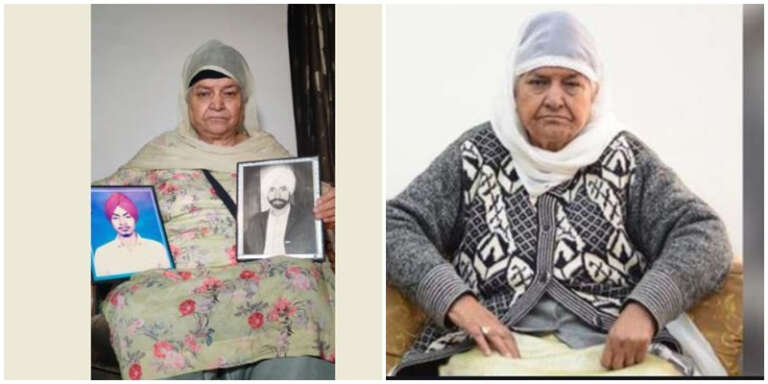
Bibi Jagdish Kaur’s testimony remained one of the most important links in this case. She testified before the court while accusing Sajjan Kumar of inciting violence. Even after years, she refused to withdraw from her statement. After Sajjan Kumar’s acquittal in 2013, Jagdish Kaur had openly expressed her disappointment. At that time, she had claimed that she was offered Rs 8 crore to retract her testimony.
This claim was also reported in the media at the time. But she did not withdraw her testimony. Her struggle was not limited to any one court date. For decades, making rounds of courts, repeatedly recalling old events and narrating the pain of the murder of her family remained a continuous mental battle for her. At the centre of her determination was only one thing: justice for her family. She knew that if witnesses became frightened or fell silent, another truth of history could be buried.
One of the biggest tragedies of the 1984 cases was also that serious questions continued to be raised about the investigation and legal action after the violence. The Delhi High Court’s 2018 judgment mentions in detail shortcomings in the investigation and facts related to cases not being pursued. In the Raj Nagar case, Jagdish Kaur had claimed that she saw Sajjan Kumar making inflammatory remarks before the crowd. Her testimony mentions the atmosphere of that time and the intensity of the violence. The court record also mentions testimonies and investigation findings related to Sajjan Kumar allegedly inciting the crowd. In its judgment, the Delhi High Court also indicated that merely looking at the role of the crowd was not enough in violence that had taken place on such a large scale. The court also seriously considered the role of politically influential persons and law-enforcement agencies.
34 Years of Waiting and Questions for the Justice System
The period from 1984 to 2018 amounts to 34 years. For a victim’s family, these are not merely years on a calendar. During this period, children grow up, elders pass away, the memory of witnesses weakens and many people leave this world while waiting for justice. In the 1984 cases, prolonged investigations, weak FIRs, delays in recording witness statements and lengthy court proceedings severely tested the patience of the victims.
The Delhi High Court had also made strong observations about shortcomings in the investigation and attempts to suppress cases. Jagdish Kaur’s story is the face of this long wait. For her, every court date was like reopening an old wound, but despite this, she did not step back.
Sajjan Kumar Sent to Jail
After the December 2018 judgment, Sajjan Kumar began serving his life sentence. In later years, legal proceedings continued against him in other cases related to the 1984 violence as well. In 2025, he was sentenced to life imprisonment in another case. On 20 August 2026, Sajjan Kumar died at the age of 80. He was serving a life sentence in jail and, before his death, he was taken to Safdarjung Hospital for treatment, where he was declared dead.
Although Sajjan Kumar’s death brought an end to a long and controversial legal chapter, the pain of the victims of the 1984 violence cannot end merely with the punishment or death of one accused. The pain of ’84 still lives in the memories of those families who lost their loved ones. A legal punishment cannot bring anyone back to life, nor can it restore the entire world that was taken away from a family. But the process of justice can certainly establish that even the most powerful person is not above the law.
Jagdish Kaur did not give up even after losing her family. In the legal battle that continued for decades, her testimony kept the voice of the victims alive. Her story teaches us that the fight for truth is not always easy.


Leave a Comment