

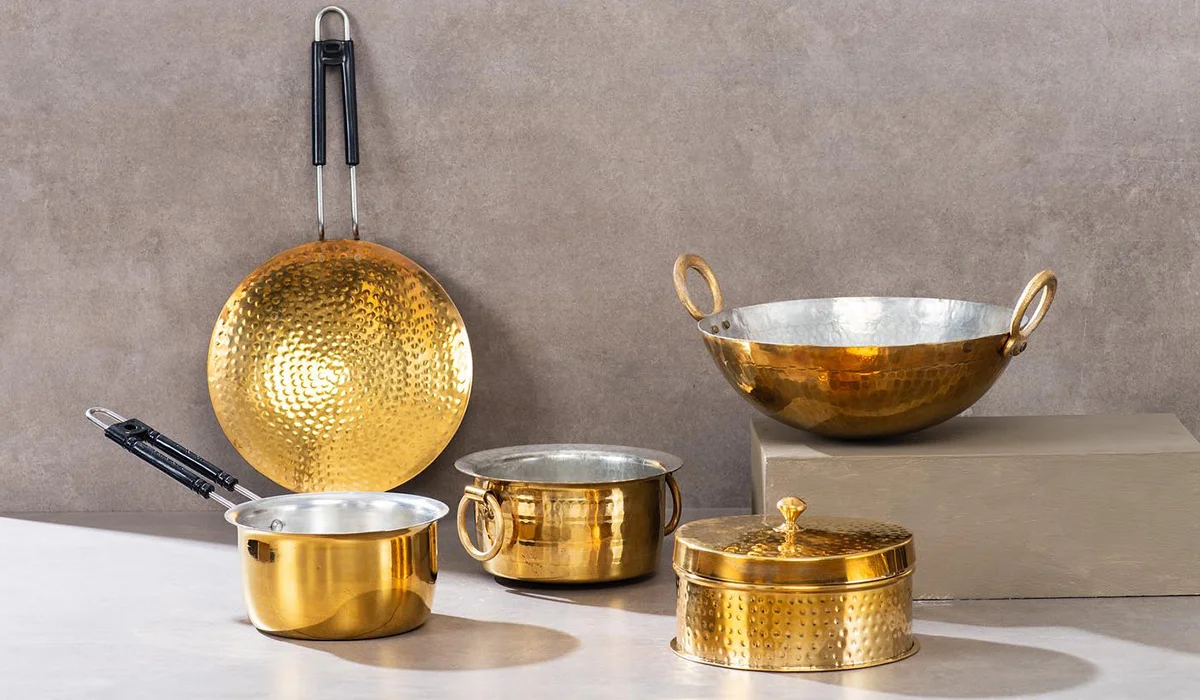

The kitchens of our grandparents were not merely functional spaces. They were, in a very real sense, pharmacies. Every vessel chosen for cooking had a purpose rooted in centuries of practical knowledge, and that knowledge was not accidental. Brass, copper, iron, and clay were the materials of daily life across the Indian subcontinent, and their presence in the kitchen reflected a deep, if unspoken, understanding of how metals interact with food and the human body.
That understanding was largely discarded within a single generation.
Roughly two decades ago, steel and aluminium swept through Indian households with remarkable speed. The reasons were straightforward enough. These newer vessels were lighter, cheaper, and required far less maintenance than their traditional counterparts. Nobody needed to seek out an artisan to re-tin a steel pot. Nobody had to spend an afternoon scrubbing a non-stick pan back to respectability. The old brass and copper vessels, some of them passed down through three or four generations, were sold off to scrap dealers or exchanged at the door for bright new steel sets.
What followed was not immediately visible, but it was consequential.
The Health Cost of a Convenient Substitution
In aluminium- and non-stick-coated cookware, it gradually became clear that they were releasing compounds into food during cooking. Researchers have linked slow accumulation of these substances in the body to joint disorders, digestive illness, and, in some studies, elevated cancer risk. The convenience that made these vessels so attractive came with a cost that only revealed itself years later, in doctors’ offices rather than kitchens.
Dr. Inderjit Kaur, addressing this question directly, notes that the human body requires trace amounts of several metals to function well. Cooking in brass vessels, which are composed of zinc and copper combined, preserves more than 90% of a food’s nutritional content, a figure that drops considerably when pressure cookers or aluminium pots are used. The zinc-copper composition of brass actively supports immune function and aids digestion. Copper vessels used for storing water help the body eliminate toxins and have historically been associated with improved cognitive clarity. Iron cookware, similarly, contributes directly to the body’s iron levels and is a natural remedy for anaemia.
The tin lining applied to brass cookware before use, known as kali in Punjabi, is not a cosmetic touch. It is a protective layer that sits between the metal and the acidic compounds in many foods, preventing unwanted chemical reactions while allowing the brass’s beneficial properties to function as intended.
The Craftsmen Who Were Left Behind
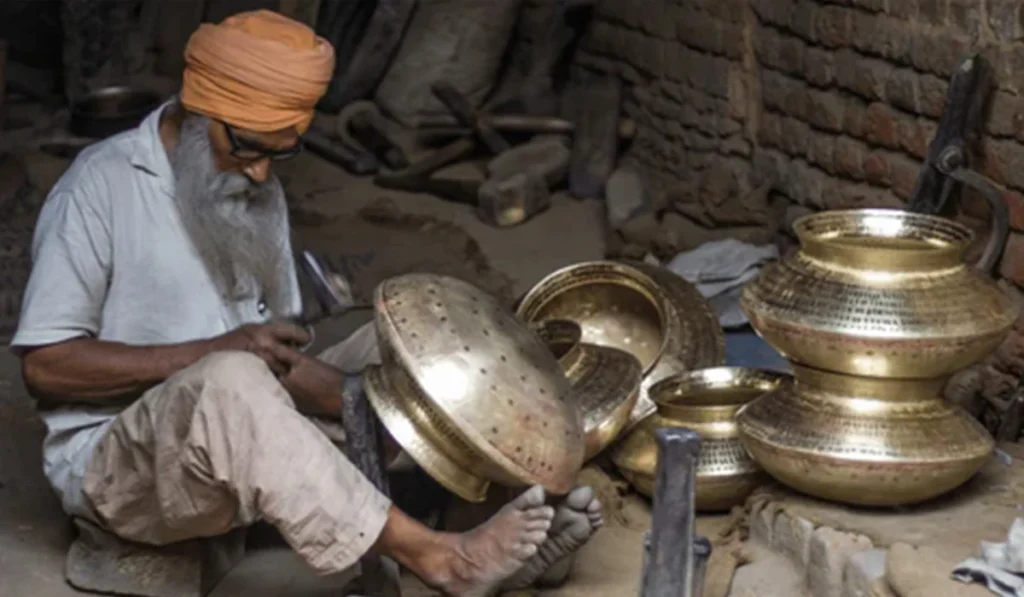
The decline of brass cookware not only affected the people who cooked with it. It devastated an entire community of skilled craftsmen.
Towns such as Batala, Amritsar, Jandiala Guru, and Hoshiarpur in Punjab had, for generations, been centres of brass-working. The sound of hammers on heated metal was as characteristic of these neighbourhoods as any other feature of daily life. Families in the Thathiara community, the traditional artisans who shaped and lined brass vessels, had practised this work across many generations. Entire streets in Batala’s Thathiara neighbourhood once operated as continuous workshops, with dozens of families engaged in making and re-tinning cookware from morning until night.
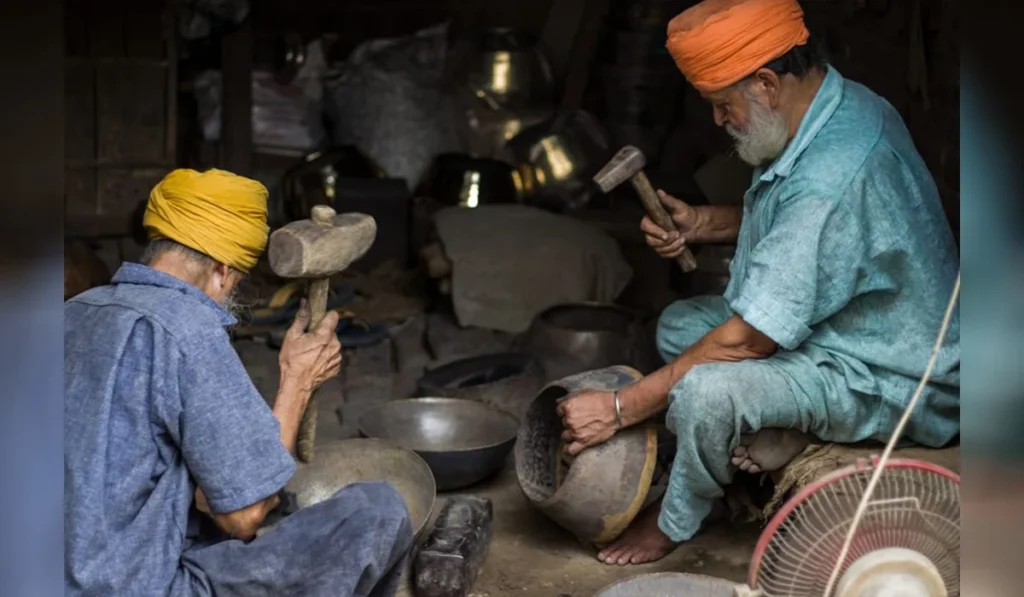
The arrival of factory-made steel and aluminium products dismantled this economy with considerable thoroughness. Most artisans, finding no market for their skills, turned to general labour. The younger generation, seeing no future in work that had become economically marginal, moved on entirely. What remains today in these workshops is largely a community of older men, continuing out of habit and dedication rather than prosperity.
It is worth noting that UNESCO has recognised the brass-working tradition of Jandiala Guru as an Intangible Cultural Heritage of Humanity. The craft of heating metal, shaping it through sustained and precise hammer work, and applying the tin lining correctly is a skill of considerable technical complexity. That recognition carries an implicit obligation.
A Return That Is Already Under Way
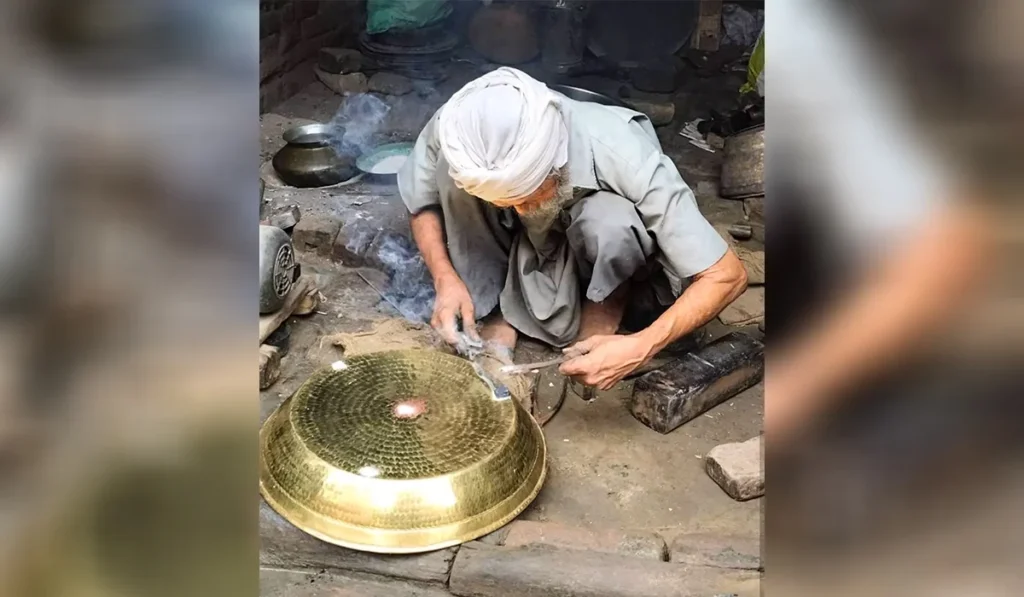
There is, however, a more encouraging development to report.
As awareness of dietary health has grown, and as the diseases associated with modern cookware have become harder to ignore, a portion of the population has begun returning to traditional vessels. Artisans in Punjab report that daily inquiries for brass paraats, bowls, karhaais, and cooking pots have resumed after years of near silence. Demand is coming not only from Punjab but also from Himachal Pradesh, where handmade brass cookware is again finding buyers.
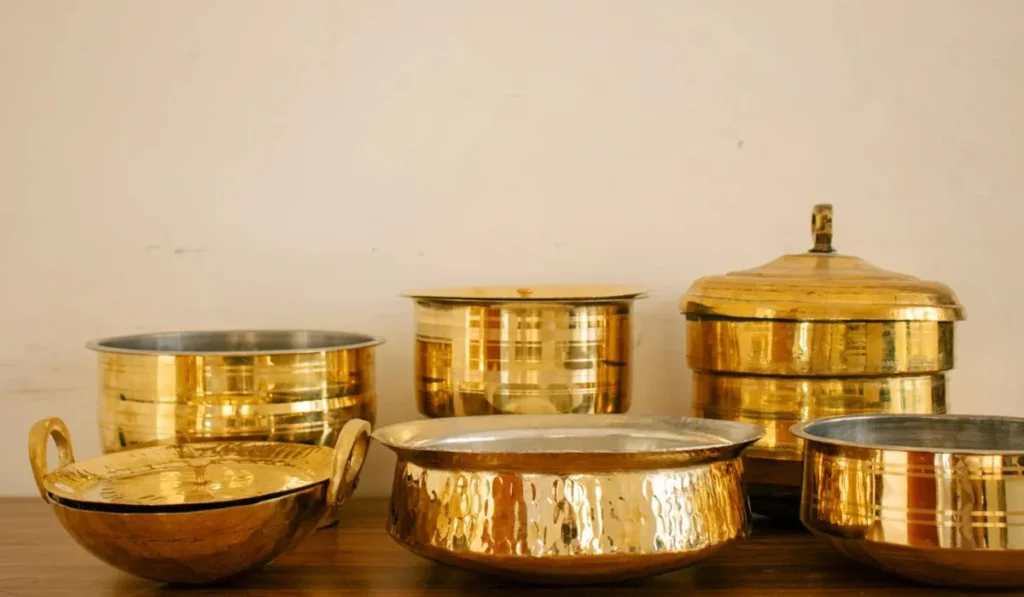
The practice of bringing old brass vessels in for re-tinning has also revived. Craftsmen note that seven or eight customers a day now arrive specifically to have their older cookware re-lined with kali, a figure that would have been difficult to imagine ten years ago. These are not people acting solely on nostalgia. They are people who have read about the health implications of what replaced these vessels and have drawn a practical conclusion.
What This Return Actually Requires
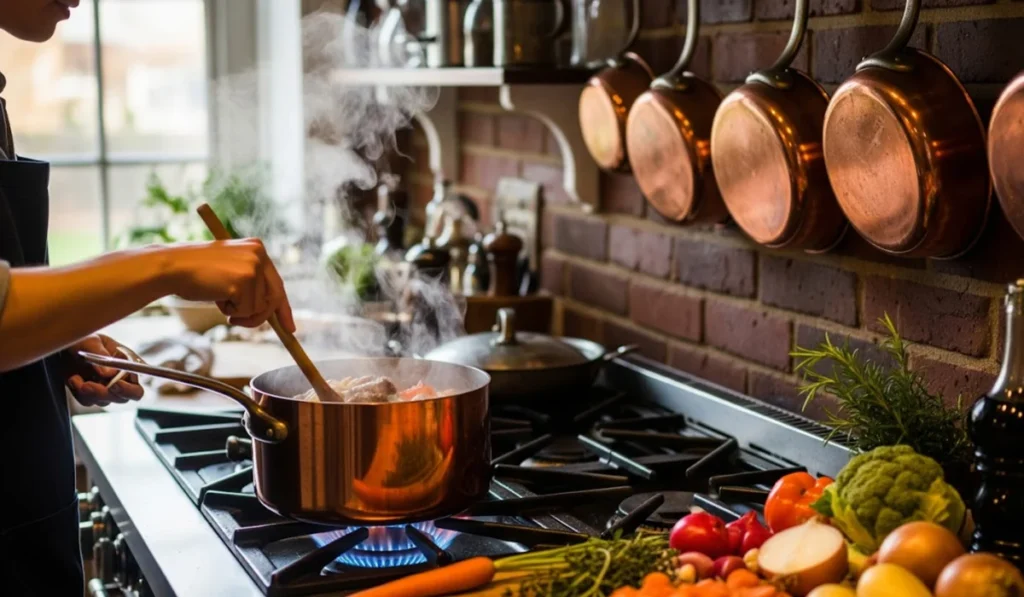
Choosing brass cookware today is a more considered act than simply finding it in a shop. A brass vessel used for cooking must be properly tinned before use and re-tinned periodically as the lining wears. This requires access to a craftsman who knows the work, and it means accepting that cookware is not entirely disposable.
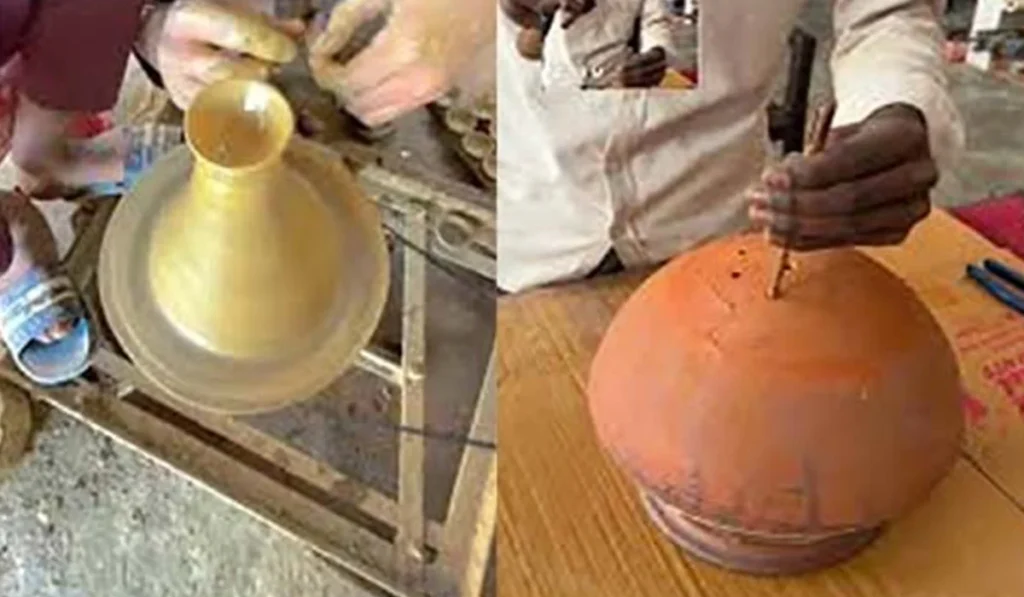
That acceptance, in itself, represents a shift in perspective. The use-and-discard culture that drove the original transition to steel and aluminium was not only a matter of health. It was a philosophical one, favouring convenience and novelty over continuity and craft. Reversing it means treating cookware as something worth maintaining, and artisans as people whose knowledge has value.
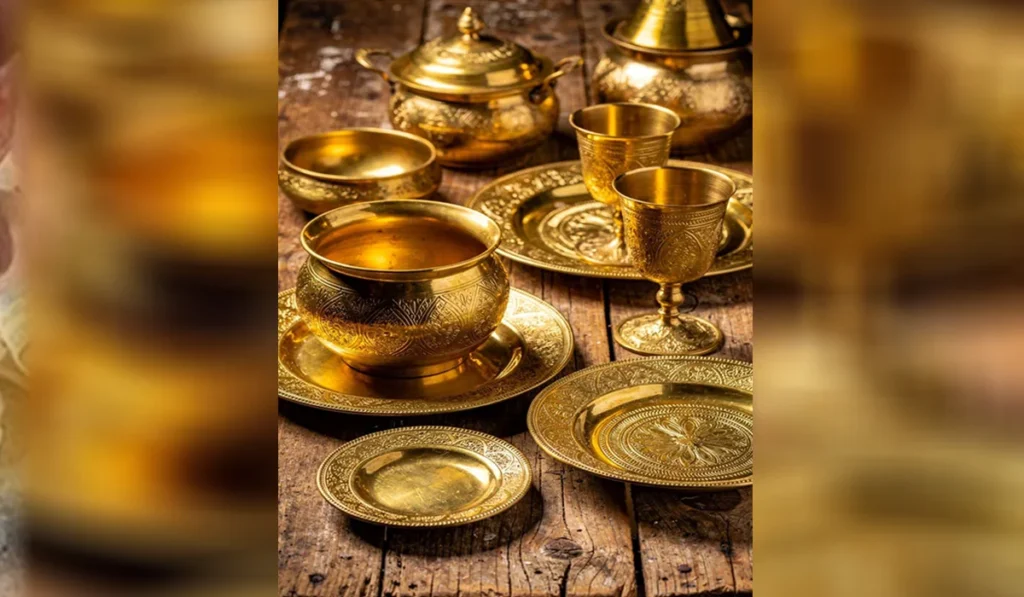
The practical recommendation is straightforward. A single brass paraat or iron karhai introduced into the kitchen is a beginning. The investment is modest. The benefit, in terms of preserved nutritional value and avoided toxins, accumulates steadily over time. Moreover, the purchase, made from a working artisan rather than a factory catalogue, keeps an old and recognised tradition from disappearing entirely.
Brass cookware is not a relic. It is a solution that was already in place before the problem it addresses existed. The kitchen that returns to it is not going backwards. It is correcting a detour.


Leave a Comment